
Swords of Honor
By Joel R. Kolander · Originally published July-August 2022 · pp. 36–46
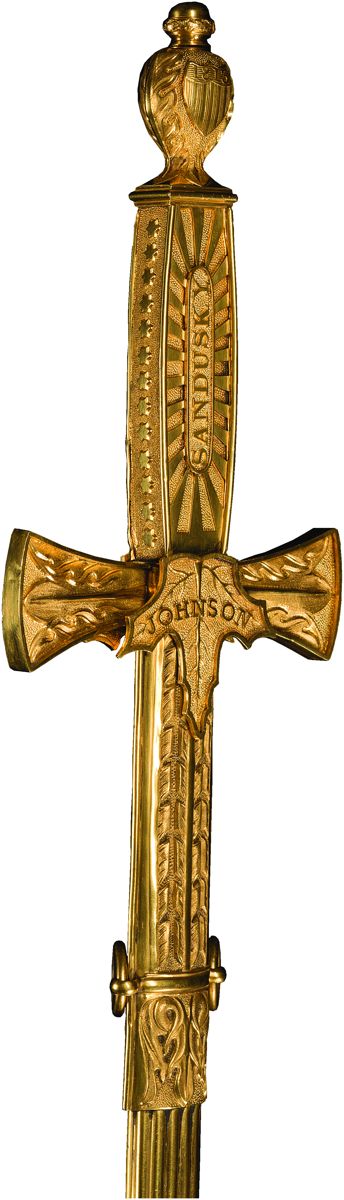
LIEUTENANT BENJAMIN JOHNSON PRESENTATION SWORD
Given posthumously, this sword was presented by President Andrew Jackson “to the eldest male representative of Lieutenant Benjamin Johnson.”11 Forged and crafted by master artisans at N. P. Ames, this sword represents the highest level of U.S. presentation swords. In private collections today, there are only approximately seven gold mounted swords presented by the president and congress for all U.S. wars. Not only is the craftsmanship of this sword exceptional, but it also made of materials to match. The cruciform hilt, four-sided grip, mounts, and throat of the scabbard are comprised of solid gold. The scabbard is gilt silver, and the length of the blade is etched with detailed embellishments including the presentation text. The 30-inch straight elliptical blade is etched with arrows, a federal shield, thirteen stars in a half-circle, floral, and two large etched panels with inscriptions. A sword of such beauty, history, and bravery is museumworthy in every sense of the word. This study in gold, silver, and steel tells the tale of when a little fort marked a big change for the entire nation.
Ames Congressional Presentation Sword formally given by President Andrew Jackson to Lieutenant Benjamin Johnson’s family for “Gallantry and Good Conduct in the Defense of Fort Stephenson” during the War of 1812. (RIAC)
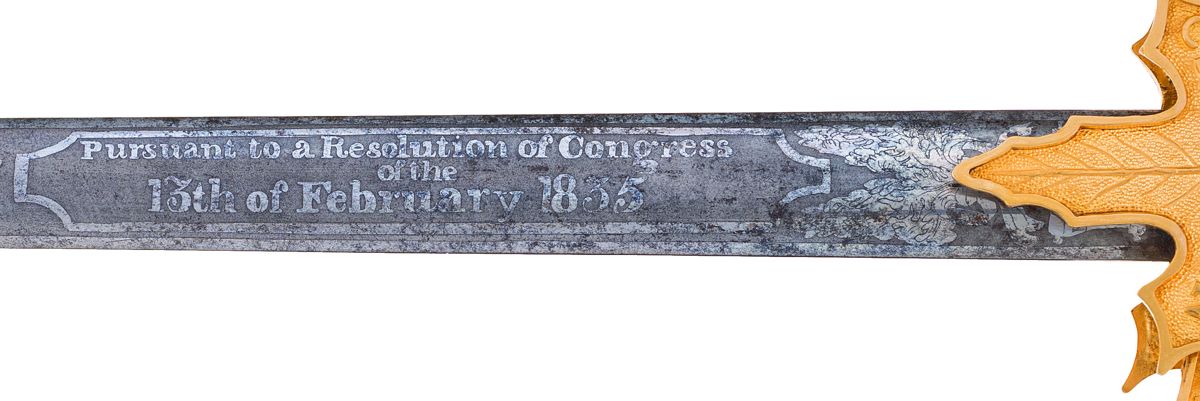
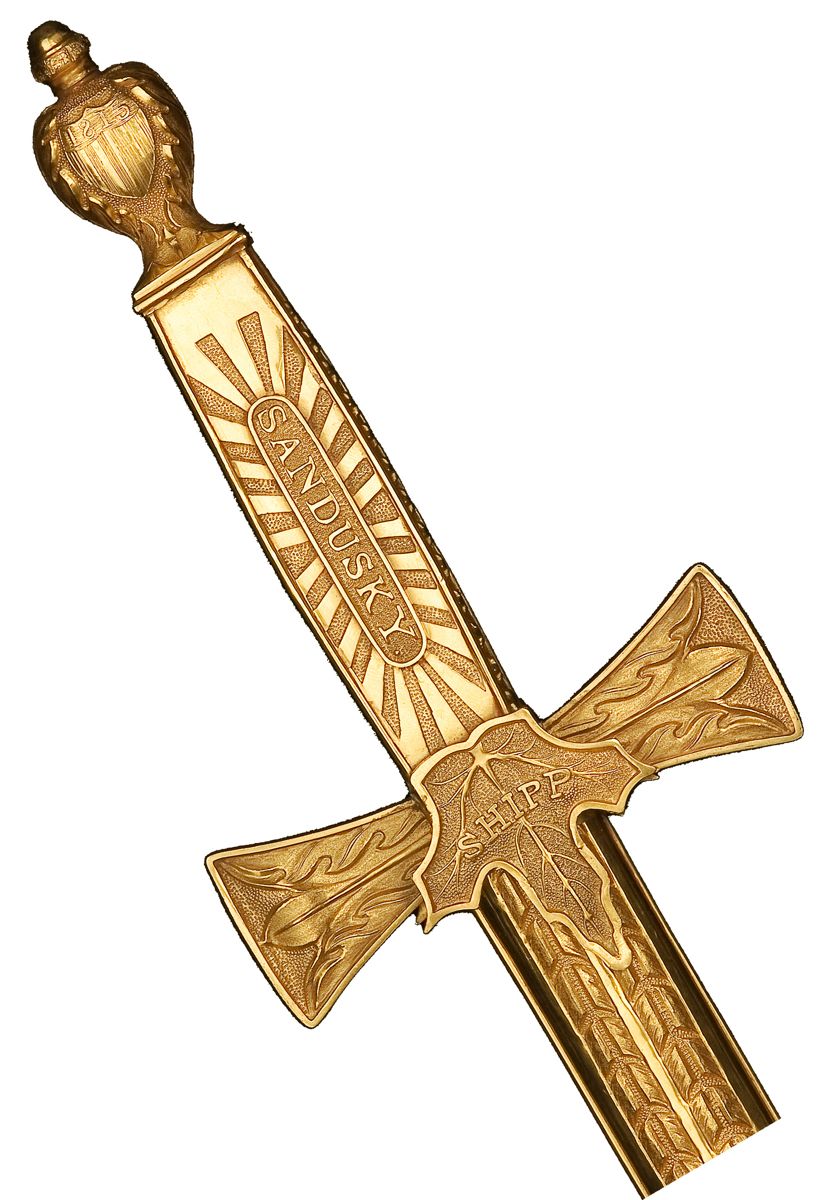
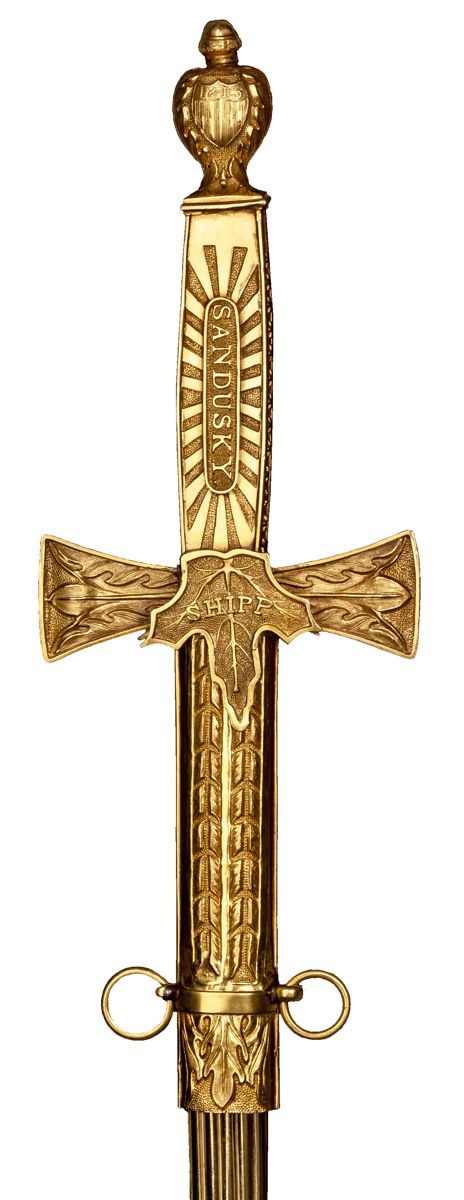
Johnson’s name on the maple leaf; Sandusky on the handle. (RIAC)
The scabbard is ribbed and has acanthus patterns on the drag and throat. The solid gold cruciform hilt has highly detailed maple leaf languets representing British Canada, and the victors’ names “JOHNSON” and “CROGHAN” in raised relief over the maple leaf on opposing sides. (RIAC)
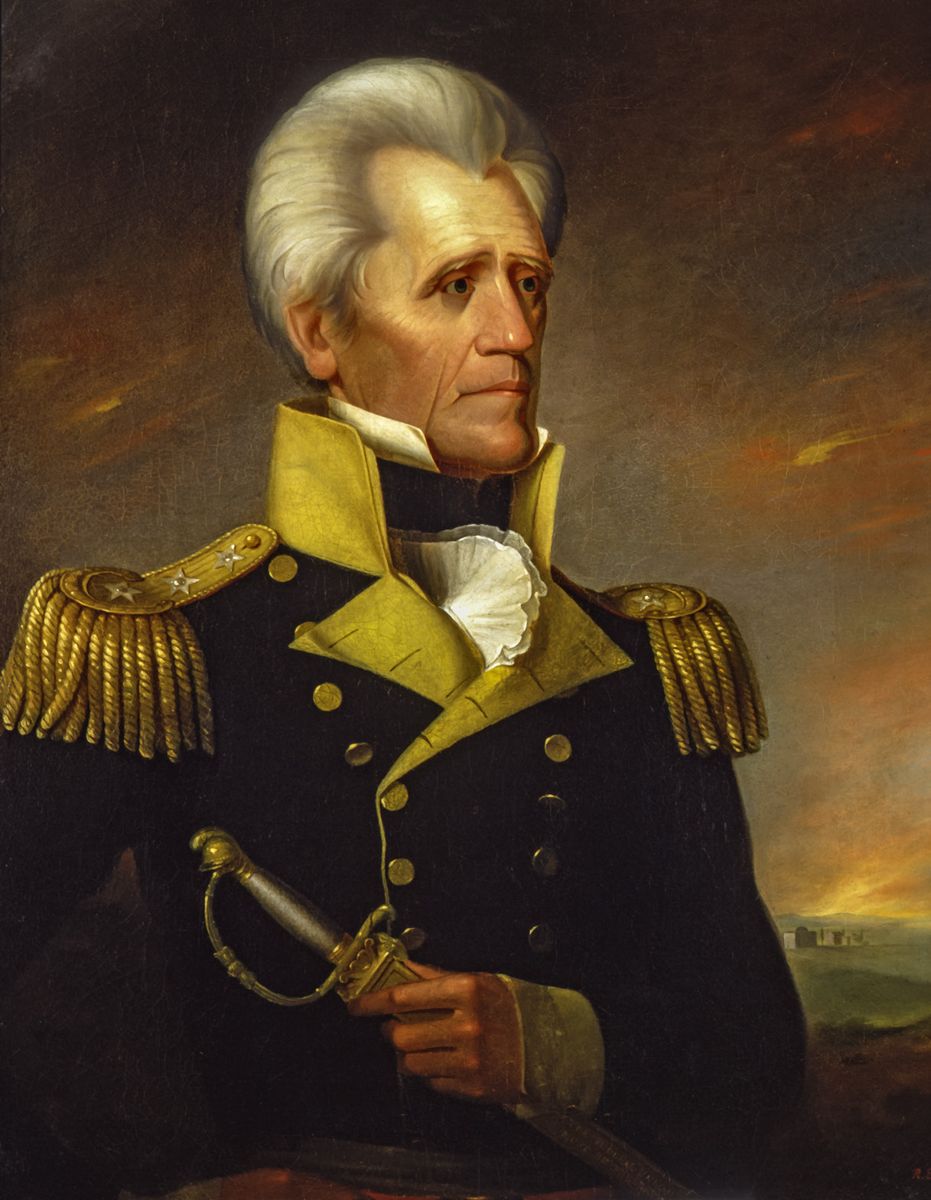
President Andrew Jackson, 1835, oil on canvas, Ralph Eleaser Whiteside Earl artist. Courtesy Smithsonian American Art Museum, Transfer from the National Institute.
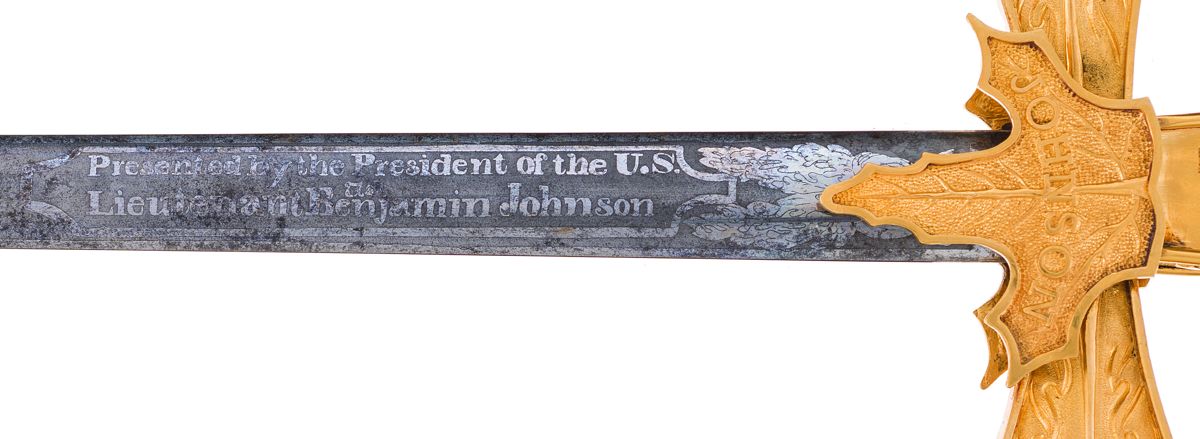
“Presented by the President of the U.S. to Lieutenant Benjamin Johnson.” (RIAC)
“Pursuant to a Resolution of Congress of the 13th of February 1835.” (RIAC)
This map shows the attack on Fort Stephenson during the War of 1812. Located in present day Fremont, Ohio, the fort, under Major George Croghan, withstood the attack by British forces, who fought under Henry Proctor and American Indian Chief Tecumseh. The battle was one of the last western battles fought in U.S. territory during the war. The map details troop advancement and the geography surrounding the fort. (Wikimedia Commons)
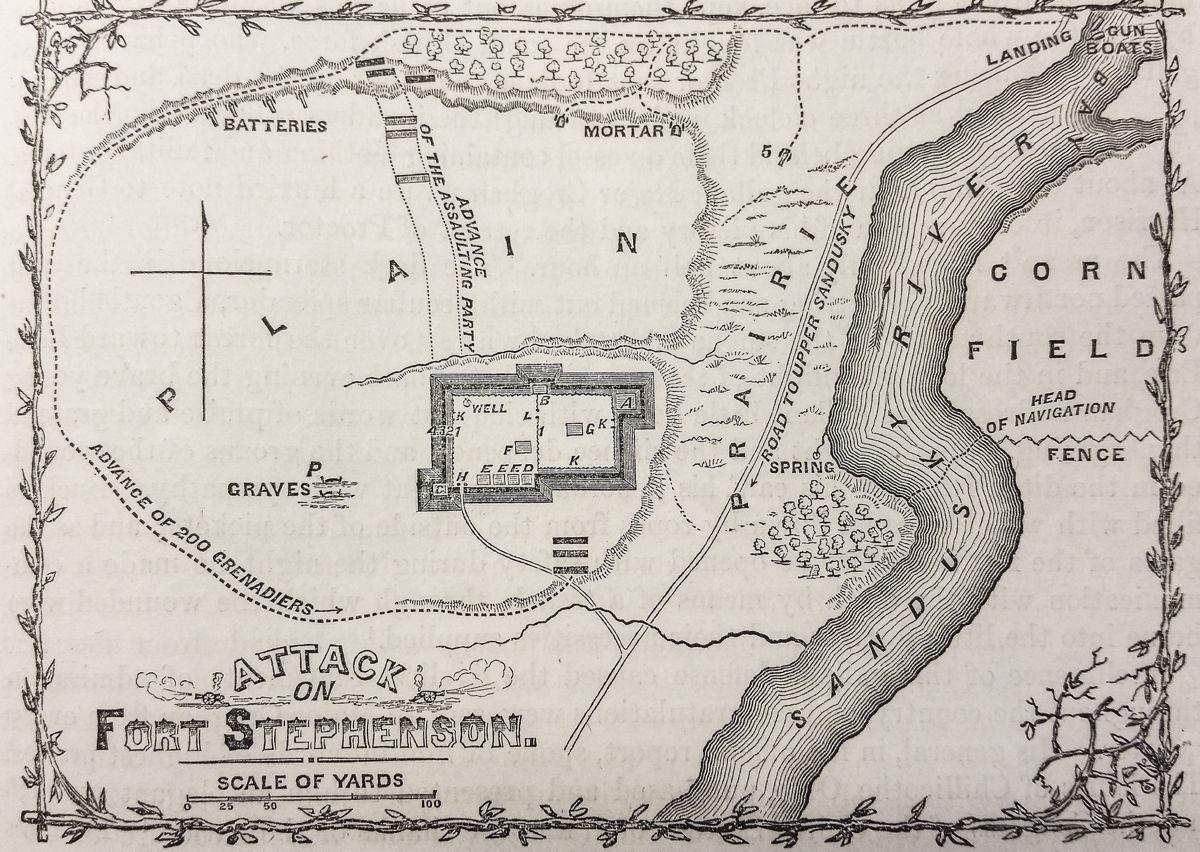
Fort Stephenson map. History of Ohio: the Rise and Progress of an American State, New York: The Century History Company, 1912, p. 296.
ENSIGN EDMUND SHIPP PRESENTATION SWORD
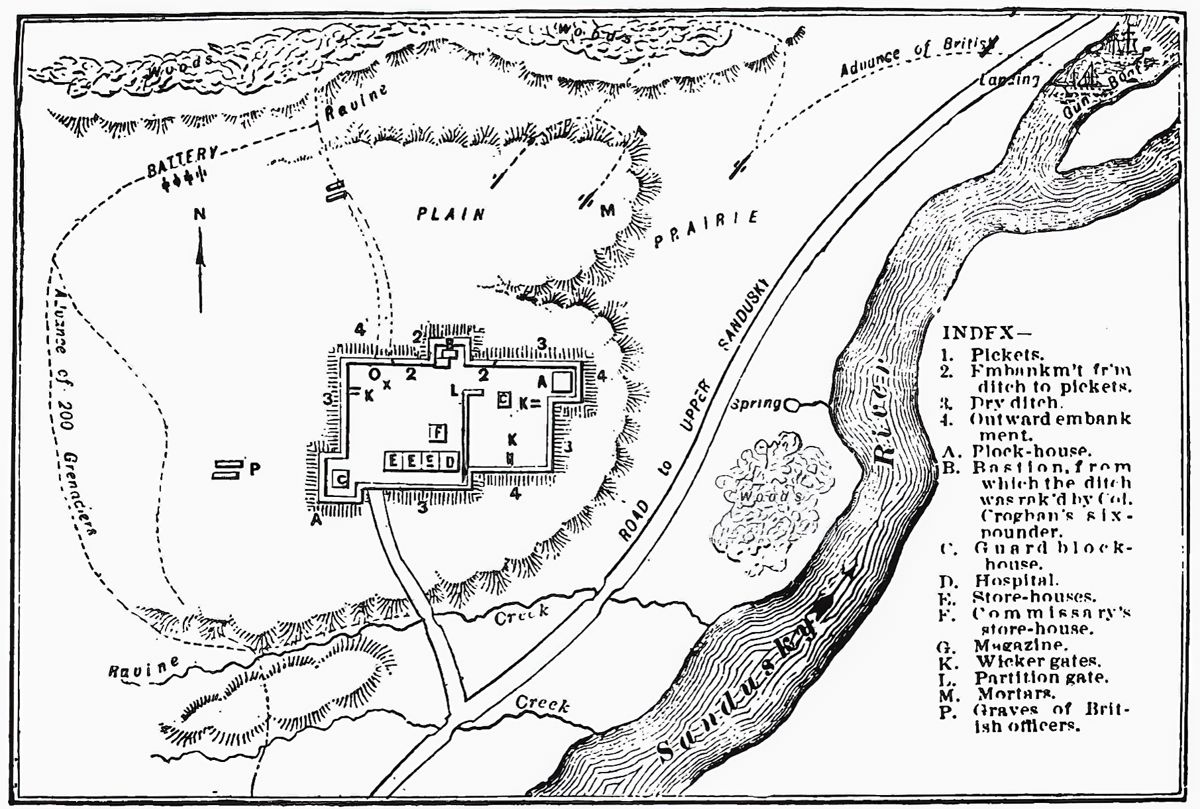
“On the evening of August 1st, 1813, this gallant young Kentucky Major then but 21 years of age, and supported by his 180 Kentucky riflemen and one six-pound [pounder] cannon, “OLD BETSY” defeated 2,400 British and Indians under the command of General Proctor and Chief Tecumseh. General Harrison had advised Croghan that if the enemy appeared in force he should retreat, but Croghan wrote back: “We have determined to maintain this place, and by heavens, we can.””12 The British attempt at convincing Croghan to surrender to avoid a massacre by the Indian force with the British brought this response from Croghan’s representative Ensign Edmund Shipp: “When this fort shall be taken there shall be none to massacre. It will not be given up while a man is able to resist.”13
The cruciform hilt, four-sided grip, mounts, and throat of the scabbard are comprised of solid gold. On the pommel is the date 1813 is embossed on a shield. (Jack W. Melton Jr.)
The blade etching reads: “Presented by the President of the U.S. to Ensign Edmund Shipp.” “Croghan” is cast into the maple leaf.
Blade is etched: “Pursuant to a Resolution of Congress of the 13th of February 1835.” “Shipp” is cast into the maple leaf.
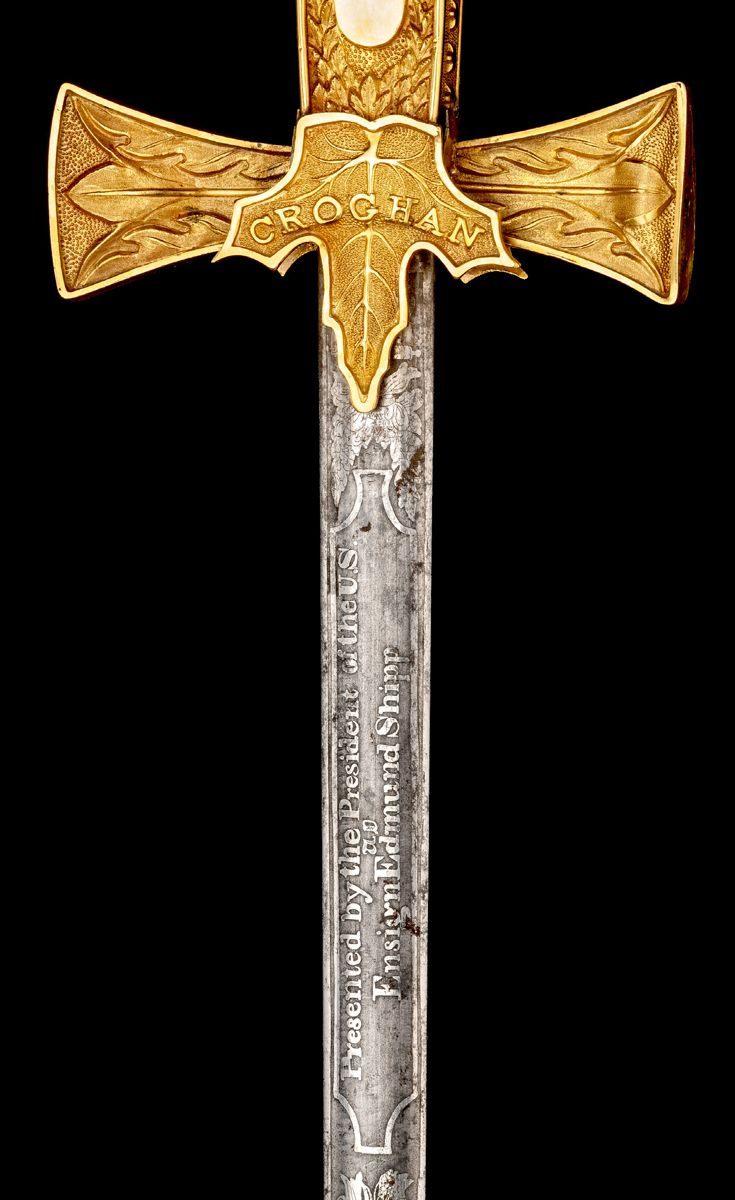
Shipp sword blade detail with a shield pierced by three arrows. (Jack W. Melton Jr.)
GEORGE CROGHAN AFTER THE WAR OF 1812 George Croghan was born near Louisville, Kentucky, on November 15, 1791. His father had served as an officer in the American Revolution, and his mother was a sister of George Rogers Clark. After attending the College of William and Mary in Williamsburg, Virginia, Croghan joined the army in 1811. He quickly saw military service, participating in the Battle of Tippecanoe and the siege of Fort Meigs. Not long after the War of 1812 began, George Croghan became commander of Fort Stephenson. Located on the Sandusky River, the fort was important to Ohio’s defense against the British. The fort consisted of three blockhouses inside a rectangular stockade. Croghan worked hard to increase the fort’s defensive capabilities. General William Henry Harrison believed that the fort was located at a precarious position and ordered that Croghan abandon it, but Croghan argued that, if his forces withdrew, Native Americans would cut his men off from the rest of the army. Before the two men could resolve their differences, British troops attacked the fort. Despite the fact that Croghan had only approximately 150 troops under his command, the U.S. forces were successful in holding off the British assault. In fact, Croghan’s men were so successful that they crippled the British forces; not one officer was left standing, and one-fifth of the English soldiers were either killed, wounded, or missing in action. The U.S. forces made their enemy withdraw from the area. The victory at Fort Stephenson came at an important time during the war, as the United States had few military successes to that point in the conflict. In addition to raising U.S. morale, it also made Croghan famous across the country. President James Madison promoted him to the rank of lieutenant colonel as reward for his service. Years later, the United States Congress voted to award him a gold medal for his success during the War of 1812. Major George Croghan continued to serve in the military after the War of 1812 ended. In 1824, he became postmaster of the city of New Orleans, but the following year he was appointed inspector general of the army. During the Mexican War, Croghan served with General Zachary Taylor. Once the war ended, Croghan was stationed in New Orleans. He died of cholera there on January 8, 1849. Although originally buried in a family cemetery near Louisville, Croghan’s remains were moved to the site of Fort Stephenson in 1906, and a granite memorial covered his grave. (Source: https://ohiohistorycentral.org/w/George_Croghan)
Ohio HIstorical Marker about Fort Stephenson on the grounds of Birchard Public Library, Fremont, Ohio. (Creative Commons)
Note: The George Croghan papers are preserved in the New York Public Library, Rare Books and Manuscripts Division, Accession # 85 M6. 1.
Endnotes:
The Historical Register of the United States …: From the declaration of war in 1812 to Jan. 1, 1814. United States: T. H. Palmer, 1814, p. 255. The Portfolio, Vol. 5, Third Series. United States: Editor and Asbury Dickens, 1815. p. 217. Elsie on the Hudson and Elsewhere, by Martha Finley, New York, Dodd, Mead and Company, 1898, pp. 172-173. Ohio History. United States: n.p., 1907, p. 28. Elsie on the Hudson, p. 173. Ibid., p. 174. Ibid., pp. 177-178. The U.S. troops were armed with muskets according to earlier text. The Historical Register of the United States …: From the declaration of war in 1812 to Jan. 1, 1814. United States: T. H. Palmer, 1814, p. 254. Historical Register, p. 256. The Public and General Statutes Passed by the Congress of the United States of America: 1828–1836, by Joseph Story, i.e. 1837. Philadelphia: P.H. Nicklin and J.W. Johnson, 1837, p. 2,420, Resolution No. 2. Ibid. Souvenir of the Diamond Jubilee of St. Joseph Parish Fremont, Ohio. Celebrated May 7, 1933, 1857–1932, by Reverend Joseph Romanus Waechter. United States: n.p., 1932, p. 9. Ibid.
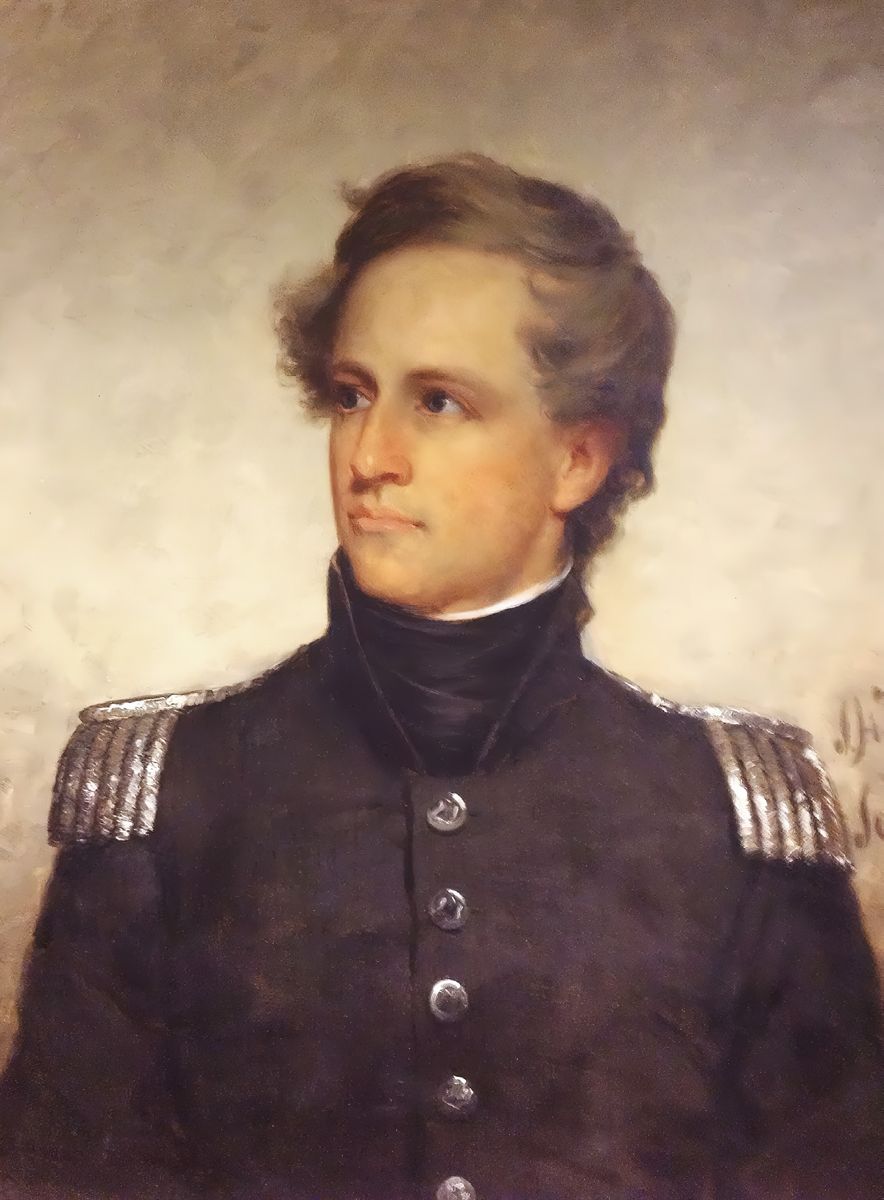
Lt. Col. George Croghan, c. 1816, by John Wesley Jarvis. (Courtesy of Birchard Public Library of Sandusky County)
About the Author Joel R. Kolander is head of online marketing for Rock Island Auction Company (RIAC).
Joel R. Kolander xton By John Se