
George W. Morse Carbine Cartridge Belt
By Shannon Pritchard · Originally published November-December 2022 · pp. 3–10
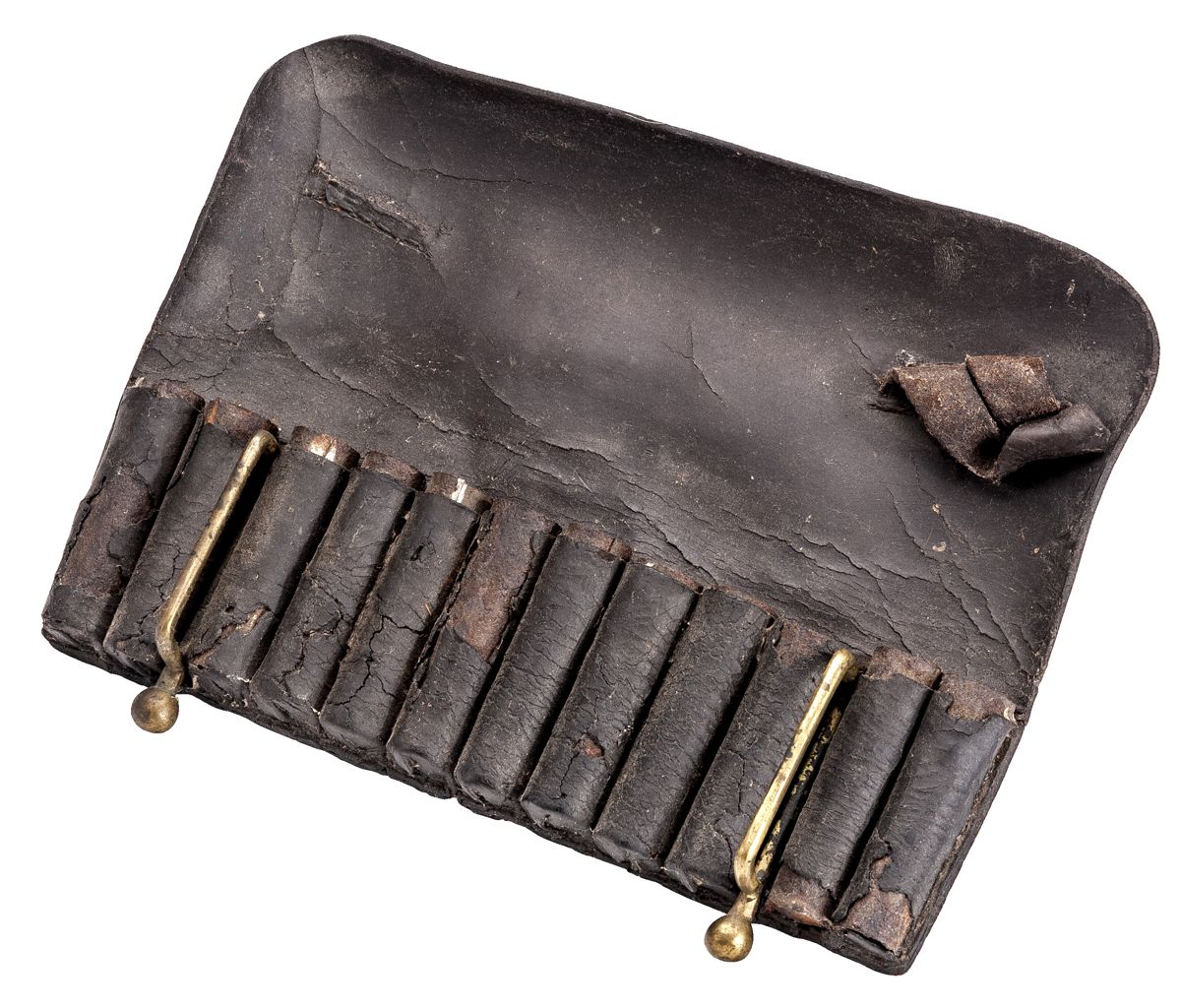
Cartridge pouches for Morse breech loading carbines made by or for the South Carolina State Military Works, Greenville, S.C. (ca. 186465). Morse developed a new means of carrying his .50 caliber brass cartridge ammunition. Each pair of pouches contained twenty-four tin tubes for cartridges, an inexplicably small number given a potential rate of fire of about eight rounds a minute.
Morse artifacts courtesy the George W. Wray Jr. Civil War Collection, Atlanta History Center. Photography by Jack W. Melton Jr.
“The breech-piece is made with a round orifice therein, to contain the percussion-rod, for firing the cartridge, and consists of at least three essential parts. First is the body-piece C, containing an orifice for the reception of the percussion-rod then a cap-piece with a globular surface next to the cartridge when inserted in the barrel, (shown at K in the drawings.) This cap-piece has a cylinder extending to the rear,which contains the percussion-rod, as represented in the drawings, and is secured in the body-piece by the pin N. And last is the slide-piece E, which receives the blow from the hammer of the gun, is forced forward thereby, and the front end, passing under the band-piece M, locks the breech-piece in place, while the hammer-piece of the slide e comes in contact with the head of the percussion-rod f, and forcing it forward fires the charge…It will be observed that the front end of the breech-piece, which is inserted in the barrel where cut in front of the breech-pin has a globular surface, all the points in each being equally distant from the center of motion. The advantages of this form of surface are as follows: It closes the cylindrical cavity in the head of the cartridge-case as perfectly as it could be done with a plane joint; it enables me to use the cartridge-case having a metallic head with a small orifice through which the fire is communicated and the wad is forced out against the sides of the case, and thus with greater certainty prevents the escape of gas.”
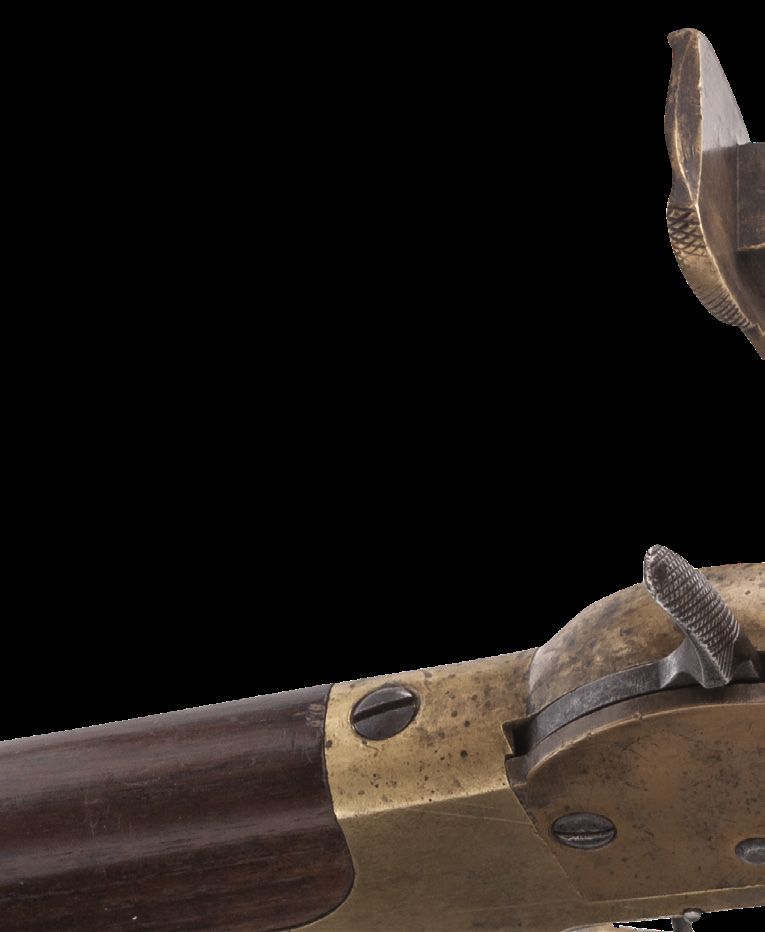
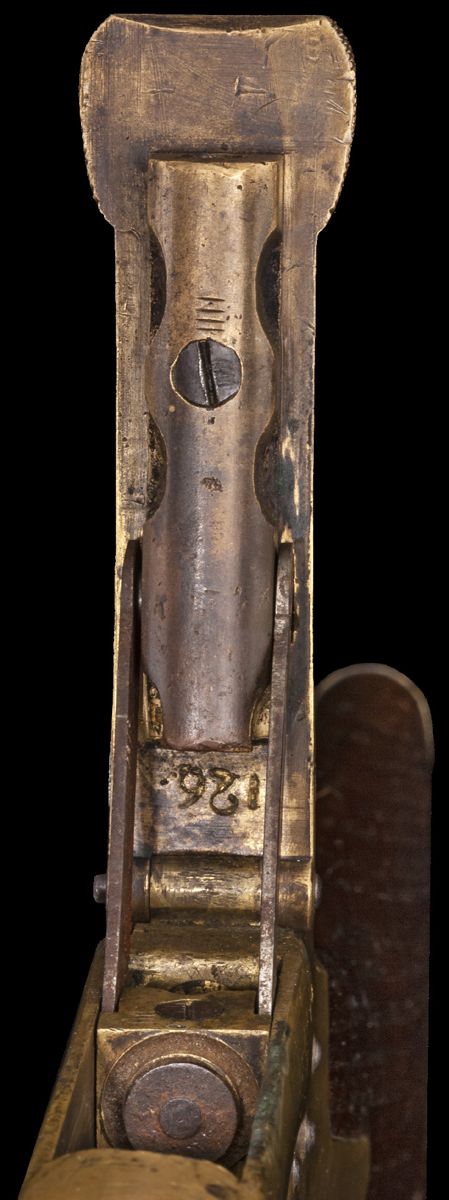
THE MORSE BREECH LOADING CARBINE MADE BY THE SOUTH CAROLINA STATE MILITARY WORKS, GREENVILLE, FIRST TYPE, SERIAL NUMBER 126 (1863)
Note the lack of a latching device for the 1st Model breech block. Serial number 126.
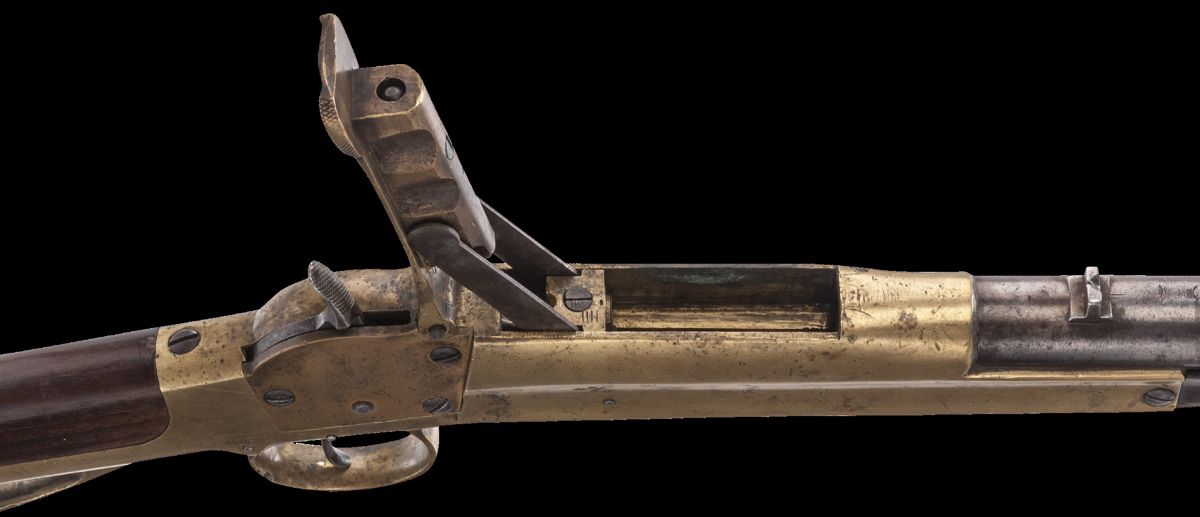
This carbine was designed by George W. Morse for the State of South Carolina. It was an extraordinary departure from any other military firearm produced in the Confederacy. Although its breech-loading system was essentially unchanged from the one he developed for the Springfield Armory alterations, Morse made a much more compact arm for South Carolina, with a hammer or firing lever mounted inside the frame. At about six and a half pounds in weight and forty inches in length, his .50-caliber breech-loading carbine was three or four pounds lighter and about sixteen inches shorter than an ordinary .577 or .58-caliber muzzle-loading rifle-musket, but, theoretically at least, just as accurate and powerful. Symbolic of the shift from nineteenth-to twentieth-century technology, where once there had been a ramrod under the barrel, now there was only a cleaning rod, which was meant to be used with a cleaning jag stored in the buttplate. Nevertheless, the first two hundred or so carbines produced in the fall of 1863 suffered from two serious defects: the solid block around the firing pin under the breech door was quite heavy, and there was not a latching device at the forward end of the door. This was corrected on later models.
CENTER-FIRE CARTRIDGES FOR MORSE’S BREECH-LOADING ARMS (1859-64)
“The South Carolina State Military Works was originally designed to cast cannon, produced Morse’s carbine and modified muskets, brass cartridges, cartridge boxes, and other military accoutrements.” – Barry L. Stiefel, College of Charleston
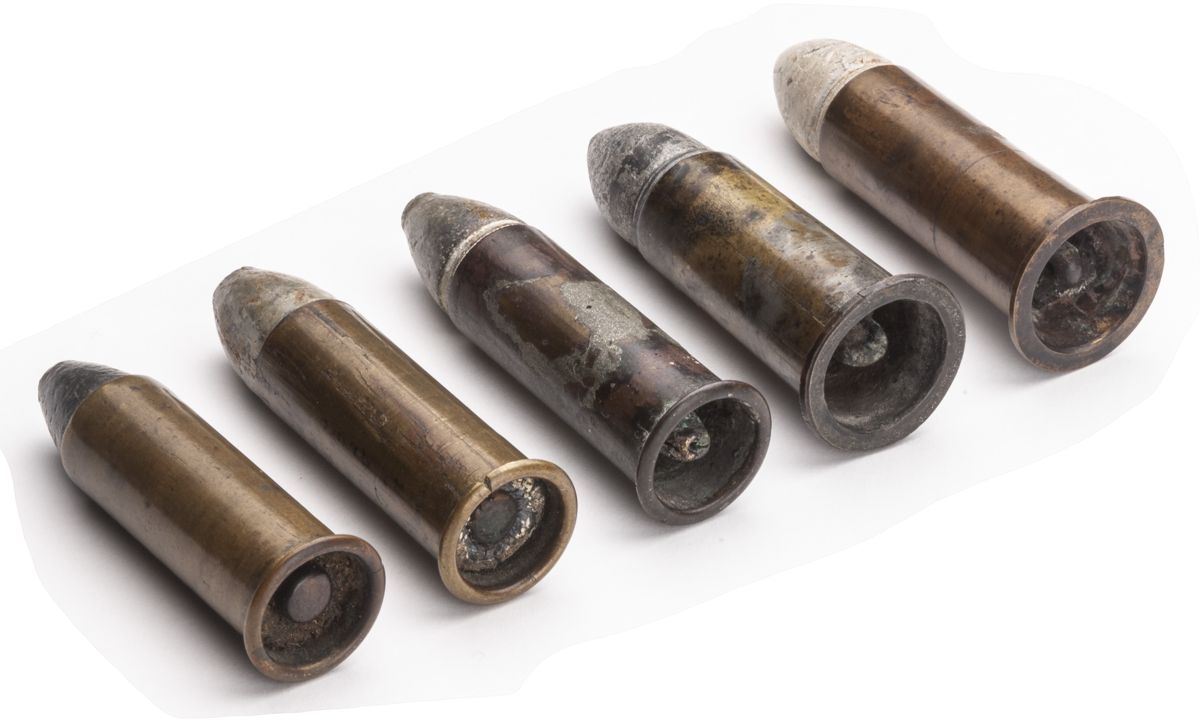
The world’s first self-priming center fire metallic cartridge was relatively simple in concept: soldered inside a rolled brass cartridge were metal straps forming an anvil on which an ordinary percussion cap was mounted. The only difficulty lay in the new tools and precision machinery required for mass producing them, hardly a problem in the North, but quite a problem in the South. Left to right: Two exceedingly rare .54-caliber cartridges made by the Frankford Arsenal for the U.S. Model 1841 alterations, with remains of their rubber gaskets intact, a .50-caliber cartridge made by the State Military Works in South Carolina, a .56-caliber cartridge made by Muzzy and Company, Worcester, Mass., and a .58-caliber cartridge of unknown origins. Excavated Morse carbine cartridges have been recovered from battlefields south of Petersburg, and Brandy Station, Va., Bentonville, N.C., and in the areas of fighting near Aiken, S.C. among others.
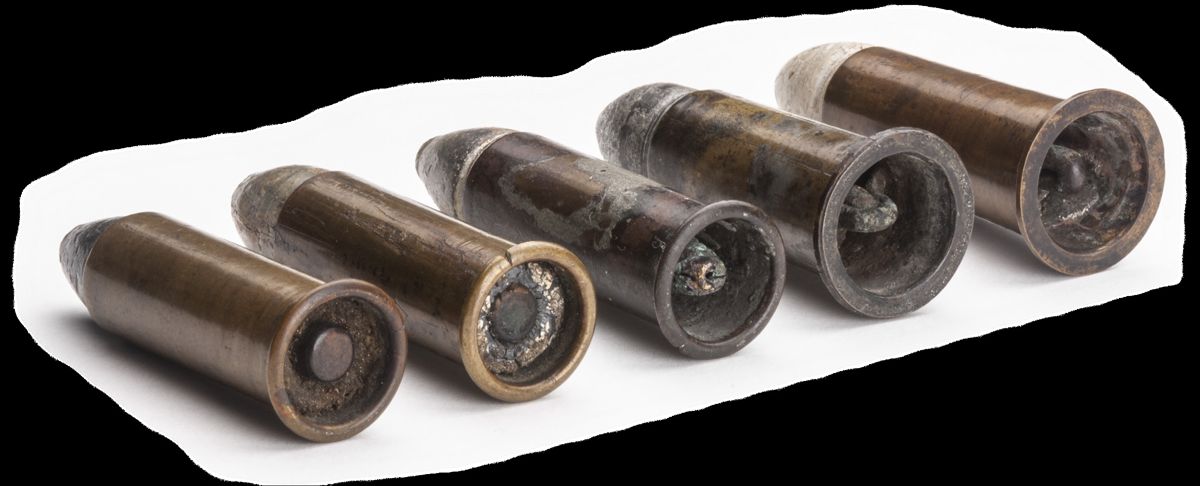
Morse brass cased .50 caliber cartridge.
“In these drawings, A denotes the tubular case or body of the cartridge, such case being formed open at both ends and with an annular shoulder, a a, extending around its rear end, as shown in the drawing. B is an expansible head, which is made of thin metal, and somewhat in the shape of a cup, and so as to slide and fit into the rear end of the tubular case A. Within the said case A there is arranged a furcated tige, C, which consists of a wire bent, as shown in Fig. 3, and having the two extremities of its prongs b b soldered or otherwise properly fastened to they internal surface of the case A. The middle part or nipple of the tige may be formed so as to receive a percussion-cap, as the nipple of a gun-lock usually receives the same. Preparatory to loading the cartridge a percussion-cap is to be placed on the tige, or, instead thereof, the inner surface of the expansible head may be coated with percussion-powder or paste. This having been done, the expansible head B is to be inserted within the case, and the latter filled with a charge of powder and shot or ball, as circumstances may require. After this has been accomplished the cartridge is to be inserted within the open breech of a gun-barrel in such a manner that the shoulder on the case or body of the cartridge may rest against the rear end of the barrel. If we suppose the gun to be furnished with a hammer arranged so as to strike on the expansible head or against it when the trigger of the gun-lock is pulled backward, a part of such head will be driven againstthe tige, and so as to cause the percussion-powder to be exploded and fire the load of the cartridge, the lateral expansion of the head B, within the body A, being sufficient to prevent the smoke and flame of the discharge from escaping back between them, and also to expand the rear part of the body A, so as to perfectly fit the bore of the gun.”
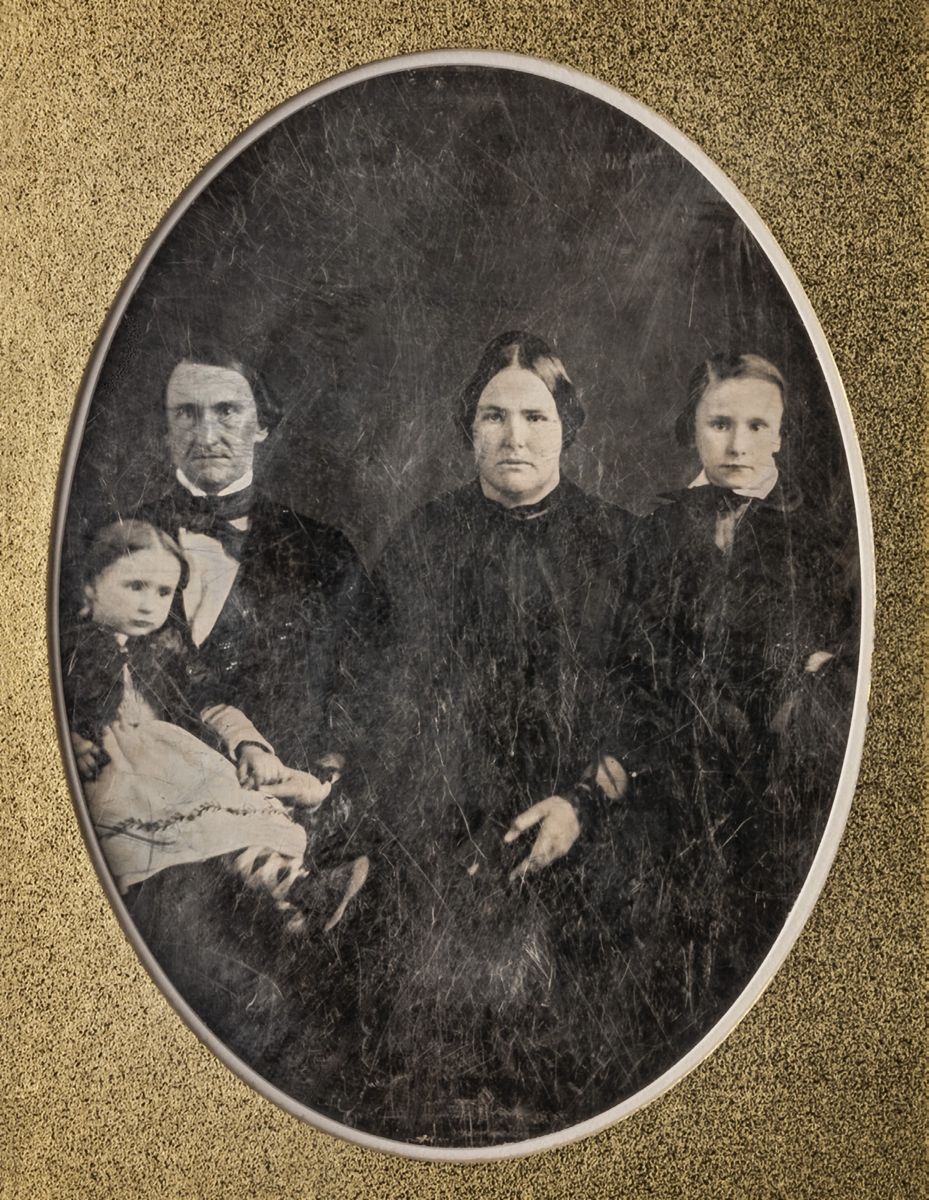
Daguerreotype of George Woodward Morse and family in Louisiana (1853). Left to right: Morse with his daughter, Lelia Everiste; wife, Marianne; and son, Peabody Atkinson. Courtesy Atlanta History Center.
“Morse’s Rifles and Pistols.” The Macon Telegraph (Macon, Georgia), Thursday, June 20, 1861, page 2.
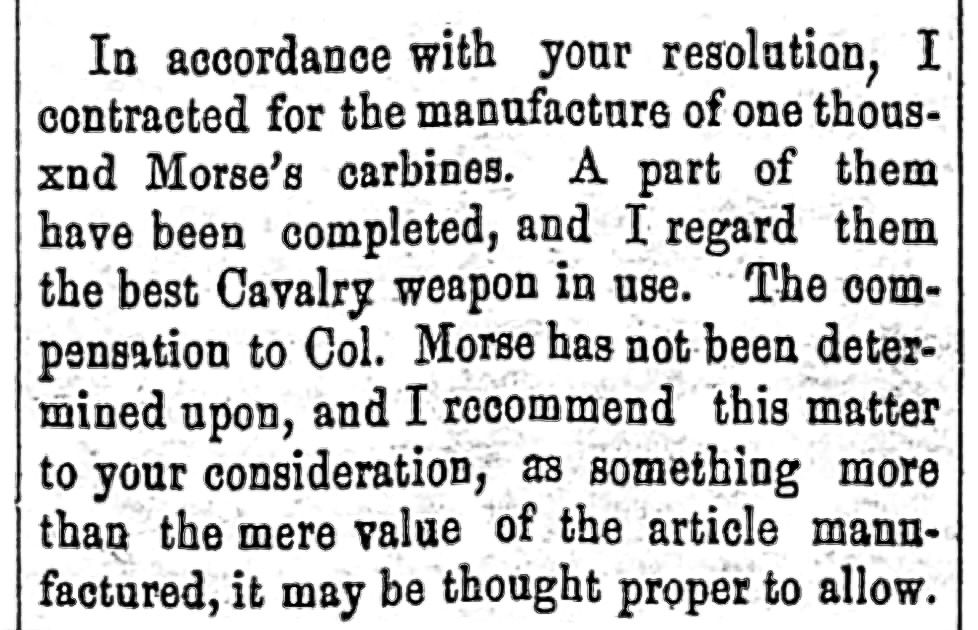
Yorkville Enquirer (York, South Carolina), Wednesday, Dec. 2, 1863, page 1.
Recommended Readings The Confederate Morse Carbine: Myth vs. Reality, by Peter Schiffers, Andrew Mowbray Publishers, Inc., 2017 The Best Gun in the World: George Woodward Morse and the South Carolina State Military Works, by Robert S. Seigler. University of South Carolina Press, 2017. Confederate Odyssey: The George W. Wray Jr. Civil War Collection at the Atlanta History Center, by Gordon L. Jones, PhD., University of Georgia Press, 2014.
About the Author Shannon Pritchard has authored numerous articles relating to the authentication, care and conservation of Confederate antiques, including several cover articles and is the author of the definitive work on Confederate collectibles, the widely acclaimed Collecting the Confederacy, Artifacts and Antiques from the War Between the States, and is co-author of Confederate Faces in Color.