
Dance Brothers Confederate Navy Revolvers
By John Sexton · Originally published September-October 2022 · pp. 54–70
J. H. Dance & Company, a metal and wood manufacturing company, was founded by James Henry Dance, his brothers Isaac C., David Etheldred, and George Perry across the street from their home. James Dance enlisted in the Brazoria Volunteers at the War’s outset and advanced to the position of first lieutenant in the 35th Texas Cavalry. Despite enlisting, his brothers George, David, and Isaac were, by early May 1862, detailed to their Columbia steam plant due to their skills and abilities. The Dance’s believed that the greatest way they could help the South would be to manufacture firearms. The Dances’ primary duties at first included grinding cornmeal, fixing wagons, and mounting cannon for the Confederate Army. George Dance wrote to Governor Francis R. Lubbock in April 1862 and asked for a $5,000 advance for machinery to produce revolvers. He stated he would be able to make 50 revolvers per week. Expectations were high for most Confederate “revolver start-ups,” and none lived up to expectations especially in early months; Griswold & Gunnison, Spiller & Burr, and Dance did not realize the rigors of producing revolvers that would be fit for military service. Colt six-shooters were firmly established on the frontier by the Civil War, and in the hands of a skilled horseman, the revolver’s firepower was the best available at the time. Dance emulated the two most popular Colts, the .44 caliber dragoon and .36 caliber navy in their unique designs. The fact that George Dance’s cousin Mattie Duff wrote in a July 5, 1862, letter that “the boys hope they will soon get some three or four of their pistols done” suggests the slow learning curve in manufacturing experienced by other Southern makers. The Dances were able to deliver 12 revolvers that passed inspection to the San Antonio Arsenal by October 2, 1862; production would become established now. Early 1863, the Dance Pistol Factory boosted labor force and productivity. By end of 1863, the Dances decided to hand over control of their business to the Confederate authorities. The brothers believed it was probable they would close the firm soon, and George left for Houston “to see if he can make it into a government operation,” the boys remarked, according to their cousin Mattie. “He believes that it might succeed,” George added. When East Columbia stopped making revolvers on December 10, 1863, Mattie stated that she had spent the week prior “about town all week persuading the guys to depart.” The Federal capture of Matagorda Island, just off the Texas coast near to Brazoria County, led to assuming the county was about to be invaded. The government purchased Dance machinery was moved out of harm’s way, near Anderson in Grimes County, where the Confederate government had an armory, arsenal, and laboratory to make cartridges, powder, artillery shells, repair arms, and manufacture pistols. On February 7th, 1864, Uncle Harrison told Mattie Duff that “they were not yet ready for making pistols but soon will.” One of the final documented revolver shipments was a 25gun lot of Dance revolvers from Anderson to the Houston Depot on April 18, 1865. About 400 six-shot Colt-pattern revolvers were made in total by Dance Brothers and later at the government pistol factory still run by Dances.
DANC E NAV Y M ODEL DETAI LS Most articles and books on Dance revolvers concern the iconic Dragoon revolver made without recoil shields. The author’s last article for Military Antique Collector, Vol. 1, No. 3, covered only Dance production of .44 Dragoon revolvers. Southern gentleman soldiers always preferred the .36 caliber navy-sized revolver. Indeed, such Southern luminaries as Robert E. Lee and Jefferson Davis carried Colt navy revolvers prewar while serving in the United States Army. All other primary Confederate pistol contractors, including Griswold, Spiller & Burr, Leech & Rigdon, Rigdon & Ansley, Columbus Firearms, and Schneider & Glassick of Memphis, made only navy revolvers. The navy revolvers were perceived as more elegant with finer lines. Southern states also bought Colts in large quantities in late 1860 and early 1861. With war imminent, thousands of “Hartford” Colt navies were shipped south. Even when large numbers of dragoon & army revolvers were ordered for cavalry, navies were included in the orders for officers.
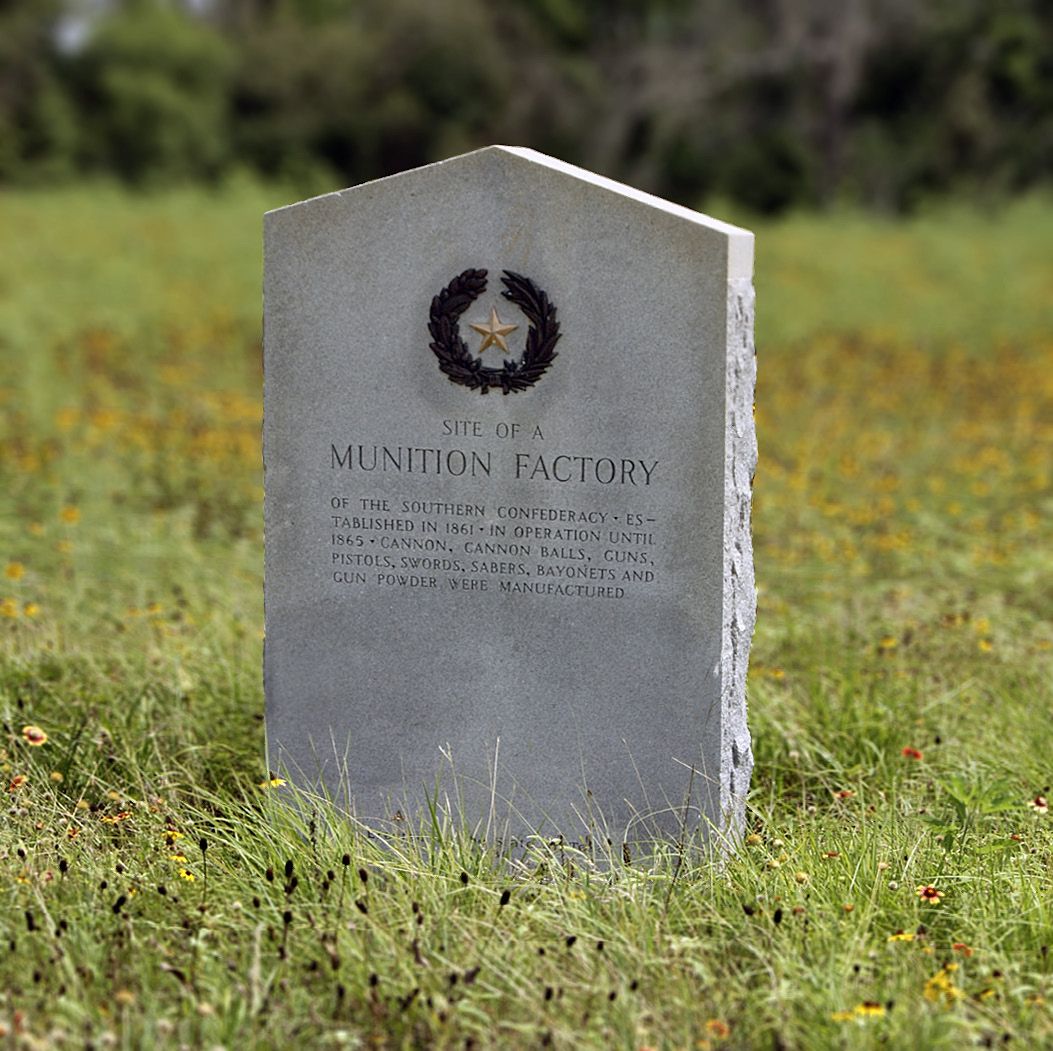
Anderson, Texas, marker for Dance factory: Site of a munition factory of the Southern Confederacy. Established in 1861. In operation until 1865. Cannon, cannon balls, guns, pistols, swords, sabers, bayonets and gun powder were manufactured. (1936)
This article explores only the Dance variations and chronology of manufacture utilizing the known surviving Dance navy revolvers. Fake Dance navies are discussed in texts as early as the 1940s by Sam Smith in Gun Collector magazine. Dance revolvers and Walker Colts have such a mystical aura, especially in Texas, that many collectors lusted for one; ergo, many were “made” to fill the demand.
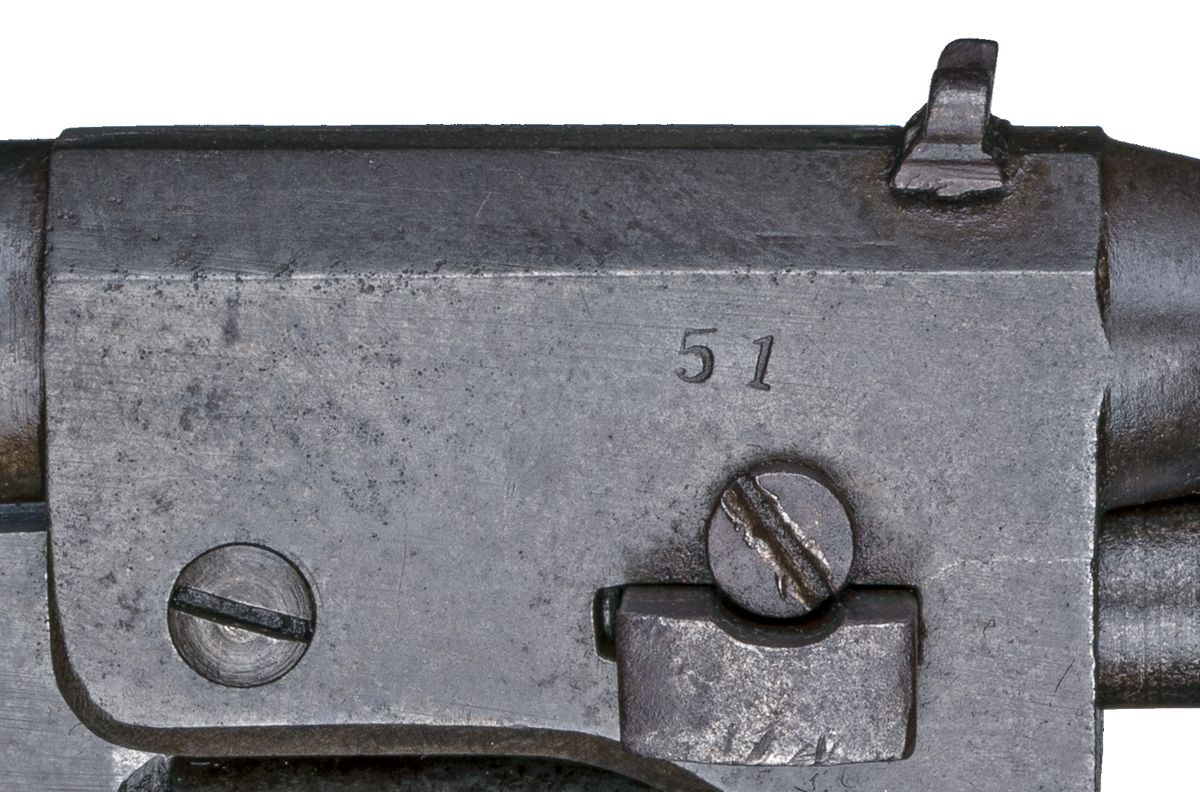
SN 51
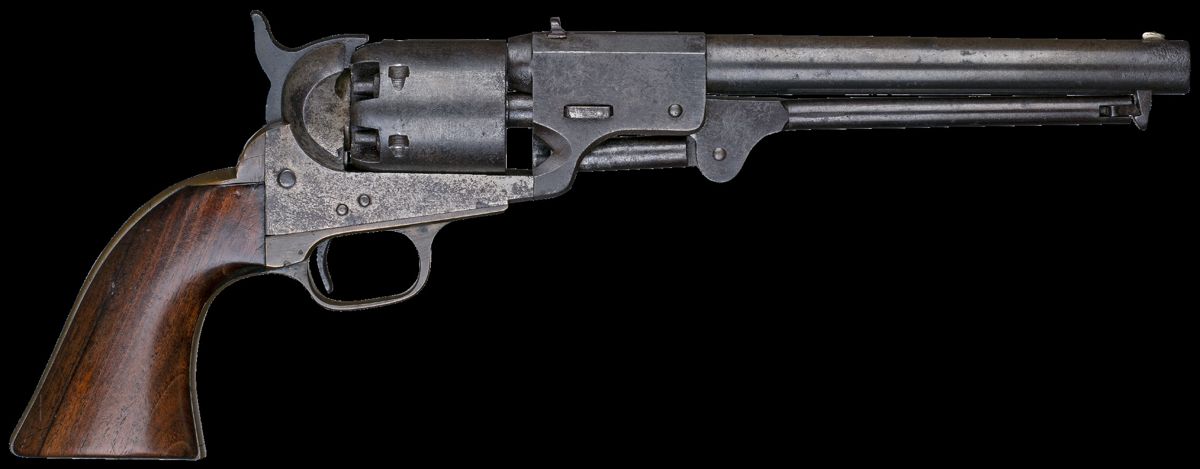
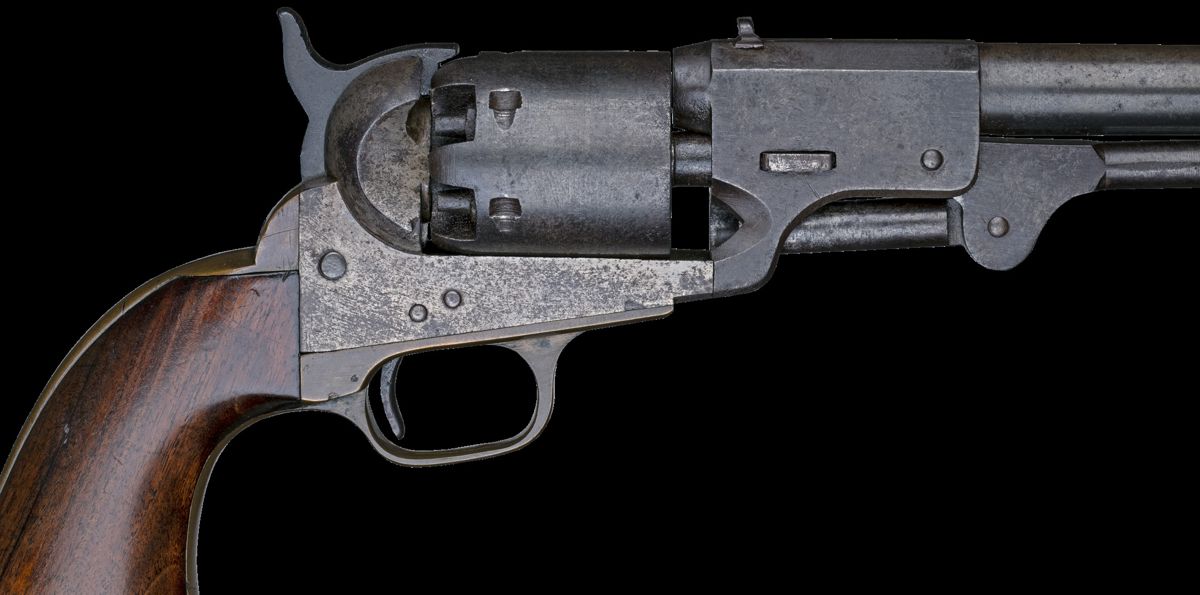
This specimen is the finest Dance navy known for condition. Though this gun was known to collectors in the 1950s, as was SN 50, both were thought to be Columbus Firearms pistols by such early collectors/dealers as Harry Brooks and Red Jackson. William Albaugh identifies this revolver as by an “unknown maker” in his 1957 text Confederate Arms. The presence of recoil shields was not a known Dance feature until later scholarship revealed this detail.
This gun was sold by James Julia Auctions in March 2016 for $149,500. Photographs by Jack W. Melton Jr.
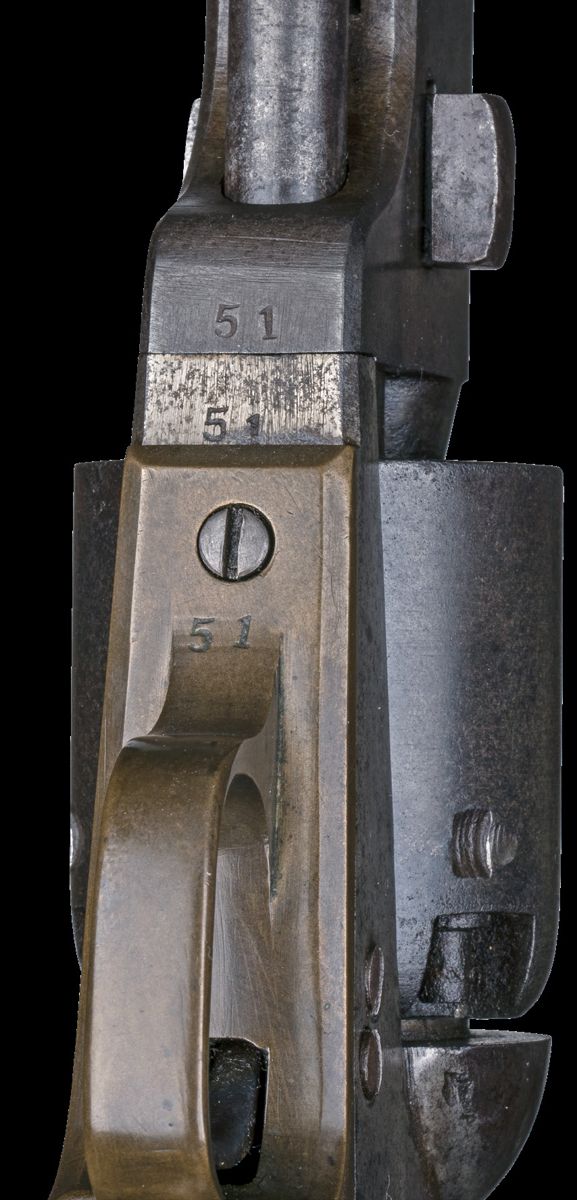
SN 51
SN 51
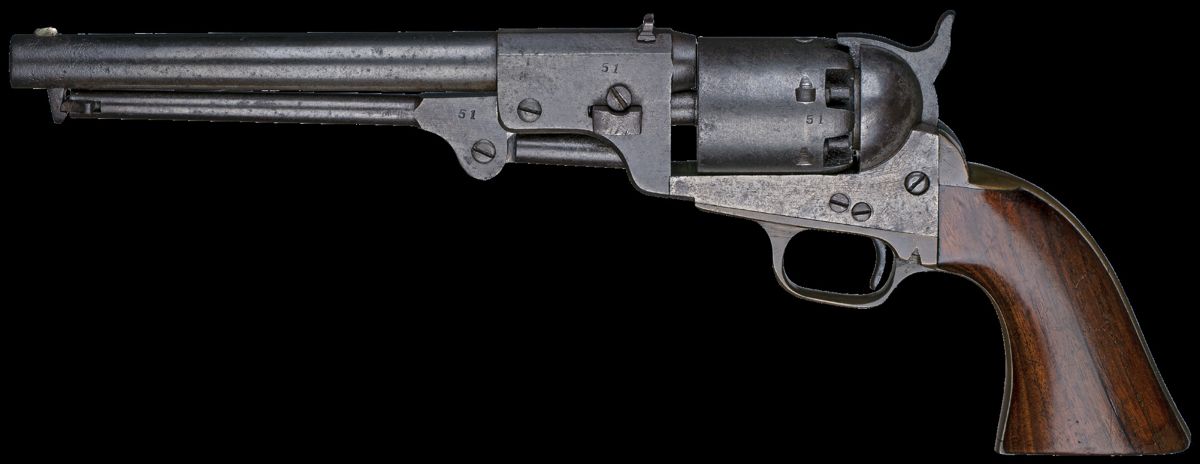
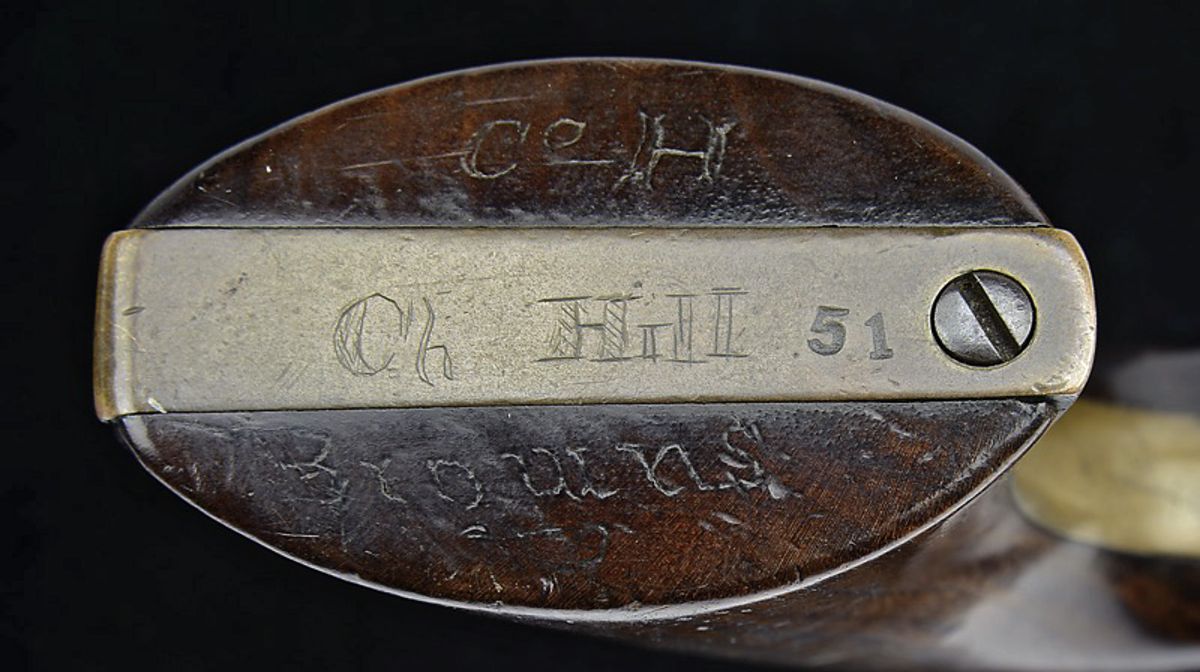
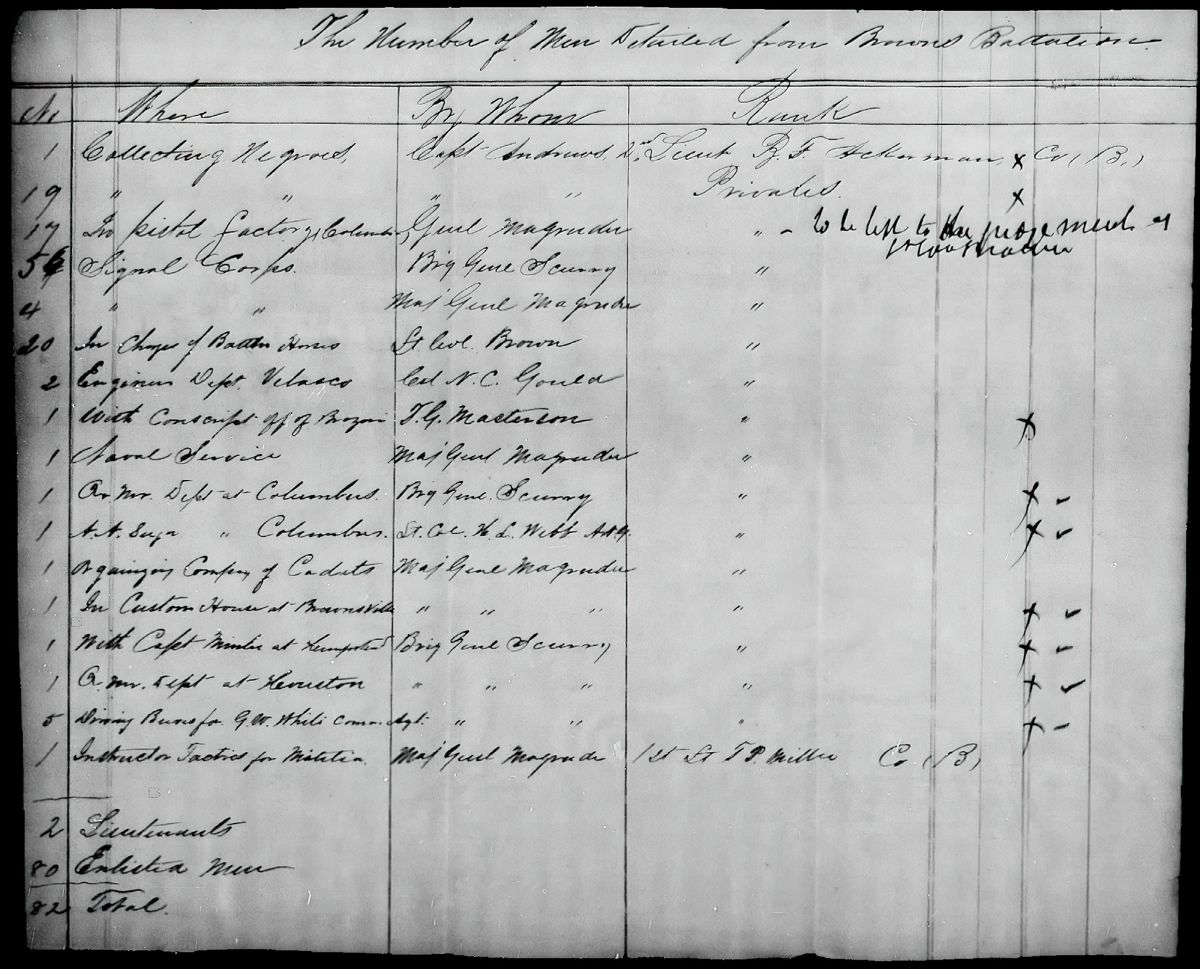
Dance navy SN 51 with recoil shields is identified to Corporal Charles Hill, Brown’s 35th Texas Cavalry. The inscription on butt reads “Ch HILL / Co H / Browns.” Brown’s 35th Cavalry Regiment was reorganized with 927 men in October 1863 by consolidating the Brown’s and Roundtree’s Texas Cavalry Battalions. Colonel Reuben R. Brown was commanding officer and originally raised the 35th. The unit served in the Trans-Mississippi Department; in January 1864, it mustered 29 officers and 409 men. It skirmished in Texas and was on scouting duty along the coast. Many Brown’s cavalrymen who were skilled mechanics, carpenters, etc. were detailed to the Dance pistol factory and later the Anderson government pistol factory.
September 19, 1863, roll of men detailed from Brown’s 35th Texas Cavalry, 17 of whom were assigned to the pistol factory at Columbia and later at Anderson. Paul Janke, in his May 1948 Dance article, states navy model Dances are “a rarity among rarities.” Bill Albaugh ends his Dance chapter, “In conclusion, let us remind any prospective purchaser of a Dance revolver to bear in mind that the old adage, “All that glistens is not gold” could be changed into “All flat framed percussion pistols are not products of the Dance Brothers.”
Anderson production is still my hypothesis, and more study is needed to be certain. Comparison of dragoon SN 48, made in Columbia, and navy SN 48 would help confirm this as the two SN 48 guns have the only duplicated SNs on both a dragoon and navy. Good photos of these and other survivors would be appreciated and may shed more insight as to where they were manufactured.
There are only 13 documented navy caliber Dance revolvers, all with round barrels. The author is confident of the authenticity of 11 complete examples and would like to have good photos or examine SN 111; it has what is most likely a replaced iron trigger guard and backstrap. There are excavated Dance navy parts, including unfinished frames with and without recoil shields, found at the Texas Confederate Ordnance Works in Anderson and at the government pistol factory.
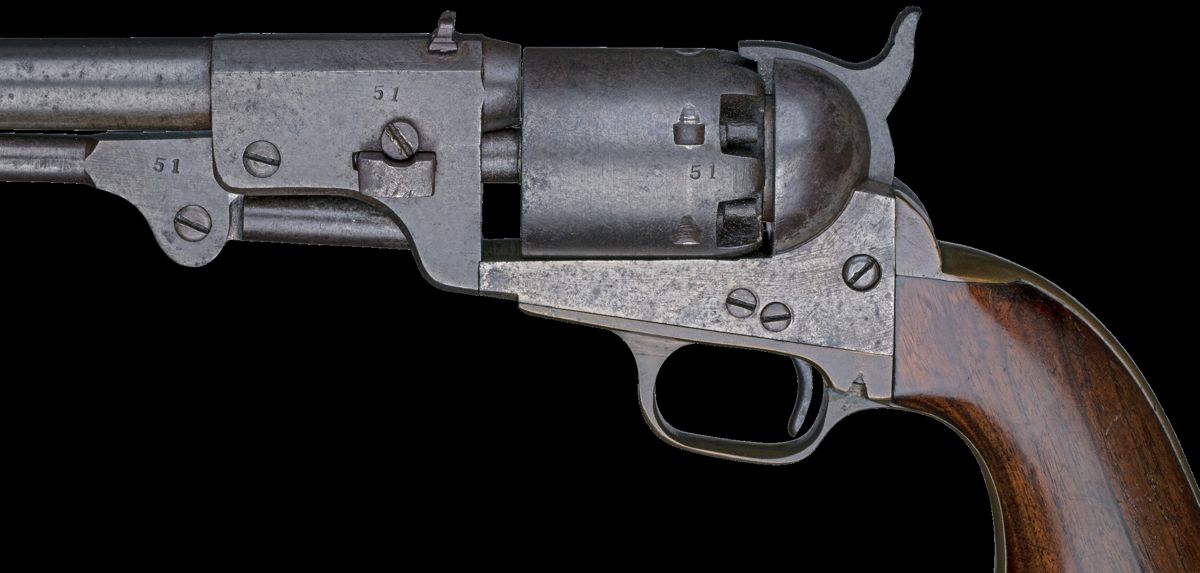
The lowest known surviving navy serial numbers; 21, 47, 48, 49, 50, and 51, have recoil shields. All other Dance navies are made without recoil shields. The highest two serial numbers known without recoil shields, 56 and 63, show the transition from “recoil shield” to “no recoil shield,” as both have a vestigial cut line on the recoil shield.
The author believes Dance navy revolvers were made in Anderson starting in 1864. The only documented Dance dragoon with recoil shields was made in Anderson and excavated navy parts from Anderson support this theory. Though no navies have the incised cylinder line or elliptical grips found on Anderson-made dragoons, all are wellmade with oval grips and beveled frame-to-barrel housing interfaces. These features are like Columbia-made dragoons.
The other navies without recoil shields, known as the standard configuration, are; 83, 91, 93, 111, 119, and 135. There are a few other navy serial numbers recorded on other lists, that are questionable. The author would like to see photos or examine any SN not listed here. The last navy SN added by the author was in 2002 (SN 91), and all the post2002 serials that have turned up and have been examined by the author are “highly suspect” or outright fakes. The author has studied several very clever forgeries that have made it into the market, some old and some recently made.
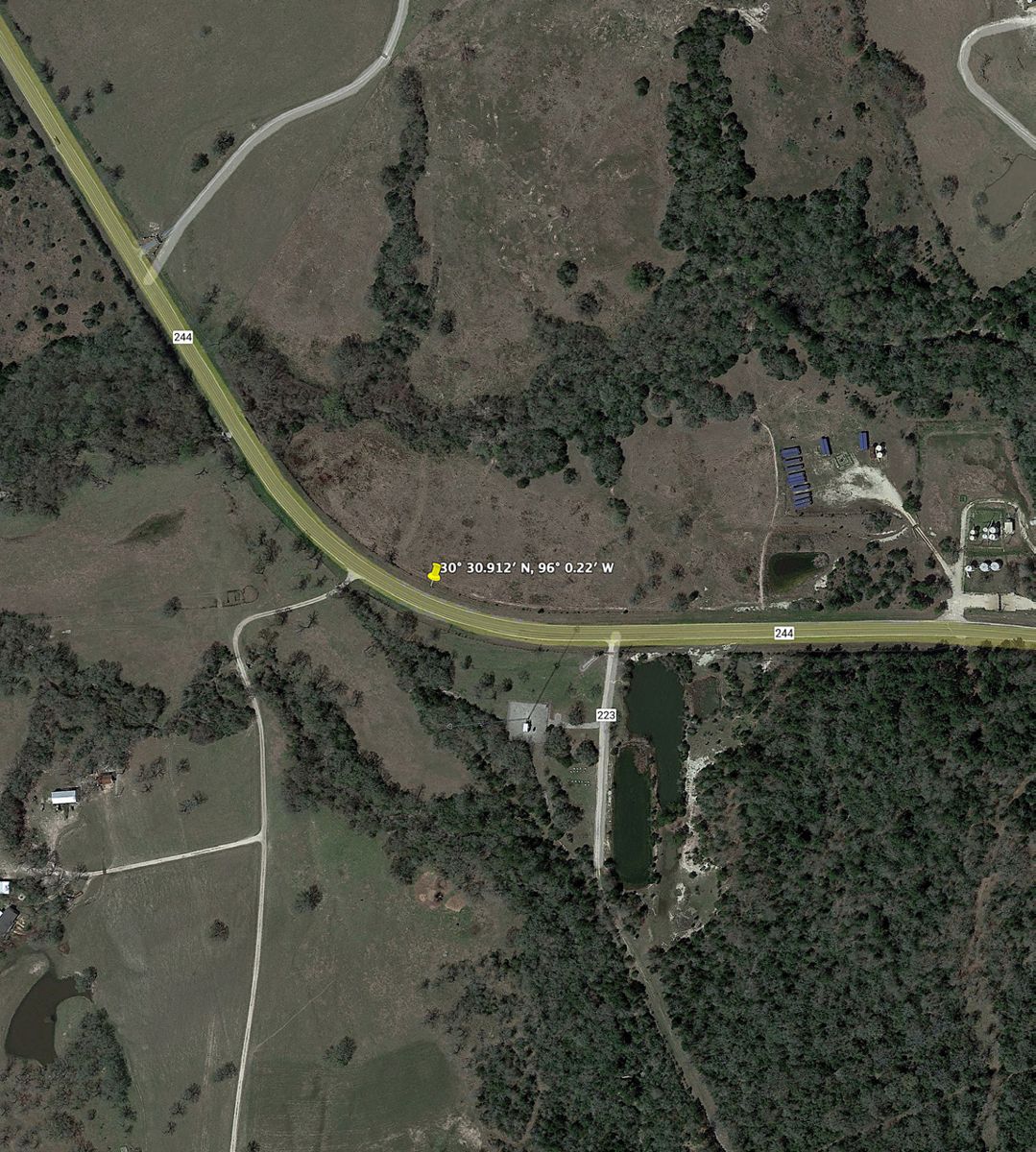
The Dance Factory site is located less than 2 1/2 miles northwest of Anderson, Texas, on highway 244, off highway 90 (see yellow pin).
General Land Office map of Grimes Co., Texas, ca 1880. The Dance Factory was in business until 1900. Courtesy Library of Congress.
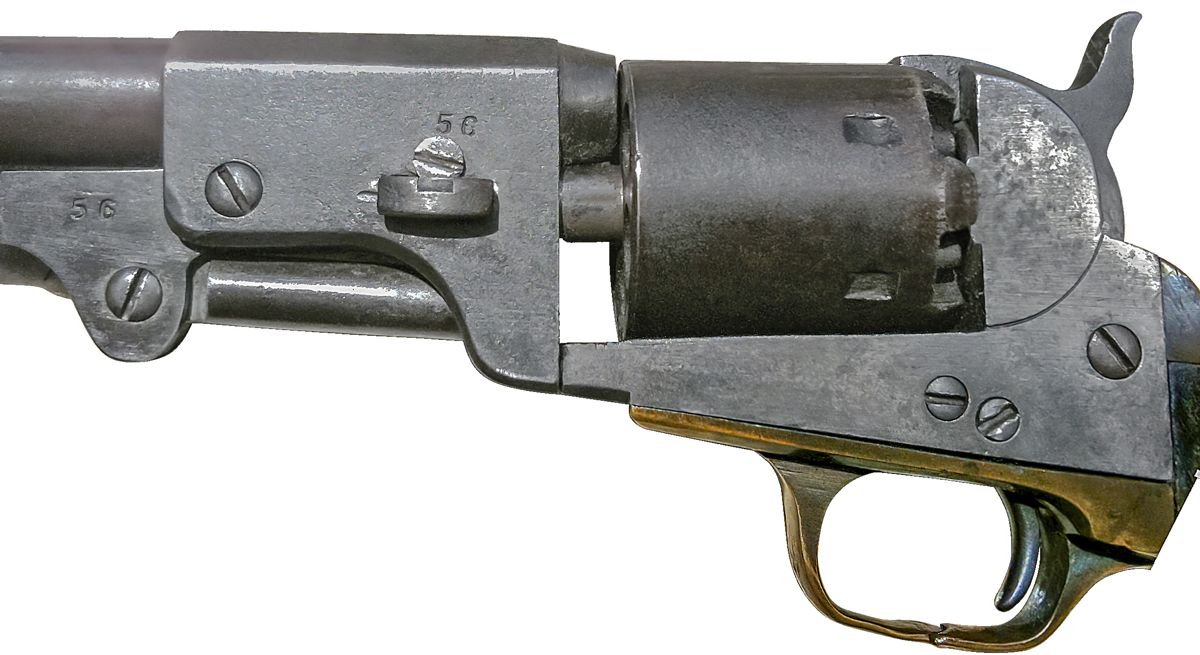
SN 56
All authenticated Dance navies prior to SN 56 have recoil shields while all above SN 63 lack recoil shields. SN 56 and 63 navies both show a transitional feature, a vestigial cut line outlining where the recoil shield would have been. SN 56 is the lowest SN without recoil shields, in the standard Dance flat frame design. Note that SN 56 shows vestigial recoil shield line clearly.
SN 63
SN 63 (ex-Ed Simmons collection) like SN 56 has vestigial recoil shield line.
SN 63
SN 63 stamped on frame, barrel, trigger guard, and hammer, showing cut line in frame unique to these transitional Dance navy revolvers.
Photographs by Jack W. Melton Jr.
SN 91
This is the finest example of a “no recoil shield” Dance navy of the seven known survivors. This was the last authentic Dance navy added to the survey in 2001. Since then, the author has personally viewed at least four fake navies, which required detailed scrutiny, as the forgers are very good.
Navy SN 91, sold at James Julia Auctions in March 2016 for $115,000.
SN 91
SN 91 shows little use, sharp edges with traces of original finish.
Photographs by Jack W. Melton Jr.
SN 119
SN 119 is located in the Milwaukee Public Museum, Nunnemacher collection. It was the first identified Dance navy revolver and the only example known to the collecting community before 1948. (Milwaukee Public Museum)
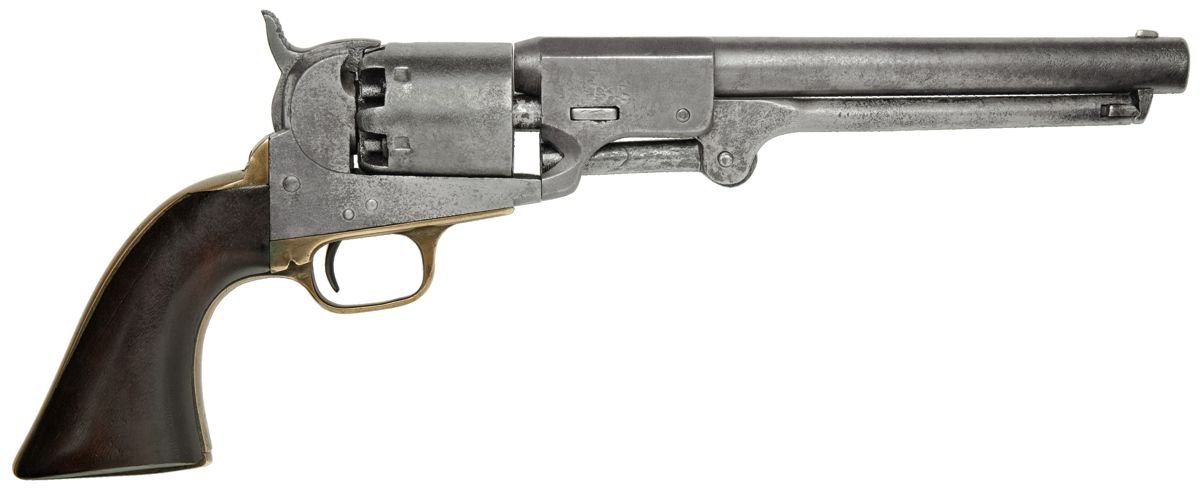
SN 135
SN 135 is the second Dance navy documented, and the highest known serial number. It was owned by pioneer Confederate collector Cliff Young and sold at Cowan’s Auction in 2016. This revolver is featured in a Gun Collector article by Sam Smith in 1949. Photos courtesy Cowan’s, a Hindman Company.
FAKE DANCE NAVY
A fake Dance navy. The cryptic <> diamond looks very convincing. It fooled a prominent & knowledgeable collector in the1980’s, who sold it for $35,000. Several very convincing fake navies have been sold; one went for over $100,000 in 2010. This pistol SN <> sold for $4,406.25 cataloged as a fake at Poulin Auctions, lot 3007, on November 8, 2021. Photos courtesy Poulin Antiques & Auctions, Inc.
dance army and navy comparison
SN 269 is by far the finest condition Dance .44 caliber army revolver and probably the finest condition surviving Dance. It retains much of its brilliant blue finish and shows little use. This gun is typical of Anderson manufacture, but is more refined and has an incised cylinder line, and elliptical grips, and no extra beveling.
SN 91 is the finest example of a “no recoil shield” Dance .36 caliber navy revolver of the seven known survivors.
S E L E CT E D B I BLIO G R A PH Y: Albaugh, William, Confederate Arms, 1959 Albaugh, Benet, and Simmons, Confederate Handguns, 1963 Anthony & Hill, Confederate Longarms and Pistols, 1978 Bridges, Ron, Dance Brothers. North-South Trader Jan/Feb 1974 Edwards, William, Civil War Guns, 1962 Gary, William, Confederate Revolvers, 1987 Gary, William, Texas Pistol Makers of the Confederacy. ASAC Bulletin 55, pp. 29-39, 1986
The Dance & Brothers shop at East Columbia, Texas.
Hartzler, Dan, Confederate Presentation & Inscribed Swords and Revolvers, 1988 Hirsch, Chris, Texas Gun Trade 2008 Holloway, Carroll, Texas Gun Lore, 1951 Janke, Paul, The Dance Brothers Revolvers. The Gun Collector No. 22, pp. 173-177, May 1948 Maxwell, Sam, Dance Brothers Revolver. The Gun Report, November 1978 National Archives, archives.org Rogers, Flem, .44 Caliber Flat Frame Dance Pistols. ASAC Bulletin 106, pp. 2-9, 2012 Salzer, Dick, The Dance Brothers Revolver, A Texas Legend. Arms Heritage Magazine, Vol. 2, No. 2, pp. 5-9, 2012 Sexton, John, Proprietary Database of Confederate Revolvers Smith, Sam, Survival Figures for the Dance Brothers Revolvers. The Gun Collector No. 22, p. 178, May 1948 Smith, Sam, Dance Brothers Revolver? The Gun Collector No. 24, p. 228, September 1948 Smith, Sam, The Dubious Dance. The Gun Collector No. 29, pp. 339-341, August 1949 Steuart, Richard, The Story of the Confederate Colt. Army Ordnance, Vol. XV, pp. 88-93 September/October 1934 Steuart, Richard, Firearms of the Confederacy, 1944 Whisker & Yantz, Arming the Glorious Cause, 1998 Wiggins, Gary, Dance & Brothers, Texas Gunmakers of the Confederacy, 1986
About the Author
John holds the highest designations as certified appraiser with International Society of Appraisers (ISA-CAPP) & accredited senior appraiser with American Society of Appraisers (ASA) specializing in Civil War memorabilia. He authenticates and evaluates other rare and valuable historic items as well. He is coauthor of the book Confederate Bowie Knives (2012) with Jack Melton and Josh Phillips, published by Mowbray Publishing Inc., and author of many periodical articles on Confederate arms. John’s contact information: website: www.civilwarappraiser.com, email civilwarappraiser@gmail.com, cell 770-329-4984. John Sexton
IMAGES CAPTURED IN TIME
PRIVATE EDWIN LANDVOIGT The left seated soldier is identified as Edwin Landvoigt, a member of the First Confederate Cavalry Regiment .The other two are unidentified soldiers in uniform, one with sword. From newspaper clipping on original glass cover: “He enlisted in the Confederate A[…]at the first call for volunteers, serving through the […]iod of the war. He was a gallant soldier, as has been attested many hundreds of times by those with whom he served. He participated actively in the great battles of Shiloh, Blackland, Fort Donelson, Farmington, Stone River, Shelbyville, Perryville, Lookout Mountain, Ringgold Gap and Fort Morgan, besides many minor engagements, and was among the captured at the latter place. He bravely followed Wheeler in his famous raid through Kentucky and Tennessee, and endured the hardships and sufferings of that cruel period, uncomplainingly and unself…” Liljenquist Family Collection of Civil War Photographs (Library of Congress).
IMAGES CAPTURED IN TIME “COLONEL EDWIN LANDVOIGT. Colonel Edwin Landvolgt, vice president of the Times Herald, published at Forrest City, Arkansas, was born in what is now the District of Columbia, then a part of Virginia, June 11, 1840, his parents being George and Dora (Kramer) Landvoigt. The father was a native of Austria, while the mother was born in Bremen, Germany. Coming to the United States in young manhood, George Landvoigt located in Baltimore, Maryland. He had previously been a soldier in the Austrian army and he was a botanist of renown, devoting his life to botanical work and to the conduct of a greenhouse in Baltimore until he removed to Washington, D. C., where he continued his activity along the same line, becoming recognized as one of the foremost botanists in the capital city. He entered the United States army with the rank of captain, serving with the regulars. He went to Mexico with the American forces and was killed during the progress of the Mexican war. His wife had come to the United States when but six years of age In company with friends, her parents having previously died. She was reared in Washington, D. C., and was there married. She lived to the advanced age of eighty-seven years. In their family were four children: Charles E., who served as a surgeon in the Confederate army and is deceased; John A., who was a member of the
Federal army during the Civil war and is also deceased; Doris W., who served with the Federal forces; and Edwin. The last named attended a private school in Washington and was also a student in the Georgetown College for a year. He afterward entered the employ of the Buell & Blanchard Printing Company In Washington and while thus employed he set up captions for Uncle Tom’s Cabin. He also acted as proof reader on Hinton Helper’s Impending Crisis of the South. In 1858 he went to Memphis, Tennessee, where he took charge of the Job office or the Eagle-Inquirer, being thus connected until the war, when he enlisted In the Confederate army, becoming a member or Wicks Mounted Infantry. Thus two of the four brothers of the family were In the Federal service and two with the Confederate forces. Colonel Landvoigt was wounded at the battle of Perryville and sustained two wounds at Fort Morgan, where he was captured. He was afterward taken to New Orleans and Ship Island, also to Point Lookout and to Castle William in New York, thence he was sent to Elmira, New York, where he was held as a prisoner of war until the close of hostilities. He afterward returned to Washington, D. C., and later again went to Memphis, where he entered the service or Whitmore Brothers as foreman on the Evening Ledger. In 1885 he came to Forrest City, Arkansas, where he purchased the Forrest City Times, which had been established by Bill Oury in 1871. This was a weekly paper, which he continued to publish until 1919, when he organized a stock company and retired from active management. He had previously consolidated this with the Herald under the name of the Times Herald. He remains vice president of the company, owning stock, but is not active in its control. In connection with newspaper publication he also did commercial printing and built up a business of gratifying proportions, having devoted the greater part of his life to newspaper interests. Colonel Landvoigt was married in young manhood to Miss Fannie White, a native of Kentucky, who died in 1902, leaving two children: Nettie, who is the widow of Charles Power of Los Angeles, California; and Dora, deceased. Colonel Landvoigt is today [1922] the oldest member of the Arkansas Press Association and has frequently served as a delegate to various meetings of the press association in this and other states. His political allegiance has always been given to the democratic party and his discussion of vital political themed through the press has been an influencing factor in molding public thought and opinion on many occasions. Fraternally he was connected with the Knights of Honor, while his religious faith is indicated by his membership in the Episcopal church. He has lived through many momentous periods
IMAGES CAPTURED IN TIME in the history of the country, watching its development since the beginning of the fifth decade in the nineteenth century and at all times his influence and aid have been given on the side of progress and improvement and in behalf of those plans and projects which he believed would prove of public benefit and of worth to community, common-wealth and country.” (Source: Centennial History of Arkansas, Vol. 2, 1922, pp. 97-98) In a letter dated February 15, 1927, Ed Landvoigt of Forrest City, Ark., expressed his vehement displeasure at being referred to as a “conscript” in the pension records. He included the following in his complaint: “Volunteered in Memphis, for THREE YEARS OR THE WAR, in Capt. Wicks Mounted Riflemen in early part of 1862. Was attached to Col. Clay King’s regiment, which was under the name of First Confederate Cavalry, because of the regiment being three years or the War termers. We seen service at Perryville, Ky., Munferdsville, Ky., Shiloh, Lookout Mountain, McLemores’ Cove, Chickamaugh, Tunnel Hill, Ga., Raid in Sequasha Valley, Stone river, and innumerable minor fights. During 1863 was “transferred” to various duties as courier to Gen Wheeler, en. bragg and other, (And probably here where the word “conscripted” was mistaken for the word “transferee.” In the usual bungling they conscripted me and taken the oath of allegianse, neither of which true, so help me God. In 1864, field duty was a bit too strenuous, I applied and secured a transfer to the First Tenn Heavy Artillery, where I serve until captured. Was discharged at end of war at prison Elmyra. Memphis has been my residence since 1858, until I came to Arkansas. If it is consistent, I wish the Hon. body to eliminate the word “conscripted,” as I feel it as a blot on my war career.” His military records also allegedly mention the 6th Confederate Cavalry, 12th Confederate Cavalry, 16th Confederate Cavalry, Claiborne’s Regiment, Lay’s Regiment, and Company A of the 1st Regiment, Tennessee Heavy Artillery (Jackson’s) Confederate Cavalry, in addition to the First Confederate Cavalry. Ed Landvoigt, a Confederate pensioner, passed away on September 7, 1934 in St. Francis County, Ark.