
Jefferson Davis’ Capture Revolver
Courtesy Rock Island Auction Company · Originally published September-October 2023 · pp. 18–31
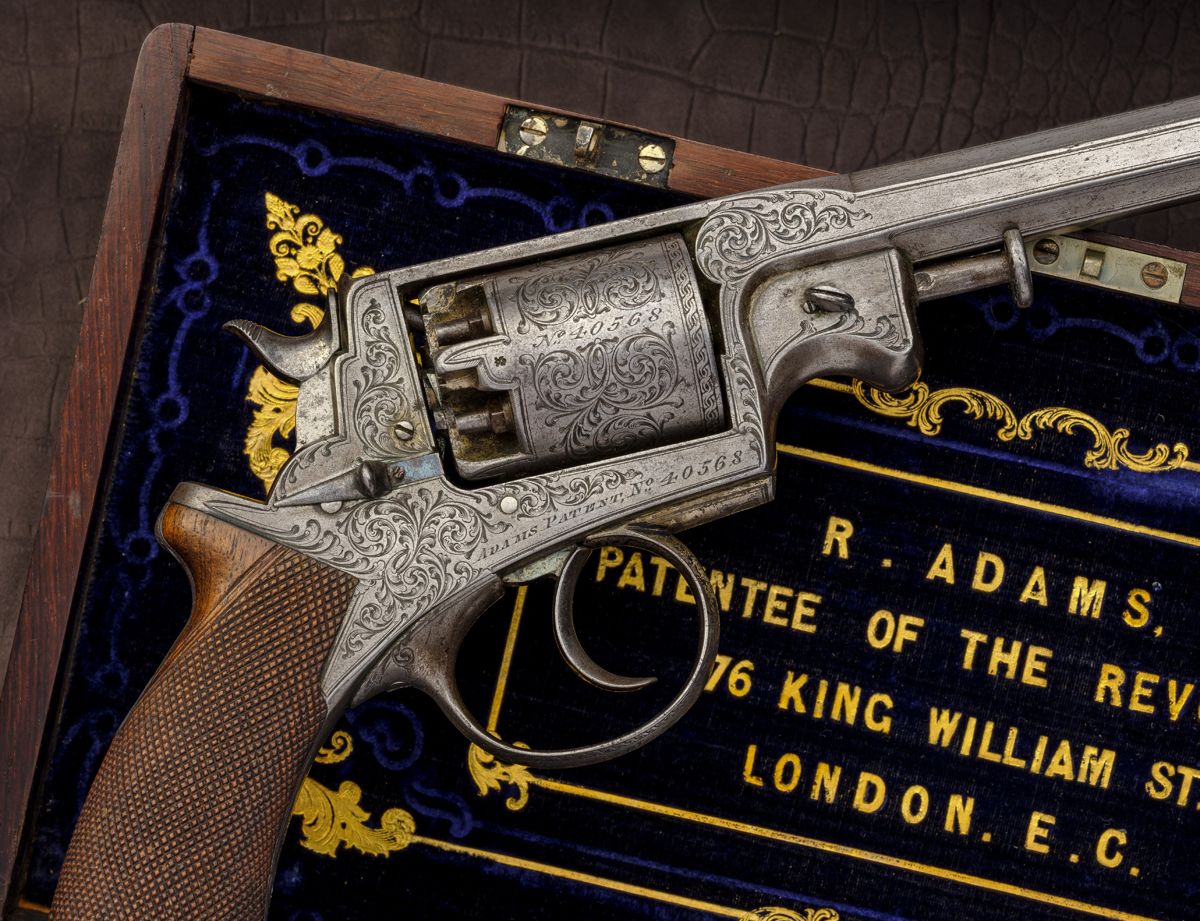
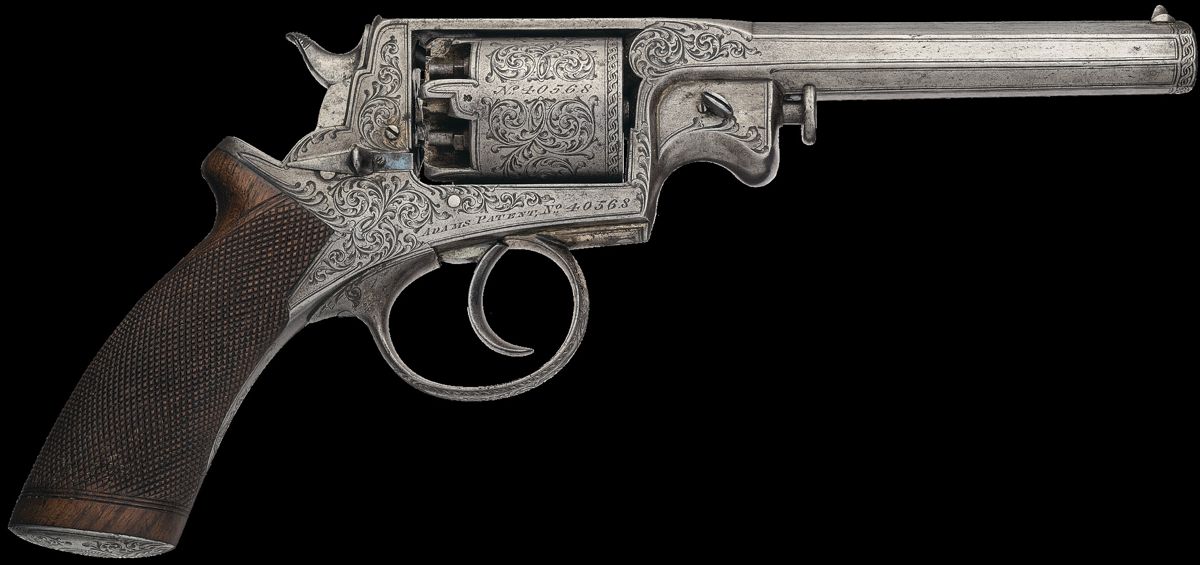
COURTESY ROCK ISLAND AUCTION COMPANY Left: Jefferson Davis, Senator from Mississippi, Thirty-fifth Congress, by Mathew Brady. (Library of Congress) Above: One of the most important war trophies from the American Civil War: Historic, finely engraved and silver-plated, Beaumont-Adams double action percussion revolver presented to Confederate States of America President Jefferson Davis by Robert Adams of London and personally surrendered to Union Cavalryman John Hines of the 4th Michigan Cavalry at the time of Davis’ capture on May 10, 1865. (Courtesy Rock Island Auction Company)
resupply the beleaguered Union garrison at Fort Sumter, Davis was in a quandary. Considering the fort Southern property, Secessionist politicians clamored for action. April 12, 1861, Davis reluctantly ordered the fort bombarded, marking the beginning of the American Civil War.
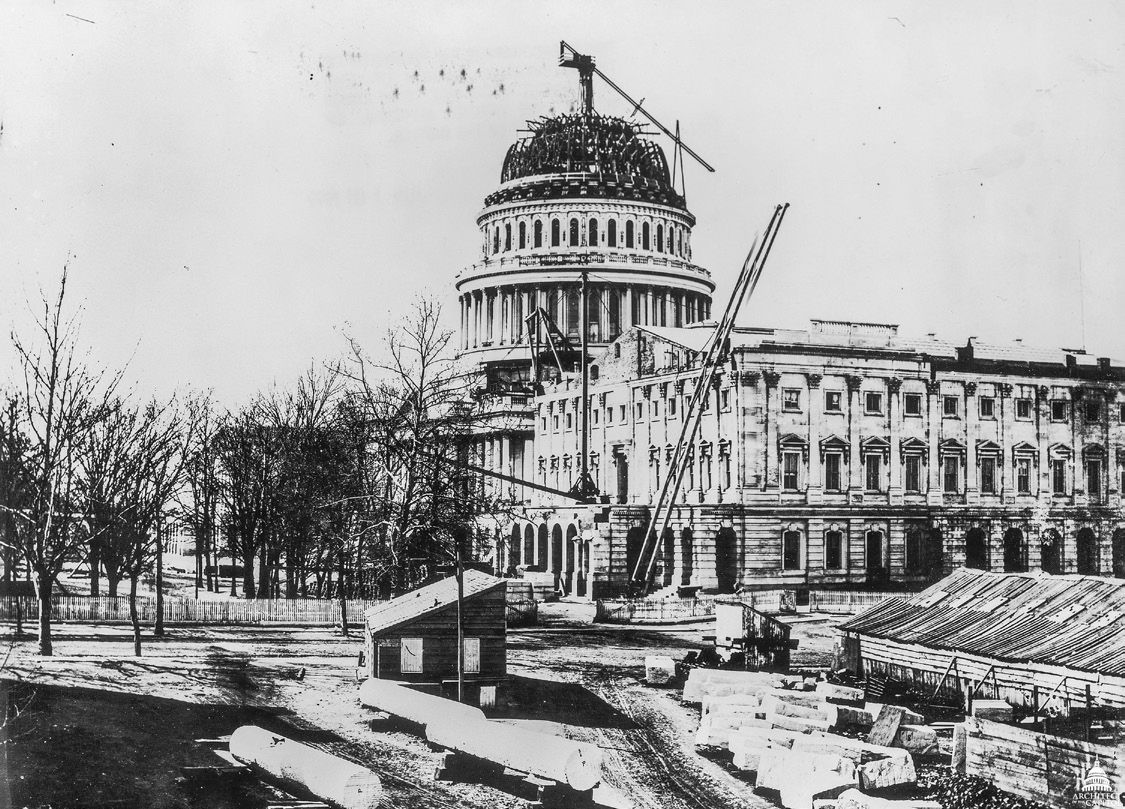
Construction of the U.S. Capitol Dome circa 1862. Going back to the antebellum era, Davis ran for the Senate again, was elected, and re-entered it on March 4, 1857. When South Carolina withdrew from the Union in December 1860, Davis opposed secession while still being a vocal proponent of slavery. He was among those who believed that the newly elected president, Abraham Lincoln, would coerce the South and that the result would be disastrous. Davis resigned his senate seat and left Washington on January 21, 1861. One month later, the Confederate Congress in Montgomery, Ala., selected Davis to become the provisional President of the Confederacy. He was inaugurated for a six-year term as president on February 22.
A new president of a new country with virtually insurmountable problems now had to create a nation in the middle of a war. With only one-fourth the white population of the Northern states, a fraction of the North’s manufacturing capabilities, inferior transportation systems, no navy, no gunpowder mills, few shipyards, and an enormous shortage of arms, the South was in poor condition to withstand invasion. However, at First Manassas the Confederates routed Union forces on July 21, 1861. Had Davis ordered his troops immediately into Washington, D.C., the South could have likely negotiated for peace, ended the war, and remained independent.
Davis’ appointment was largely political. He was a compromise candidate chosen to appease both the moderate and radical factions in the Confederate Congress. Davis did not want the job; he hoped for a military command. His first act was to send a peace commission to Washington, D.C., to prevent an armed conflict, but Lincoln refused to see his emissaries. When Lincoln sent armed ships to Charleston, S.C., to
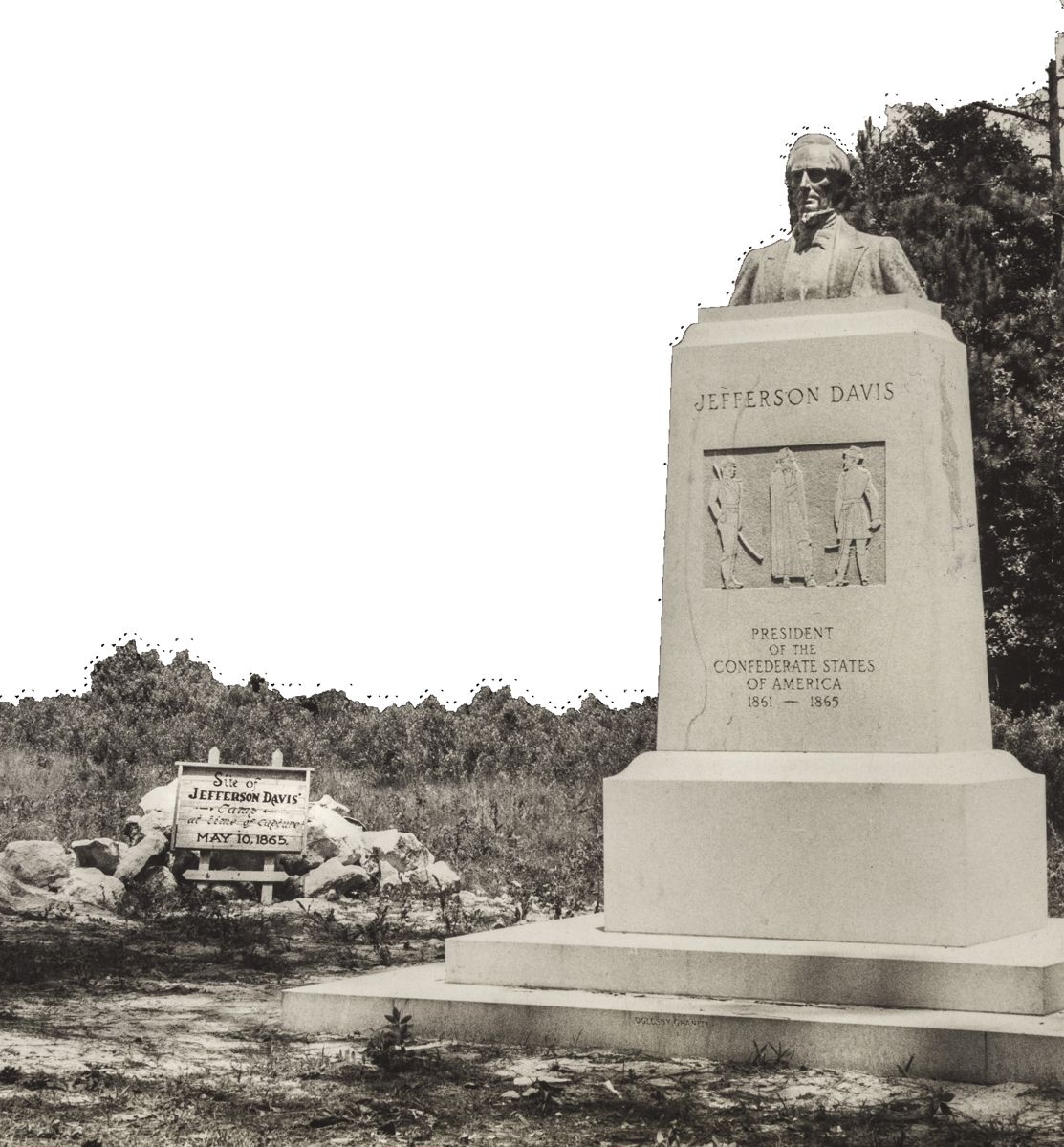
Memorial marking the spot where Jefferson Davis was captured by Union Soldiers on May 10, 1865. Monument erected by United Daughters of the Confederacy chapter, Ocilla, Ga., and dedicated June 3, 1936.
Davis’s defensive posture throughout the early stages of the war, and disbursement of troops over the vast South rather than concentrating forces in key areas to win large battles is today considered his major flaw by many military experts. In the meantime, with makeshift materials, Davis created factories that produced cannon, gunpowder, small arms, and quartermaster stores. He restored naval yards for constructing gunboats and had the South’s inadequate railroads and equipment patched up repeatedly. Davis sent agents to Europe to buy arms and ammunition to also include representatives to secure recognition from England and France. Even with deteriorating political tensions, poor military conditions, and spiraling inflation, he carried on the war for independence. The amount of mental and physical pressure on him must have been massively intense. His career, and the Confederacy, officially ended when he handed his Beaumont-Adams revolver to John Hines. After he surrendered, Davis was held, first in Fort Pulaski, Ga., then in Fort Monroe, Va., as the fort casemates served as military prisons. Freed after two years, Davis tried a few business ventures with little success, and finished his days revered in the South for his dignity and vilified in the North for his refusal to disavow his cause. Confederate States of America President Jefferson Davis is one of the most famous individuals in American history, being loved or hated by millions for over a century.
PISTOL HISTORY To start with its documentation, the pistol was surrendered to 4th Michigan Cavalry Corporal John Hines (1843–1865) by Davis on May 10, 1865, near Irwinville, Ga. John, his brother Edwin, and William Linsley, were members of Company E, 4th Michigan Cavalry. The brothers are shown as enlisting at Manchester, Mich., in Company E on July 23, 1862. They both signed up for three years when the regiment mustered in Detroit on August 28, 1862. Edwin entered as a sergeant and was promoted to first sergeant on Sept. 13, 1864. He mustered out at Nashville, Tenn., July 1, 1865. John enlisted as a private who was later promoted to corporal on Sept. 13, 1864. His death at Irwinville, Ga., was documented as killed in action. He was buried in the Andersonville National Cemetery in Georgia after originally being interred at Abbeville. A commemorative marker placed at Davis’s final campsite notes the deaths of
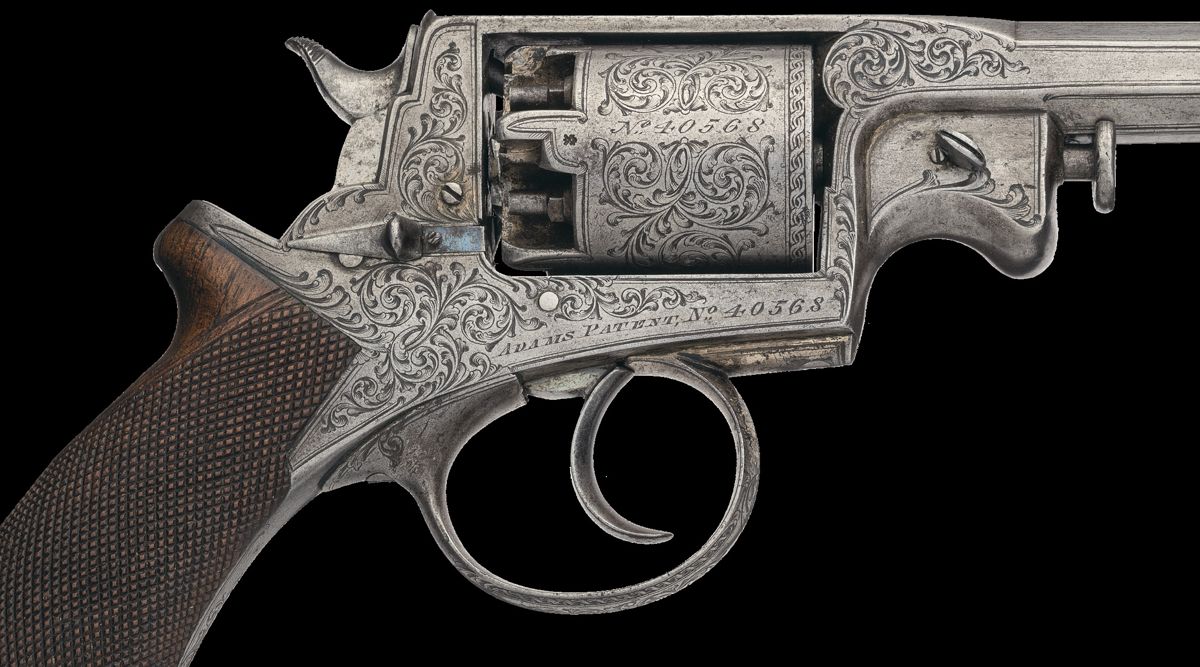
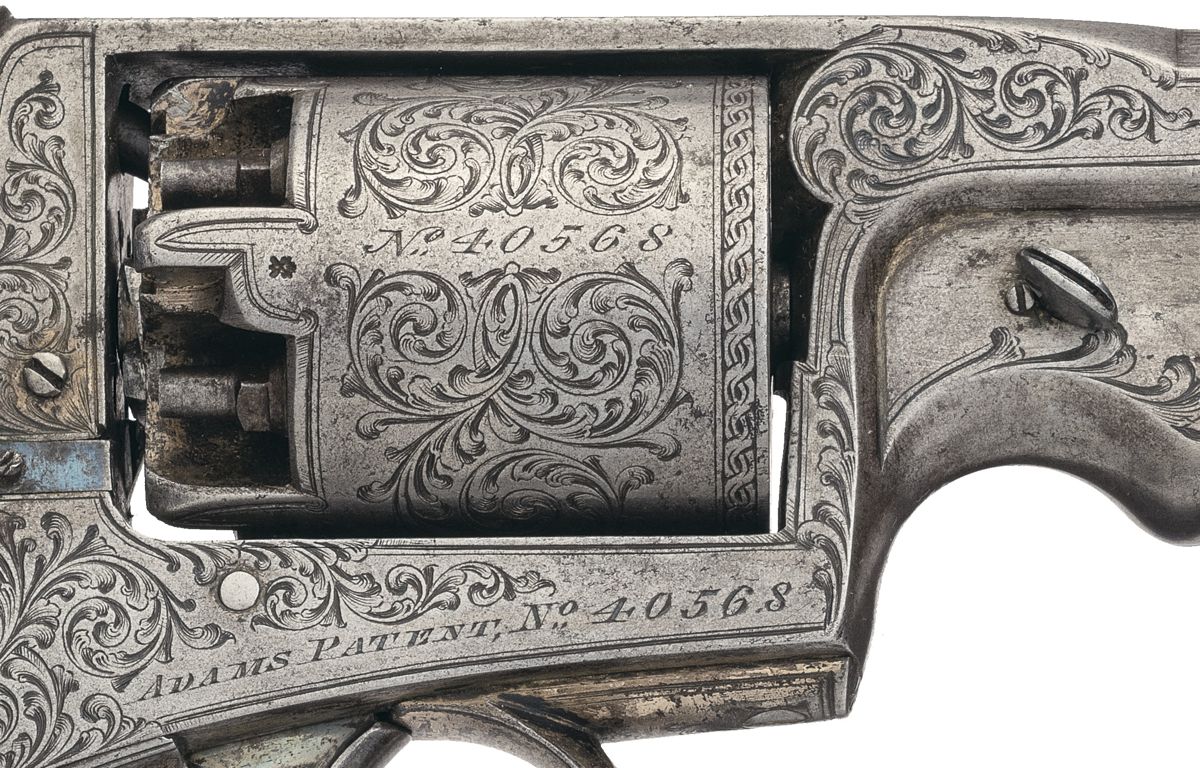
The Beaumont-Adams Davis revolver features fine English engraving including a braided border design at the muzzle and front of the cylinder as well as the edges of the trigger guard, floral designs on and around some of the screws, and primarily classic scroll engraving and lined borders.
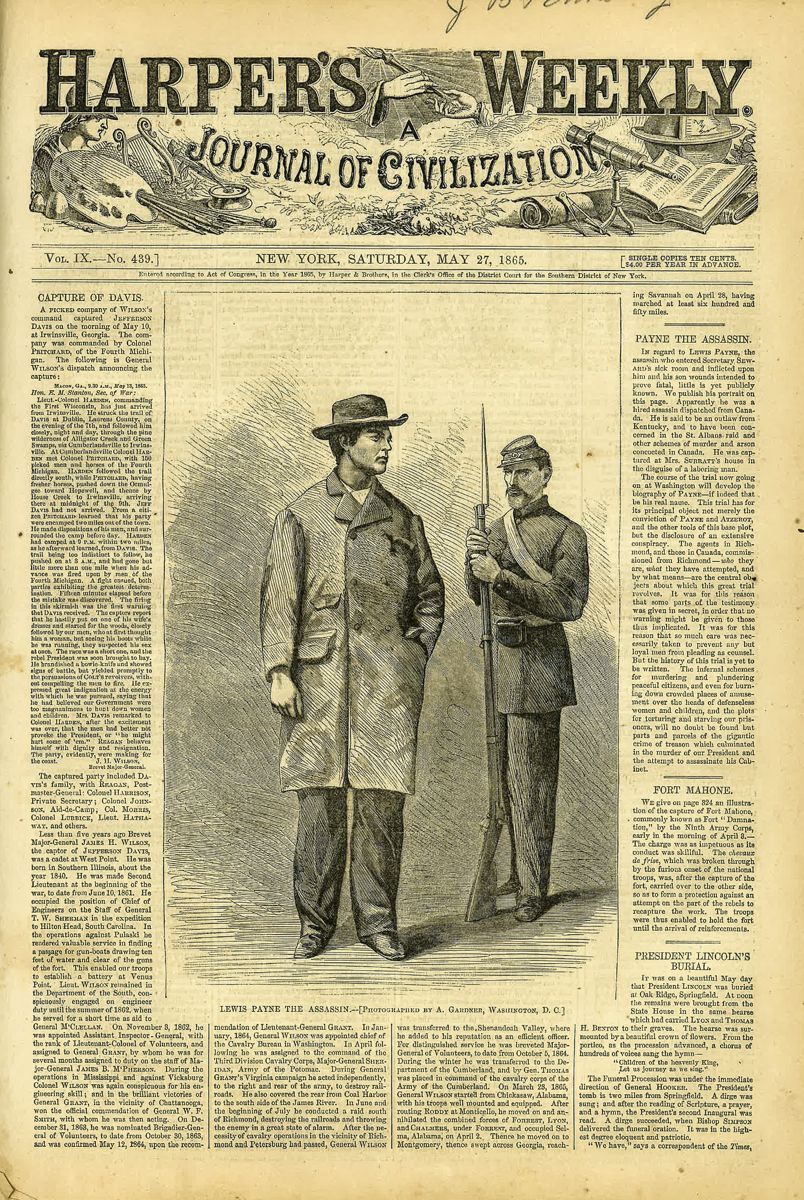
John Hines and John Rupert on May 10, 1865, the result of shots fired by Wisconsin cavalrymen during the capture of the Confederate president. U.S. military records and eyewitness accounts, including Record of Service of Michigan Volunteers in the Civil War, 1861–1865, Vol. 34, documented their service. There are also several secondary accounts about the link between Davis, the pistol, and the Hines brothers. William Linsley, another 4th Michigan Cavalryman, left his own account of the surrender. It was published by the “Then and Now Historical Society” in Dorr, Mich., by Mrs. Ann VandenBerg, a direct descendant of Private Linsley. The Linsley account provides a most compelling affirmation of the Hines story with great accuracy as well as previously generally unknown details: “We were in the pine woods. We charged about 20 rods and came right into camp. John Hines and Charlie Tyler and myself went into a tent and no one was up in this tent there was one man and two women. The old man rose up to see what was going on. ‘I surrender’ he said and reached down in the bed and got a revolver and handed it to John Hines. We did not know who they were and some of the boys knew who they were after and this proved to be Jefferson Davis and the women proved to be his wife and sister. We did not know it at the time we went out of the tent. Just as we got into the road bang, bang went the guns about 40 rods up the road and they kept a going all excited. Prichard ordered us to fall in. We did and went up the road… Then we formed in line and then we went into the fight. I fell in behind a pine tree. I had fired two shots and was putting a load in my gun when they hollered cease firing. You are firing on your own men. We had two killed and three wounded. They proved to be the 1st Wisconsin and the 1st Ohio. They had seven wounded and then we went back to camp… Some of the boys was getting a barrel out of a wagon. They called for me to help and it proved to be a barrel of whiskey. We soon made a hole in it and I was filling my canteen when Frank Carpenter came rushing out. ‘Say Bill, we have got old Jeff’ and I spoke up, ‘Hell we have’ and said, ‘Where is he?’ Right where the crowd is. I rushed up, there he was. The same old man that was in the tent with the women… Just at this time someone touched me on the shoulder. I turned around to see who it was and it was Charlie Tyler. ‘Bill, John Hines has been killed.’ I spoke up and said, ‘My God, is that so. Where is he?’ ‘He was over where we formed in line a fighting. He was shot in the mouth, come right out the back of his head.’ Captain Hudson just rode up and he says take out what things he has in his pockets. We took out Jeff Davis revolver, the one Jeff gave him when he surrendered and his pocket book and some other trinkets. We spread his blanket over him saying we would come back and get him… I do not know what took place in our camp after we went away only what they tell. But some of them said that when we was fighting with the 1st Wisconsin that Jeff tried to get away. Prichard had put a guard around the camp. Mrs. Davis stepped out of the tent asked if they would allow her mother to go down to the brook and get a pail of water. The brook was about 4 rods from the tent and the guard said yes. As he (Jeff) walked out he had on a riding dress and shawl over his head, he looked like an old woman. As he walked along his spurs picked up his dress behind him and showed his boots and the guard stopped him and made him back to the tent.” A report by Adjutant Julian G. Dickinson relayed a similar story but included that “a man dressed in woman’s clothing” captured while trying to escape with his wife and a female servant was revealed to be Davis. Secretary of War Stanton and others reported Davis was trying to escape in his wife’s clothes. The story was heavily embellished in the Northern press, with some going so far as to suggest Davis was actually wearing a woman’s bonnet and a full hoop dress. Following the friendly fire incident, the pistol was taken by Sergeant Edwin Hines, John’s brother. As Linsley reported, “Captain Hudson just rode up and he says take out what things he has in his pockets. We took out Jeff Davis revolver, the one Jeff gave him when he surrendered and his pocket book and some other trinkets.” The Jefferson Davis revolver, serial number 40568, was taken home by Sergeant Hines. Other items were also taken by the cavalrymen.
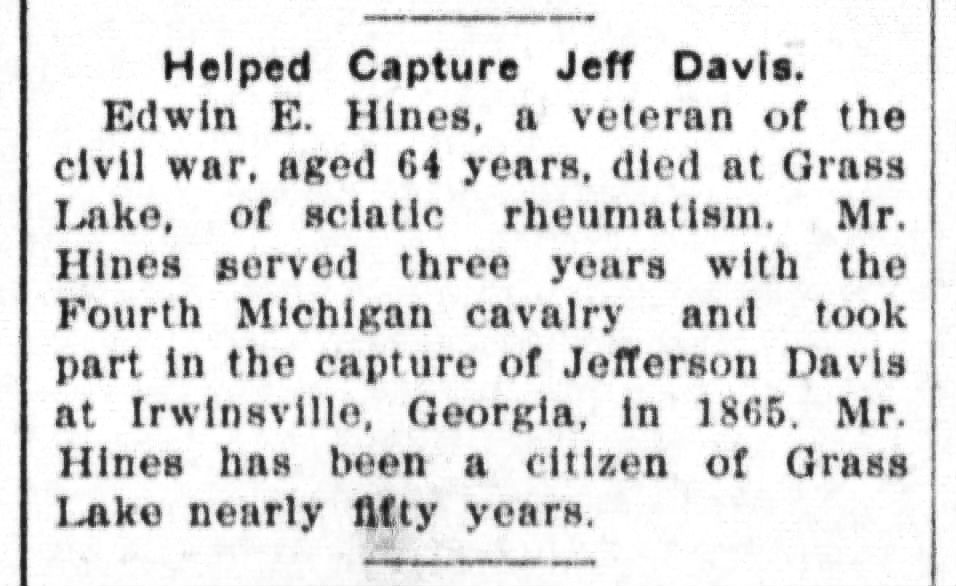
Diamond Drill, Crystal Falls, Iron County, Mich. December 23, 1905, page 3. Mentions the account of Edwin E. Hines’ capture of Jefferson Davis.
Sergeant Hines is documented as obtaining the pistol from his brother’s body shortly after the friendly fire; creating a solid link between Davis and the Hines family who subsequently owned it. Once the sergeant returned home, the pistol remained in the Hines family until it was sold in 2018.
The primary provenance documentation comes directly from the family in the form of affidavits and a 2018 bill of sale from Linda Lee Hines Inman, the great granddaughter of Edwin Hines (1840–1905). Inman further documented that her grandmother, Harriet Crosthwaite Hines, showed the revolver to her when she was young and told her she would inherit it and to take good care of it since it had belonged to Jefferson Davis and had been on the body of John Hines, her grandfather’s uncle, when he was killed. Her bill-of-sale to a private entity lists the revolver as “An Antique Adams Revolver, serial number 40568, surrendered by Jefferson Davis, President of the C.S.A. to Corporal John Hines of the 4th Michigan Cavalry during his capture at or near Irwinville, Georgia, May 10, 1865.”
the February 1875 Michigan Argus. The article described Edwin Hines as owning “a silver mounted revolver, taken by him, from Jefferson Davis at the time of his capture. The revolver is a self-cocker and originally cost $100.” It further states Hines had been offered $1,000 for the property. The description certainly matches the engraved, silver-plated, and British-made Adams Revolver from the Hines family while adding that the pistol was a double action. The silverplated and more descriptive “self-cocking” terminology matches the Hines gun since the Adams is a double-action. A third article from the Friday, June 25, 1886, Alma Record, reported that “One of the revolvers upon the person of Jeff Davis, when he was captured, is in the possession of Edwin Hines, a Grass Lakes soldier.”
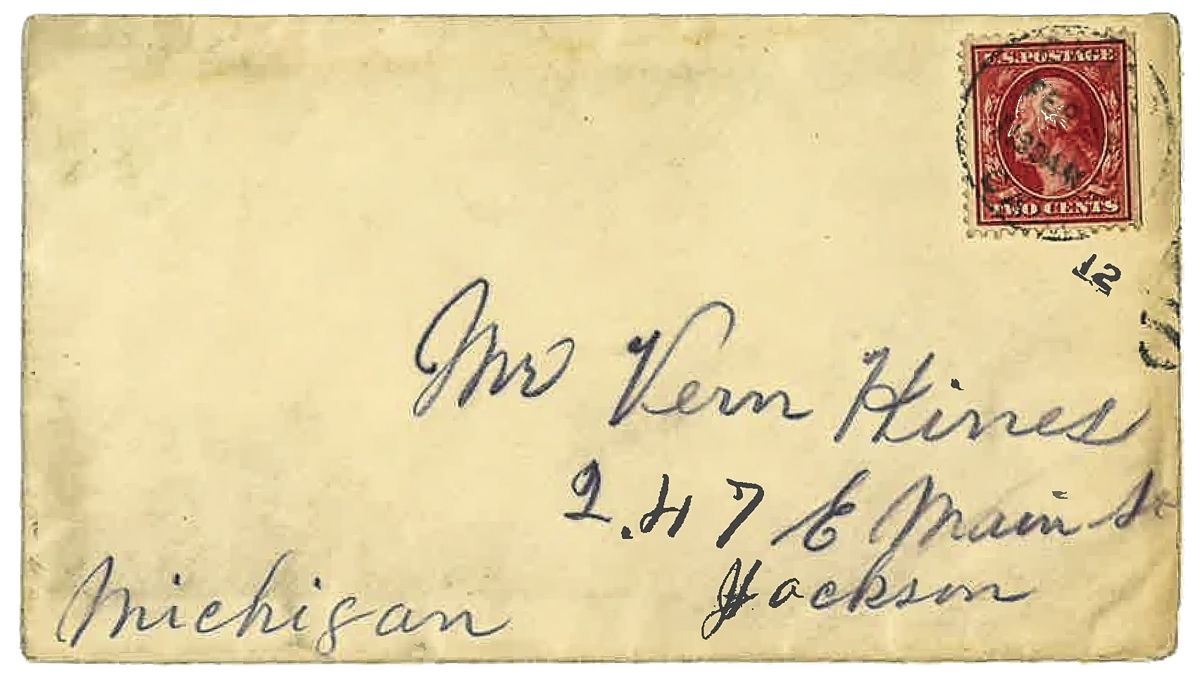
Virtually the same story is related in another affidavit from LaVerne Hines Jr., a grandson of Edwin Hines. The senior LaVerne Hines inherited the revolver from his father, Edwin Hines. His son, LaVerne Jr., indicated it kept wrapped up in a closet. Original letters mailed between 1911–1912, contain inquiries about the “Davis Revolver” and whether there was any interest to acquire and/or sell it, possibly to a Lansing history museum. These letters’ envelopes were postmarked and include various cancellation dates during 1911–1912, which provide additional testimony about the pistol’s retention in the Hines family. A Detroit Free Press article published less than a month after the pistol’s surrender stated, “Major Hudson brought with him Jeff Davis’ pistol, now on exhibition at Mr. S. Smiths. It is an elegant silver plated instrument, costing about $45. The case contains the initials J. D., together with the letter of the admiring donor, a gift from a friend, the maker of the pistol in London, altogether forming a delicate morsel and most significant exhibition of British ‘neutrality.’” What is interesting in this account is that the pistol was then in a case; neither case not the supporting letter have been seen since. A second newspaper article appeared in
Alma Record, Alma, Mich. June 25, 1886, page 4.
THE PISTOL
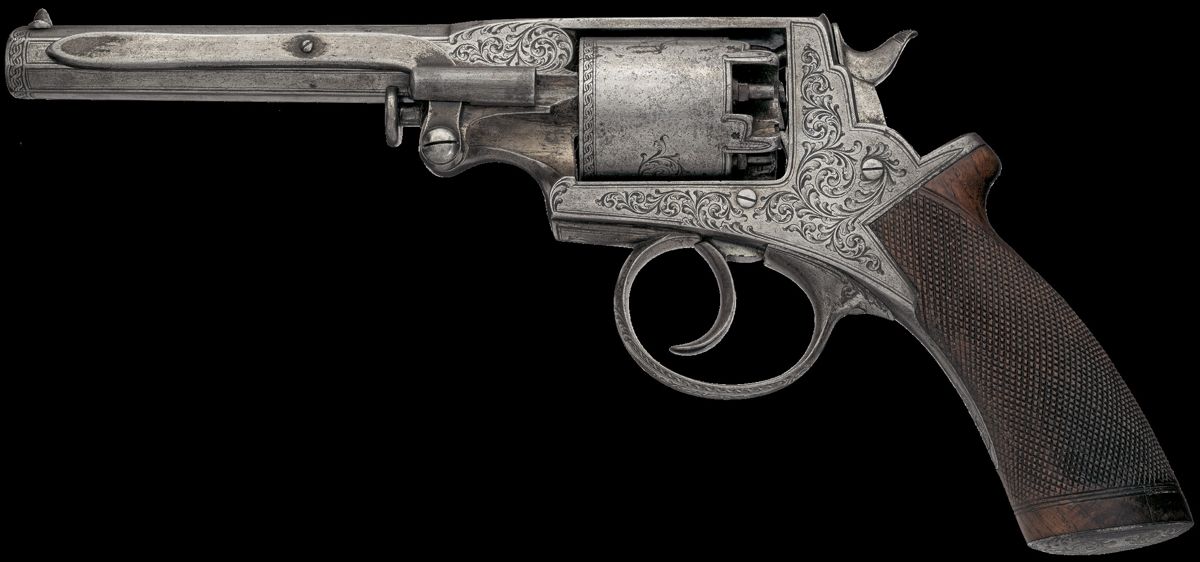
Robert Adams patented the first successful double action revolver in 1851. The description of this Beaumont-Adams pistol serial number 40568 shows that it was manufactured by the Adams firm in London, England. The gun is a double action .45 caliber percussion revolver produced circa 1863. The barrel is a 5 ⅞ inch octagon finished in silver. The hand grip is checkered walnut. This revolver is signed “ROBERT ADAMS. No. 76 KINGWILLIAM STREET. LONDON” along the top strap and breech end of the barrel. Robert Adams was located at that address from 1858 to 1865 as noted in Blackmore’s “Gunmakers of London.” The frame is marked “ADAMS PATENT, No. 40568” on the right side, and the number is repeated on the cylinder. Stamped on the loading lever and face of the cylinder are the assembly number “727.” The barrel has Birmingham proof marks.
Detroit Free Press, Detroit, Mich. June 4, 1865, page 1.
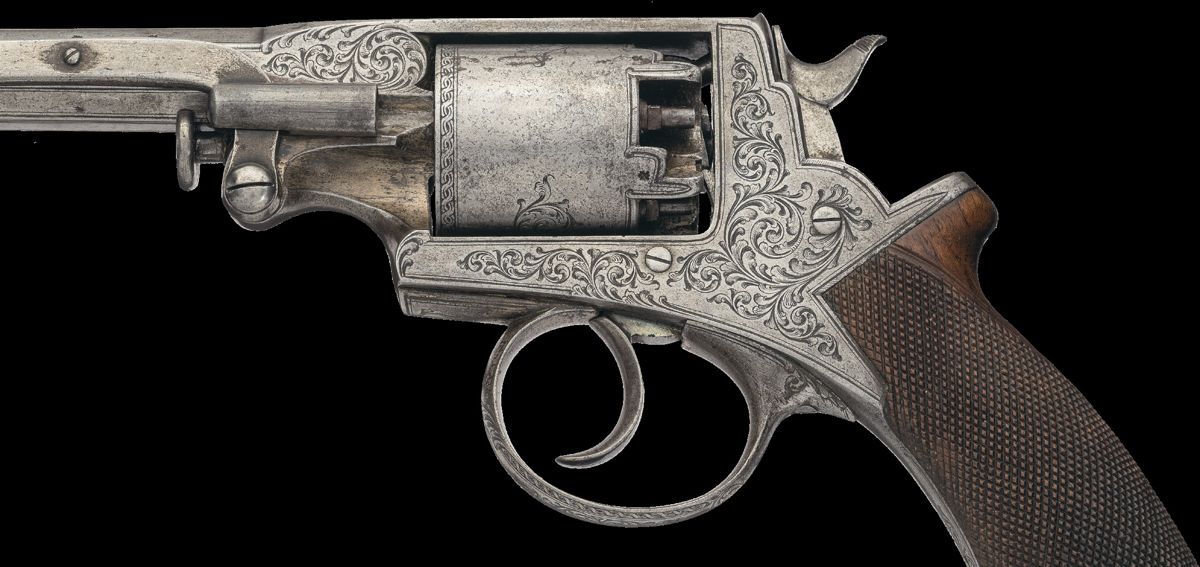
The barrel has a dovetailed blade front sight and a fixed notch rear sight.
Harper’s Weekly, Vol. IX, No. 439, May 27, 1865.
The revolver is signed “ROBERT ADAMS. No. 76 KING-WILLIAM STREET. LONDON” along the top strap and breech end of the barrel. Robert Adams was located at that address from 1858 to 1865 per Blackmore’s “Gunmakers of London.” The frame is marked “ADAMS PATENT, No. 40568” on the right side, and the number is repeated on the cylinder. The loading lever and face of the cylinder are numbered with the assembly number “727.” The revolver has Birmingham proofs, a dovetailed blade front sight, fixed notch rear sight, silver plated finish, and checkered walnut grip.
JEFFERSON DAVIS’ CAPTURED BEAUMONT-ADAMS REVOLVER
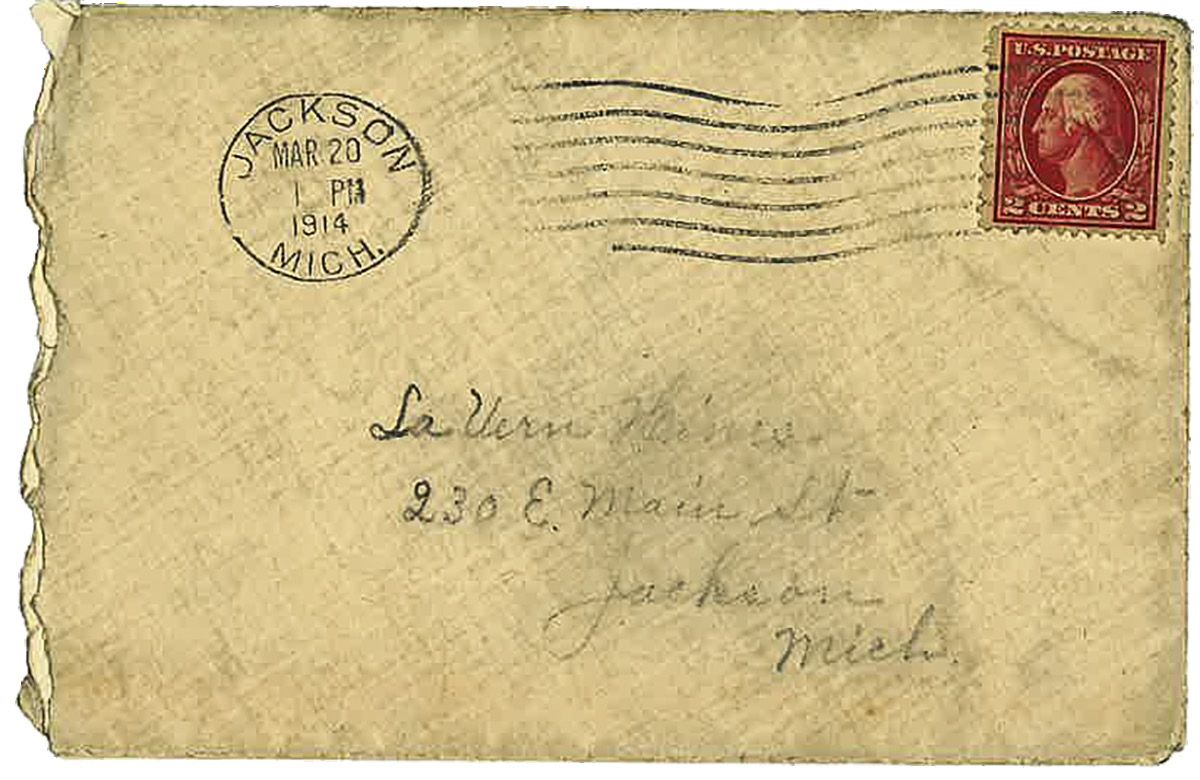
Correspondence to the Hines family.
Robert Adams presented a revolver to Union General George B. McClellan. McClellan’s presentation case is inscribed on the inlaid brass lid-ring and is identical to Stonewall Jackson’s presentation inscription. Its lid interior is also identical and embellished with gold leaf.
The revolver features fine English engraving including a braided border design at the muzzle and cylinder front as well as the trigger guard’s edges. There are floral designs on and around some screws, as well as some classic scroll engraving and lined borders.
three that can be accounted for going to major Confederate leaders, plus the McClellan gun, there’s little doubt some other high ranking Union figures also received such gifts, possibly to include President Abraham Lincoln with all pistols likely in the same serial range.
Another Davis pistol was a well-known engraved, cutfor-stock Colt 1851 Navy Revolver presented to him by the workmen of Col. Colt’s Armory following his service as U.S. Secretary of War. This .36 caliber, single action pistol was also taken during his capture. It was given to The Museum of the Confederacy in 1949 by the son of Col. Robert Minty who also served in the 4th Michigan. This pistol’s matching Colt Navy shoulder stock was also an engraved presentation piece. It was auctioned by RIAC in 2016.
ACKNOWLEDGMENTS
Davis’s choice of the Adams revolver for his personal protection while during the retreat is indicative of his familiarity with weaponry. He was quite aware the .45 caliber Adams had far superior stopping power vs. the .36 caliber Colt, and, in close quarters, he could empty the Adams into any assailants in a third of the time it took to empty the Colt, producing the desired personal protection in a very short time. Having both guns at his disposal, he obviously preferred the Adams to protect himself and his family.
COMMENTARY It appears that Robert Adams took a few pages from Samuel Colt’s marketing playbook. The Davis revolver’s serial number 40568 is four numbers away from an almost identical pistol presented to Stonewall Jackson. Jackson’s embellished revolver, #40572, is blued rather than silver plated. It also came from Adams, encased with accessories, and has been housed in The American Civil War Museum in Richmond, Va. It was donated by Jackson’s wife over a century ago.
This article benefited from materials provided by Rock Island Auction Company and other researchers including Nancy Dearing Rossbacher, and historical artifact dealer/ collector Michael Simens. The photographs and article are courtesy Rock Island Auction Company. Additional research complied by Lawrence E. Babits, PhD.
SOURCES Campbell, Cpt. Given. Memorandum of A Journal Kept Daily During the Last March of Jefferson Davis. N.d. Raw data. N.p. Foote, Shelby. The Civil War: A Narrative – Red River to Appomattox. New York, NY: Random House, 1974. Print. Lasswell Crist, Lynda. Partial Transcription of the Given Campbell Diary. March 30, 2011. Raw data. Rice University, Houston, TX. Wolf, Wayne, Paul Faeh, and Jack Simmerling. Colonel Given Campbell C.S.A. N.p.: McGraw-Hilll, 1995. Print.
A third Adams presentation pistol is reported to have been given to General Robert E. Lee, as he wrote a “thank you” acknowledgment delivered to Adams through CSA Agent Caleb Huse in early 1864. Although persuasive gifts were commonplace for Colt, it is now certain that Adams used the same sales tactics on a much smaller scale. A most interesting fact is that Adams also presented a revolver to a major Union figure, General George B. McClellan. Photos of this gun’s recently discovered casing shows its inscribed brass lid-ring as identical to the Jackson inscription. Its lid interior is also identical and embellished with gold leaf. It is now unquestionable that Adams presented revolvers to key military and/or political figures, both North and South. With
Eighty-acre state memorial park, Jefferson Davis Park, bound on three sides by Irwinville Farms, Ga., property. (Library of Congress)