
Kuser Prize Rifle
By John Estok · Originally published January-February 2024 · pp. 3–12
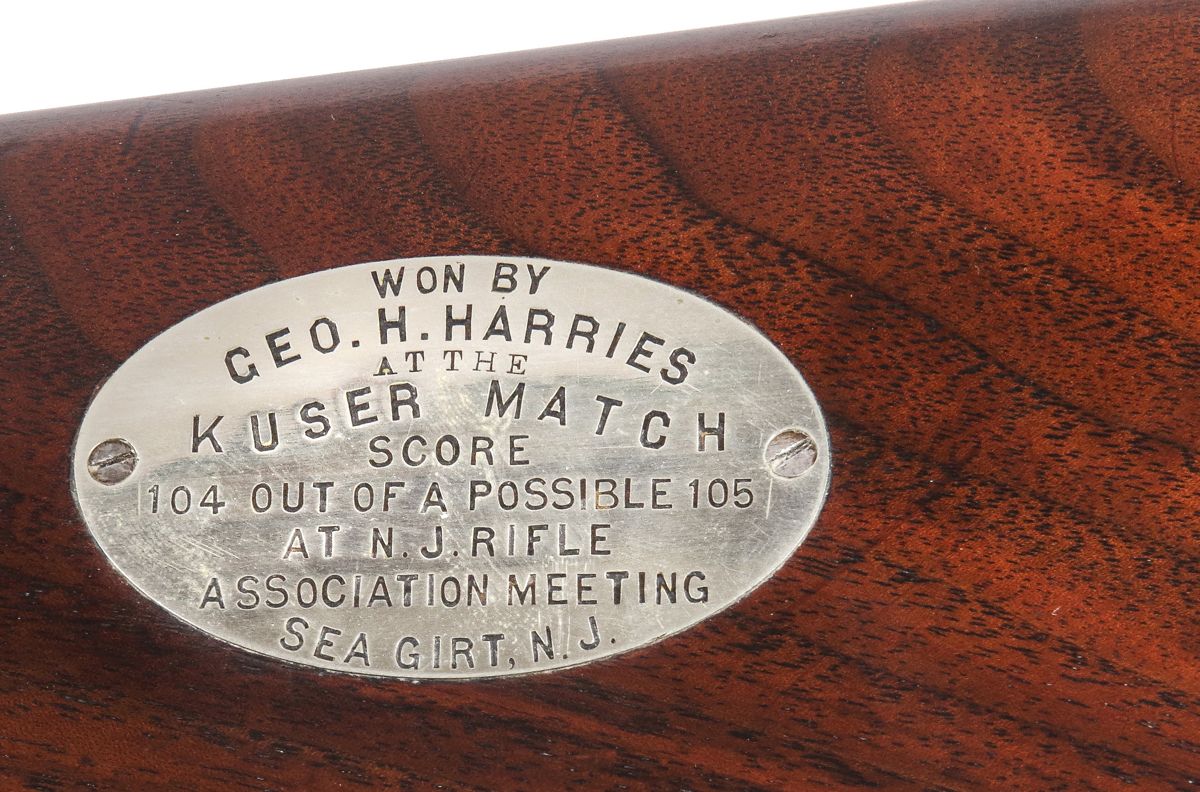
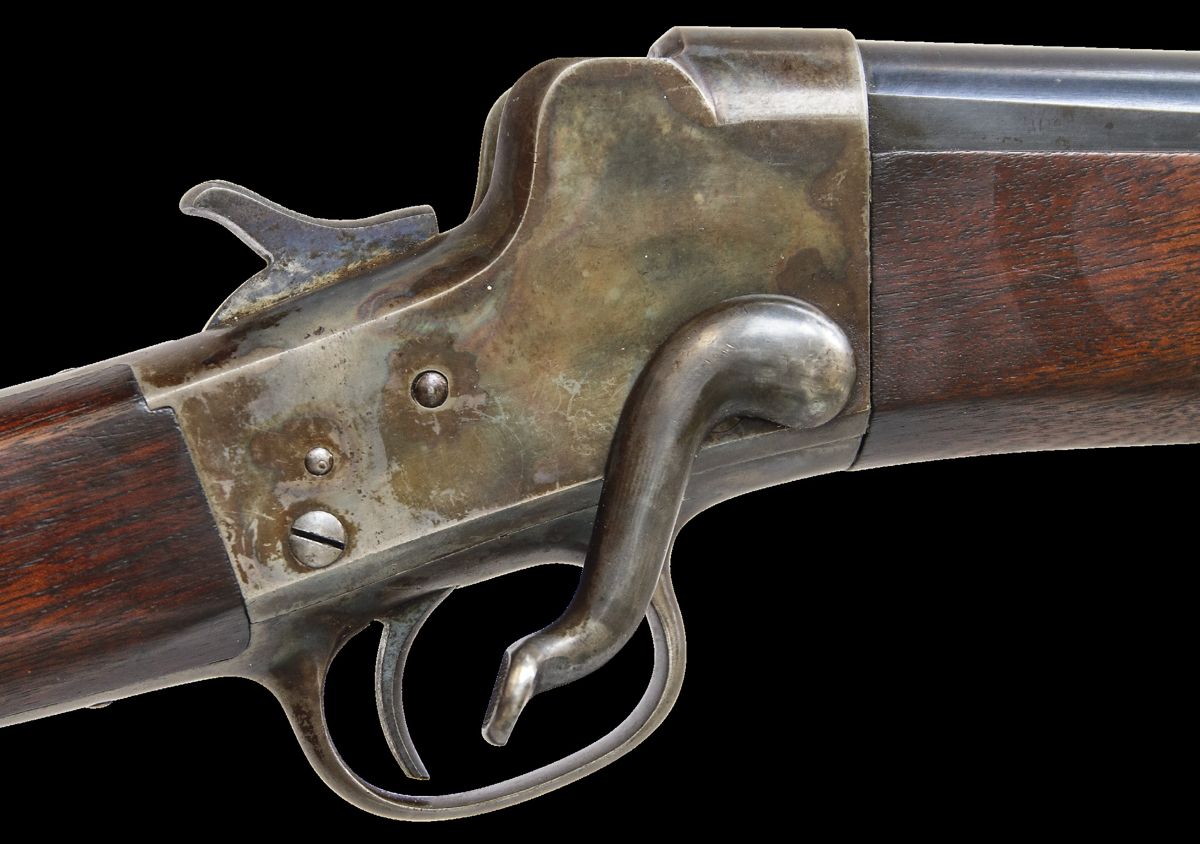
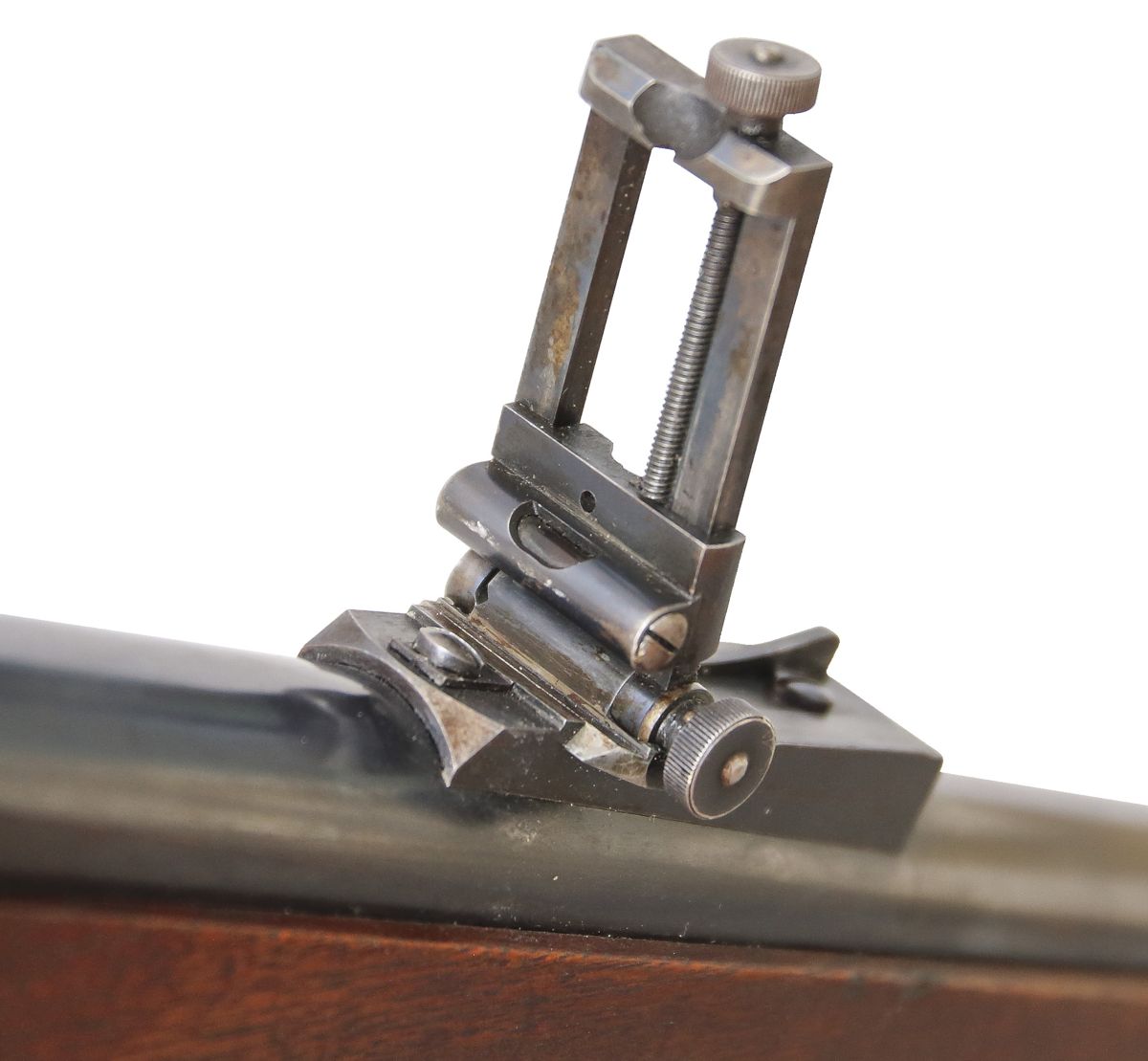
When purchased from another collector approximately three to four years ago, this rifle possessed the two attributes some collectors search for in an object: excellent condition plus a hint of provenance. The same rifle is pictured on page 199 in Tom Rowe’s excellent publication Remington’s No. 3 Hepburn Sporting & Target Rifles. As described, “The rifle is in near new condition. The dark color on the action is the old varnish applied at the factory to protect the colors.” It is .44-2.6 caliber and fitted with a long-range rear sight, which requires a corresponding slide-on front sight to allow for long-range competition. Also pictured is an engraved silver presentation plate, that led to an interesting history regarding the evolution of shooting sports in the United States. Due to the lack of public interest and financial support, the 1891 NRA international match was last shot at Creedmore. In the years following, the range reverted solely to New York National Guard use. By 1892, the ailing National Rifle Association had placed its records into storage and, following negotiations with the New Jersey Rifle Association, transferred its matches to the Sea Girt Range. Simultaneously, with the support of Governors Leon Abbett and Robert Green, guidance by General Bird Spencer, Director of Rifle Practice and eventual President of the NRA (1900–1907), and aid from philanthropists such as Anthony R. Kuser, 148 acres were purchased in 1889 for constructing a rifle range at Sea Girt. The inaugural meeting of the New Jersey State Rifle Association occurred at the range in 1891 with the Kuzer Match being a high point of the events. The “Kuser Match” consisted of three strings of seven shots, each fired from 500 yards at a canvas elliptical bull military-type target, with a high score of five, thus making the highest possible aggregate score 105. The match was made possible by the generosity of Colonel Anthony Kuser, who purchased the prize rifle pictured from Remington for $65, equivalent to $2,183 in today’s dollars. Anthony Rudolph Kuser was born May 12, 1862, in Newark, N.J. He was educated in Newark parochial schools and Hamilton Township public schools, where he studied engineering. He organized the Trenton Hygeia Ice Company, the Trenton Brewing Company, and was instrumental in consolidating the gas and electric companies in Trenton. Along with his twin brother, John L. Kuser, he was the leading spirit in purchasing the Trenton Street Railway Company. He was also president of the South Jersey Gas & Electric Lighting Company and originated the idea of manufacturing coke at Camden and piping the produced gas to Trenton. At the time, it was the longest pipeline in the world.
Col. Anthony Randolph Kuser. (Newspaper photo) In 1889, Kuser was appointed to the personal staff of Governor Abbett with the rank of colonel. He would serve in the same capacity for Governors Werts and Griggs. As such, he was also a staff officer for General Bird Spencer. Kuser was a generous philanthropist who supported many organizations, including the Zoological Society of New York. In today’s parlance, he would be considered a “birder.” In 1909, he financed the Kuser-William Beebe Expedition to study birds in Ceylon, India, Burma, the Malay States, Java, Borneo, China, and Japan. In 1916, he provided $100,000 to publish a four-volume set of color plates titled a Monograph of Pheasants, which is still in demand today. As an aside, William Beebe is the Beebe associated with the bathysphere expeditions in the 1930’s. In 1910, Kuser purchased the High Point Inn, remodeling it as a residence and in 1928, commissioned the building of a war memorial obelisk at the site. Although the residence is gone, the monument is now a state park. In 1915, Anthony Kuser provided funding to William Fox to establish the Fox Film Corporation, later merged into 20th Century Fox. He would remain on the Fox Board until he died in 1929. The “Kuser Match” opened on Thursday, August 26, 1891. It was fired from the prone position with head
Left: The Kuser Prize rifle and the engraved silver presentation oval.
toward the target. The entry fee was $1 each or three for $2 if taken at one time, with reentries permitted. By the end of the first day, the scores were Priv. Dickey-100, Lieut. Harries-99, Major Pollard-98, Capt. Cash97. The following quote from the August 27, 1891, edition of The Evening Star gives an indication as to how intense the competition might have been. “What the next four days’ of shooting may bring forth no one can guess, but the chances are the winner of the first “Kuser” prize will have to post a clean 105.” By the end of the match on Monday, August 29, the winner had been decided, as this quote from The Evening Star, Washington, D.C. Tuesday, September 1. 1891 reported,
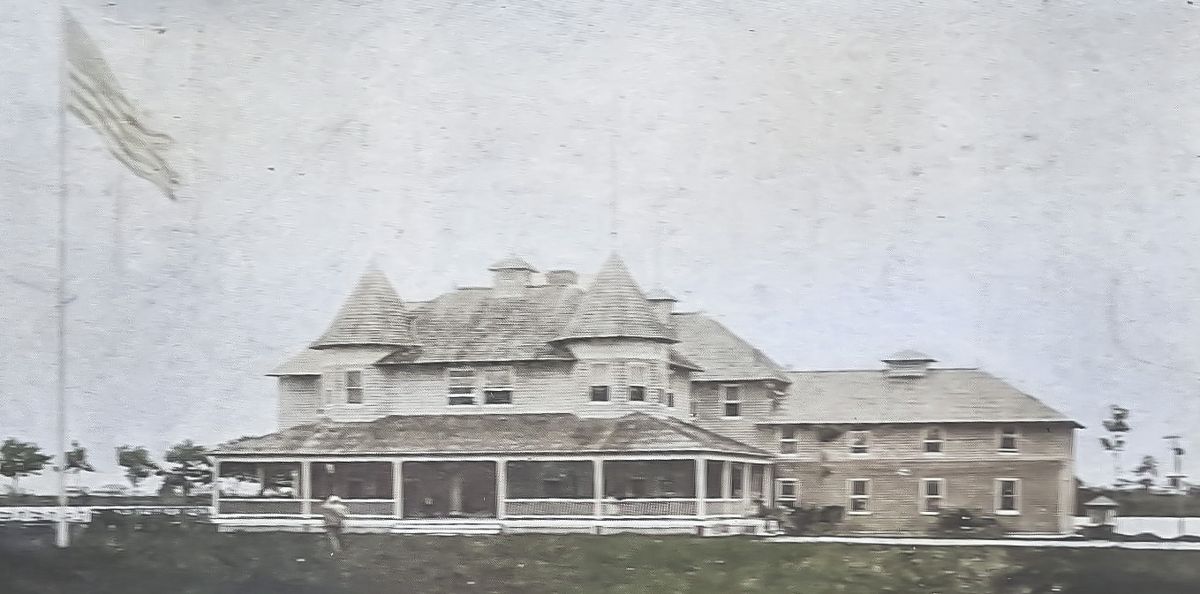
Sea Girt Rifle Range Clubhouse. (Period postcard)
At this stage of the proceedings Col. A. R. Kuser handed to Gen. Spencer the very fine special military rifle given by the Colonel as a prize for the competitor making the biggest aggregate in three scores of seven shots each at 500 yards. That stirred Gen. Spencer up to making another speech funnier, perhaps than his first, and when he was through with his oratory he handed the gun to Lieut. Harries, whose total of 104 out of a possible 105 had given him clear title to the gun. Who was George Herbert Harries? Born on September 19, 1860, in Haverfordwest, South Wales, he attended local schools and, at the age of 18, immigrated to the United States, where the U.S. government employed his father as an Indian agent. Harries served as a deputy sheriff before operating a successful newspaper in Winnipeg. While visiting family in Washington, D.C., his business was destroyed by fire. Rather than return to Canada, he obtained employment as a reporter for the National Republican and then the Washington Star. In 1889, Harries joined the District of Columbia National Guard and was assigned to brigade headquarters as a staff sergeant. Working as a reporter, he served as an aide de camp to General Nelson Miles during the Ghost Dance uprising. He was on the committee establishing the boundary between the Pine Ridge and Rosebud reservations. Commissioned a lieutenant in 1891, he served as a headquarters staff officer, where one of his functions was inspector of rifle practice. A promotion to the rank of major soon followed. Upon the death of the D.C. National Guard commander in 1897, he was promoted to brigadier general, assuming command of the district’s army and naval militias. With the advent of the Spanish-American War in 1898, the guard was organized as the 1st District of Columbia Volunteer Infantry with Harries commanding, appointed to the federal rank of colonel. With the end of hostilities, he resumed command of the D.C. National Guard and attained the rank of major general before retiring in 1915. In 1917, Harries resided in Omaha, Nebraska. As war clouds appeared on the horizon, he returned to military service as a brigadier general in command of the Nebraska National Guard’s 1st Brigade. He commanded several units in the U.S. and France and, because of his business acumen, was selected by General John J. Pershing to construct and operate the Port of Brest, the main point for debarking U.S. troops and equipment arriving in France. Following the end of hostilities, General Harries was Chief of the U.S. Military Mission in Berlin and repatriated POWs captured by Germany. He was instrumental in preventing the German government from forcing Russian POWs to return to a red Russia, where they were subject to execution if they refused to pledge allegiance to the communists.
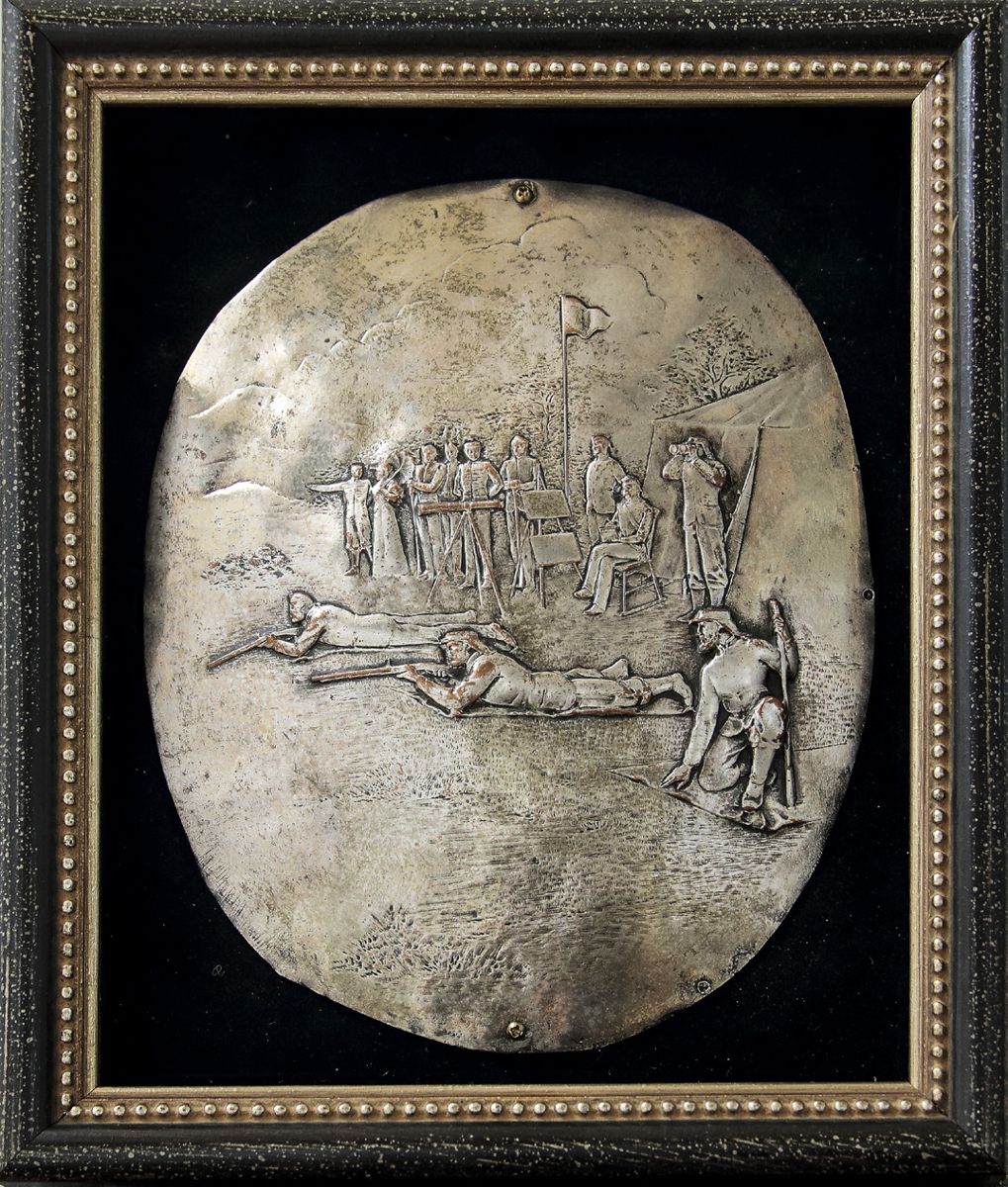
19th-century silver plated copper disc of a rifle match.
As a civilian, Harries was a newspaper editor before moving on to a business career. He was president of the
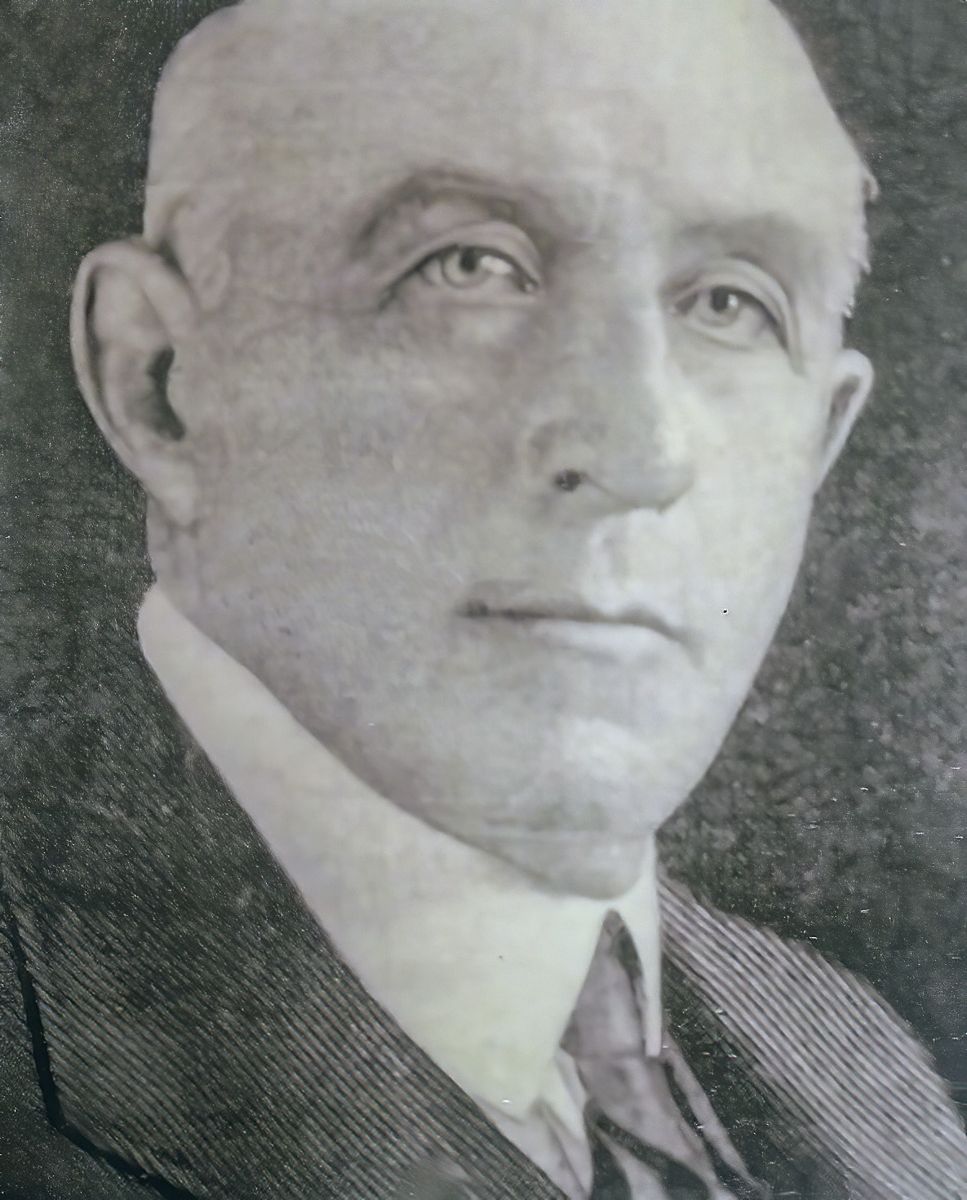
George Harries circa 1890. (Library of Congress)
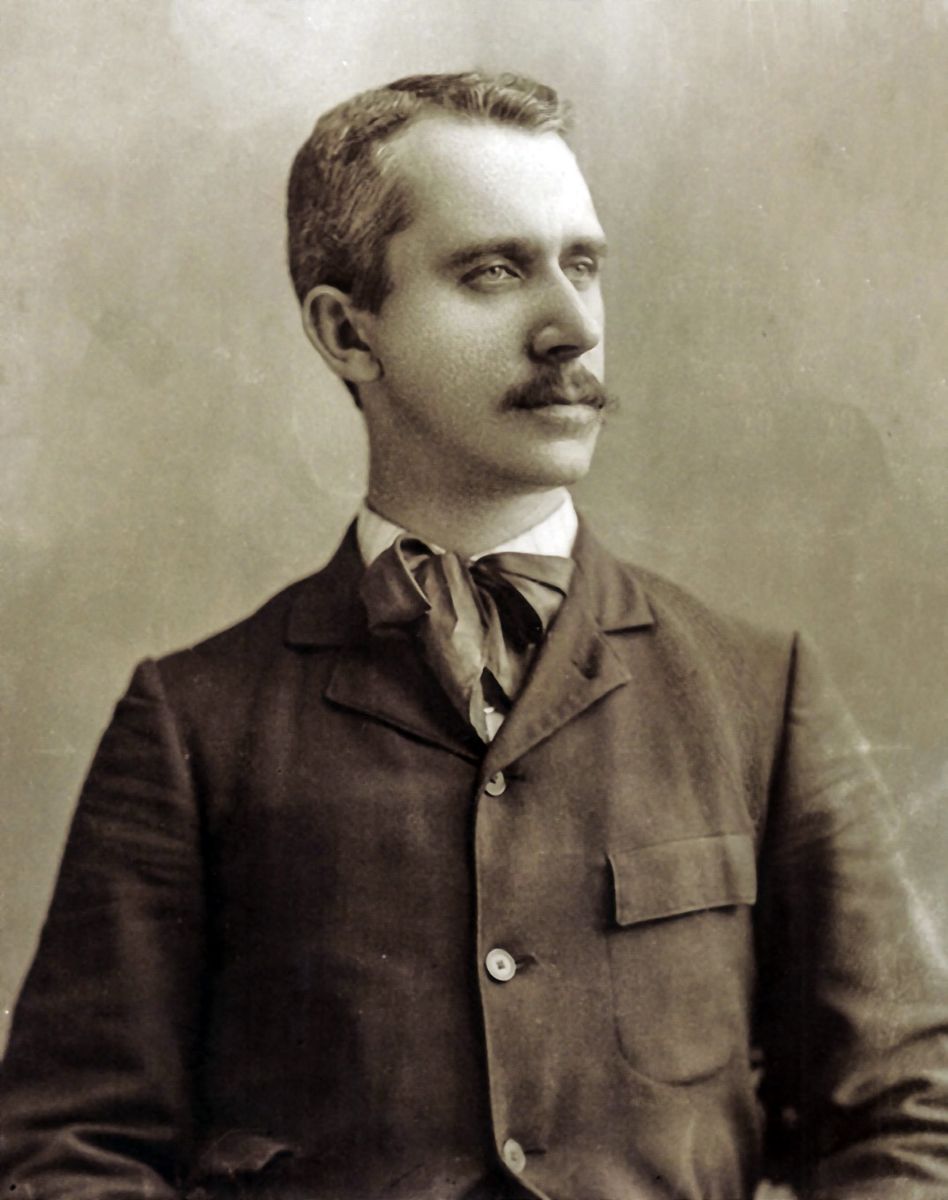
General George Herbert Harries (Sept. 19, 1860 – Sept. 29, 1934). (Library of Congress)
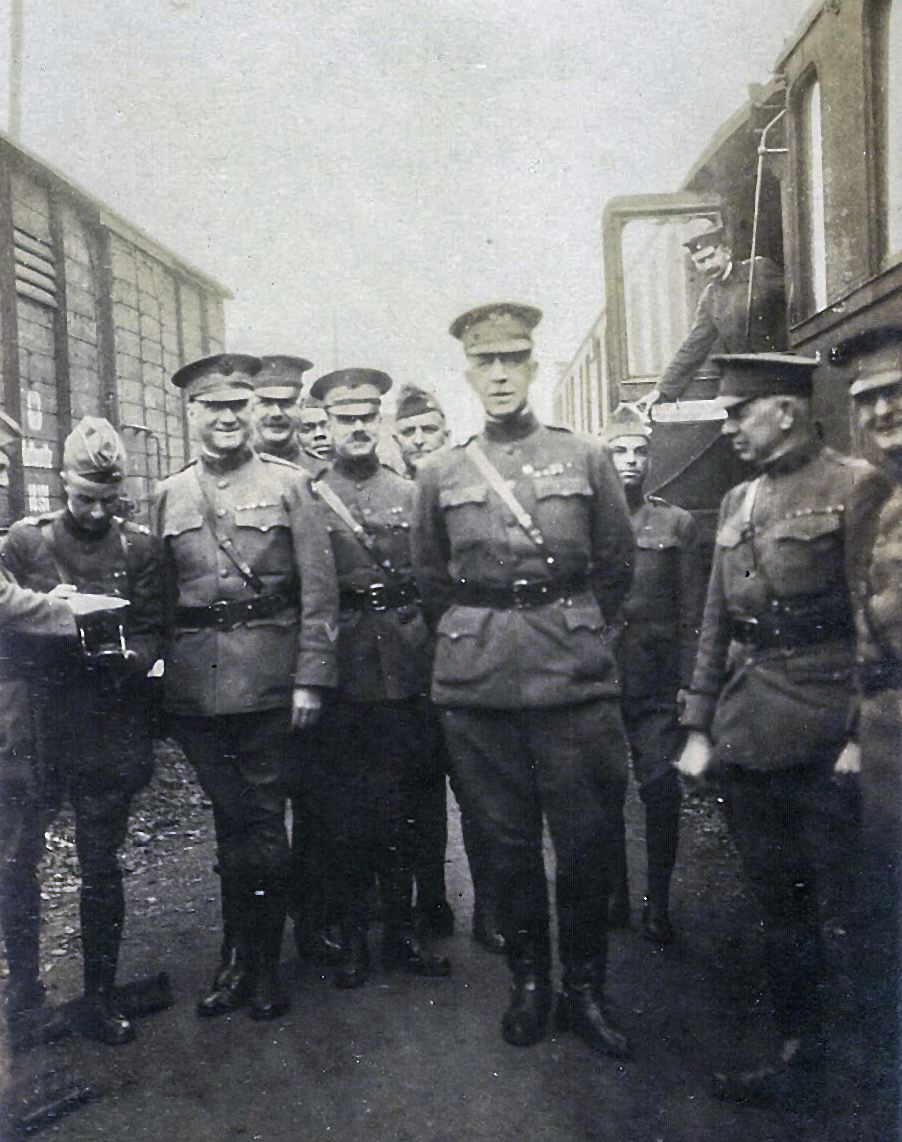
U.S. Military Mission en route to Berlin, Aug. 26, 1919. General Harries in the center.
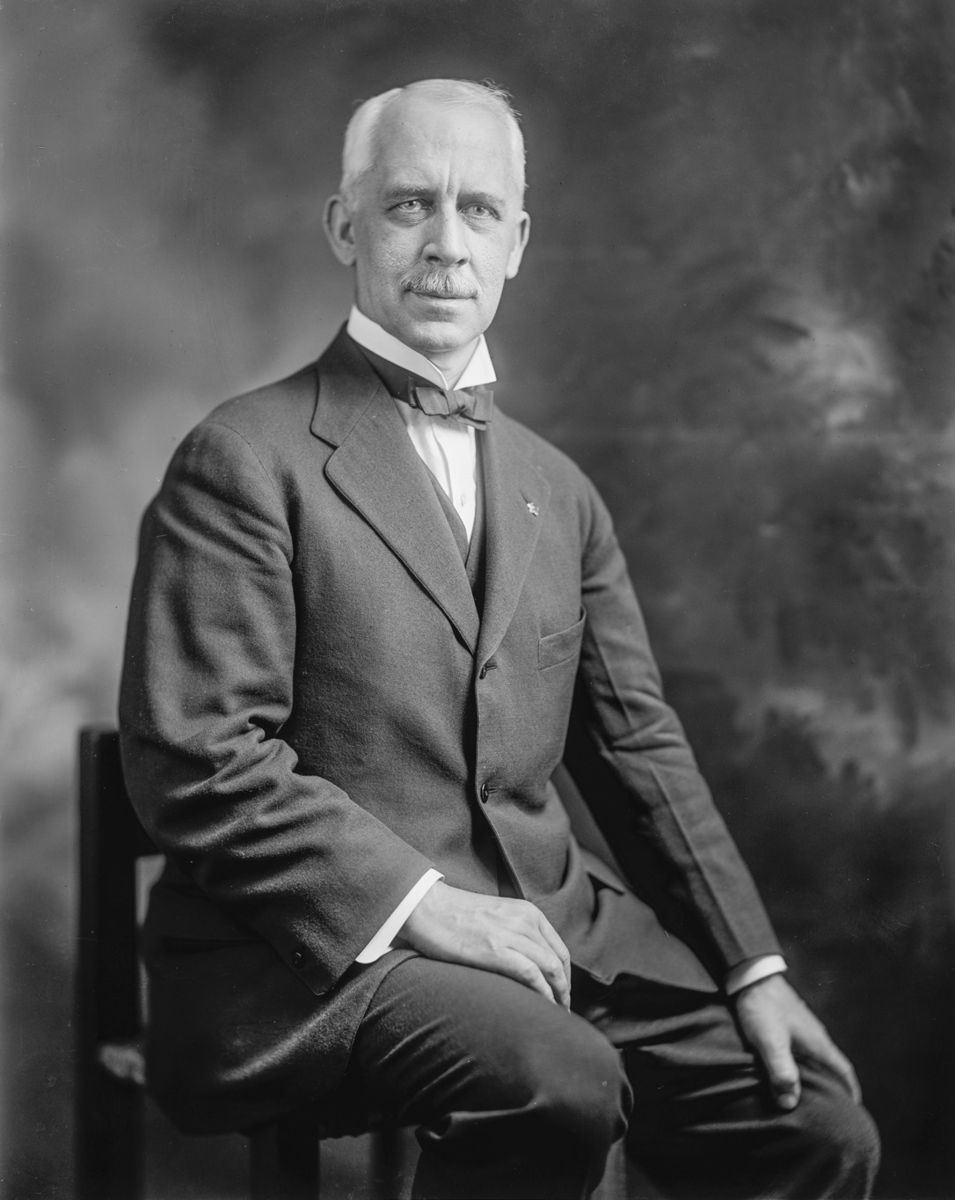
Major General George Herbert Harries D.C. National Guard. (Library of Congress)
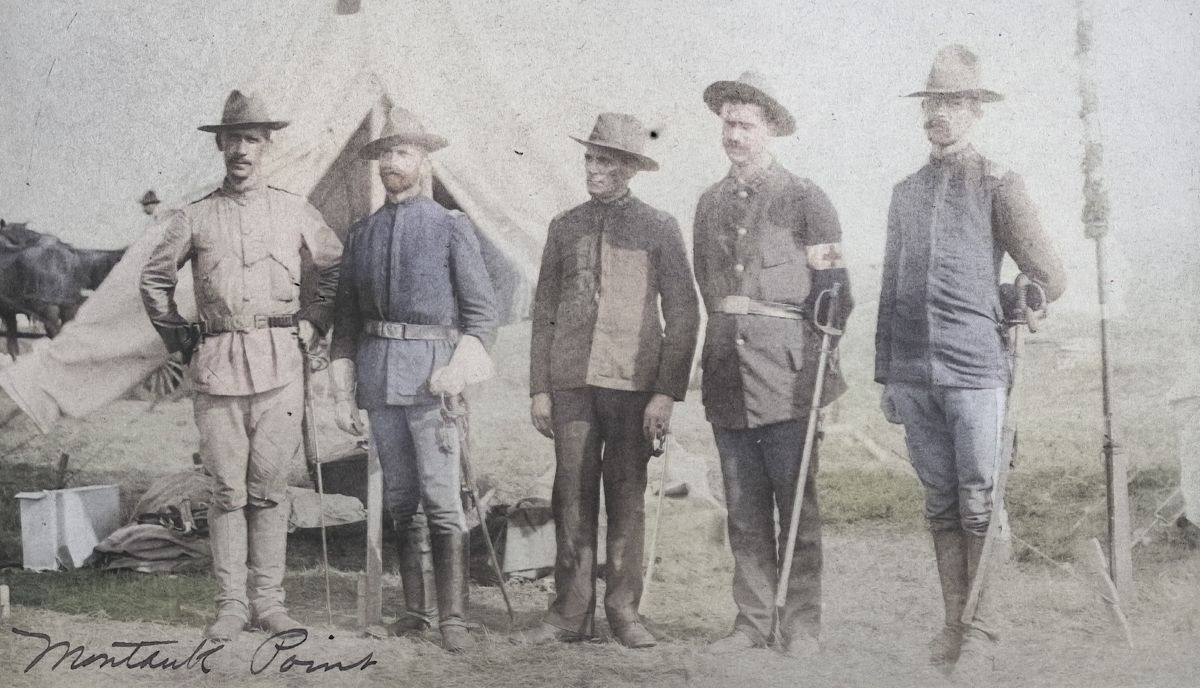
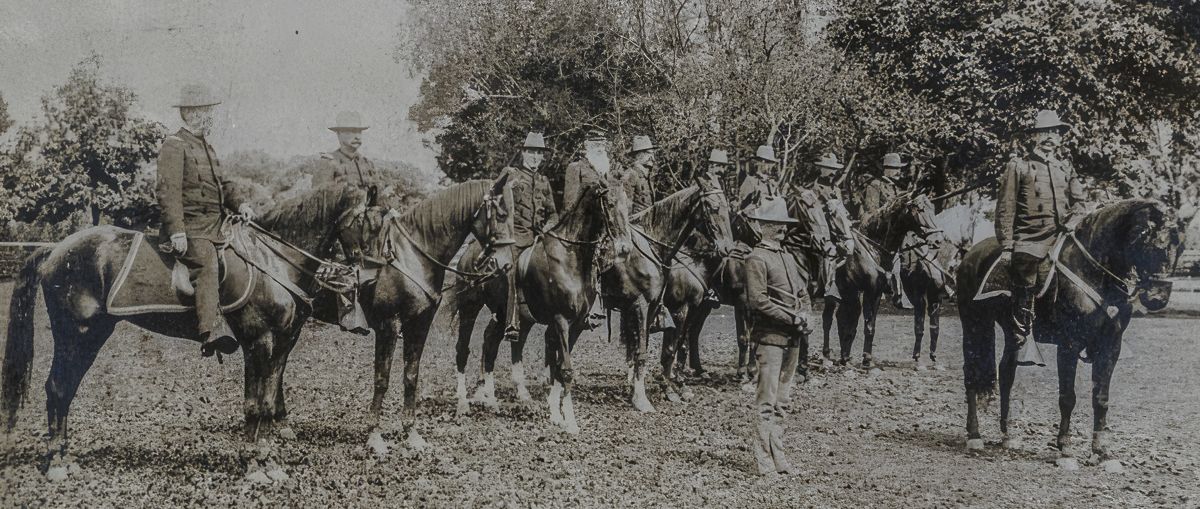
Colonel George Harries (far left) with staff at Rough Riders military camp, Montauk Point, New York. (Library of Congress)
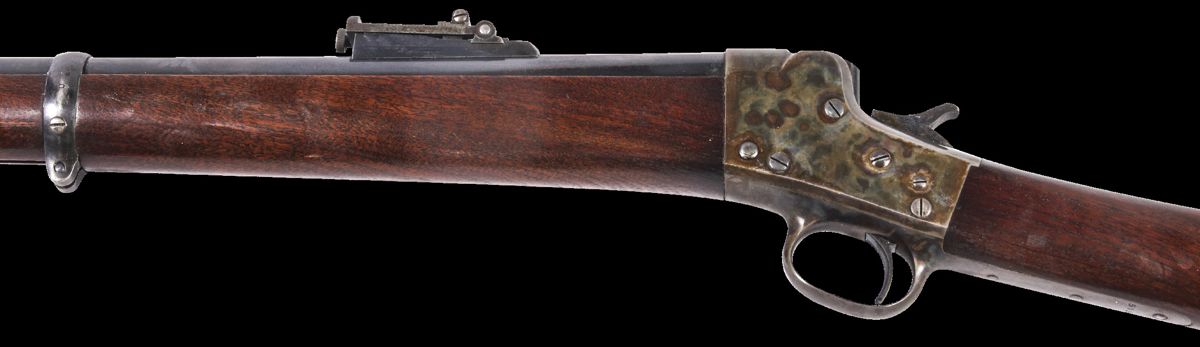
Right side with action opened.
The left side shows the long-range rear sight.
Long-range rear sight with spirit level requiring a special elevated front sight.
Group shot of General Bird W. Spencer and Staff, Sea Girt. General Bird W. Spencer, at right front. Officers listed on the photograph: Captain Daniel A. Currie, Colonel John C. Owens, Colonel Anthony R. Kuser (third from left), Lt. Colonel Franklin Gauntt, Lt. Colonel George G. Felton, Private Albert L. Millburn, Bugler, Lt. Colonel William L. Righter, Captain Alvin H. Graff, Captain Charles A. Reid, and Captain William Decker.
Sea Girt Rifle Range from the clubhouse. (Library of Congress)
Metropolitan Railroad Corporation and vice president of the Washington Railway and Electric Company. He eventually became associated with H. M. Byllesby and Company, an engineering and management consulting firm that specialized in restructuring non-profitable companies. He was the recipient of many military awards from other countries and the U.S. Army and Navy Distinguished Service Medals. In addition, he was a lecturer on U.S. colonial history at a number of universities.
Sources:
General Harries succumbed to pneumonia in 1934 and is interred in Section 2, Arlington National Cemetery. As for the National Matches, they were re-instituted at Sea Girt, New Jersey, beginning in 1903 and, because of popularity, were relocated to Camp Perry, Ohio, in 1907 due to lack of space.
• •
• • • • •
• • • • • • • •
•
• • • • •
• •
Colonel George Herbert Harries, standing near tent at the Rough Riders military camp, Montauk Point, New York. (Library of Congress)
•
Rowe, Tom, Remington’s No. 3 Hepburn, Mowbray Publishing Co., 2011. NRA Staff, “NRA Annual Matches Move To Sea Girt In 1892,” Sept. 6, 2018. “Gun Shop Guide,” posted January 1, 1989. Lee, Francis Bazely Genealogical and personal memorial of Mercer County, New Jersey, The Lewis Publishing Co., Chicago, 1907. “Book on Pheasants Will Cost $225,000,” The New York Times, January 19, 1916. http://www.njkylands.com/pkhighpt2.htm. The Evening Washington Star, Washington, D.C., Thursday, August 27, 1891; Library of Congress. The Evening Washington Star, Washington D.C., Tuesday, September 1, 1891; Library of Congress. “One Thousand Men of Mark Today” American Men of Mark., 1916. “Gen. Harries Dies; Headed D. C. Guard” The Evening Star, 1934. Library of Congress. “Rainy Morning in Camp: Camp Notes” The Evening Star. July 25, 1889. Library of Congress. Who Was Who in American History – the Military. Marquis Who’s Who. 1975. “The Annual Rifle Competitions,” The Evening Star. October 24, 1892. Library of Congress. “Ordway’s Remains Here” The Times. November 23, 1897. “Harries Selected: Appointed to Command the District National Guard.” The Evening Star. November 30, 1897. Library of Congress. “Receives His Orders: Colonel Harries to Report With Regiment at Chickamauga.” The Evening Star. May 18, 1898. Library of Congress. “Brig. Harries Seeks Retirement” The Evening Star. April 22, 1915. Library of Congress. “G. H. Harries Is Now Major General, Retired.” The Evening Star. May 25, 1915. Library of Congress. “Officers of the “Dandy” Sixth,” Chardon Record, NE. July 20, 1917. “Our Military President, Transactions of the Illuminating Engineering Society” Easton, PA. November 20, 1920. “General George H. Harries Has Resumed Civil Life,” Electric Traction, New York. NY. Kenfield-Davis Publishing Company, October 1919. United States Amy in The World War, 1917–1919. Historical Division, Dept. of the Army, 1948. “Maj. Gen. Harries, 74, Commander At Brest. Is Dead in Maryland” Chicago Tribune, September 30, 1934. “Harries Funeral Rites Tomorrow,” The Sunday Star, Washington, D.C. September 30, 1934.
About the Author John E. Estok, BA, MPH, DMD, is a retired dentist and a forty-plus-year member of the North-South Skirmish Association. He is an avid collector of 19th-century militaria and an amateur historian.