
A Fiery Eyed Son of Texas
By Shannon Pritchard · Originally published July-August 2024 · pp. 35–37
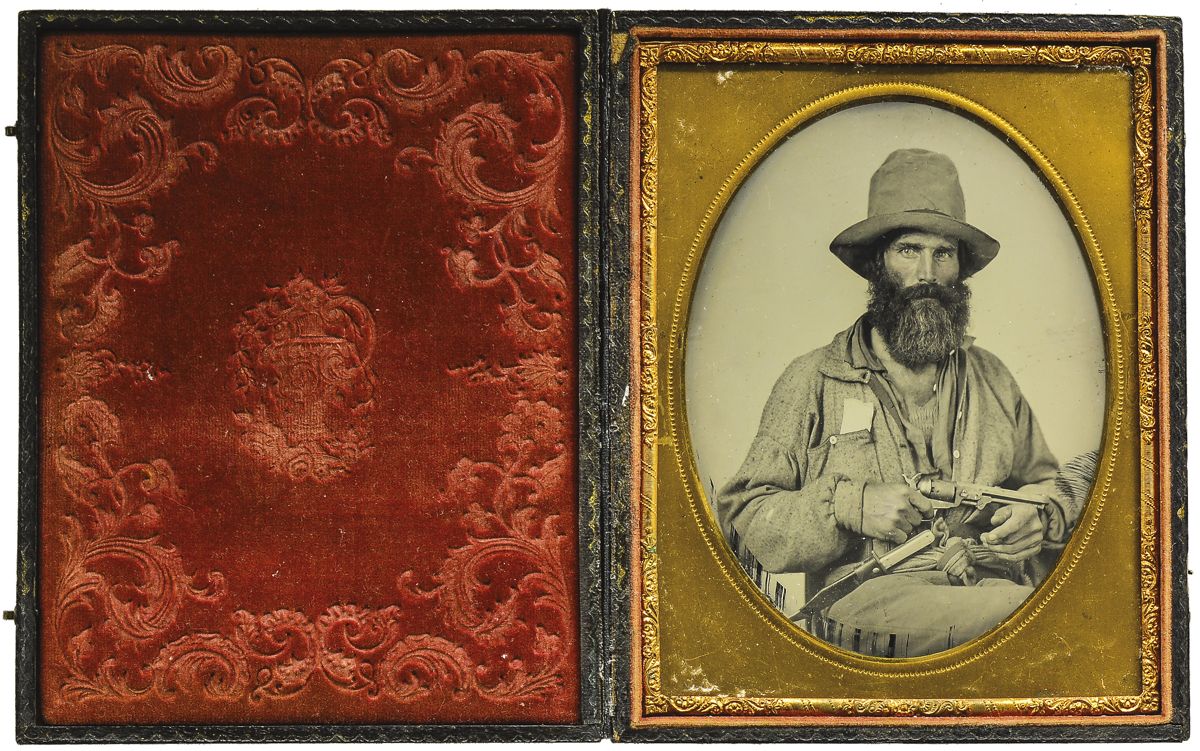
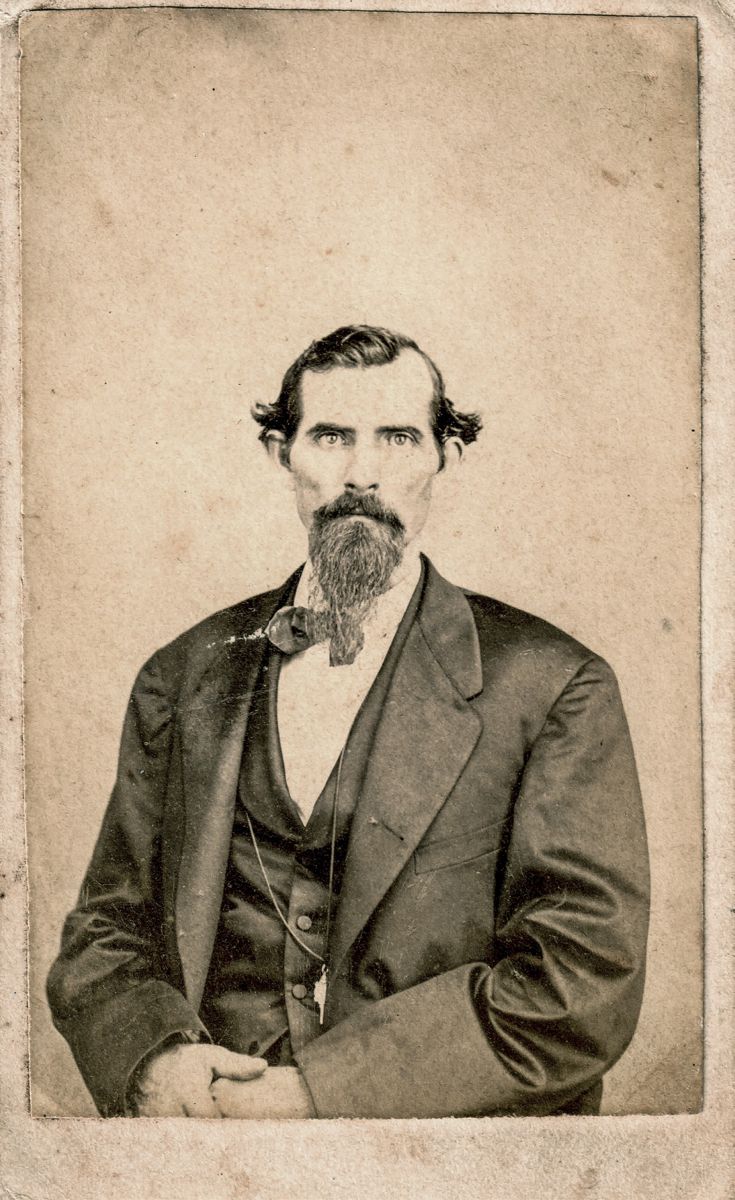
A FiEry Eyed Son of TexaS B ased on the available information when I first wrote about this image, I felt confident that he was a Texan. Further information has come to light, leaving no doubt that he is a Texan. The soldier’s fierce gaze is so distinctive that when one of my readers saw him, he instantly recognized him as the same man who was the subject of a CDV that had been handed down in his family. The back of the CDV is marked “SB Russell Texas.” Russell worked out of Navasota, Texas. This confirms my speculation. Though my reader did not know his ancestor’s name, he knew his family history and kindly shared it with me. He wrote: “My aunt died at 92 in 2012 and her family gave my cousin (not her son) a bunch of old pictures and he gave them all to me and the picture I sent you was among them. I had been impressed with the guy in my CDV because he looked like someone to not be messed with, so I was immediately taken when I saw your image. Thus, he is very likely a Baird. John Baird came from Scotland to Va., in the 1600s. His son, John, was born in 1675 and he married Margaret Rookings in 1699, a granddaughter of William Rookings, III, whose plantation was Flying Point in Surry and who took part in Bacon’s Rebellion (pre-Revolution Virginia). So, the Bairds spread from James City County to Surry, where they built a mill there in 1749 and sold it to Thomas Averis and the millpond is still there and called Avery’s Pond today.
They went on to Lunenburg Co. and it split and they ended up in the Mecklenburg part. Then they went to Richmond Co, etc., east of Charlotte, and then to Lebanon, Tenn., and they did milling the whole way. There is an intersection with nothing there called Bairds Mills where they had a grist mill and a saw mill and the farm, run by my g-grandfather, Clem, (he) supplied fresh food for the Baird Hotel in Lebanon. Most of the cedars of Lebanon went out west as fence posts. A lot of Bairds went down to Texas before, during, and after the CW. Clem went to Waco, Texas, after the Civil War and his grandsons were my dad and two uncles from Waco.”
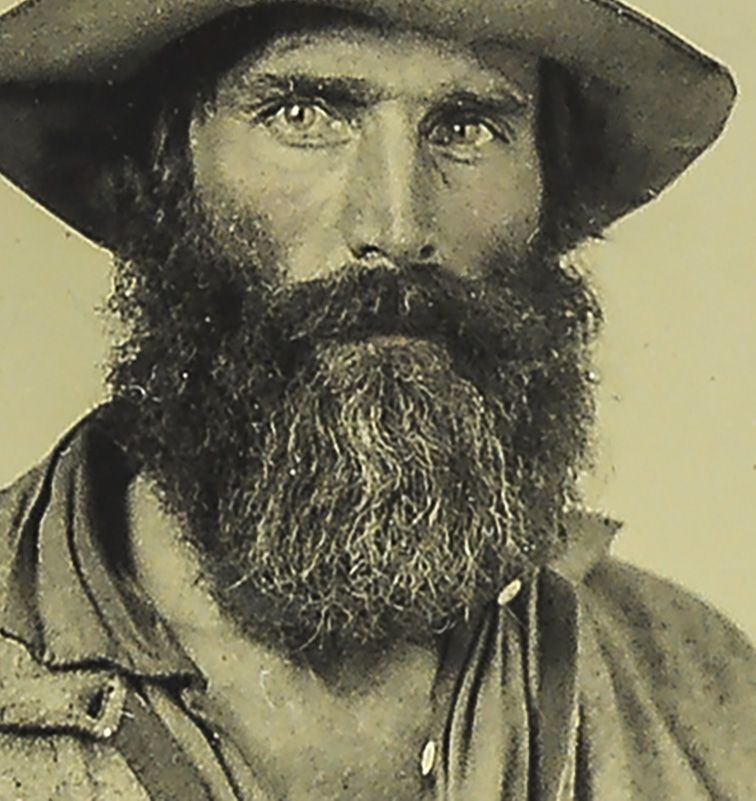
Images are judged on what I call the “three c’s” – content, contrast, and clarity. All images are judged by these three things. They are few in proportion, but there are many that have perfect contrast. The same can be said for clarity. Among the many images that survive, only a few have the clarity that reveals the thread of the shirt, or the texture of the hair on the subject’s face, and the veins in his hands, but once in a while, we are blessed with that perfect clarity. So, of the images that have perfect contrast and perfect clarity, all we can say is that there are none better; one cannot exceed the other once the level of perfection is reached. Content is intangible.
With this additional information, it is likely that, with time, a skilled researcher should be able to identify this man. Not only would you have the family and image information to work with, but it is evident, based on the half-plate size of the image and his dress in this image, that he is a man of some prominence.
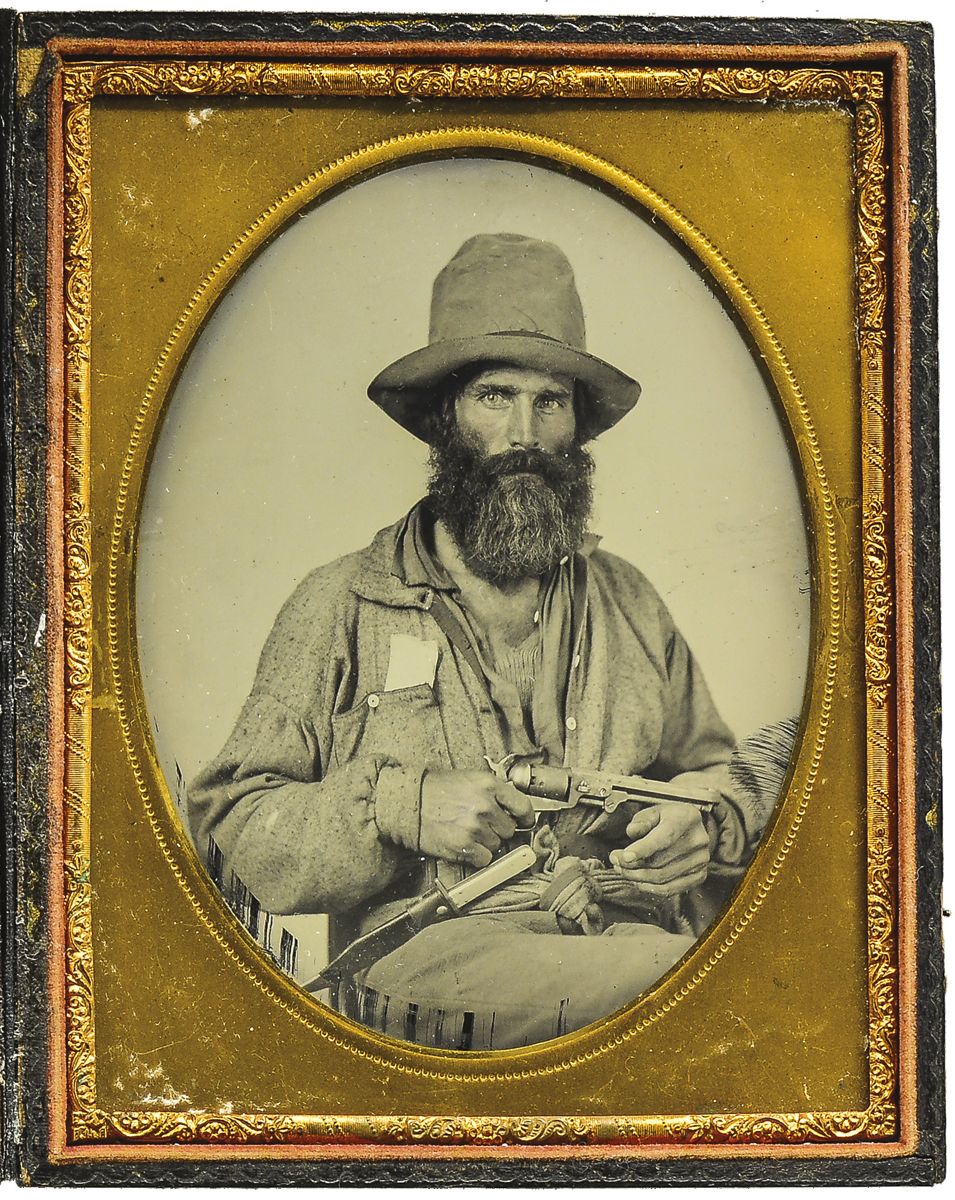
The image is a half-plate ambrotype. It has perfect contrast; it has excellent clarity, and there are none with better content.
Though we do not know who the subject is, we know that the image came from Texas. I once read a soldier’s description of the men in the Texas Brigade upon seeing them for the first time: “They were all hat, hair, and knife.” These two things leave no doubt that this is indeed one of Texas’ finest. This fiery-eyed son of Texas wears a sash as a belt to hold his Sheffield Bowie knife’s leather and brass scabbard. He also wears a leather belt. In his left hand, he holds a half-cocked, .36 caliber Colt M1851 Navy revolver resting on his right hand. There are no percussion caps on the revolver ’s nipples. He wears a distinctive gray jacket with a tall collar and a large, single-breast pocket, like that found on the Western Theatre battle shirts. The nap of his jacket is crystal clear. The jacket’s outer body is wool, and the interior borders are piped in red flannel. Under the jacket, he wears a collared shirt and, under that, an undershirt with a vertical weave. Both shirts use the same bone or ivory buttons. A tobacco bag sets in his pocket. Under the three shirts, all open at the collar, the hair on his chest can be seen. His hat is so clear that each stitch can be clearly seen, as can the loose thread on the hat band. The veins in his hands stand out as though he is in your presence, and the hairs on his face can be counted.
About the Author Shannon Pritchard has authored numerous articles relating to the authentication, care, and conservation of Confederate antiques, including several cover articles and is the author of the definitive work on Confederate collectibles, the widely acclaimed Collecting the Confederacy, Artifacts and Antiques from the War Between the States, and is co-author of Confederate Faces in Color.