
Rigdon, Ansley & Co. Revolvers: The Finest Confederate Revolvers
By John Sexton · Originally published March-April 2024 · pp. 54–79
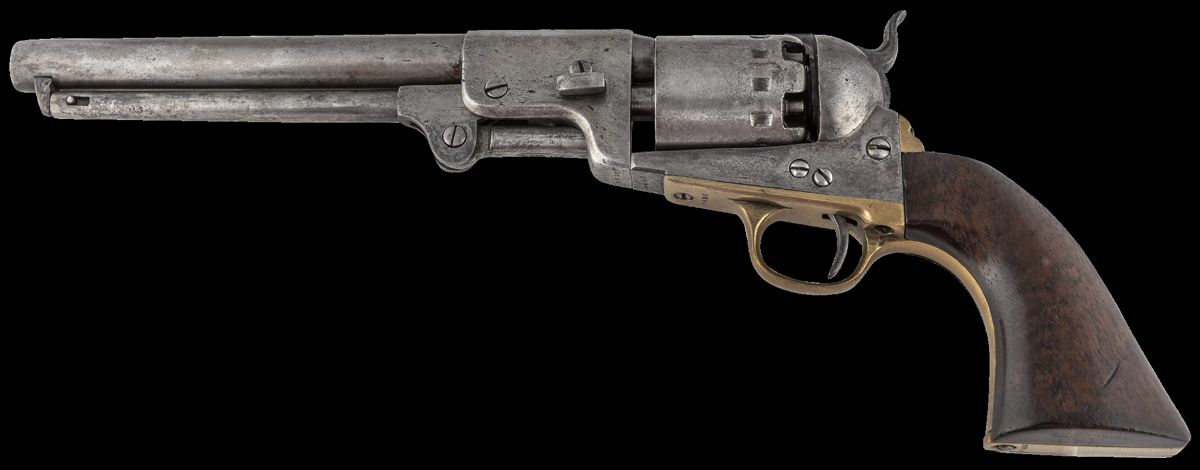
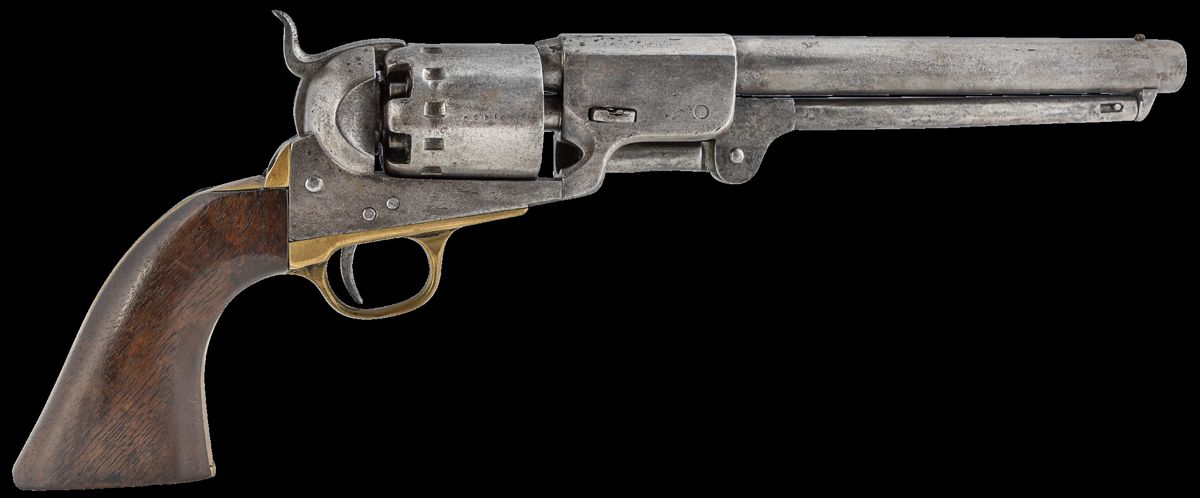
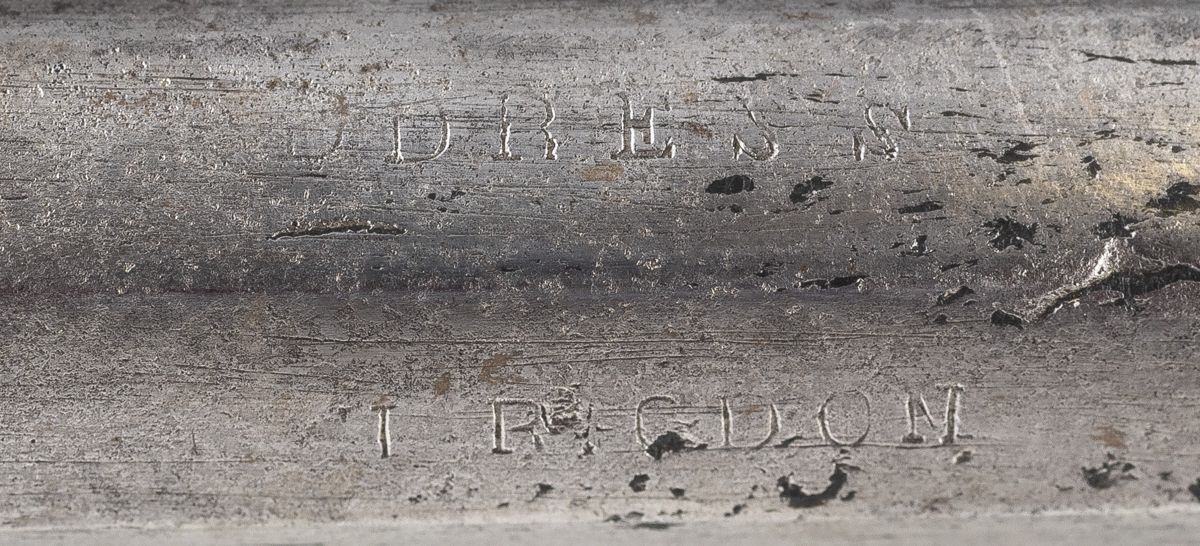
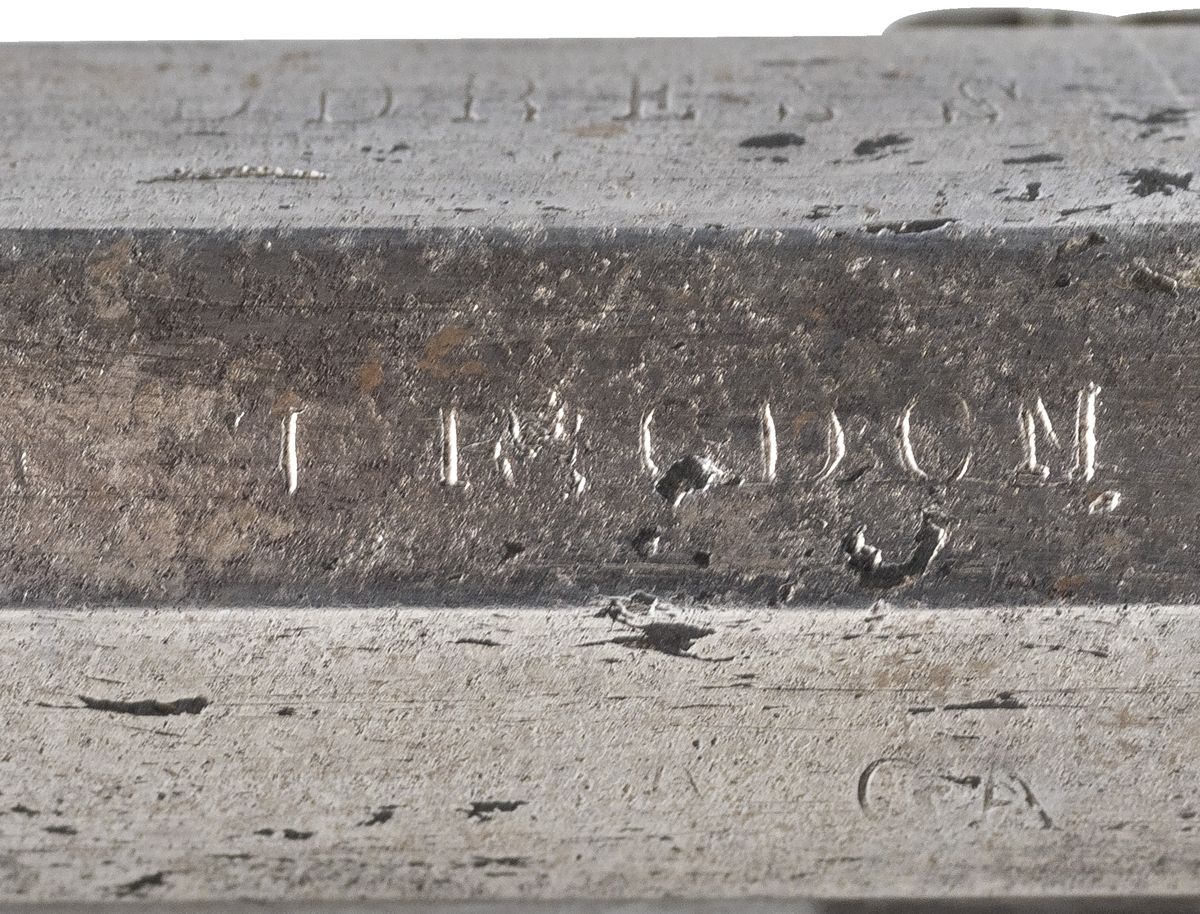
Wescom Hudgin (1829–1883), a The physician and engineer, County, Va., for Stonewall Jackson andJan JEB Stuart, later· Page Macon Telegraph (Macon, Georgia) · 10 1865,and Tue had an interesting military career. His first Confederate as a contract surgeon, but he wanted a different role. General service was as a “guide scout” in his native Culpepper JEB Stuart and Secretary of State Robert M.T. Hunter,on among Downloaded Jan 23, 20 others, personally recommended him for the Confederate Ordnance service because of his engineering background. He was assigned as the Assistant Small Arms Inspector responsible for the inspection of Rigdon, Ansley & Co. revolvers on January 22, 1864. He was ordered to Augusta for inspection and improvement of pistols and making there delivery to Col. George W. Rains at Augusta Arsenal. Wescom traveled on other inspection assignments in Georgia, mostly traveling back and forth between Augusta and Athens, where he inspected Cook & Brother rifles. His inspector’s cartouche is found on most Rigdon Ansley revolvers and late production Cook rifles and carbines. No name is found on any Rigdon Ansley revolver other than “C H Rigdon” on a few. The first revolver made as a sample with a new 12-stop safety system is SN 1490 with unique barrel markings on three flats of half octagonal barrel housing: “ADDRESS,” “CH RIGDON,” and “AUGUSTA GA.” Manhattan Arms, Newark, N.J., patented the 12-stop cylinder in 1859, and it competed well with Colt’s safety pin system because the pins were easily damaged, as seen on a majority of field-used U.S. and C.S. revolvers. Flattened or broken pins were so common that most surviving C.S. revolvers have no functional safety pins. The 12-stop system on RA revolvers worked well; no longer requiring pins, the cylinder could now safely lock between any two chambers with the hammer resting solidly. U.S. manufacturers would not infringe on Manhattan’s patent, fearing litigation; Confederate manufacturers did not worry about such minutiae; arms were desperately needed. The 12-stop cylinders addressed Colonel Gorgas’ concerns, along with the addition of a sturdier Colt-style loading arm latch and frame with capping channel cutout seen on all RA revolvers.
gusta
Macon Telegraph, dated Jan. 10, 1865, reprinted from Augusta Constitutionalist January 4. “Charles Rigdon, superintendent of the Confederate States Pistol Factory.”
Wescom Hudgin, after receiving his orders on February 22, 1864, traveled to Augusta and inspected revolvers. The first revolver that bears his cartouche, “WH in a diamond,” is SN 1262 marked “LEECH & RIGDON” from the March 1863 contract that Rigdon completed. The previous inspector mark found on Rigdon Ansley produced “Leech & Rigdon” marked revolvers was “S.C” or “S.Ca” thought to be an unknown South Carolina contract. A few of the last “SC” inspected revolvers also have an early “WH” cartouche. By the time of 12-stop RA production, Wescom Hudgin’s cartouche would be a script WH inside a parallelogram frame. This identical script cartouche is also found on Athens-made Cook & Brother rifles. Wescom Hudgin’s inspection mark is found on almost every Rigdon revolver that went into Confederate service. The few outliers that were not inspected and only marked “C H RIGDON” are thought to be private purchases or guns owned by Charles Rigdon himself.
Clipped By:
One outlier is SN 1482, which has no barrel markings, and is unmarked other than (continued on page 61) JACK3535
Tue, Jan 23,572024
Rigdon Ansley SN 1490
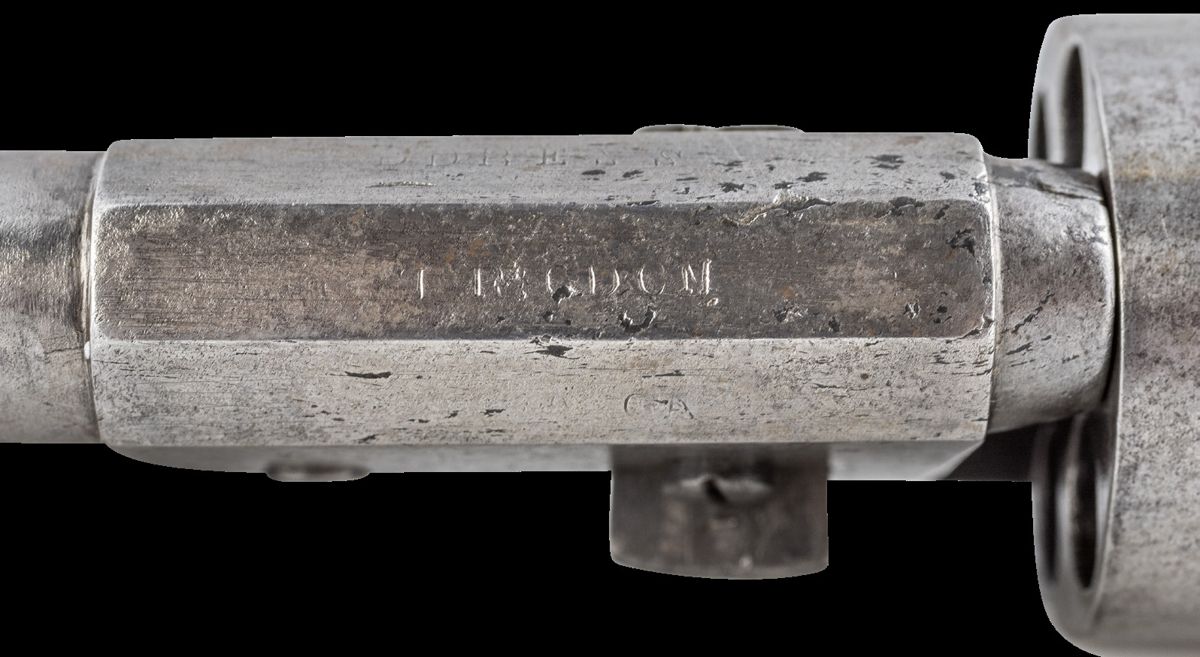
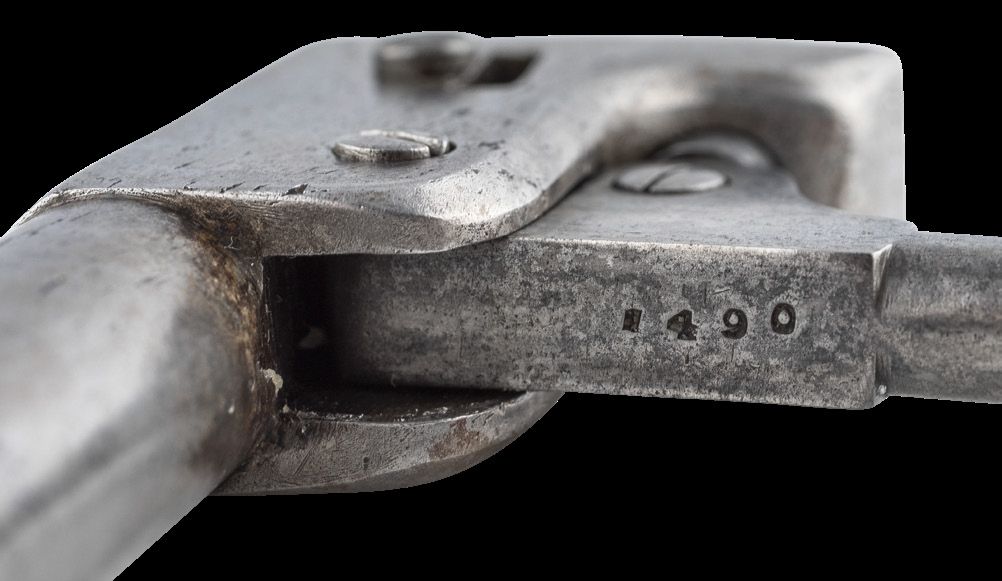
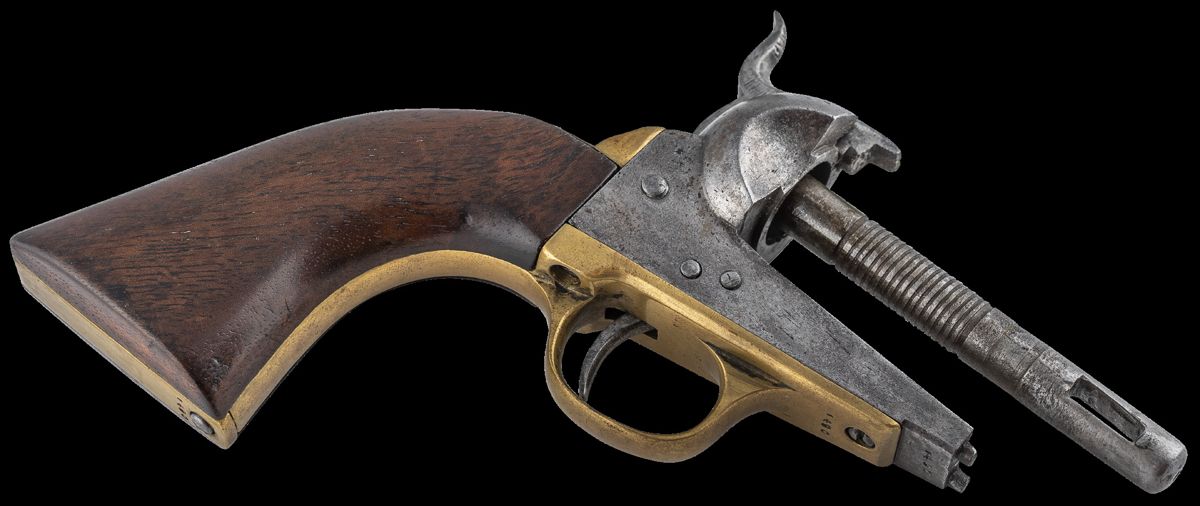
SN 1490 is the first 12-stop revolver made from Leech components. The uniquely marked barrel is marked on three flats, “ADDRESS,” CH RIGDON,” and “AUGUSTA GA.” There is no CSA final inspection supporting that this was the first revolver made with the new safety system of 12 stops.
“ADDRESS” stamping is done with individual dies and is unique to this first Rigdon revolver. Stamping is worn with “A” only partially discerned.
The grips on SN 1490 are a higher grade of walnut with some burl, appropriate for Rigdon’s first attempt with his new 12-stop cylinder safety system.
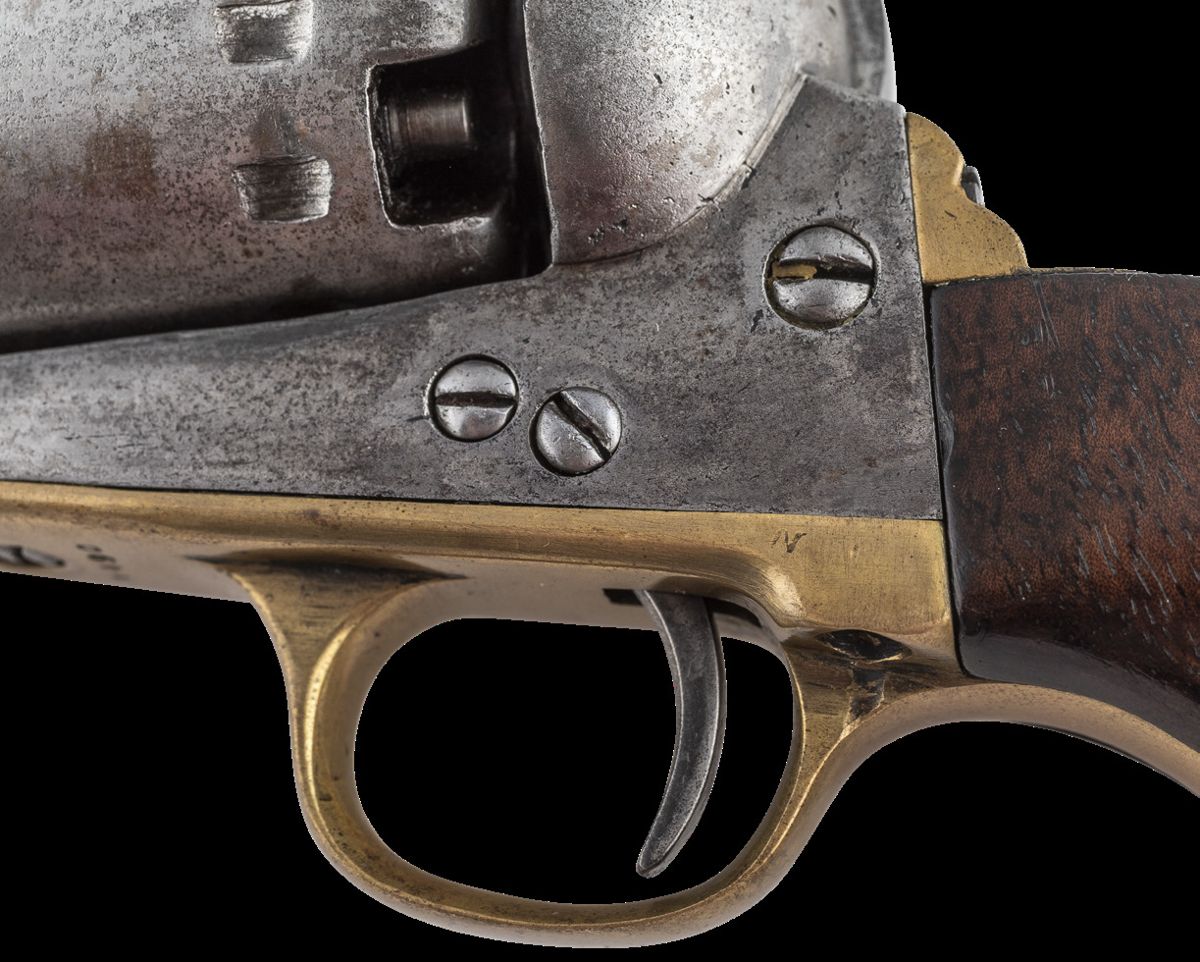
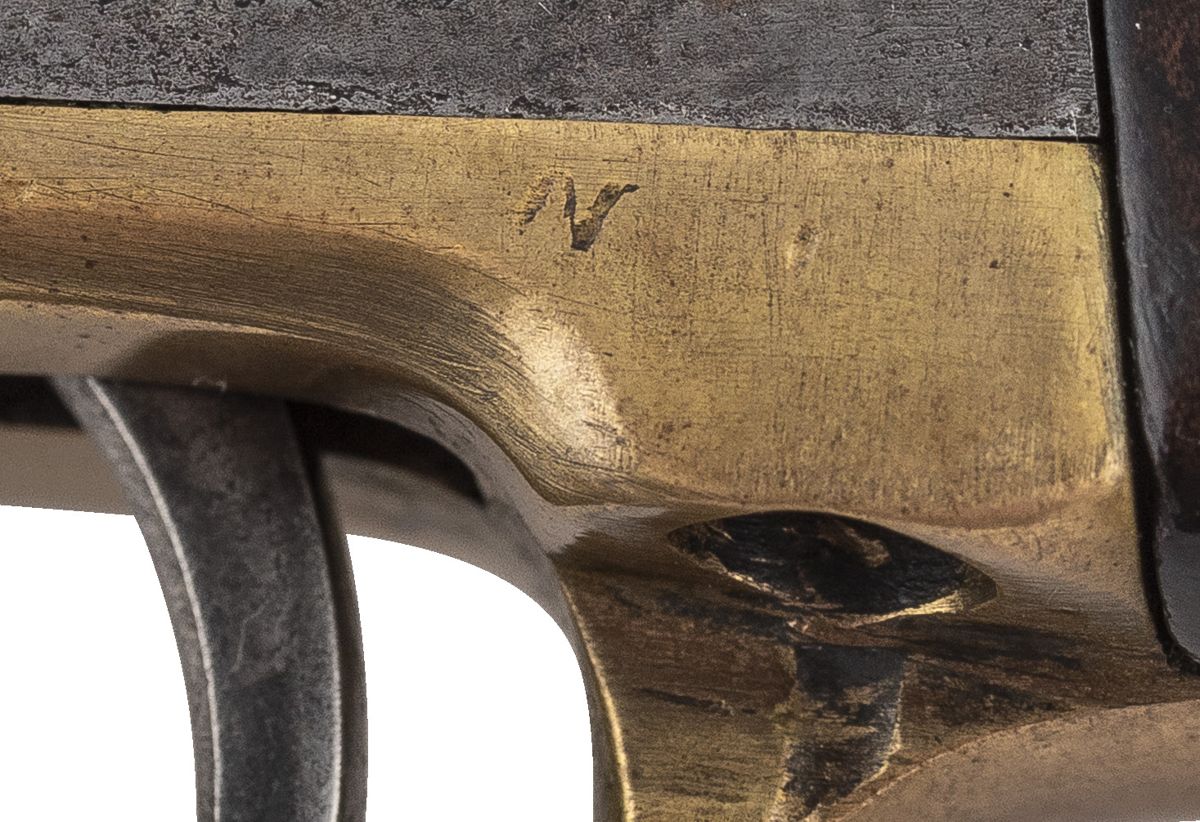
“N” inspection was polished out on the reused Leech trigger guard on SN 1490. “N” inspector unknown, but there are no Rigdon Ansley revolvers with this inspection.
”C H RIGDON” and “AUGUSTA GA” stamped on two barrel flats are the same dies found on all other “C H RIGDON” and “AUGUSTA GA” marked revolvers, though both dies are weak or worn on SN 1490.
(SN 1490 courtesy Augusta Museum of History. Photography courtesy Charlton Hall Galleries, Inc.)
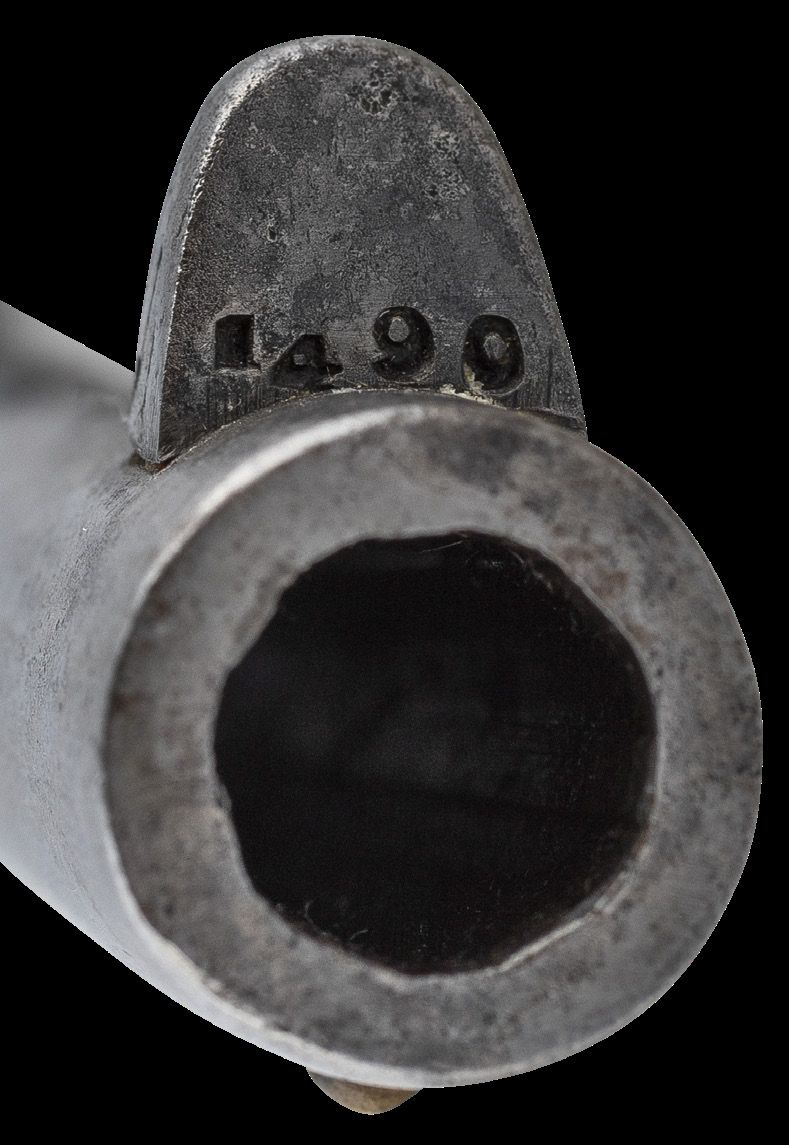
Continuing with the Leech chronology, loading lever catches were still serial numbered using the same dies used until about SN 1900 when a new larger font appeared. The “1” would not be much more than a dot at the end; it is just a short rectangle on this gun, hardly recognizable as “1.”
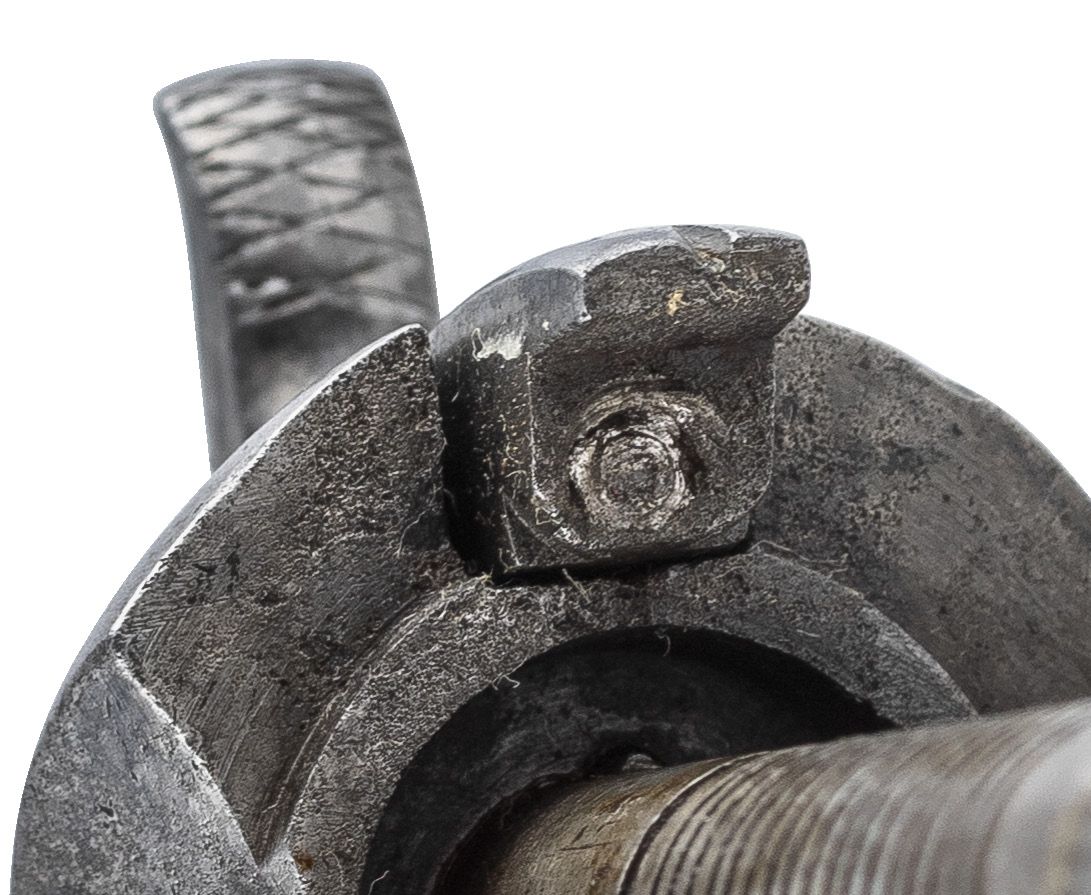
The Leech loading arm has a ball-pin attachment on SN 1490; all later standard production guns would have a Colt-type spring catch as recommended by Gorgas.
(from page 57) serial numbers and “W” on frame. It is the earliest SN with a 12-stop cylinder, but the cylinder is the only RA component. The cylinder is not serial numbered; the revolver appears to be part of the March 1863 Leech & Rigdon contract that Rigdon completed. SN 1482, other than the un-numbered cylinder, is totally Leech with a slotted hammer for safety pins not seen after SN 925. I only have poor photos of this revolver from Fred Edmunds with no notes. I would like to examine this revolver in person to see where it fits chronologically.
Rigdon Ansley Confederate inspected production revolvers numbers begin about SN 1500. These are revolvers contracted January 1, 1864, by Rigdon, Ansley & Co. Production began Spring-Summer of 1864 with a total production of about 850 pistols, but still following the serial number sequence used by L&R and starting sometime after the last known Leech & Rigdon SN 1461.
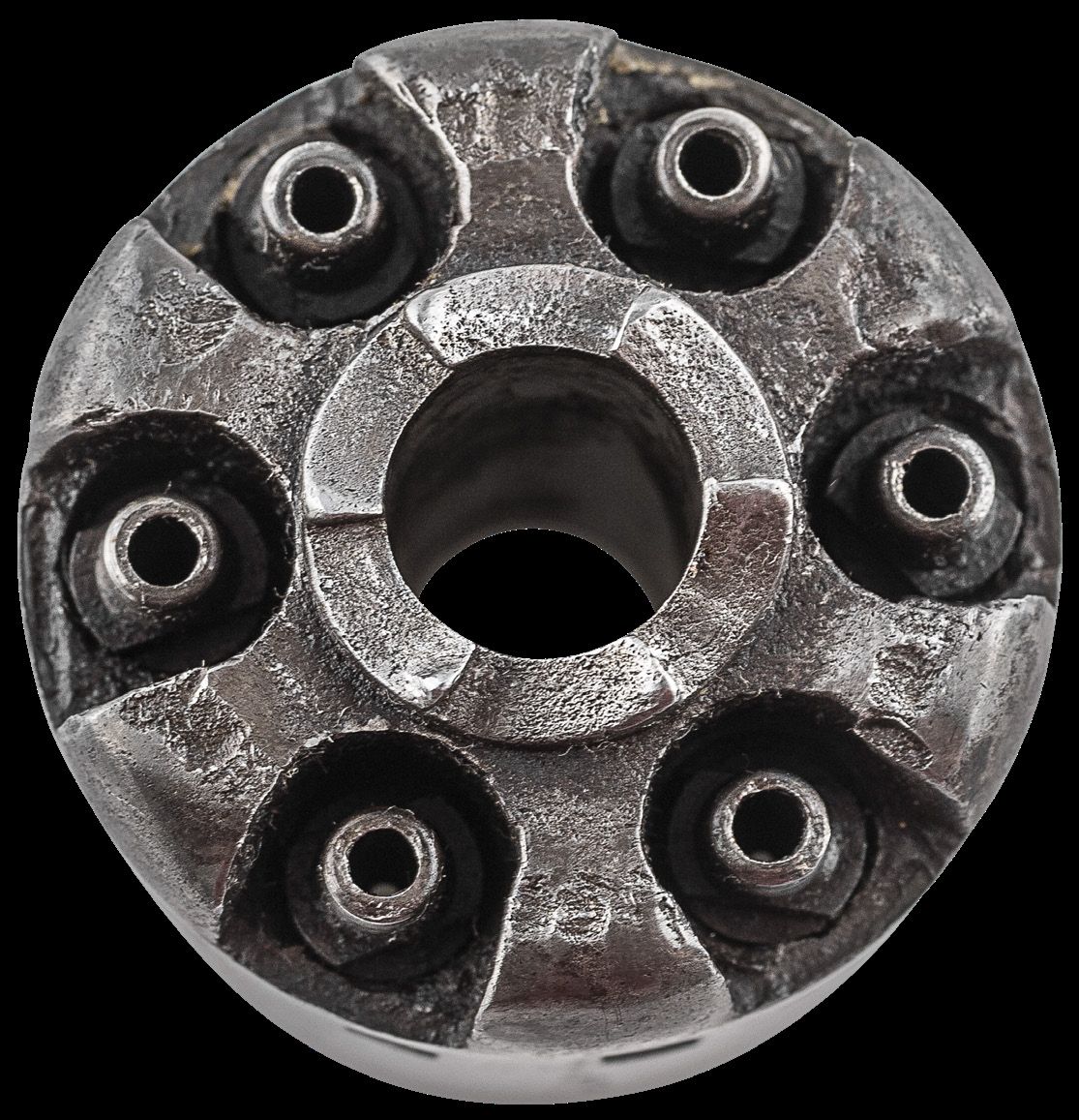
The hammer face on SN 1490 has no slot for a safety pin (Rigdon), and the cylinder was never drilled for safety pins, but residual irregular bumps are present to mark where pins were to be placed (Rigdon-transition).
The frame is a standard Leech type with no capping channel cutout; the capping channel cutout is found on all standard production Rigdon & Ansley revolvers, and even two Leech & Rigdon marked revolvers made by RA when completing the March 1863 contract were without safety pins (SNs 964 and 1421). SN 964 and 1421 were made after SN 1490 based on standard 12-stop cylinders with well-defined tapered grooves leading into stops.
Tapered grooves leading to rectangular stops are found on all standard production Rigdon Ansley revolvers. SN 1775 is shown and has the same small SN die font used on Leech & Rigdons.
Cylinder stops have short, tapered, shallow grooves for the hand to slide into rectangular stops. SN 1490 is the only Rigdon noted like this; all others have long, deeper, tapered grooves on each stop. Even earlier, SNs 964, 1421, and 1482 have distinct deep grooves supporting evidence that they were produced after SN 1490.
Rigdon Ansley NSN - Unique 5-inch Barrel
Unique “CH RIGDON” pocket revolver with 5-inch barrel and shortened frame, select burl walnut handles. It has an internally filed “V” cut into the backstrap that is observed on only one other “CH RIGDON” marked revolver, SN 2316.
The frame is shorter than any other Leech or Rigdon product. Marked “C H RIGDON” on top flat with no other marking. It may have been one of Charles Rigdon’s personal revolvers along with 2316. The 5-inch barrel revolver is a unique “pocket-sized” navy with a custom shorter frame. Early authority and collector Sam Smith stated in his text he felt the 5-inch revolver was Rigdon’s, though no source was cited. Provenance: Ex-Herman Stumpf collection, ex-Morris Racker collection, Chicago, IL. It is also pictured in Albaugh’s Confederate Arms, 1957, page 13, and pictured and described in Sellers and Smith’s American Percussion Revolvers, 1971. Sold by James Julia Auctions, October 2017.
Rigdon Ansley “AUGUSTA GA CSA” – SN 1610
The first standard production Rigdon Ansley revolvers known are in the SN range 1512-1689 with barrels marked “AUGUSTA GA” and “CSA.” Most of the 26 survivors in this range were marked and inspected in grips by Wescom Hudgin’s script cartouche and on trigger guards as inspected either “W” or “J.” The “W,” I believe, is Wescom Hudgin, and the “J,” probably Major Frank Jones, Chief Small Arms Inspector, who was Hudgin’s direct superior and frequented all the Georgia pistol manufacturers.
“AUGUSTA GA” has a ”stutter” to the mark seen on several guns in this range. The “CSA” marking is from a separate die.
SN 1610 retains most of its original factory varnished grips, another characteristic of Rigdon Ansley. SN 1610 has all matching SNs with the exception of the loading lever, which is marked SN 1511, and represents a wartime repair. The earlier part has virtually identical matching wear and patina; note hammered over bolt instead of a screw. This revolver is among the most recent SN added to data base and was found in a South Georgia estate in September 2018. it is a beautiful “as found” and uncleaned gun with lots of original blue finish. Sold by Poulin Auctions, April 2019.
Inspector initial “J,” possibly for Chief Small Arms inspector Major Frank Jones, is found on the bottom of trigger guards of about 20-25% of surviving Rigdon revolvers. All “CSA” stamped Rigdon revolvers have an inspection initial.
Wescom Hudgin “WH” cartouche as found on most Rigdon Ansley revolvers.
Rigdon Ansley “CSA” – SN 1774
SN 1774 has small serial number fonts and spring wedge continued from Leech & Rigdon. This changed around SN 1900 with new set of larger numbering dies and solid non-spring wedges.
In the serial range starting about 1690, revolver barrels are marked “CSA” on top barrel flat showing Confederate government ownership until the last documented revolver SN 2359.
Wescom Hudgin script inspection cartouche and small “W” stamped on the trigger guard’s side. The “W” is found on about 70-75% of all Rigdon Ansleys, and likely also for Wescom Hudgin. “W” is found until the end of production; on the last 150 revolvers when Chief Inspector Maj. Frank Jones was back in Richmond and only Hudgin was in Georgia.
Rigdon Ansley revolvers have well-defined beveled barrel housings, frames, and trigger guards. Rigdon had finer detail and finish throughout to all his revolvers.
Rigdon Ansley “CSA” – SN 1775
SN 1775 was sold with SN 1774 as a pair by James Julia Auctions in October 2007. Both are in beautiful condition and among the finest survivors as they retain most of their original finish. Both have Wescom Hudgin cartouches in their stocks but have different inspection initials on the trigger guards, representing Chief Small Arms Inspector Maj. Frank Jones and Asst. Small Arms Inspector Wescom Hudgins.
“J” inspection on trigger guard.
“WH” cartouche is partly obscured by “tacking marks.”
Rigdon Ansley “CH RIGDON” “AUGUSTA GA” “CSA” – SN 2182
SN 2182 is an outlier with no inspection cartouche or inspector initial. It is one of 3 revolvers with identical markings and no inspection, along with 2154 and 2180. In addition to “CSA” on the top flat, “CH RIGDON” is stamped on the left flat, and “AUGUSTA GA” on the right. Like the other “CH RIGDON” marked survivors, they are not government purchased and are personally associated with Charles Rigdon, either as private purchase or possible gifts.
“CH RIGDON”, “CSA”, “AUGUSTA GA” markings, solid non-spring wedge found in last production.
This gun has a long collection history dating to 1950 with Los Angeles gun shop owner Will Hoffeld; Rock Island Auctions, 2008; Jim Maconkey collection; James Julia Auctions 2015.
Fine varnished grips with no inspection cartouche and no inspection initial on the trigger guard. Large serial number fonts started about SN 1900.
Rigdon Ansley “CSA” – SN 2231 This gun has a long collection history starting with Harry Brooks and is pictured in TGCA Bulletin #36, July 1953; Jackson Arms, Dallas 1960; Conrad Smith Collection 1969; Don and Kathlee Bryan Collection; James Julia Auctions 2015.
SN 2231 is a very fine example of one of the last Rigdons made November-December 1864 with a “W” inspection mark on the trigger guard but no cartouche. These last revolvers with no cartouche in the SN 21542352 range are the last complete revolvers known.
“CSA” proof is still sharp, but die would break down soon on later survivors.
All matching crisp serial numbers, full varnish grips with no cartouche.
It is interesting that the “W’ has been moved above the trigger guard bow web, where it is observed on earlier revolvers.
Rigdon Ansley “CSA” – SN 2233
The “C” in the “CSA” die font is starting to break down; was perfect just two serial numbers prior.
SN 2233 has a long collection history; Bill Albaugh bought it in June 1954. It was owned later by Norm Flayderman, Jan Reifenberg 1979; Mattison Verdery collection, Augusta, Ga., 2000.
Deeply engraved initials “DR” on the butt strap, most likely those of a Confederate soldier who owned it. It is in fine condition showing little use.
Serial number well struck throughout. The solid non-spring wedge is often missing or replaced. This example shows matching SN.
Rigdon Ansley – SN 2316
Unique inset blade front sight, not observed on any standard production Confederate inspected examples.
SN 2316 is an outlier with a barrel marked “CH RIGDON” with no “CSA.” It was carried by a soldier in the family lineage of David Crockett, Elizabethton, Tenn., according to family correspondence.
Collections of Bernie Braverman, Tom Wibberley and Buddy Bass, last sold by Poulin Auctions, June 2020.
Distinct deep tapered grooves leading to cylinder stops, characteristic of all RA production.
Matching large font SNs are observed throughout apart from the grips, which are penciled “1091.”
Grips are inspected “S.C” which is only found on RA guns manufactured in the SN ~1000-1300 range. These were the “Leech & Rigdon” marked revolvers that were part of L&R March 1863 contract. Grips are from Leech & Rigdon SN 1091.
CH RIGDON mark shows a distinct stutter like that seen on the other unique 5-inch revolver thought made at the same time. Both have a “V” cut internally inside the grip frame, not observed on standard production Confederate-inspected revolvers.
The trigger guard has “W” stamped on the trigger guard, is consistent with Rigdon Ansley production.
Manufacture of the Rigdon, Ansley revolvers ended in late 1864, although Wescom Hudgin may have inspected earlier completed revolvers as late as January 27, 1865. An ad ran for two weeks starting December 20, 1864, in Augusta Constitutionalist: “To Manufacturers—A rare opportunity for investment is offered in the purchase of a large factory building, 160 by 40, new with machinery well adapted for all kinds of work in metals, consisting of turning lathes, drill presses, etc. Also a brass foundry of 20 horse (power) which can be increased to fifty. A full quota of shafting, belting and other appliances for adapting it to any kind of manufacturing. The attention of Railroad Companies, manufacturers of small arms, cotton and woolen goods is especially directed to these works. Extensive ground for additional buildings and other purposes. For terms, etc. address Key Box No. 49, Augusta Post office.” Bill Albaugh stated in his 1963 text: “There can be little doubt that this advertisement refers to the plant of Rigdon, Ansley and Company and that “Key Box 49” was Charles H. Rigdon.”
Rigdon Ansley – SN 2352
“C” in “CSA” die is almost gone now, but production was ending too. This revolver was produced in December 1864. The number dies were also breaking down in the last few survivors, note the broken “3” and “5.”
SN 2352 is the highest SN of complete Rigdon & Ansley survivors documented. SN 2359 is the highest SN known, but it has mixed parts from Colt, including frame. Note the “crack” in the right side of the frame seen in several of the last produced revolvers when pistols were needed in the field so desperately. (Courtesy Rock Island Auction Company)
SN Ranges
Barrel Markings
Inspector Initials
Grip
Latch
Cap Channel
Wedge
SN Font
Approximate Dates
925-1000
LEECH & RIGDON CSA
N, D, ::
None
Pin-ball
No
Spring
Small
Jan. 1864
1000-1290
LEECH & RIGDON CSA
N, J, ::
WH, SC
Pin-ball
No
Spring
Small
Jan.-March 1864
1300-1461
LEECH & RIGDON CSA
J, ::
WH
Pin-ball
No
Spring
Small
March-April 1864
1482
None
W None
Pin-ball
No
Spring
Small
May 1864
1490
ADDRESS , CH RIGDON, AUGUSTA GA
N None
Pin-ball
No
Spring
Small
May 1864
1500-1690
AUGUSTA GA, CSA
J or W
WH
Colt
Yes
Spring
Small
June-July 1864
1691-1899
CSA
J or W
WH
Colt
Yes
Spring
Small
July-Sept. 1864
1900-2151
CSA
J or W
WH
Colt
Yes
Non-Spring
Large
Sept.-Nov. 1864
2154-2359
CSA
W None
Colt
Yes
Non-Spring
Large
Nov.-Dec. 1864
2154, 2180, 2182
CH RIGDON, AUGUSTA GA, CSA
None
None
Colt
Yes
Non-Spring
Large
Nov.-Dec. 1864
2316
CH RIGDON
W *SC
Colt
Yes
Non-Spring
Large
Dec. 1864
NSN
CH RIGDON
None
None
Colt
Yes
Non-Spring
Large
Dec. 1864
Production of revolvers by Rigdon, Ansley & Co. are detailed in the above chart.
SE L E C T E D B I B L IO G R A P H Y: Albaugh, William A. III, & Steuart, Richard D. The Original Confederate Colt, the Story of the Leech & Rigdon and Rigdon-Ansley Revolvers, privately published 1953. Albaugh, William A. III, Benet, Hugh Jr., and Simmons, Edward N., Confederate Handguns: Concerning the Guns The Men Who Made Them and the Times of Their Use, 1963. Anderson, Cecil W., “The Enterprising Mr. Thomas Leech,” North South Trader Magazine, July-August 1985: 12-18. Gary, William A., Confederate Revolvers, 1987. Meredith, Edward “Ted” “Variations of the Leech & Rigdon Revolver,” The American Society of Arms Collectors Bulletin (ASAC) #72, 1995. Sexton, John “Proprietary Database of Confederate Revolvers.” Steuart, Richard D., “Firearms of the Confederacy, 1861-1865,” Magazine of Antique Firearms, December 1911: Volume III, No. 1. Wall, Kent “Leech and Rigdon Revisited,” ASAC Bulletin 103.
About the Author
John Sexton holds the highest designations as certified appraiser with International Society of Appraisers (ISA-CAPP) & accredited senior appraiser with American Society of Appraisers (ASA) specializing in Civil War memorabilia. He authenticates and evaluates other rare and valuable historic items as well. He is coauthor of the book Confederate Bowie Knives (2012) with Jack W. Melton Jr. and Josh Phillips, published by Mowbray Publishing Inc., and author of many periodical articles on Confederate arms. John’s contact information: website: www.civilwarappraiser.com, email civilwarappraiser@gmail.com, cell 770-329-4984.