
Photography Before and During the Civil War
By Stephen Davis, Ph.D. · Originally published November-December 2024 · pp. 41–50
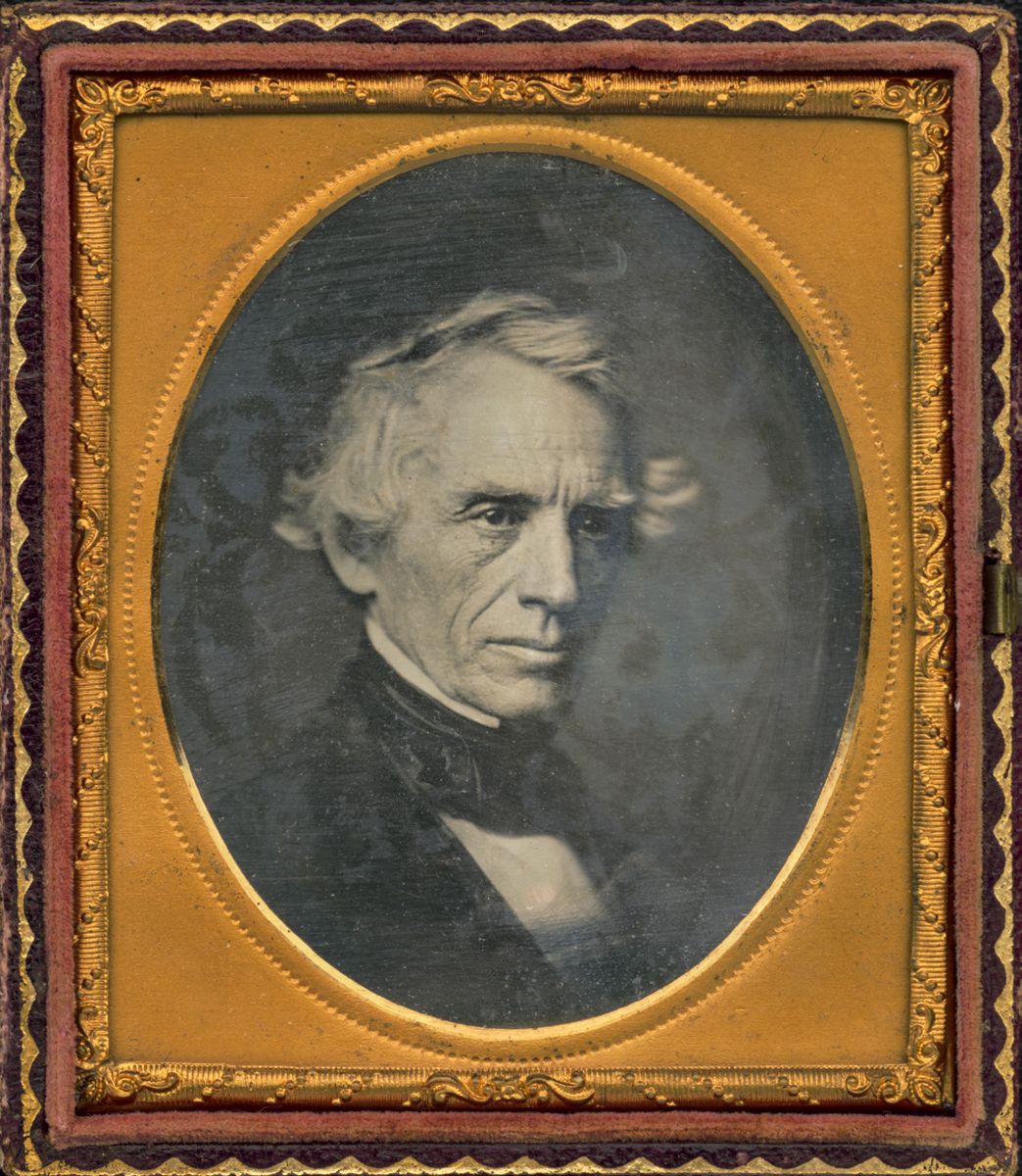
- he plated a copper sheet with liquid silver and polished it; 2. he put the silver surface in a little box filled with iodine vapor for up to half an hour till it turned golden or yellow; 3. he then placed the silver-sensitized sheet in a camera obscura for from five to twelve minutes, depending on the air temperature; 4. with the reversed image now present on the plate (but not yet visible), he developed it with liquid mercury vapor; 5. he washed the developed plate with hyposulfite of soda, dried, then mounted it under glass; 6. voila! The finished daguerreotype! Daguerre’s process got into the papers immediately. The London Globe published an article on it four days after the Paris meeting. With communication between America and Europe still dependent on steamers at sea, it was the arrival of the H.M.S. British Queen in New York on September 20 that brought the Globe with its reporting on Daguerre’s exciting new process. Within days, papers in major U.S. cities were reprinting the article.2 This set industrious artisans to work trying to produce their own daguerreotypes. Within a month, Samuel F.B. Morse, the same Morse who had invented the electromagnetic telegraph in 1835–37, produced a daguerreotype at his New York office.
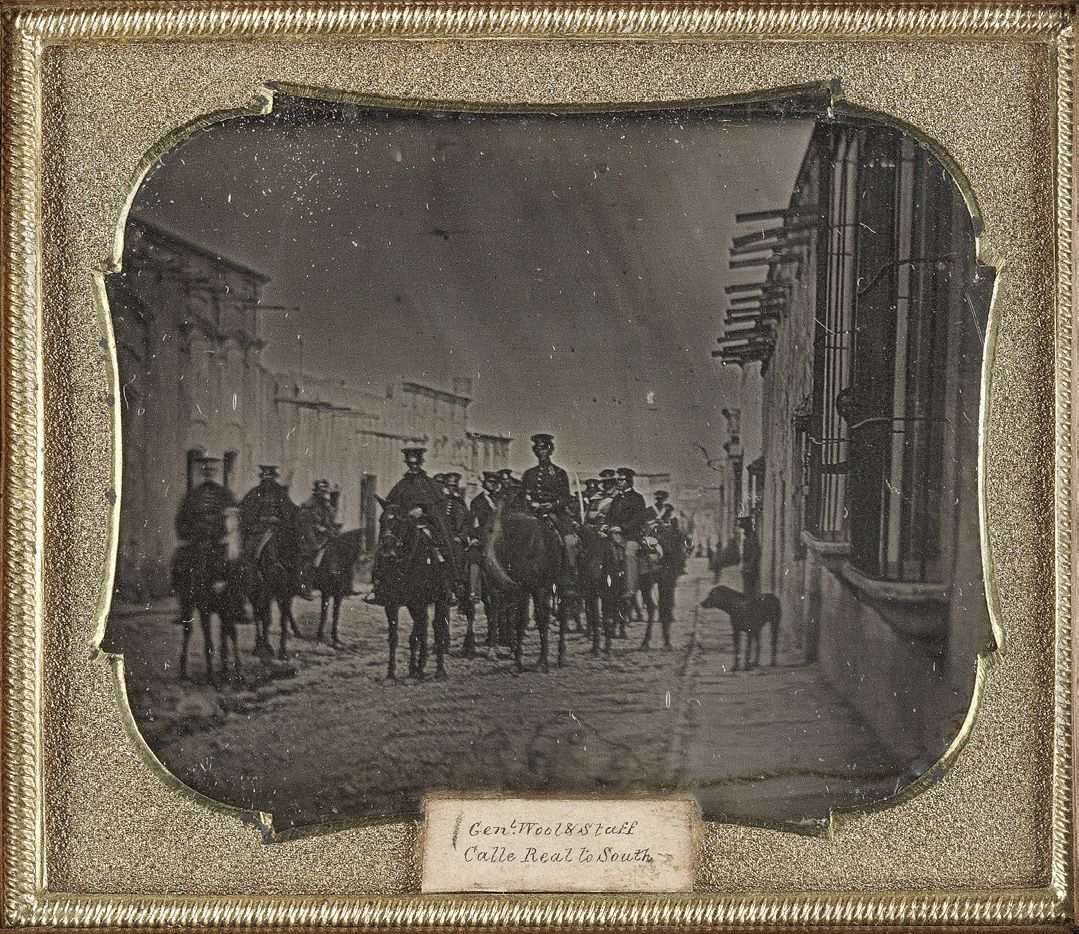
Daguerreotypists in other major American cities began to advertise for patrons. Along the way, experimenters improved the production process. During the time of his experiments with daguerreotypes, Morse was visited by a young Mathew Brady. Brady, born in upstate New York around 1822, was enthralled and learned the process from Morse. He then opened his own studio in New York City in 1844. Within a year he came up with the idea of making pictures of every famous person he could. In this endeavor he famously succeeded, thus earning from Robert Taft, historian of American photography, credit as an accomplished “photographic historian.”3 The idea of photographs capturing people and moments in history was further tested, and advanced, during the Mexican-American War of 1846-48. One of a handful of existing daguerreotypes shows General John E. Wool and his staff on horseback in the streets of Saltillo during the winter of 1846-47. A few years later, in 1855, Englishman Roger Fenton went to Crimea and took pictures of the Crimean War. He and his assistant produced more than 350 images, the best known of which are titled “Valley of the Shadow of Death”—referring to the famous charge of the Light Brigade.4
Daguerreotype of Brigadier General John E. Wool and his staff at Saltillo, Mexico, in 1846. (Yale University Library)
Samuel F.B. Morse. (Library of Congress)
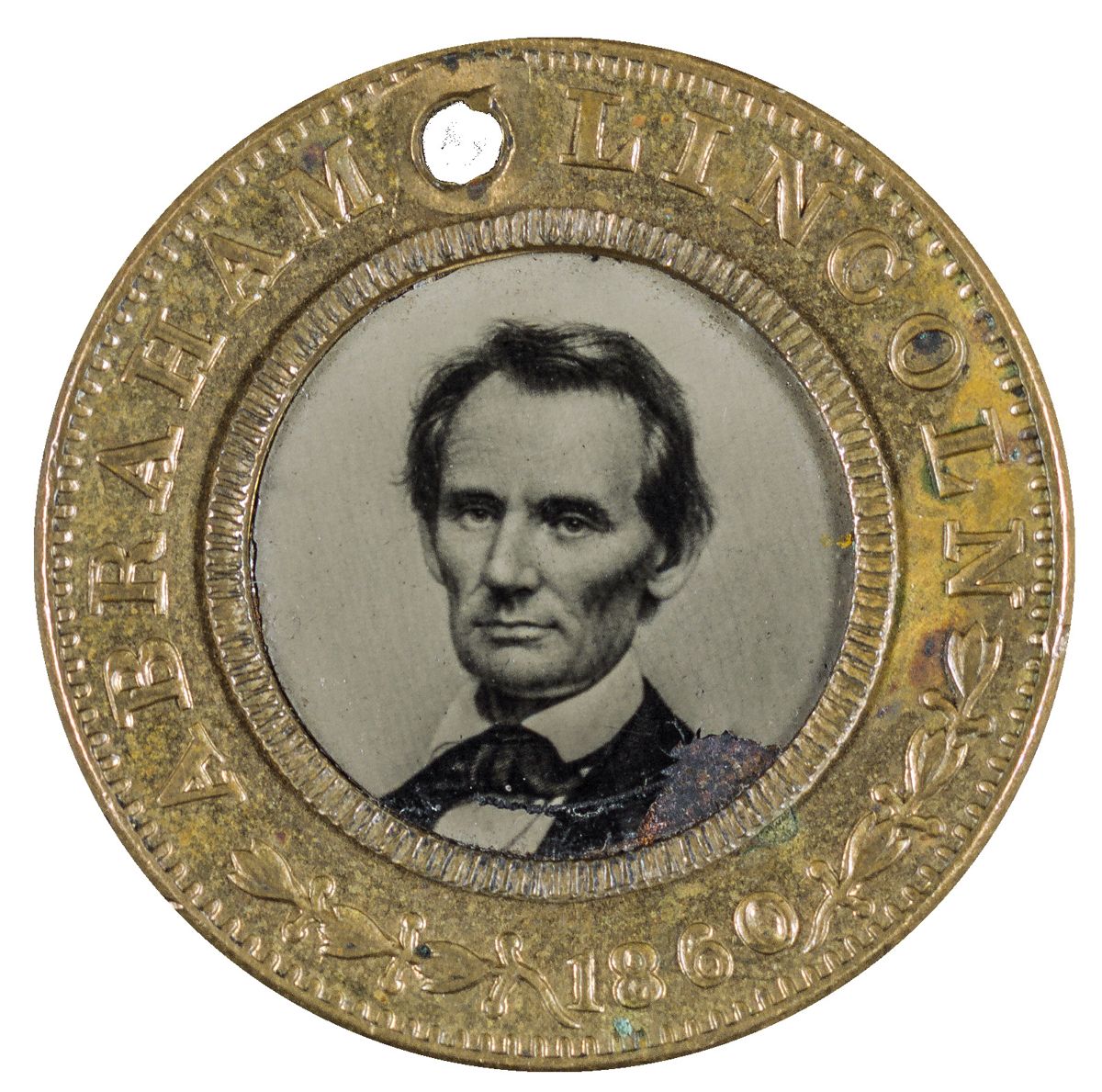
By that time, the daguerreotype was already in decline, replaced by wet-plate collodion photography, as experimenters sought continually to improve the process and product. A major defect of Daguerre’s image was that there was no way to replicate it, and visually, because of its mirror-like surface, the picture could only be seen in a certain light. As the craft was evolving, the term photography took hold as artisans began producing images on chemically treated paper. Early photographers in the 1840s also began speaking of negatives (original images in the camera) and positives (prints derived from the negative).5 In 1850 nearly a thousand daguerreotypists were in business across the country. “The rage for photography was overwhelming,” writes historian George Gilbert. In every major city, photographic galleries, like exhibition rooms in the finest museums, made it possible for everyone to see and acclaim photographic likenesses—and to consider a suitable time for arranging a sitting. In the earliest years some studio-galleries had from three hundred to a thousand sittings a day. Few photographs made in the mass production centers were larger than a playing card, and most were only half that size. Encased in their protective leather, wood, or molded housings with the delicate Daguerrean image under glass, the miniatures were an endless source of amazement. Although at first they cost about $5 (more than a week’s wages for a workingman), it was not long before studio competition brought prices down to a dollar, then fifty cents, and, finally, to the outrage of the leading photographers, twenty-five cents.6 Technological improvements continued. Physicians in the late 1840s had learned that collodion, a syrupy mix of nitrated cotton in alcohol with ether, when dried formed a transparent membrane that could be applied to wound and burn victims as a “skin.” Photographic experimenters realized that collodion could be applied to glass plates to prevent their fracturing. Better still, collodion could absorb the photographer’s light-sensitive chemicals. Thus was born the “wet-plate.” Transfer of the image from glass plate negative to treated paper produced positive prints lots of them inexpensively. In 1857 a European nobleman had his likeness glued onto small (2 ½ x 4 inch) cards, giving rise to the carte de visite—also known as a CDV—a popular type of cheap photographic portrait. Oliver Wendell Holmes, the Massachusetts physician and man-ofletters, called the card-portraits “the social currency, the sentimental green-backs of civilization.” Then in 1855 came the ambrotype: a glass negative backed with black velvet or black paper to render it into a positive, and encased in the manner of daguerreotypes. Ambrotypes came in a variety of sizes. Most common were 2 ¾ inches x 3 ¼ inches and 3 ¼ inches x 4 ¼ inches. Their rise as successor to earlier technology was swift. Frank Leslie’s Illustrated Newspaper in New York used photographic images as the basis for its wood engravers to make printable pictures. In 1856, of 123 pictures rendered from photographs, 100 came from ambrotypes, ten from paper photos, and thirteen from daguerreotypes.7 Photography for everybody took another step forward in 1856 with the tintype (or ferrotype, from the Latin for iron). Tintypes used the same sticky wet emulsion as before, but on lightweight metal instead of glass. The finished product also needed no protective case. The result was a photographic image that could be produced for a single cent. The inexpensive ferrotype became a political campaign tool just before the Civil War. In February 1860, a beardless, fifty-one-year-old lawyer from Illinois, Abraham Lincoln, was in New York to give a speech he hoped would advance his chances of securing the Republican Party’s presidential nomination. On February 27, the day of his address at the Cooper Union (a Manhattan school with a large auditorium), Lincoln stopped by Mathew Brady’s studio at Broadway and Tenth Street to have his picture taken. An enterprising resident of Waterbury, Conn., D. F. Maltby came up with the idea of putting tintype photos of leading politicians on small buttons for their supporters to wear. When manufactured by the Waterbury Button Company, Lincoln buttons—an estimated 300,000 were eventually circulated—put the Railsplitter’s face before countless Northerners. Both the speech and the button succeeded. Later Lincoln was heard to remark, “Brady and the Cooper Union made me president of the United States.”8
Abraham Lincoln-Hannibal Hamlin campaign button for 1860 presidential election. (Library of Congress)
Endnotes: 1.
The Knickerbocker (a New York magazine), quoted in Robert Taft, Photography and the American Scene: A Social History, 1839–1889 (New York: Dover Publications, 1964 [1938]), 3. Taft, Photography and the American Scene, 4-6, 14. Taft, Photography and the American Scene, 39, 43, 46, 55, 57, 59. Taft, Photography and the American Scene, 223-25; Allan R. Millett and Peter Maslowski, For the Common Defense: A Military History of the United States of America (New York: Free Press, 1994 [1984]), 153; Errol Morris, Believing Is Seeing (Observations on the Mysteries of Photography) (New York: Penguin Press, 2011), 3-4. Taft, Photography and the American Scene, 7-8, 101, 103, 105-106. Michael Fellman, “Foreword” in Ronald S. Coddington, Faces of the Civil War: An Album of Union Soldiers and Their Stories (Baltimore: Johns Hopkins University Press, 2004), x; George Gilbert, Photography: The Early Years A Historical Guide for Collectors (New York: Harper & Row, 1980), 37. Gilbert, Photography, 39; J. Matthew Gallman, “Foreword” in Ronald S. Coddington, African American Faces of the Civil War: An Album (Baltimore: Johns Hopkins University Press, 2012), xvii; James D. Horan, Timothy O’Sullivan: America’s Forgotten Photographer (New York: Bonanza Books, 1966), 13, 23; Fellman, “Foreword,” x-xi. Gilbert, Photography, 55-56, 58; Stephen B. Oates, With Malice Toward None: The Life of Abraham Lincoln (New York: Harper & Row 1977), 171; Harold Holzer, Lincoln at Cooper Union: The Speech that Made Abraham Lincoln President (New York: Simon & Schuster, 2004), 6, 105; James D. Horan, Mathew Brady: Historian with a Camera (New York: Crown Publishers, 1955), 31; Taft, Photography and the American Scene, 158.
Selected Civil War Photographers George Norman Barnard
George Norman Barnard (1819–1902). (National Portrait Gallery/ Smithsonian Institution)
Military Division of the Mississippi, to run the army’s photographic operations based in Nashville. He took numerous photographs of Nashville, Knoxville, and Chattanooga in the spring and summer of 1864. Poe directed Barnard to join him in Atlanta after Sherman took the city in September 1864. Once there, over the next two months he took pictures of Federal and Confederate fortifications, the occupying Union troops, and the city itself.
eorge N. Barnard was born Dec. 23, 1819 in Coventry, Conn. (near Hartford). He was a farmer’s son whose father died when George was six. In 1846 he opened a daguerreotype gallery in Oswego, N.Y.; he moved his studios to Syracuse in 1854. Barnard made the transition to wet-plate collodion photography and took his camera on the road. After the war started he joined Mathew Brady’s “photographic corps” and with James F. Gibson took pictures of Bull Run and the Washington area.
G When Sherman began his march to the sea, Barnard followed him and made images of Savannah. He did not accompany Sherman’s forces into the Carolinas, but in March 1865 sailed to Charleston and took more pictures. After the war, likely inspired by the 1866 publication of Alexander Gardner’s book he began planning an album of his own photographs. The resulting book, produced in only a hundred copies for sale by subscription, includes pictures of Georgia battlefields taken by Barnard in a return to the South in the spring of 1866.
Barnard was hired in December 1863 by Capt. Orlando M. Poe, chief engineer for the Union
The irony is that if it had not been for this Northern cameraman, hired by the Union army, we would not have any photographic evidence of Sherman’s occupation and subsequent destruction of Atlanta. Sources: • • • •
photographers such as Alexander Gardner. “By 1858, at the age of thirty-four,” writes biographer Roy Meredith, “he owned three elaborate galleries and was a comparatively wealthy man.”
Davis, Keith F. George N. Barnard: Photographer of Sherman’s Campaign. Kansas City MO: Hallmark Cards, 1990. Hoobler, James A. Cities Under the Gun: Images of Occupied Nashville and Chattanooga. Nashville: Rutledge Hill Press, 1986. Photographic Views of Sherman’s Campaign George N. Barnard With a New Preface by Beaumont Newhall. New York: Dover Publications, 1977. Rosenheim, Jeff L. Photography and the American Civil War. New York: Metropolitan Museum of Art, 2013. Chapter Eleven, “Barnard and His Views of Sherman’s Campaign.”
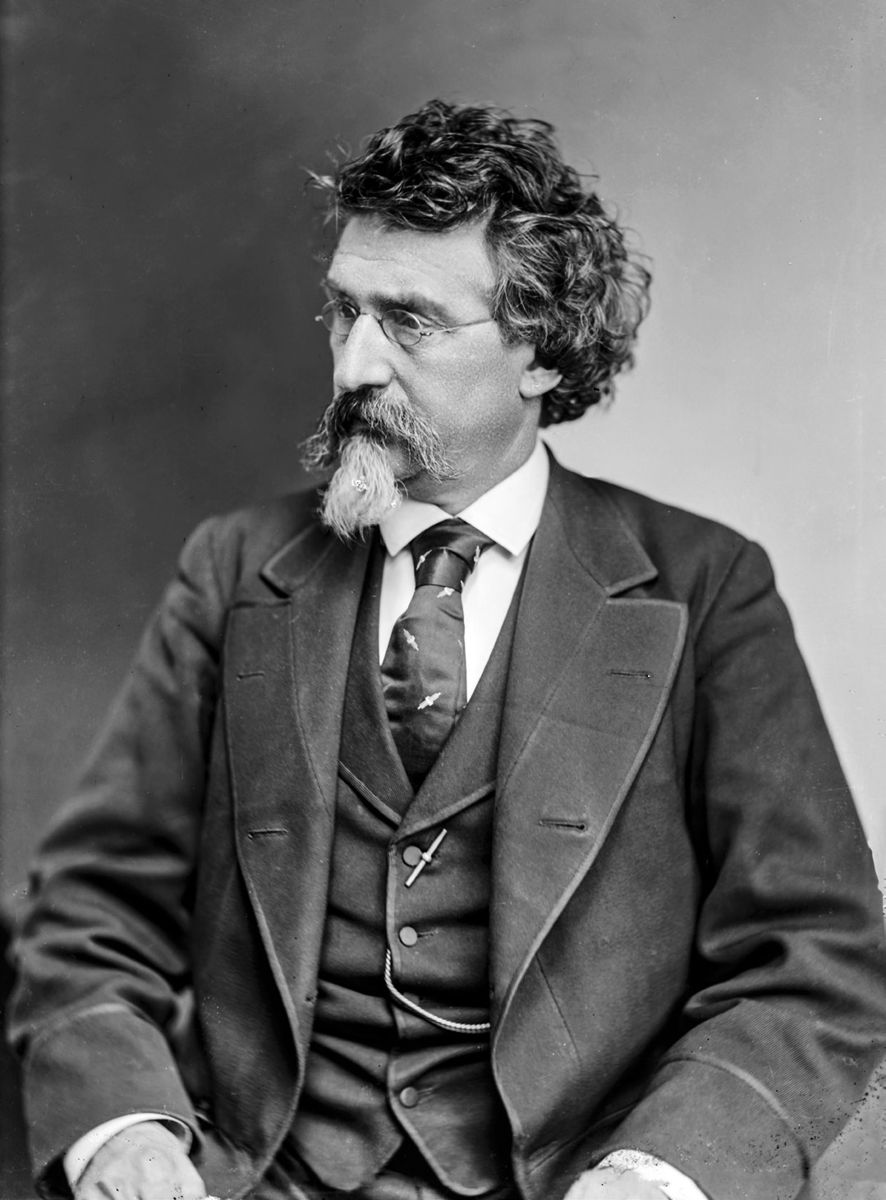
M Mathew B. Brady athew Brady was born near Saratoga, N.Y., around 1823 or 1824 (he later added his middle initial just to lengthen his name). By the time of the Civil War he had become the most famous photographer in America. He opened his first studio in New York City in 1844. He soon resolved to photograph as many distinguished people as he could. After he opened a second gallery in 1847 in Washington, he became the first cameraman to photograph a U.S. president and his Cabinet members. Failing eyesight curtailed Brady’s own camera work after 1851. Instead he employed talented
Mathew B. Brady (c. 1822–1896). (Library of Congress)
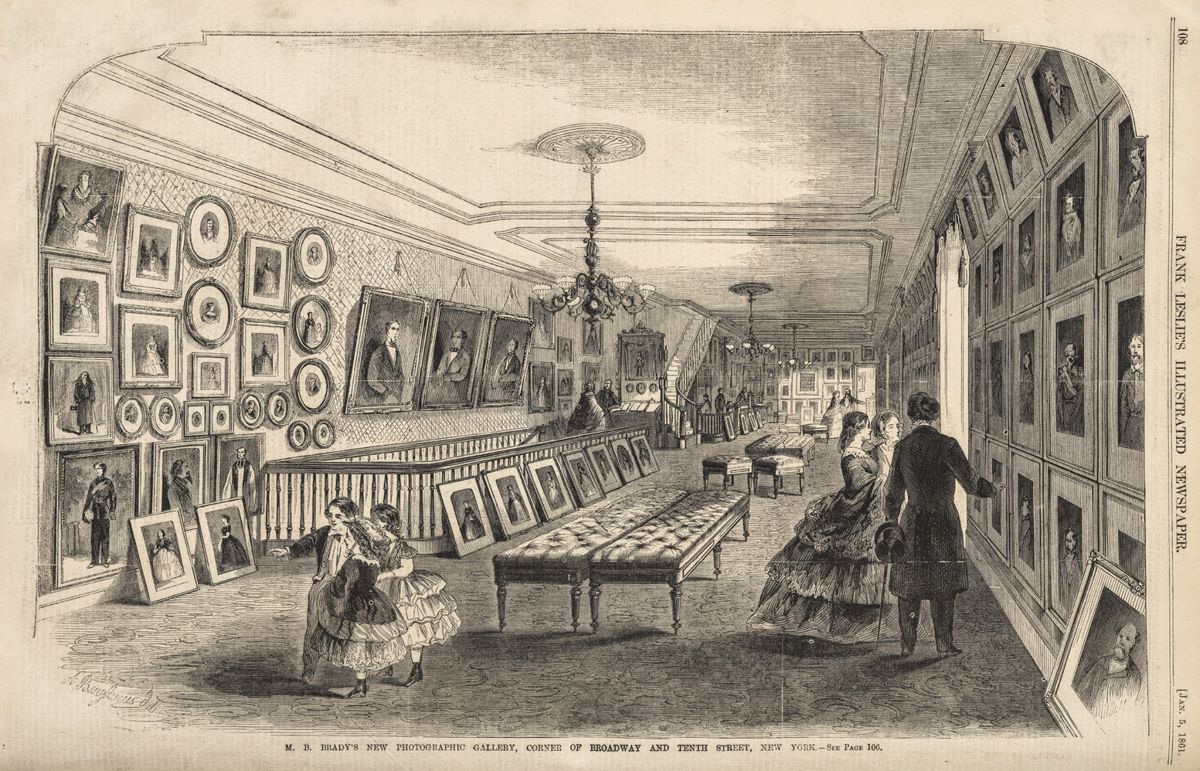
When war came, Brady resolved to photograph it, even securing President Lincoln’s permission (as long as he financed his operations himself, without government dollars). Brady was at Bull Run and Antietam. He and Gardner photographed the Maryland battlefield with its dead lying about. When displayed to the public in his New York gallery, Brady’s Antietam pictures shocked civilians. “It was so nearly like visiting the battlefield to look over these views,” wrote Oliver Wendell Holmes after seeing them.
Mathew B. Brady’s new photographic gallery, corner of Broadway and Tenth Street, New York . A. Berghaus del. (Library of Congress)
Brady continued to work well after the war. “Still taking pictures” was the headline of an article in the New York
World, April 12, 1891. The man who had been called “prince of the photographers” died of kidney disease in New York City on Jan. 15, 1896. Brady’s Civil War photographs are to be seen everywhere. His picture of Robert E. Lee, taken after Appomattox at his home in Richmond, is one of the most famous images of the Confederate general. The photograph of President Lincoln taken at Brady’s Washington studio in February 1864 is the one featured on our five-dollar bill. Sources: • • • • •
Hogge, Dennis. Mathew Brady’s First Manassas: A Biography and Battlefield Tour. Centreville VA: Old Dominion Publishers, 2013. Holmes, Oliver Wendell. “Doings of the Sunbeam.” Atlantic Monthly, July 1863. Horan, James D. Mathew Brady: Historian With a Camera. New York: Crown Publishers, 1955. Meredith, Roy. Mathew Brady’s Portrait of an Era. New York: W. W. Norton, 1982. Rosenheim, Jeff L. Photography and the American Civil War. New York: Metropolitan Museum of Art, 2013. Chapter One, “The Dead of Antietam.”
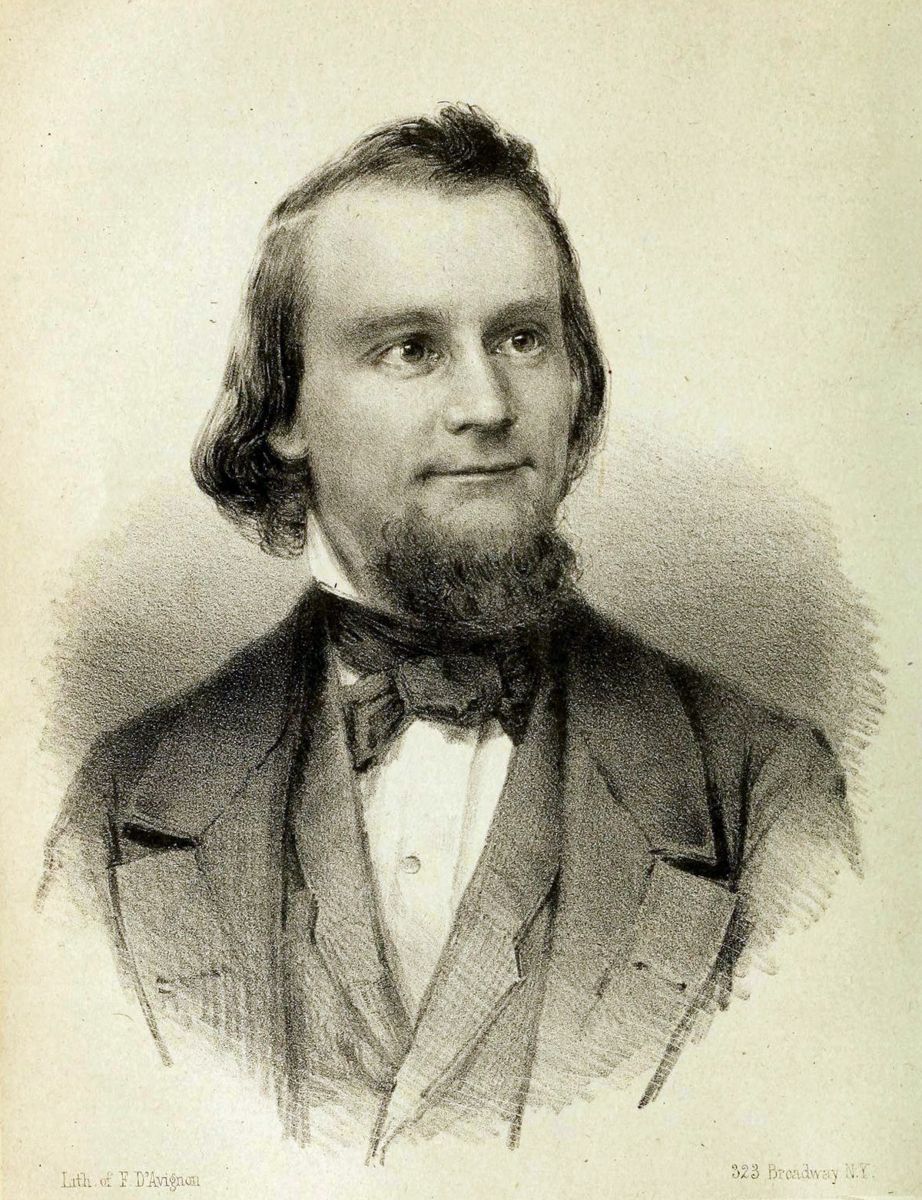
George Smith Cook
When Mathew Brady and his wife took a trip to Europe in July 1851, he left his New York studio in the hands of George Cook.
Born in Stratford, Conn., on Feb. 23, 1819, Cook learned to paint portraits in New Orleans during the 1830s. He then took up daguerreotypy until leaving for New Jersey in 1845; there he got married and bought his camera equipment. Returning to the South, he set up temporary galleries in Natchez, Miss., Huntsville, Ala., Macon, Ga., and elsewhere in the late 1840s. In 1849 he and his family settled in
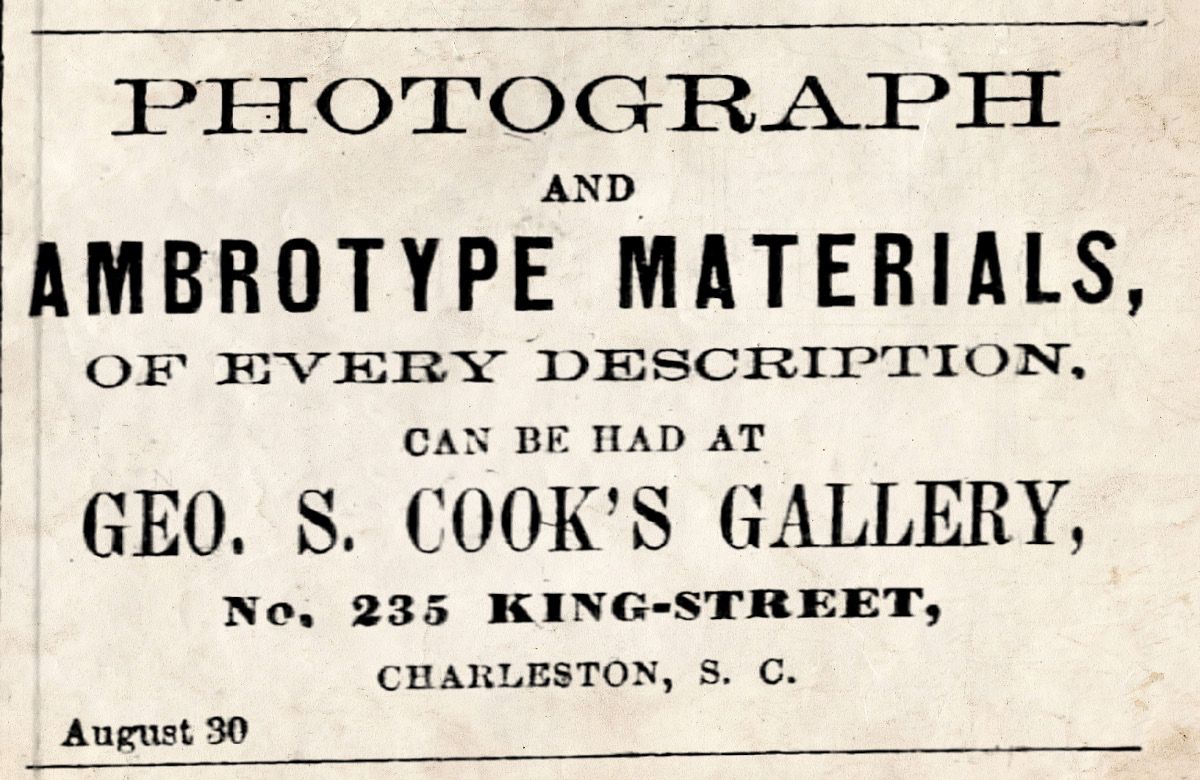
George S. Cook advertisement in the Charleston Mercury (Charleston, South Carolina), Friday, Oct. 4, 1861, page 2.
Lithograph of George S. Cook (1819–1902). (The Photographic Art-Journal Vol. 1, 1851)
Charleston, S.C. When his wife visited relatives in New Jersey, Cook went to Manhattan to meet Brady, and was thus available to manage the famed photographer’s studio at 205 Broadway. Brady’s return from abroad in May 1852 led Cook to return to his own studio in Charleston. During the 1850s, Cook was one of a dozen cameramen in the coastal city; he had his studio at 235 King Street. There he mastered the collodion technique and also the stereoscopic photograph. “The 3-D phenomenon was introduced to the world by Sir Charles Wheatstone of Great Britain in 1838, one year before the daguerreotype was introduced,” writes photographic historian Bob Zeller; “Wheatstone coined the word ‘stereograph’ and explained that people see objects in three dimensions because each eye sees a slightly different view.” After a Scotsman, Sir David Brewster, invented the stereoscope, a device for seeing two nearly identical images at once, viewers could hold it with its twin photographs and see the single scene in 3-D. Cook was thus well poised to become Charleston’s cameraman when war came. After the fall of Sumter, he photographed the fort and Confederate troops camped in the area. Later he took pictures of the David type torpedo boat and, in 1863, documented the reduction of Fort Sumter by Northern cannon. Sources: • •
Ramsey, Jack C., Jr. Photographer…Under Fire: The Story of George S. Cook (1819–1902). Green Bay WI: Historical Resources Press, 1994. Zeller, Bob. The Civil War in Depth: History in 3-D. San Francisco: Chronicle Books, 1992.
Jay Dearborn Edwards “THE WAR! Views of Pensacola, Forts Barancas, McRae and Pickens; of the Companies there—“Orleans Cadets” “Crescent Rifles” “Chausseurs a Pied,” Mississippi and Alabama Regiments and of the U.S. Fleet— 39 different Photographic Views, taken by an accomplished artist on the spot, will be on sale tomorrow at the Book Stores, Picture and Looking Glass Stores. They are very large and taken superbly. Price $1 per copy.”
This was the advertisement appearing in New Orleans newspapers on May 14, 1861, announcing the work of J.D. Edwards, a photographer in the city who had just returned from Pensacola, Fla., where Braxton Bragg’s Confederate troops were stationed near the Federal-held Fort Pickens.
Edwards was twenty-nine years old in 1860, working in the Crescent City as an “ambrotype portrait” maker in his studio at 23 Royal Street. In late April 1861, many Southern soldiers from his city were at Pensacola. Edwards saw commercial profit from pictures of Confederate soldiers there, so he traveled to the area of Fort Pickens. He photographed the camps of the 9th Mississippi, the Orleans Cadets, and famously General Bragg himself. Leslie D. Jensen assesses his work at Pensacola: Edwards had produced a comprehensive photographic panorama of the forts, guns, barracks, shipyards, and most importantly, the men who comprised the Confederate Army. Were it not for Edwards, photographic coverage of Confederate military events would be limited to a mere handful of isolated pictures, many of them taken in northern prison camps. J.D. Edwards died in Atlanta on June 6, 1900. Source: •
Jensen, Leslie D. “Photographer of the Confederacy: J. D. Edwards.” In William C. Davis, ed., Shadows of the Storm, Volume I in The Image of War: 1861-1865. New York: Doubleday & Company, 1981. Pp. 344-363.
Alexander Gardner
Alexander Gardner is less well-known than Mathew Brady. Yet, as E.F. Bleiler wrote a half-century ago, “he was simply the man who took many of the better-known pictures which usually appear under Brady’s name.” The photographer was born in Scotland in October 1821. At first a jeweler’s apprentice in Glasgow, he acquired a newspaper, but his scientific bent led him to experiment with photography in the early 1850s. He traveled to America in 1856. “Providentially, the thirty-five-year-old skilled jeweler, proficient journalist, and experienced businessman and photographer,” writes Mark Katz, “decided to initiate contact with Mathew Brady, the premier American photographer.”
Newspaper account from the New Orleans Crescent (New Orleans, Louisiana), Tuesday, May 14, 1861, page 1.
Before the war Gardner moved to Washington and, after the start of the conflict, became one of Brady’s famed assistants. He photographed Rose Greenhow, the Southern spy, at the Old Capitol prison in 1862. He took pictures of Confederate dead at Sharpsburg; the Burnside Bridge over Antietam Creek; Lincoln meeting McClellan after that battle; the dead Confederate sharpshooter at Devil’s Den at
Gardner gave up photography in 1879. The famed cameraman passed away on Dec. 10, 1882 at the age of sixty-one. Sources: • • • • •
Frassanito, William A. Antietam: The Photographic Legacy of America’s Bloodiest Day. New York: Charles Scribner’s Sons, 1978. Grant and Lee: The Virginia Campaigns 1864–1865. New York: Charles Scribner’s Sons, 1983. Gardner, Alexander. Gardner’s Photographic Sketch Book of the Civil War. New York: Dover Publications, 1959 [1866]. Katz, D. Mark. Witness to an Era: The Life and Photographs of Alexander Gardner. New York: Viking, 1991. Rosenheim, Jeff L. Photography and the American Civil War. New York: Metropolitan Museum of Art, 2013. Chapter Seven, “Gardner and His Photographic Sketchbook.”
A Royan M. Linn fter Union troops won the battle of Lookout Mountain, Tenn. On Nov. 24, 1863, the eighteen hundred-foot promontory got a distinguished visitor: Maj. Gen. Ulysses S. Grant, commander of the Army of the Cumberland.
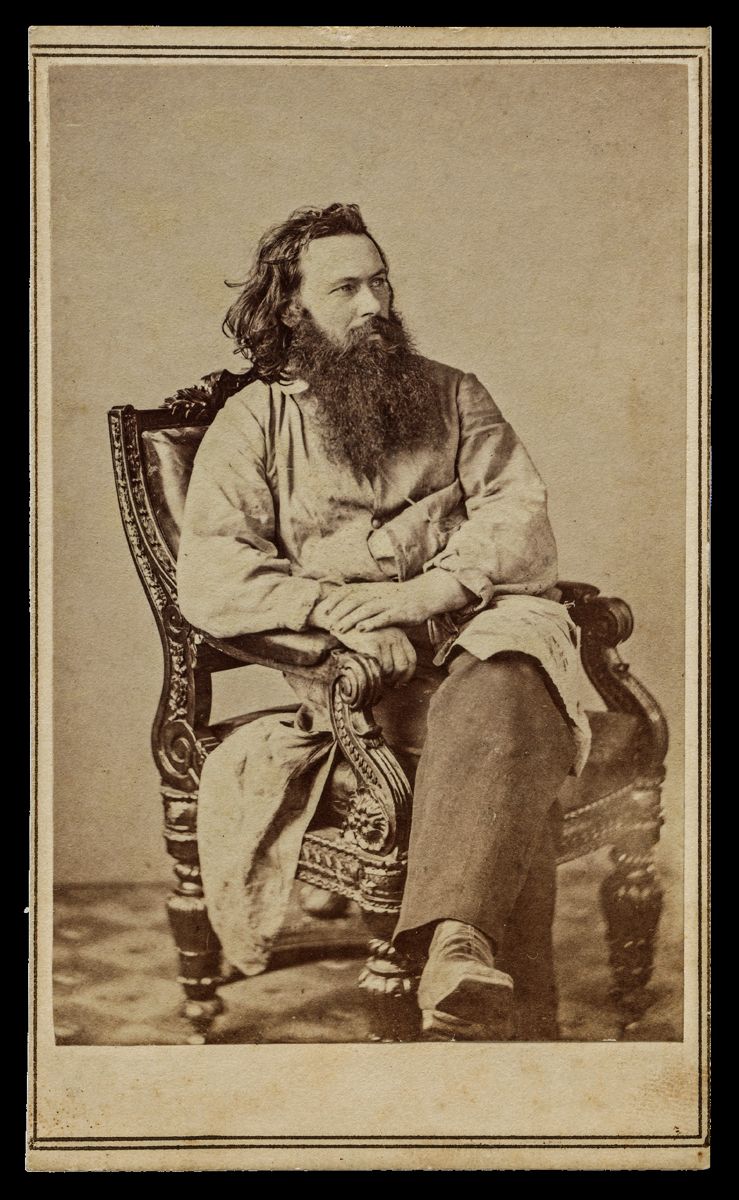
Alexander Gardner (1821–1882). (National Portrait Gallery, Smithsonian Institution)
Gettysburg; and Richmond after the fall of the city in April 1865. His images of President Lincoln are some of the most widely published. Gardner parted ways with Brady in the fall of 1862, and opened his own gallery in the nation’s capital. Sensing the commercial value of his wartime work, in 1865 he assembled a hundred photographs for a book, Gardner’s Photographic Sketch Book of the War. Because each image had to be hand-mounted in the book pages, the work was expensive, priced at $100. A second volume appeared in 1866. Several years after Appomattox, Gardner traveled west and continued his photographic work. He photographed Cheyenne, Arapahoe, and Sioux Indians in Wyoming and, when tribal chiefs traveled to Washington, in his studio.
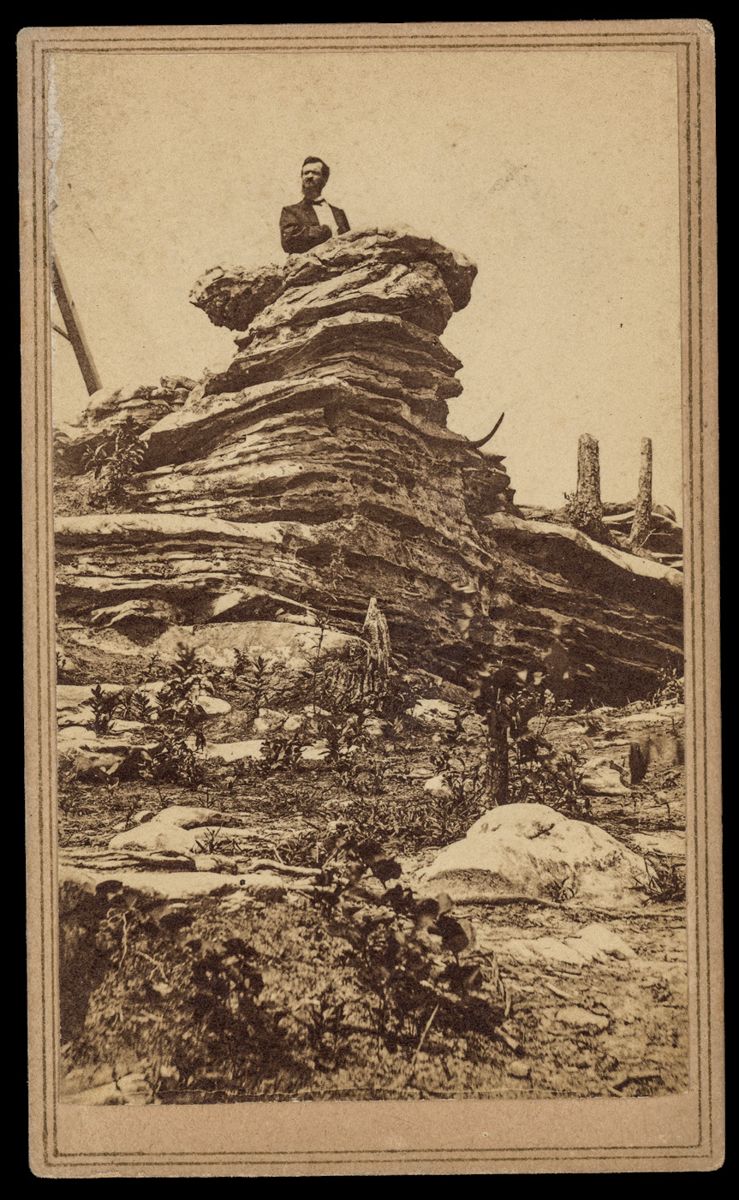
Photographer Royan M. Linn at Pulpit Rock on Lookout Mountain above Chattanooga, Tennessee. (Library of Congress)
• • •
I Davis, William C., ed. Fighting for Time: Volume Four of The Image of War 1861–1865. Garden City NY: Doubleday & Company, 1983. Pp. 123, 291. Hodges, Anthony. “The Linns of Lookout.” Military Images, Autumn 2018. Pp. 37-43. Ray, Frederic E. “The Photographers of the War.” In William C. Davis, ed., Shadows of the Storm. Volume One of The Image of War 1861–1865. Garden City NY: Doubleday & Company, 1981. Pp. 429-431.
Andrew David Lytle mmediately after the war, enterprising photographers such as Alexander Gardner and George Barnard began compiling their images in books. The technology of the time did not allow printing of photographs, so the artists had to paste each image onto the page. Needless to say, the photographic volumes were produced in very limited numbers, and at expensive prices. Halftone printing decades later allowed photographs to be published. The first important work of this kind was the monumental ten-volume Photographic History of the Civil War, published in 1911 under the editorship of Francis Trevelyan Miller.
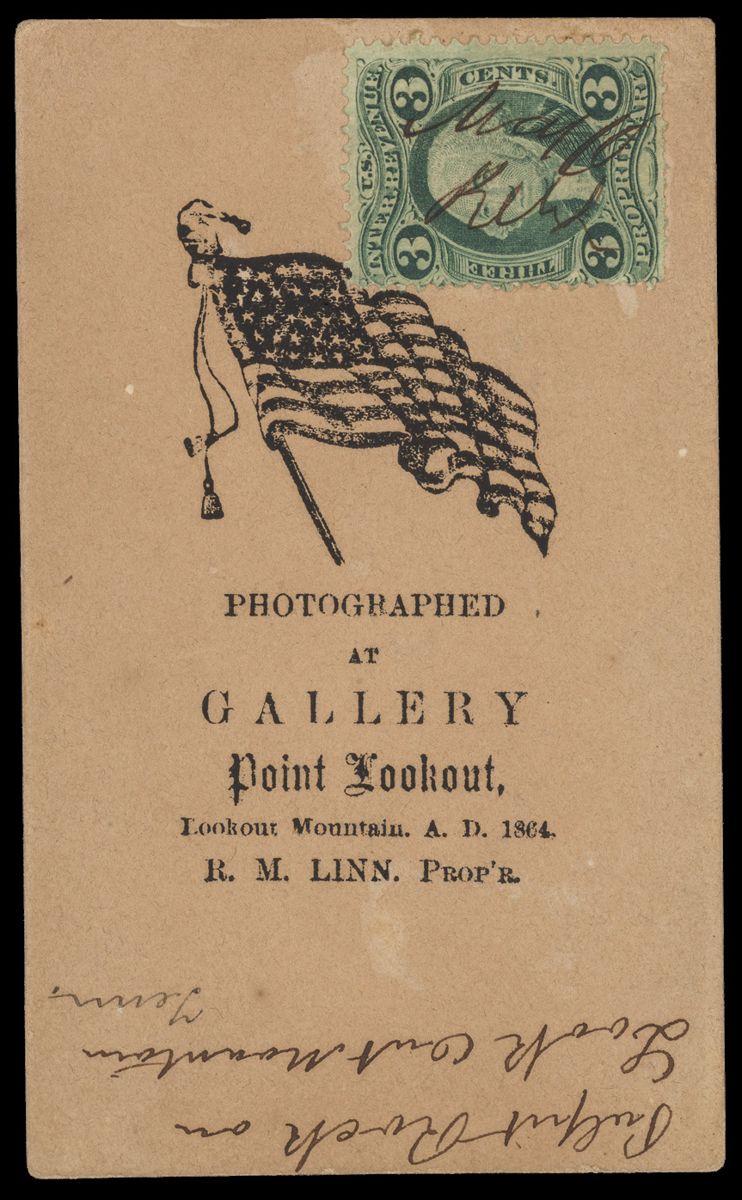
Back of Linn CDV with three cent George Washington stamp.
Linn, of Marion, Ohio, had been a photographer and cartographer for the Union army. In the fall of 1863 he took his camera and equipment to Chattanooga. There he was so impressed by the grandeur of Lookout Mountain that he bought a small house nearby, built a photographic studio on the mountain’s crest, and began taking pictures of the Northern officers and men who climbed the mountain and wanted to be seen perched on the cliff edges. Summoning his brother J. Birney, the two Linns operated Point Lookout Gallery. They took many photographs of Federal soldiers—generals down to privates—till the end of the war. The Linns’ gallery flourished even after R.M.’s death in 1872. J.B. Linn continued the work with Royan’s son George until 1886, when a Michigan firm bought the studio. For his wartime work Royan M. Linn has been called “the ‘Brady’ of itinerant portrait photographers.” Sources: •
Baumgartner. Richard M. and Larry M. Strayer. Echoes of Battle: The Struggle for Chattanooga. Huntington WV: Blue Acorn Press, 1996. Pp. 265, 433, 435-436, and 445.
Andrew David Lytle.
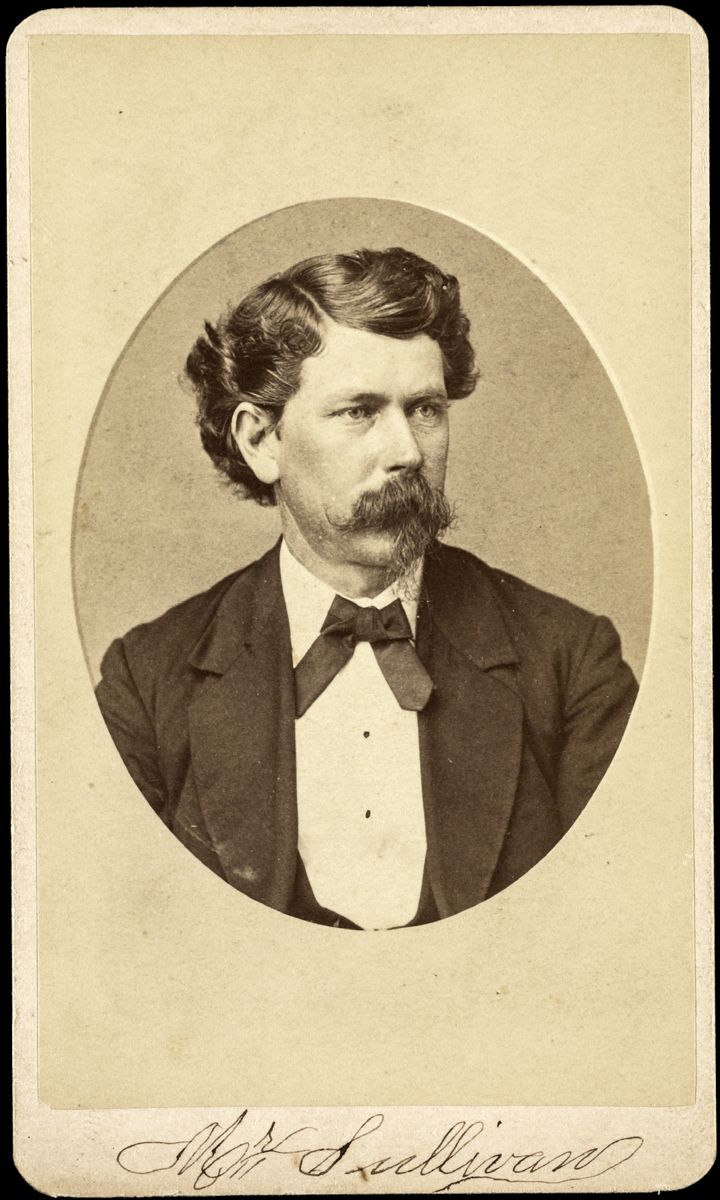
Miller and his staff knew of the work by major Northern cameramen, but Miller hired a recent Yale graduate, Roy Mason, to tour the South, literally looking for pictures. “My quarry,” he recalled, “was any and all photographs of war scenes taken by Southerners within the Confederate lines during the war.” In Baton Rouge, La., Mason learned that a local photographer, A.D. Lytle, had some pictures. Mason called on Lytle and found “a veritable mine, as he later recalled. This was reflected when Miller’s Photographic History came out with more than fifty of Lytle’s images, more than any other Southern cameraman. Lytle was born in Ohio in 1834. In his twenties, he apprenticed under a Cincinnati photographer. In 1857 he moved to Baton Rouge and started a camera studio. After the war broke out, young soldiers came to have Lytle photograph them. When Union forces captured the city in May 1862, Lytle stayed on, continuing work as cameraman. His photographs depicted the state capital, the Mississippi waterfront, Union seamen, Federal officers who came to his gallery, and Northern troops camped in the area. After the war Lytle became Baton Rouge’s leading photographer. When Roy Mason came upon him in 1911, the photographer was in his mid-seventies. He died on June 8, 1917. Sources: Davis, William C. “Introduction” in Davis, ed., Shadows of the Storm, Vol. I of The Image of War: 1861–1865.Garden City, NY: Doubleday & Company, 1981. East, Charles. “A Yankee in Dixie: Baton Rouge Photographer A. D. Lytle,” in William C. Davis, Touched by Fire: A Photographic Portrait of the Civil War. 2 vols. Boston: Little, Brown and Company, 1983. Volume One, 195-232.
• •
Timothy H. O’Sullivan He lugged his cumbersome camera and equipment from Second Manassas to McLean’s immortal clapboard house at Appomattox. He followed the Army of the Potomac, bouncing along the rutted roads in his traveling studio, setting his negatives in the canvas darkroom that reeked of chemicals. Twice his camera was knocked from his hand by shell fragments but he always got his pictures.
So does James D. Horan write about Timothy O’Sullivan. He was two years old in 1842, when his Irish parents took him to the United States.
Timothy H. O’Sullivan. (Library of Congress)
As a boy he began working for Mathew Brady in New York, and thus learned the processes of photography. Along with Alexander Gardner, O’Sullivan was one of Brady’s assistants who photographed the Civil War. He was at Gettysburg with Gardner to take the now-famous picture of the Iron Brigade’s dead, slain on the battle’s first day, and the Confederate sharpshooter lying among the rocks of Devil’s Den. He photographed Fort Pulaski, Ga., and Fort Fisher, N.C., after they fell. He was the one who captured Grant and his officers making plans at Massaponax Church, Va., on May 21, 1864, during the Overland Campaign. Of the latter scene, O’Sullivan took three pictures from a church window. In the background a Union wagon train is in motion. Because several seconds were needed to successfully transmit light onto the collodion plate, the wagons appear as a whitish streak, resulting in the ghost-like imagery seen in many Civil War-era photographs. After the war he accompanied western explorers, and took pictures of California deserts, Utah mountains, and Nevada mining camps. His photographs of Indians managed to convey the strength and dignity of the indigenous peoples. Timothy O’Sullivan died in New York on Jan. 14, 1882, from tuberculosis. He was forty-two. Sources: • •
Horan, James D. Timothy O’Sullivan: America’s Forgotten Photographer. New York: Bonanza Books, 1966. Ray, Frederic. “A ‘Moving Picture’ of a Council of War.” Civil War Times Illustrated, vol.1, no. 2 (My 1962). Pp. 14-16.
G Charles R. Rees eorge S. Cook of Charleston and Jay D. Edwards of New Orleans are better-known Confederate photographers, but deserving mention with them is Charles Richard Rees of Richmond (1825–1914).
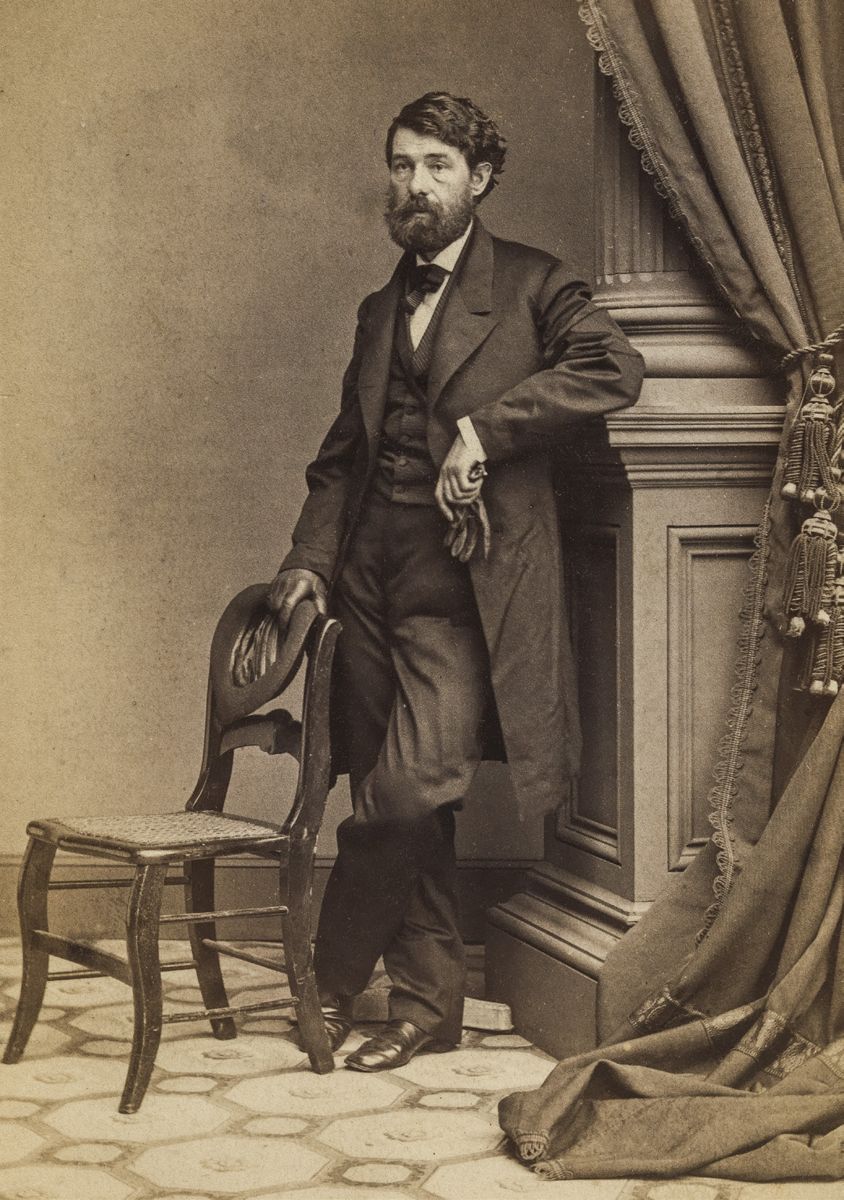
Born at Allentown, Pennsylvania, in January 1825, Rees (like other Civil War-era cameramen) began working in the field early; he was engaged in daguerreotypy at Cincinnati around 1843. Nine years later, aged 27, he moved to New York and acquired a gallery on Broadway, the heart of the city’s booming image industry. Leaving Gotham in 1854, he traveled around working before settling in Richmond in 1857, joining a downtown daguerreotype gallery. He became its owner in 1858. Though he was competing with Vannerson and others, Rees oversaw the growth of his studio, situated in the floors above Johnston & West’s bookstore on Main Street. War brought plenty of young volunteers to Richmond, eager to have their pictures taken. A number of these military images are today reproduced, including the familiar photograph of Brig. Gen. Cullen A. Battle. Brigadier Gen. William W. Loring also had his picture taken by Rees; he stands beside the fluted column that served as prop in other Rees studio photographs. Wartime inflation and shortage of photographic chemicals curtailed Rees’s work, but his output was still impressive. Students of Civil War photography are overly familiar with the subjects’ standard pose of the day—unsmiling soldiers, staring straight into the camera. Example is Pvt. Andrew J. Stokes of Company A, Hilliard’s Alabama Legion, a representative Rees image. Service in a reserves regiment kept Rees in the Confederate capital, although details are skimpy. We know that for some reason he sold the furniture of his Grace Street residence in September 1864, and that the fires of April 2, 1865 destroyed his studio. Yet Rees returned to business in downtown Richmond. After the war he moved to Petersburg, and worked there until his death in 1914. He is buried in Richmond’s Hollywood Cemetery.
Andrew Joseph Russell
Andrew J. Russell enlisted in August 1862 in the 141st New York Volunteers. He received a special assignment from Gen. Herman Haupt’s U.S. Military Railroad Construction Corps to take photographs of the Corps’ work.
Signed Charles Rees image of a soldier wearing a Virginia infantry uniform holding a Bowie knife. Enlargement of his signature shown above. (Liljenquist Family Collection of Civil War Photographs, Library of Congress)
“Russell’s duties included taking photographs of the work and other experiences of the Construction Corps in order to create a historical record and to be of practical use as guides for similar units elsewhere,” write Joe Buberger and Matthew Isenberg. In addition, Russell took pictures of Federal