
CS Marked Raking Spurs
By Shannon Pritchard · Originally published January-February 2025 · pp. 11–15
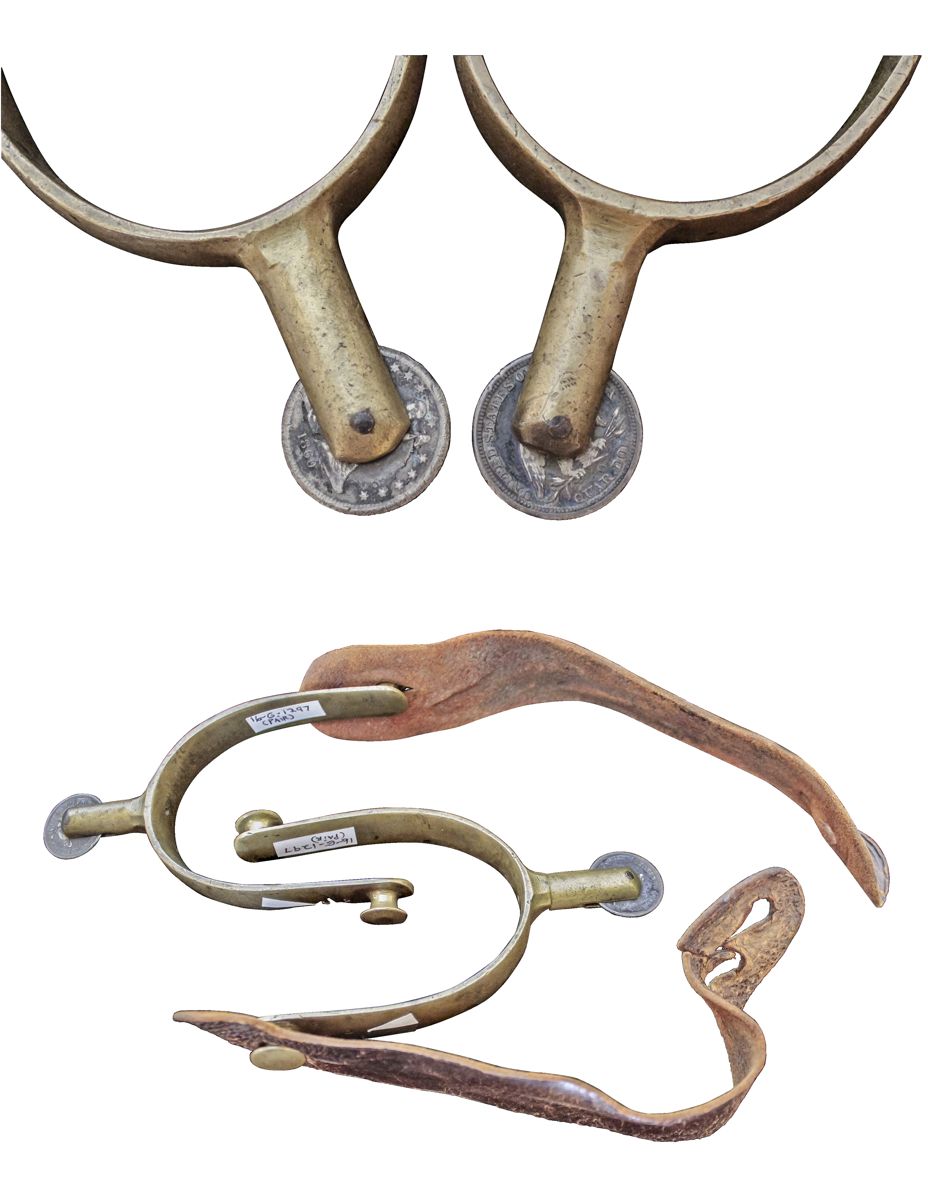
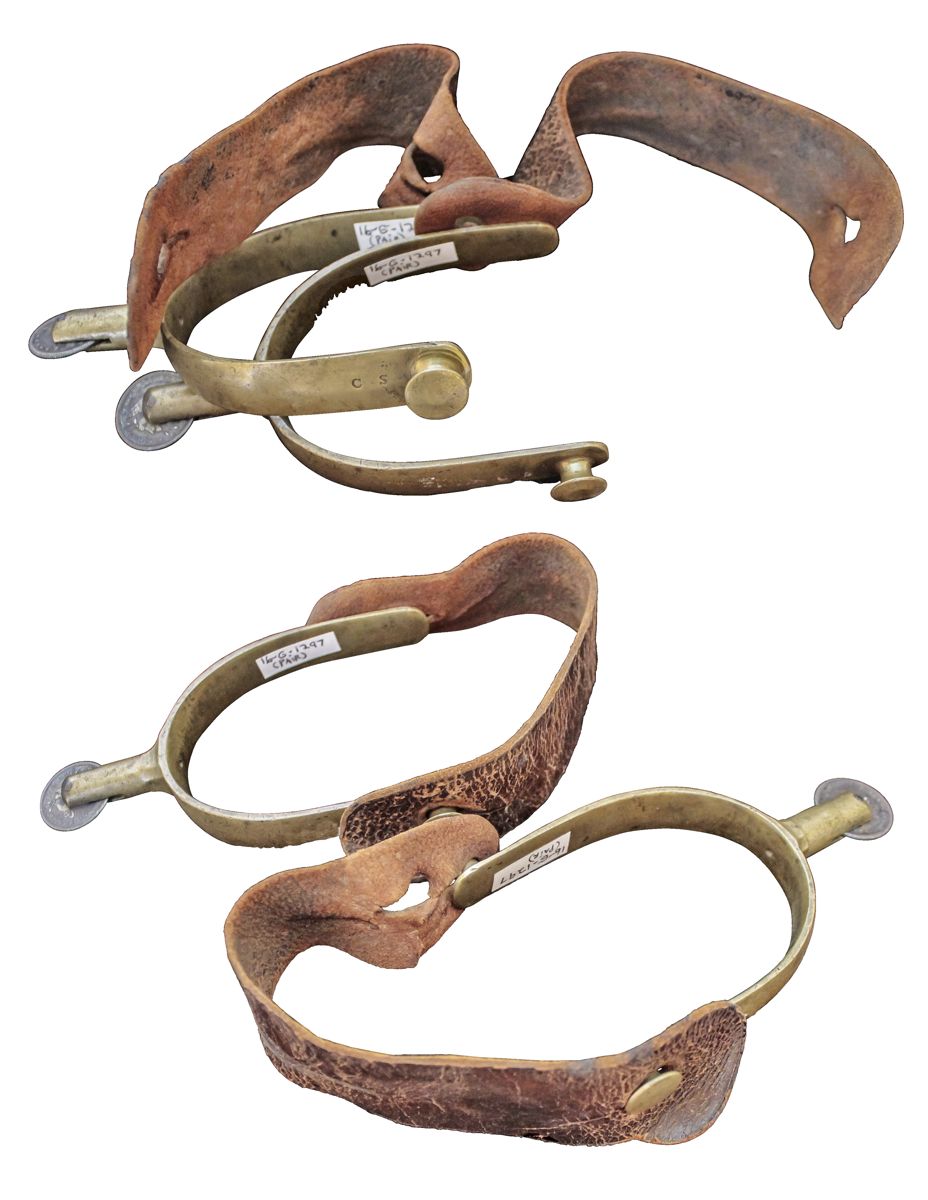
The jagged iron rowels were replaced with smooth silver quarters. The original leather straps are harder to come by than the spurs.
About the Author Shannon
Pritchard has numerous articles relating authored to the authentication, care, and conservation of
Confederate antiques, including several cover articles and is the author of the definitive work on Confederate collectibles, the widely acclaimed
Collecting the Confederacy, Artifacts and Antiques from the War Between the States, and is co-author of Confederate Faces in Color.
Smith participated in the Mexican War, conducting reconnaissance and creating a map of the Valley of Mexico. He was brevetted to 1st Lieutenant on May 30, 1848, for meritorious conduct while serving in enemy territory.
He was appointed Brigadier General on April 11, 1862, and Major General on November 4, 1862. He was given an important role in the planning and construction of defenses for New Orleans and Vicksburg and also commanded troops at both locations.
Following the war, the Mexican government requested Smith’s assistance in establishing a drainage system for Mexico City. He conducted surveys for the improvement of the Savannah River in Georgia and in the Department of Texas from 1849 to 1852, as well as for a proposed ship canal across the Florida Peninsula from 1853 to 1854. Smith was promoted to 1st Lieutenant in the Topographical Engineers on March 3, 1853. He then served as the assistant in charge of the Topographical Bureau in Washington, D.C., from 1855 to 1856; as the assistant in charge of the Coast Survey Office in Washington, D.C., from 1857 to 1859; and in coast survey duties in Florida from 1859 to 1861. Smith was promoted to Captain in the Topographical Engineers on July 1, 1856, and he resigned on April 1, 1861. Smith joined the Confederacy and was commissioned as a Major in the Corps of Engineers on March 16, 1861. He was sent to New Orleans to inspect and improve its defenses. Upon the arrival of Major General Mansfield Lovell in October, Lovell appointed Smith as Chief Engineer and Ordnance Officer. On several occasions, Lovell recommended Smith for promotion, though there were no openings in the engineer corps. On February 13, 1862, he was finally promoted to Colonel of the 21st Louisiana Infantry, an infantry regiment organized in New Orleans.
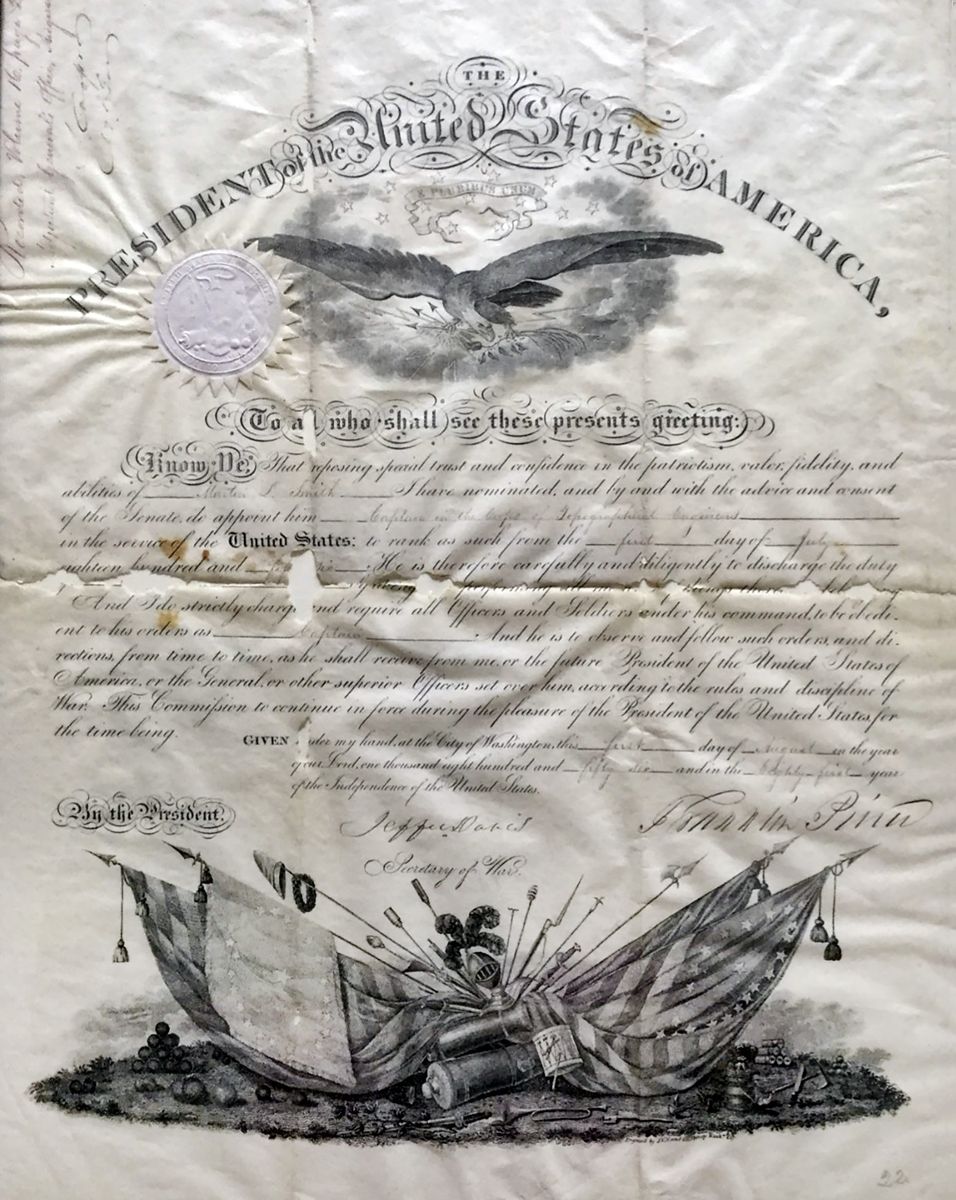
Smith’s 1856 commission as Captain in Topographic Engineers signed by President Franklin Pierce and Secretary of War Jefferson Davis.