
The Birth of the Belt Feed Machine Gun
By Jeff W. Zimba · Originally published July-August 2025 · pp. 37–52
The technology of today’s “Modern Weaponry” is still based in the early 1900s by Jeff W. Zimba
All the predecessors of Sir Hiram Maxim’s invention lacked a few key points that the Maxim machine gun addressed. They were limited in the number of rounds a cylinder or magazine could hold and they needed to be operated by hand to function. In order to fire a round, a crank would be operated to power the feed system. As soon as the hand cranking stopped, the gun stopped firing. In contrast, the Maxim machine gun, and its later counterparts, could fire as long as the belt of cartridges continued to feed into the action; it only took a single human action to start the firing sequence. For the first time in history, the energy of the fired cartridge was utilized to feed, fire, extract, and eject the previous round, and the firing sequence would continue as long as desired. In this period of major technological advancement, new innovation was rife, and the weaponry continued to evolve. Ammunition belts transitioned to using metallic elements, first sewn into the cloth belts, and then eventually replaced with disintegrating links in the USA. Non disintegrating link segments remained popular in other nations. The belt would, in reality, allow the user to completely determine the capacity, since there was no longer a finite limit. Individual, metal, disintegrating links could be assembled in any length. A section of belted ammunition, with each round being presented for feeding, created a mechanical bond to present the next round for firing. The brass cartridge casings served as the pivot point of each belt section as well as holding the belt together. As each round fired, the casing was ejected from the firearm while the expended, but often reusable links fell away. Later requirements led to link collection after firing to keep the area around the gun clear and allow them to be utilized again at a future time. The latter is more often the desire of the recreational shooting community, to keep the budget in check for live fire activities, but not so much the concern of those engaged in military applications. A metallic belt made from disintegrating links could be assembled in ANY length and even modified as mission details changed. No longer was it necessary to utilize a bulky 250-round cloth belt, which is heavy and susceptible to the elements, such as precipitation and freezing temperatures. If a shorter length of ammunition was desired, a single round could be removed from a pre-loaded belt section and the user would instantly have two belts, or more, at whatever length worked best. Belts were developed that were manufactured in multiple round segments, often of 25 or 50 round
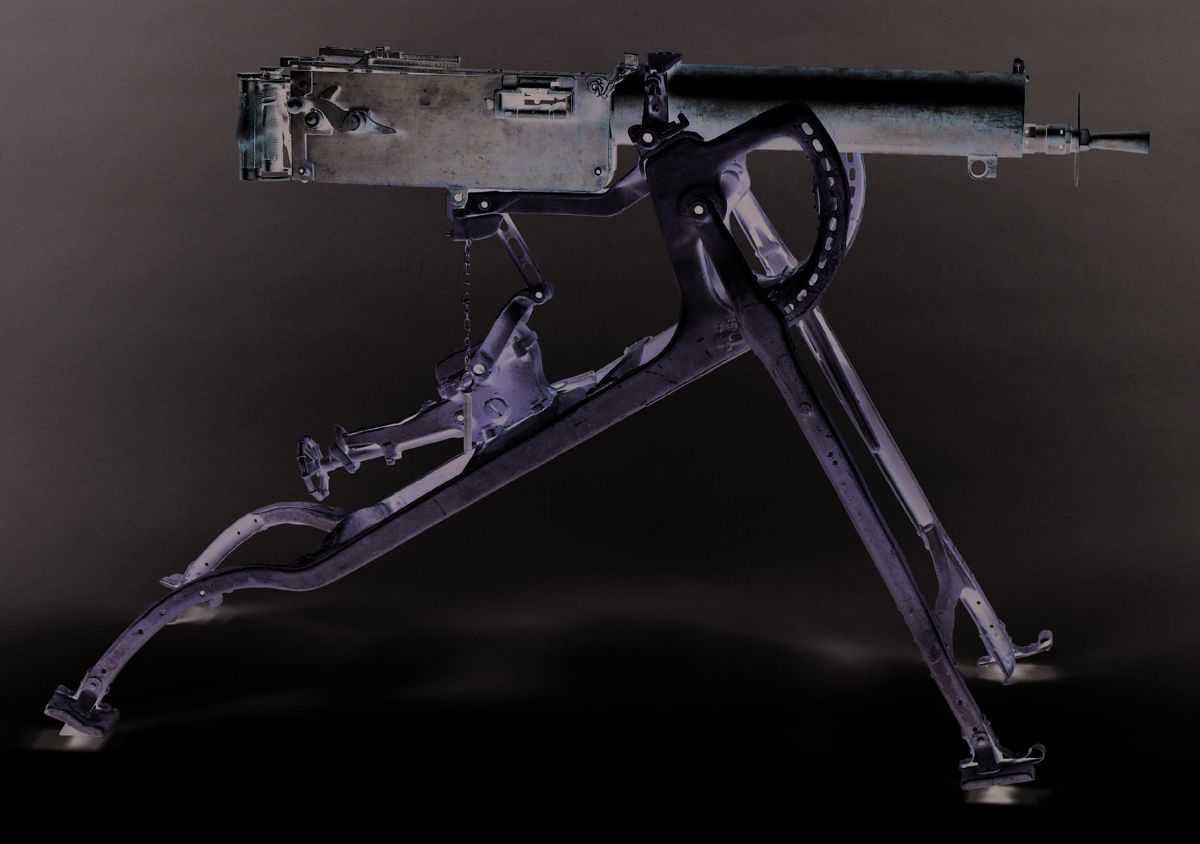
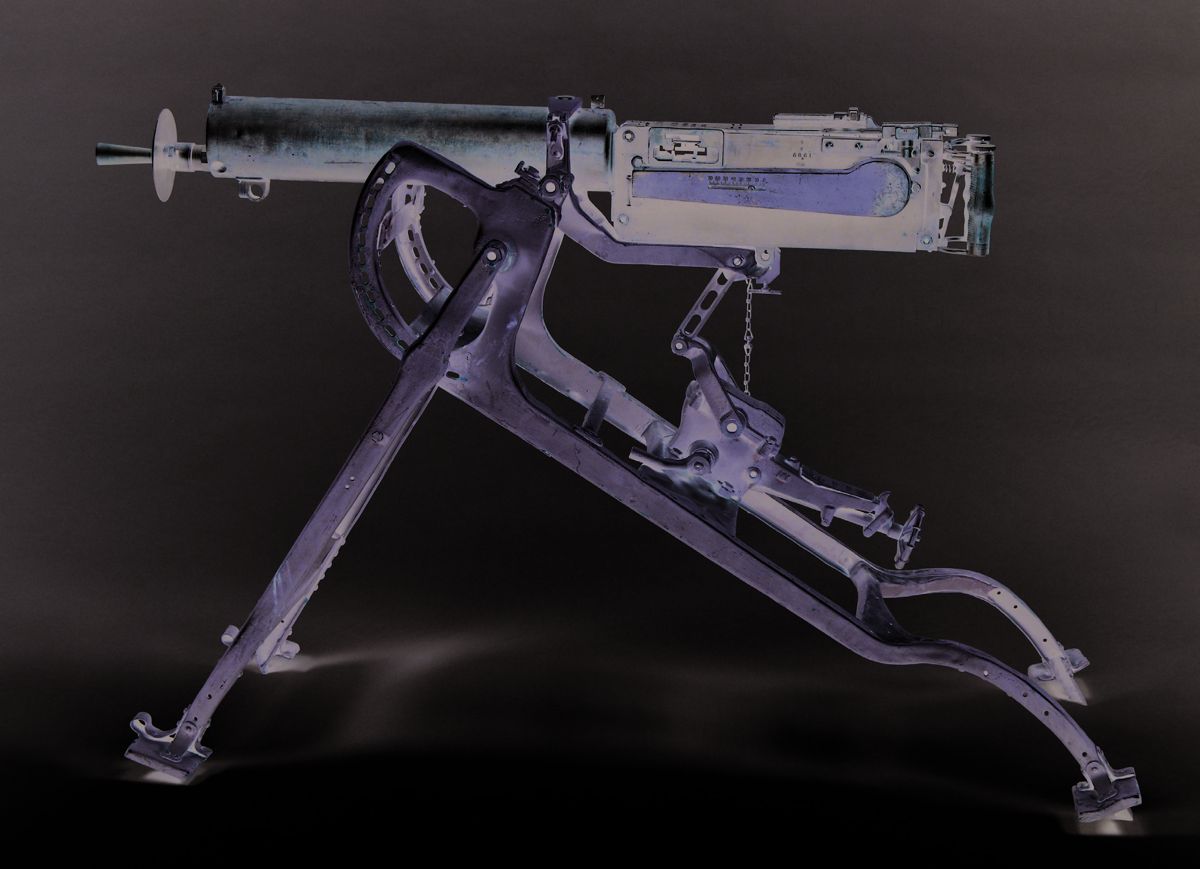
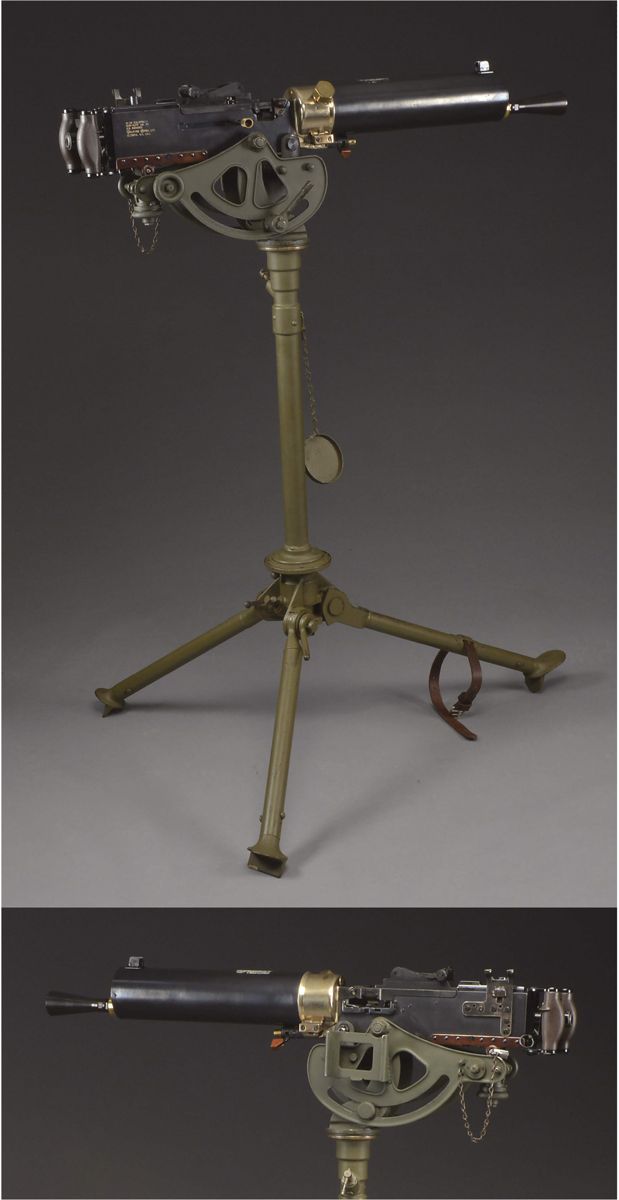
The Maxim MG08 on an original sled mount as manufactured by DWM in Berlin, 1918. This particular model is a close relative of Sir Hiram Maxim’s forerunner, the first true machine gun ever fielded.
lengths, that could be spliced together by inserting a single round between them to combine multiple sections. They worked in a very similar fashion as the disintegrating links by supplying the intended ammunition and being ejected in whatever the predetermined lengths were. Ammunition spliced sections would often fall away individually after being fired. Instead of necessitating an actual cartridge to mechanically connect each individual link, they would be assembled by bonding empty lengths together with a small, coiled length of wire, of through reciprocating notches and grooves built into each individual link during the manufacturing process.
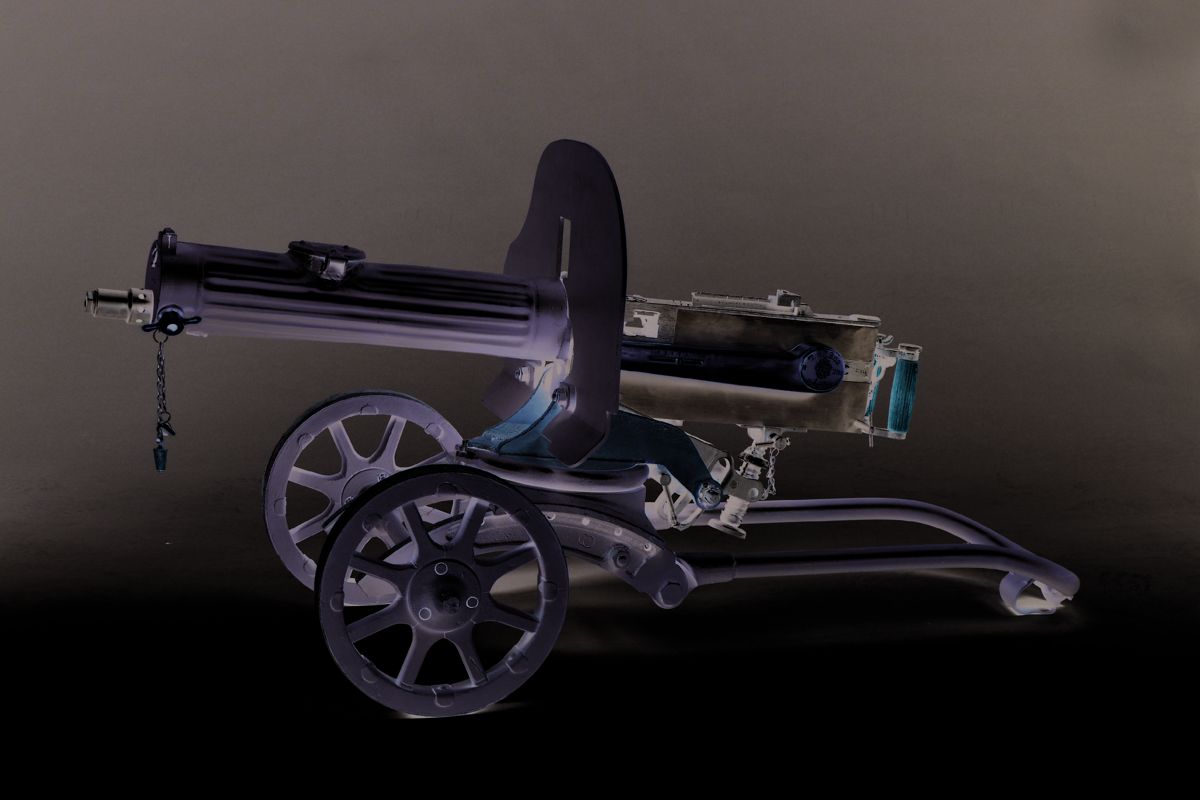
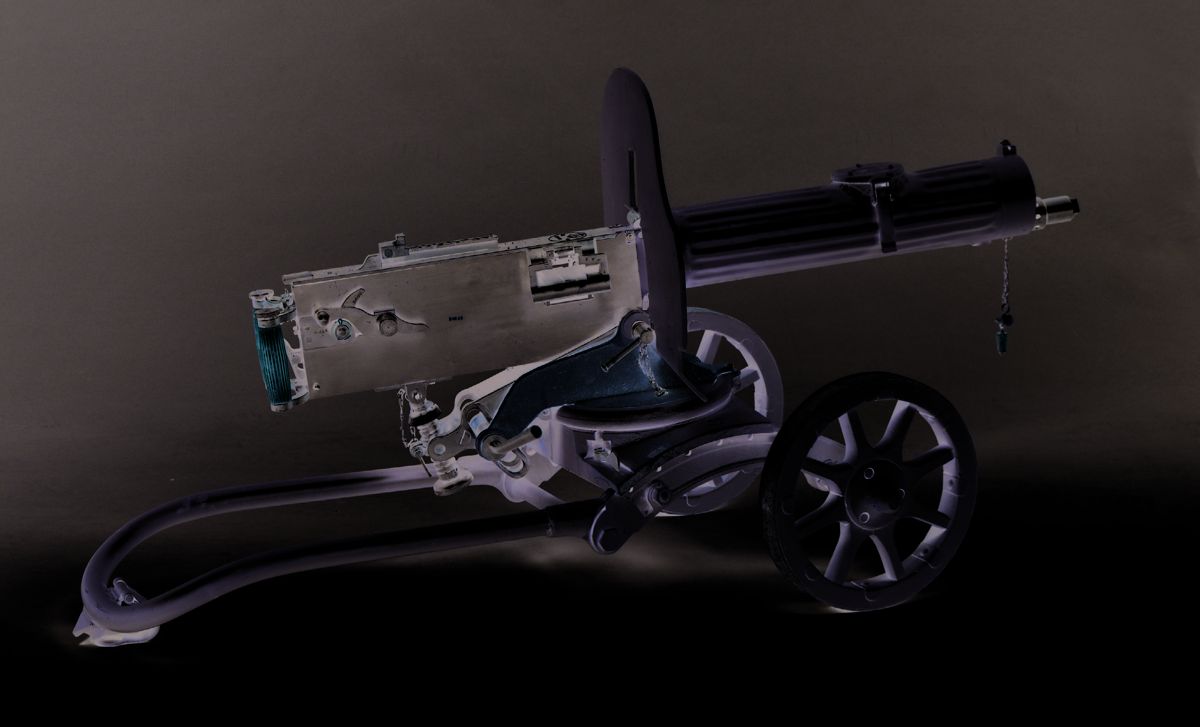
WWII Russian Model 1910 MG on the iconic Sokolov mount. While the 1910 was directly derived from Maxim’s original creation, there were a few features unique to this particular version; the Sokolov mount may be the most recognizable. The snow cap on top of the fluted water jacket was another starting in the late 1920’s.
Examples of machine guns that utilized cloth feed belts, or a combination of steel tabs sewn into a cloth belt include the following: N Maxim machine gun N Vickers machine gun N Model 1919 Browning machine gun N Colt 1928 machine gun
Examples of machine guns that utilized disintegrating links include the following: N Modified Model 1919 (and later model Browning) machine guns N Belgian FN30 machine gun N US M2HB 50 caliber machine gun N US M60 machine gun N M249 machine gun N US M240 machine gun
Examples of machine guns that utilized non-disintegrating links include the following: N Soviet and Chinese PKM machine gun N Soviet and Chinese RPD machine gun N German MG34 machine gun N German MG42 machine gun
Examples of machine guns that utilized feed strips include the following: N Italian Model M37 Breda machine gun N French Model 1914 Hotchkiss machine gun N Japanese Type 92 machine gun
While nations including the United States and Germany were moving forward, utilizing links to meet the demand of feeding the never ending hunger of these modern marvels, other nations like France were experimenting with “Feed Strips” to increase their firepower. Usually manufactured of a solid material, including brass and/or steel, the feed strip would function much like the links. Preloaded trays of cartridges, often holding 20 rounds, evenly spaced, would be inserted into the firearm`s action where the recoil forces were captured to advance the strip, or tray, with each round fired. The following round would be presented for feeding and this cycle would be repeated until the feed strip was empty. A new strip would be inserted to continue firing. The rigidity of feed strips mandated that they be stored in a bulky, rectangular fashion, in whatever length was desired, as opposed to having the flexibility to be stored and shipped in rolls found with linked counterparts. While a few could be bonded together to increase capacity, many could not, creating a finite ammunition situation, similar to the box magazines that were being replaced. The rigidity of the strips required their being supported horizontally, rather than hanging loose or presented in a feeding box
Cloth belt utilized in 1917 and 1919 firearms. These belts were meticulously sewn and were not uncommon in lengths for 150 to 250 rounds. -
IIIIIIIIIIIIIIIIIIII I
The Kulspruta Model 1936 is a modified Browning 1917 specifically manufactured for the Swedish military.
I I
Rigid feed strips hold a predetermined number of rounds.
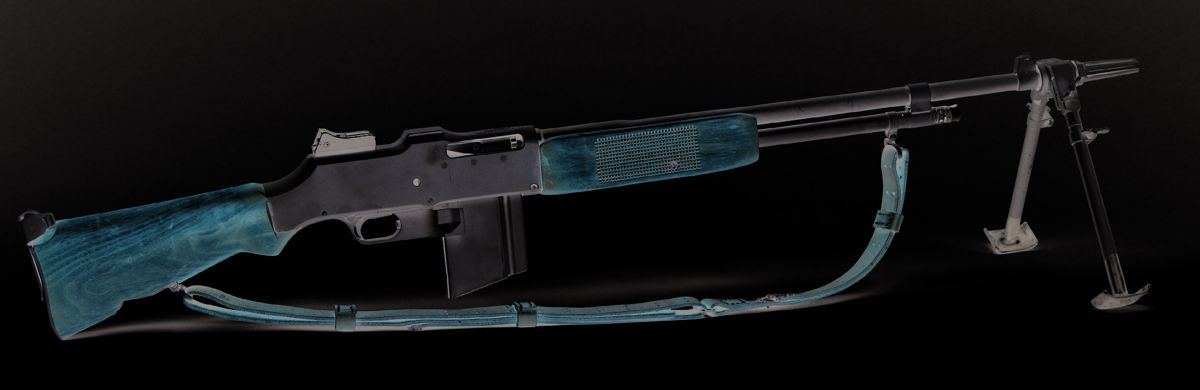
The BAR was developed by John Browning in 1917 as an air cooled, gas operated, magazine fed, and chambered for the .30-06 Springfield rifle cartridge. This was a shoulder fired automatic rifle for use in WWI and a newer model was developed for WWII.
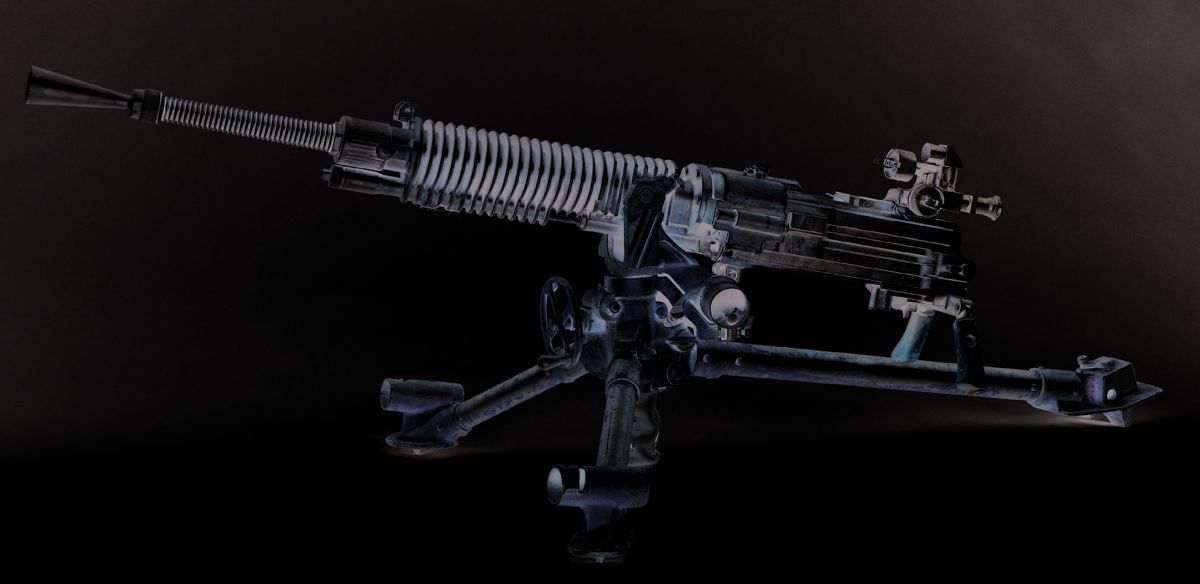
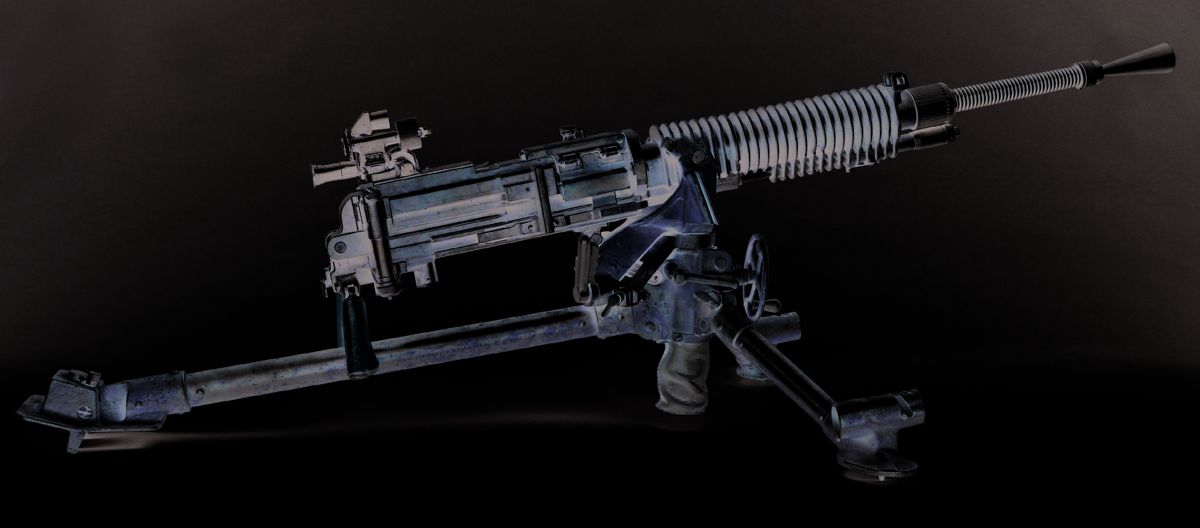
The Hotchkiss Model 1914 machine gun was heavily copied by the Japanese in both style and function. From pronounced fins to facilitate barrel cooling to the feed strip type mechanism, there are numerous similarities.
Japanese Type 92 heavy machine gun made by Hitachi in December 1943.
or bag, and made feeding difficult compared to links. Even if the strips could be snapped together to increase capacity, the logistics of supporting a long, rigid tray, sticking out the side of an often moving machine gun wasn’t always advantageous. It would be an oversight and an injustice not to mention the interesting mechanism of one particular machine gun that utilized a feed strip. The Breda Model 1937 was designed to reinsert the expended casing back into the feed strip, after firing. It necessitated more energy to function properly, slowing the rate of fire, but worked quite well.
Stuck in Time… Studying the century between 1850 and 1950 easily illustrates the enormous leap in small arms evolution; a quick peek at the guns in our current inventory seems to indicate that we’re still heavily vested in the technology of this time period. A look at the arms found in service around the globe today reveals that modern arms are still primarily utilizing brass cased ammunition and machine guns are the most popular way to deliver it. Even the feed mechanisms bear a strong resemblance to the earlier originals. The original Maxims, Vickers, and Colts have largely dropped the external water cooling systems for quick change barrels, and many guns still fielded today have a direct lineage to them. From the MG34 and MG42 through the M60 and RPD, today’s M249s and M240s are direct descendants of this period of innovation. As a testimony, the big M2HB, .50 caliber Browning machine gun, affectionately referred to as “Ma Deuce” is still in service and aside from some lighter materials used in the manufacturing process, is virtually the same as when introduced in the early 1920s. Almost as fast as the sweeping changes were implemented, newer technologies seemed to slow to a trickle. The new future of small arms was defined by mass produced, brass cased ammunition, and machine guns of all feed styles and capacities would become common in every army. While major advancements occurred in almost every other aspect of our lives, small arms development is still based on early 1900s technology. Outside firearms development, our lives have been heavily modified by technological advancements over the last 50 years; they continue to evolve almost daily. The most obvious is the commonplace use of the modern computer and its ability to advance at lightning speed. Telephones, brought into our lives around the same time as modern machine guns, have been almost completely outdated, being replaced by cellular phones, allowing us to communicate from any place we can travel. For those who live off the grid, satellite phones can communicate from any point on the globe, completely un-tethered. Computers that guided our first lunar landings in 1969 have been surpassed by the internal telephone computer carried in our pocket. This means that the iPhone in your pocket has over 100,000 times the processing power of the computer that landed man on the moon 50 years ago. Automobiles have become as fast as our imagination can modify them, operating at increasing efficiency, every year. Cars and trucks can now “drive” themselves, yet the technology surrounding firearms is still rooted in the early days of their inception, illustrated in this article. My belief in the stagnant nature surrounding firearms design is as simple as a pen and a piece of paper. Good old government regulation. There is nothing that will stifle innovation like over-regulation and that seems to be at the crux of the issue at hand. If you look at the heyday of firearms design, the period from 1850 to 1950 when the last big advancement occurred, you will see the final days of unfettered
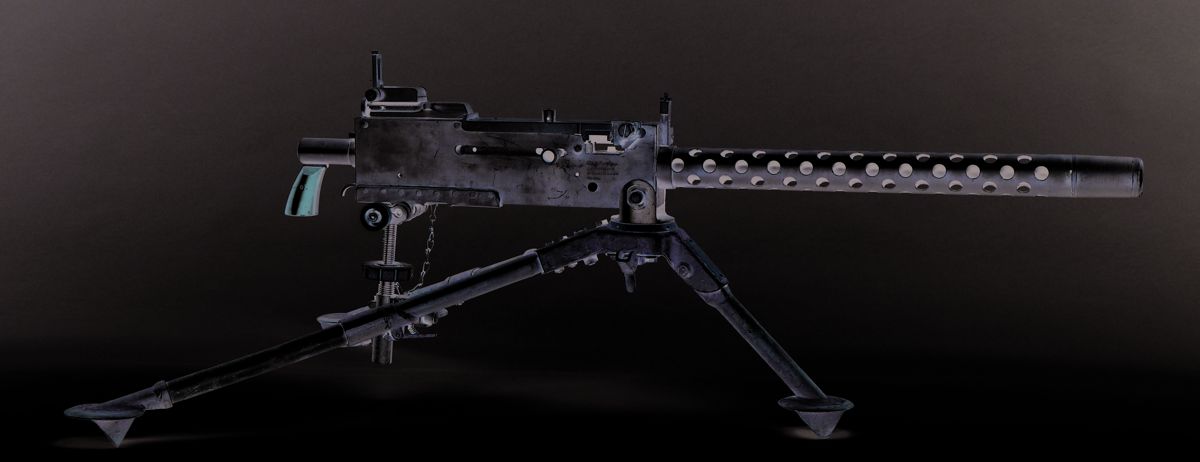
There aren’t many firearms from the military past of the United States that are as recognizable as the rectangular receiver and perforated barrel shroud of the Browning 1919.
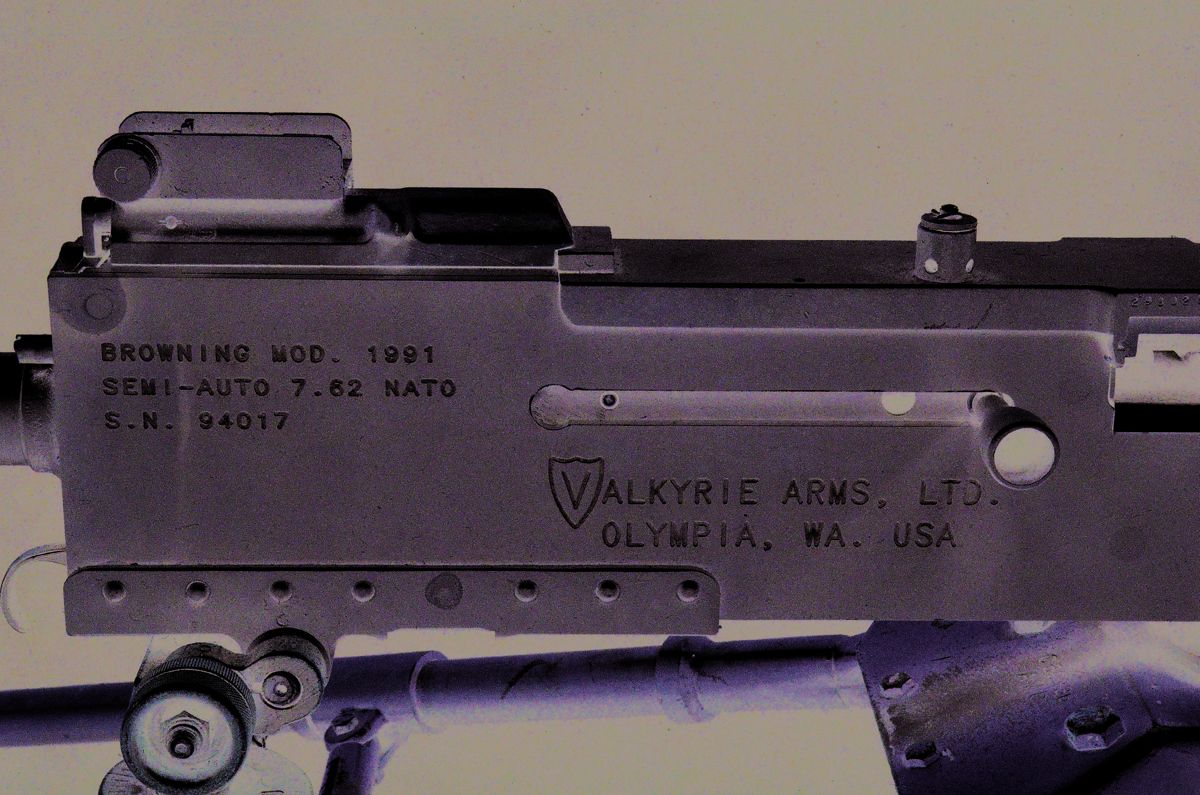
Although the exterior size and shape of semi-auto variants appears identical to full auto counterparts, there are several internal differences
At first glance the MG38 could be mistaken for the much more common Colt 1917A1.
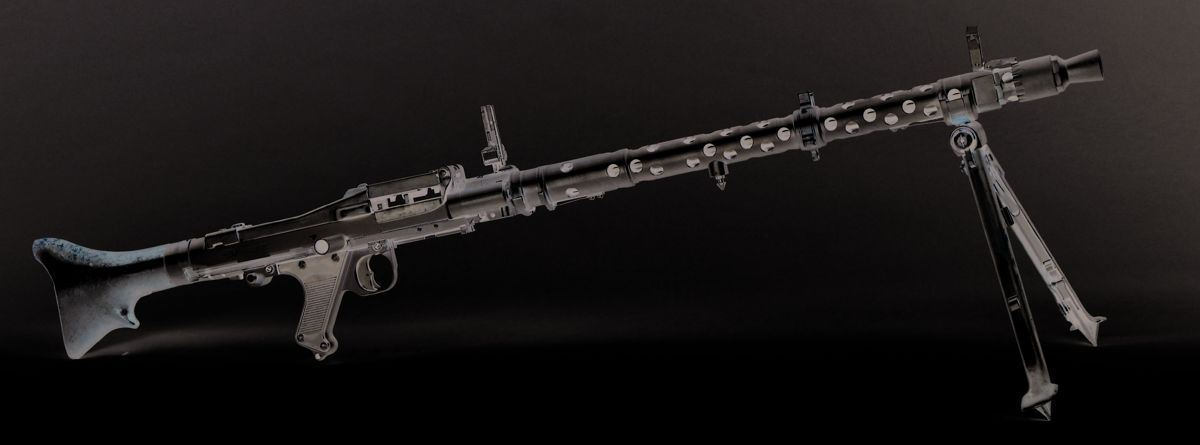
The German MG34 is one of the most recognizable WWII era machine guns.
gun ownership in the United States. Federal laws instituted in 1934 with the “National Firearms Act,” imposed a tax of $200 on any machine gun manufactured, or purchased, by an individual. This tax was around $3,500 per gun when measured by today’s money, and it all but destroyed the ability of someone outside the industry to “tinker” and experiment with new ideas. In the period previous to the National Firearms Act, people regarded as “tinkerers” and inventors, used to try new ideas as they encountered them inside the areas of their interest. As it became more difficult, expensive, and even legally problematic to explore, their interests and ideas shifted to places more common in their current livelihood.
In the late 1960s, things became a little more difficult for U.S. citizens who desired to collect and work on firearms ideas. The Gun Control Act of 1968 completely prohibited the interstate transfer of firearms with the exception of licensed dealers and manufacturers. This all but finalized the contributions a law abiding citizen could make to the industry, without being licensed and officially “engaged in the business” of such activities. In the 1980’s laws went even further, and manufacturing machine guns for individual ownership was completely banned as of May 19, 1986. Now, even those who were so dedicated to research and development of machine guns that they were willing to spend $200 for a tax stamp for each one they made were completely shut out because the government started refusing to collect the 1934 tax. As it stands today no citizen can own a machine gun manufactured after 1986; current R&D and T&E is limited to the few federally licensed manufacturers willing to pay the price of admission. Imagine how many potential Hiram Maxims or John Brownings have turned away from future innovations, simply because the law made it so difficult for them to participate. If those early pioneers responsible for the technology we have today were committing felonies just by trying new ideas, there is a good chance we would be even further back on the ballistic evolutionary chart.
WWII German MG42 light machine gun. The MG42 later led to development of the U.S. M60.
How do we move on? After 1986, it was clear that students of the machine gun would have to employ some ingenuity if they wanted to participate. With the legal number of machine guns that could be owned by individuals capped, it was immediately clear that the laws of supply and demand would quickly come into play. Prices shot through the roof; they continue to rise today, 33 years later. Due to these legal hurdles, and combined with the high prices that a free market demands, there is an entire market for semiautomatic variants of these large, formerly fully automatic designs. While they look very similar outwardly, there is a very important internal difference; they fire in semiautomatic mode, only. In
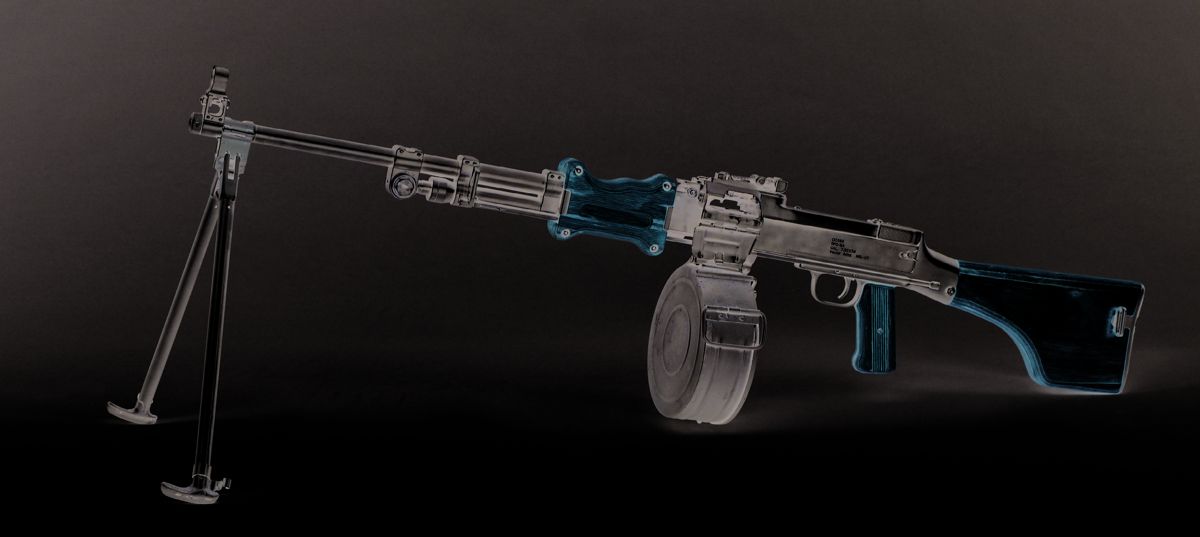
The iconic Ruchnoi Pulemet Degtyarev (RPD), once had the distinction of being the lightest squad automatic in existence as it weighs only 17 pounds unloaded.
The semiautomatic variants may have been born out of necessity, but in the last 20 years they have taken on a life of their own. Where they were originally only attractive to those who lived in areas where machine guns were prohibited, they have slowly gained a following in all parts of the nation.
this configuration, the normal paperwork is no longer necessary, and new ones can still be manufactured. With some states having stricter regulations than the federal government mandates, there are a handful of areas where the market for the semiautomatic versions have flourished, even prior to the 1986 law outlawing new machine guns. Making a machine gun for personal use is absolutely an option as far as federal law is concerned, but because the unintentional consequences of making something that is too readily adaptable to fully automatic function, many leave the alteration to professionals who specialize in them. The automatics require internal differences so that some full auto parts no longer fit. Conversion may be achieved by either using a thicker sideplate or by adding interrupter bars, neither of which are compatible with older, full auto only parts. No Lengthy Waiting Periods. Since they are not machine guns, but only function semi-automatically, the normal time consuming paperwork is not required. The purchaser may purchase and take possession immediately. No Federal Taxes or Fees. While purchasing a machine gun requires a $200 transfer fee, (proven by a $200 U.S. Treasury stamp affixed to the ownership form), a normal, semiautomatic version is a simple purchase, just like any other hunting or target rifle. Much Lower Cost than Machine Guns. Since these semiautomatic versions may still be assembled and sold, there is an infinite number at this point. Given that available, legal machine guns are dwindling in numbers, their price continues soaring to enormous heights several times more than a semiautomatic version. They Have Terrific Display Value. For a centerpiece of a display, or to enhance a firearms collection, there are almost no visible differences between the expensive original machine gun and the semiautomatic version built from an original kit. They are equally as easy on the eyes. Dollar to Cyclic Rate Value. If you are a recreational shooter and simply desire a big, beautiful belt-feed for range use, there is often no degradation in performance from an original. With many older machine guns possessing a cyclic rate of 400 to 500 rounds per minute some semiautomatic versions are capable of up to 600 rounds per minute, it’s not uncommon to enjoy an increased cyclic rate over the original. Perfect For Reenactments. For those who are going for the aesthetics of the original machine gun, there are actually benefits of having a semiautomatic version over the fully automatic original. The lengthy paperwork, along with the enormous, growing value of an original, can be a deterrent to including it.
The Italian 8 mm Model 37 Breda is arguably regarded as the most successful Italian machine gun used in WWII.
This particular Bren MKII SA version was designed after the 1944 Canadian Inglais “Chinese Resistance” version chambered in 7.92. It utilizes a ZB26 / 30 feeding device.
The FN30 is a modified U.S. M1919 style Browning machine gun. A quick indication for identifying a FN 30 versus the 1919 would be the top mounted trigger bar and single vertical pistol grip that extends around entire firing mechanism.
Disintegrating links assembled to create a belt length as desired. As the rounds are fired, individual links fall away.
The Madsen M1946 is a great example of a firearm having the capability of laying down a large amount of fire power without an external feeding system; it used 30-round magazines.
What does the future bring?
The HK23E is a West German 5.56 NATO variant of the popular HKG3. Developed in 1972 to compete with other battle rifles of the era, it has a roller locked blowback operated action capable of feeding from M27 links.
Thinking about the potential for small arms advancement continuing where it left off, is exciting. If firearms technology moved ahead at the same pace as the other common items we use on a daily basis, newly developed weapons may be completely unrecognizable within a decade. To consider the potential of moving ahead at the same pace as automobiles, computers, or telephones over the last 30 years alone leaves this writer wondering what a truly modern firearm would resemble. Be it the legal hurdles that have impeded research and development, or just rapid technological advancements in that last
The Shrike 5.56 weapon system, developed by Ares Defense, later evolved into the MCR marketed by Fitelight Industries. It has the capability of feeding from a box magazine, a drum, or M27 disintegrating links.
The Lakeside Machine Razorback is an infinite capacity belt feed rimfire upper receiver for any standard AR15 style lower receiver.
100-year breakthrough that fast tracked things years ahead of their time, we may never know. What we do know with certainty is, there is really no limit to what the future can bring, and if the next evolution is as fast-paced as the last one, it will be an exciting period.
Jeff W. Zimba is the author of The Evolution of the Black Rifle and he has written over 200 articles on military style firearms for several industry publications in the United States, Germany, and South Korea. He is a Master Registered Maine Guide where he also makes custom knives as time permits. His work can be viewed at www.bigshooterist.com.