
The Civil War Collection of James C. Frasca
Courtesy Cowan’s Auctions · Originally published May-June 2025 · pp. 46–71
Selected
Un
He ion a e dG a r
The Civil War Collection of James C. Frasca Courtesy Cowan’s Auctions
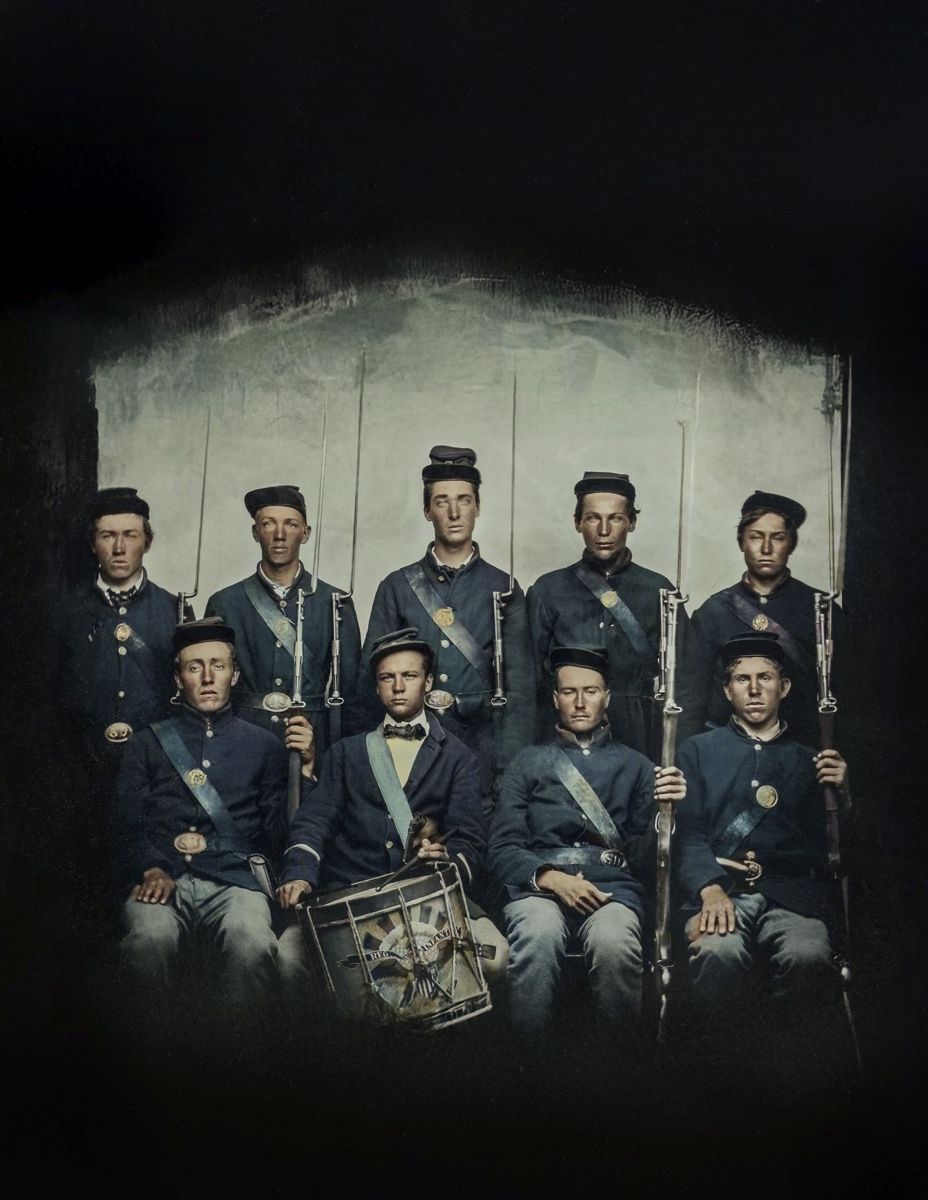
A group of nine Union infantrymen posing in what appear to be 5 button sack coats and forage caps with their accoutrements. Eight hold Austrian Model 1854 rifle muskets with fixed bayonets while the musician is holding regulation eagle drum marked “Regt Infantry” without a number. Of the eight infantrymen, the men seated second from right has his cartridge box slung on the left side and his waistbelt and cap box reversed as well. The two men on the left do not have slings on their rifles muskets while the other five do.
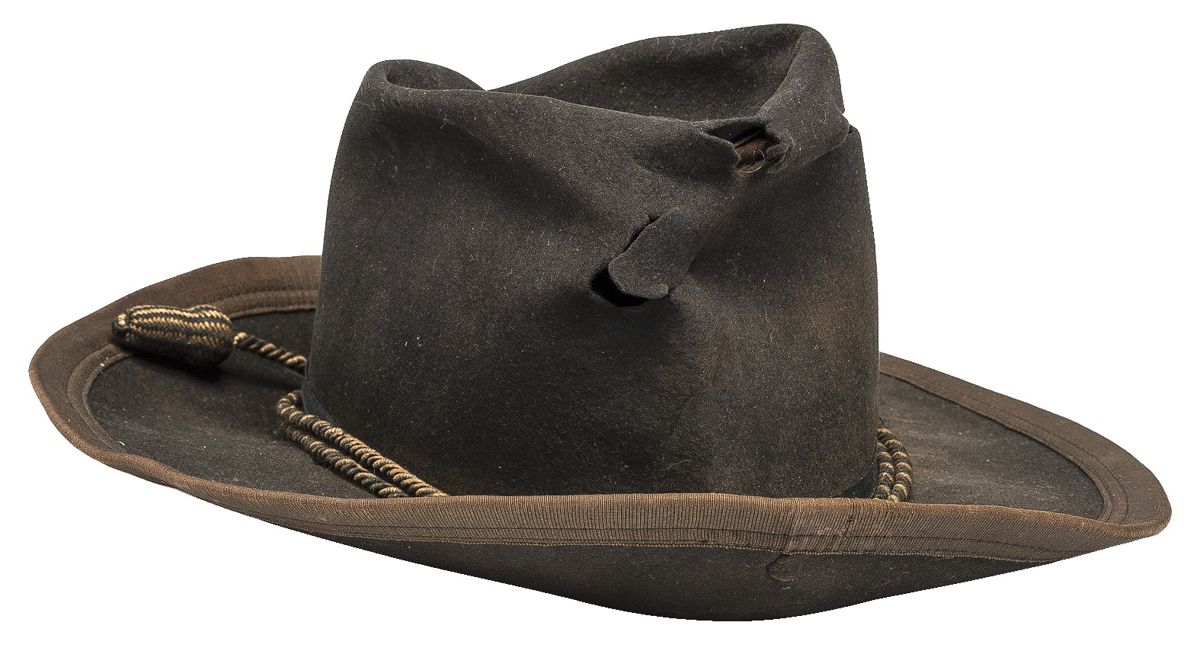
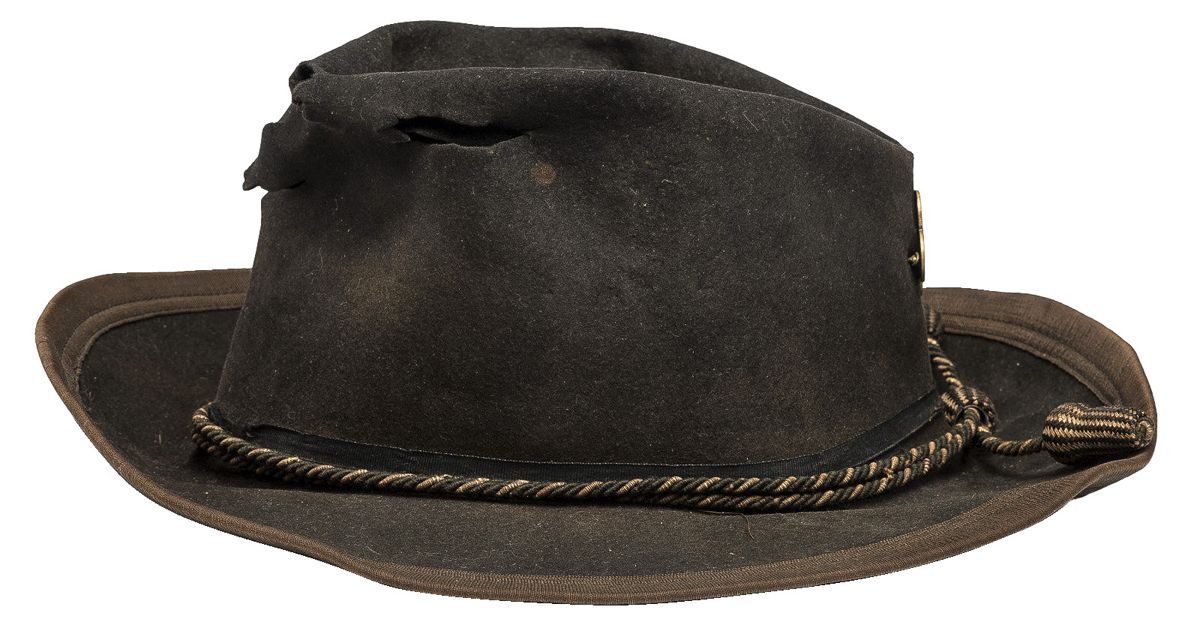
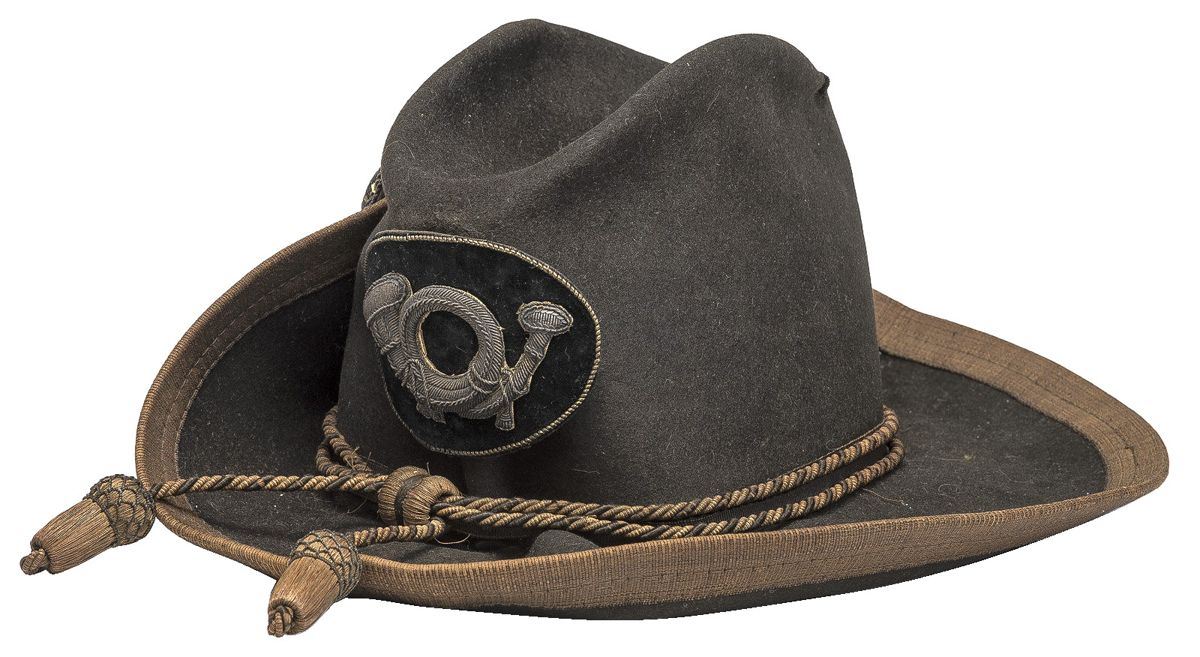
Two Army Slouch Hats Identified to Captain Charles E. Nash, Co. F, 19th Maine Infantry
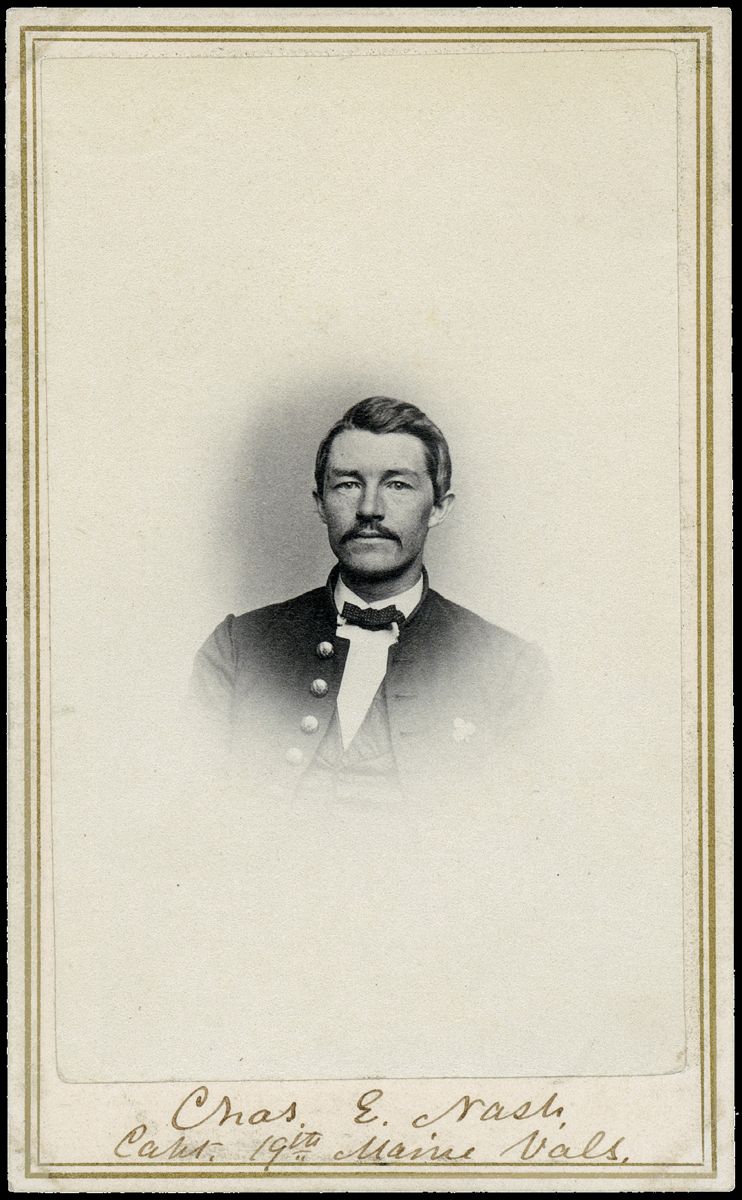
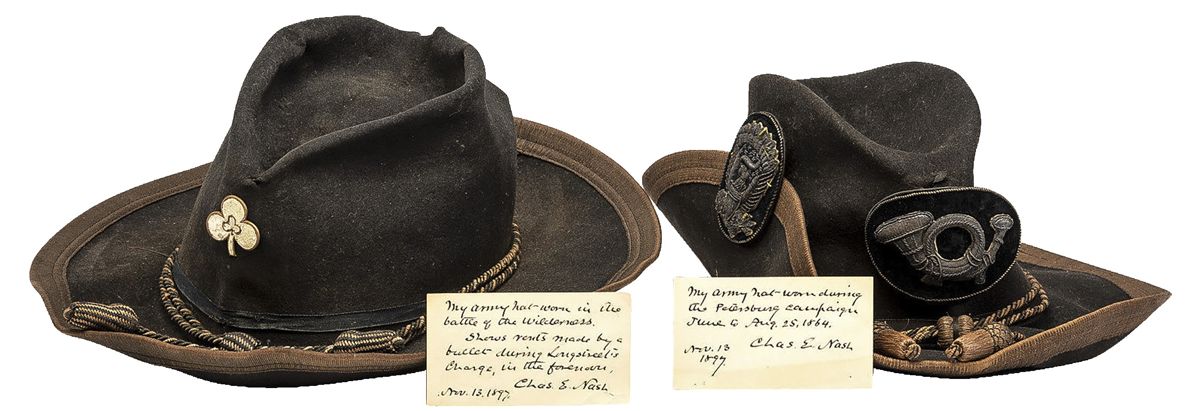
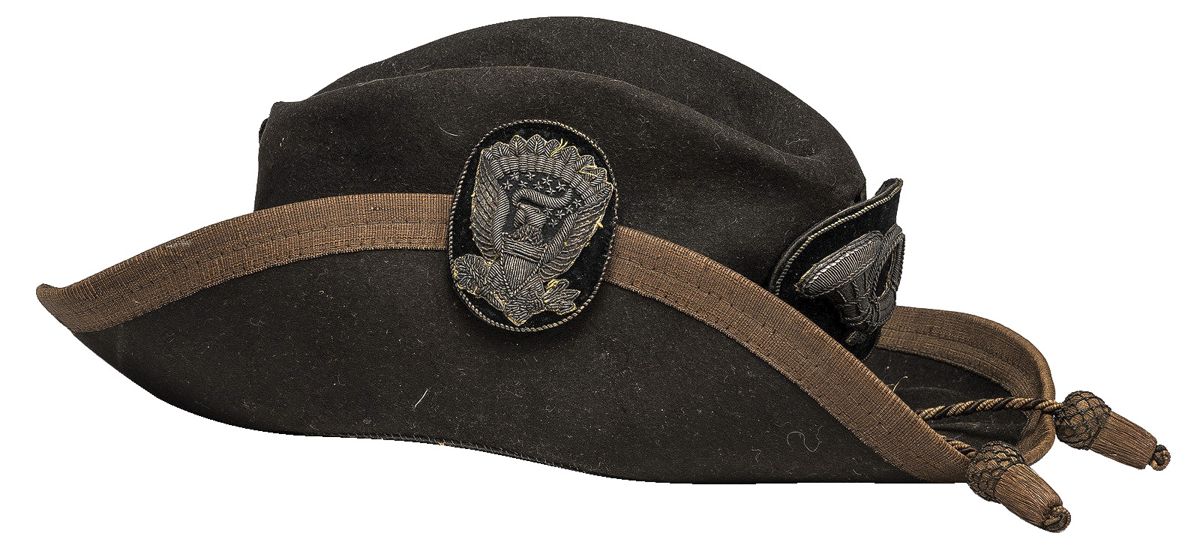
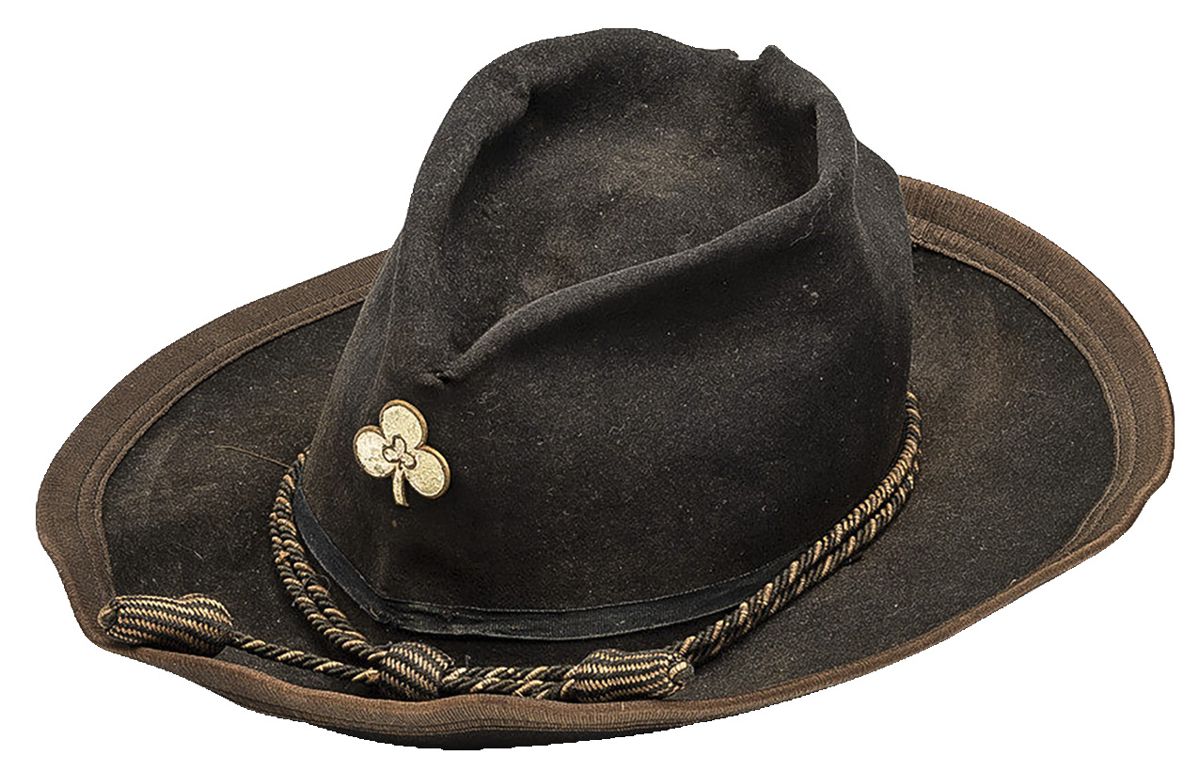
Charles Elventon Nash was born in Montpelier, Vermont, on October 9, 1838, and died on February 25, 1904. He enlisted in the 19th Maine Infantry on August 25, 1862, as a 24-year-old printer in Hallowell, Maine. He was commissioned as 1st lieutenant, and later promoted to captain of Company C. During its term of service, the 19th saw the worst of the fighting, participating in Fredericksburg, Chancellorsville, Bristoe Station, Gettysburg, the Wilderness, Mine Run, Spotsylvania Court House, Po River, Totopotomy, North Anna River, Bethesda Church, Cold Harbor, Petersburg, Deep Bottom, Reams’ Station, Strawberry Plains, Hatcher’s Run, Boydton Plank Road, Fort Powell, Amelia Springs, and High Bridge. Nash was wounded August 25, 1864, at Reams’ Station. After mustering out in November 1864, Nash married Sarah Livermore (1838–1919). By the 1870 census they had two children, Mary (4) and Edward (1). He appears in the city directories of the county as a printer and editor during his post-war career. Campaign hats worn by Captain Charles Elventon Nash, Company F, 19th Maine Infantry. They were discovered in 1968 in New England, each hat is maker marked and accompanied by an 1897 dated browned ink tag in Nash’s hand on the back of his calling card. Each tag notes the campaign/battle in which it was worn. Additionally, the tag accompanying the Wilderness battle hat also states that the hat was bullet struck during Longstreet’s charge. A description of each hat is as follows.
Carte de Visite of Captain Charles E. Nash, 19th Maine Infantry. (Maine State Archives Collection)
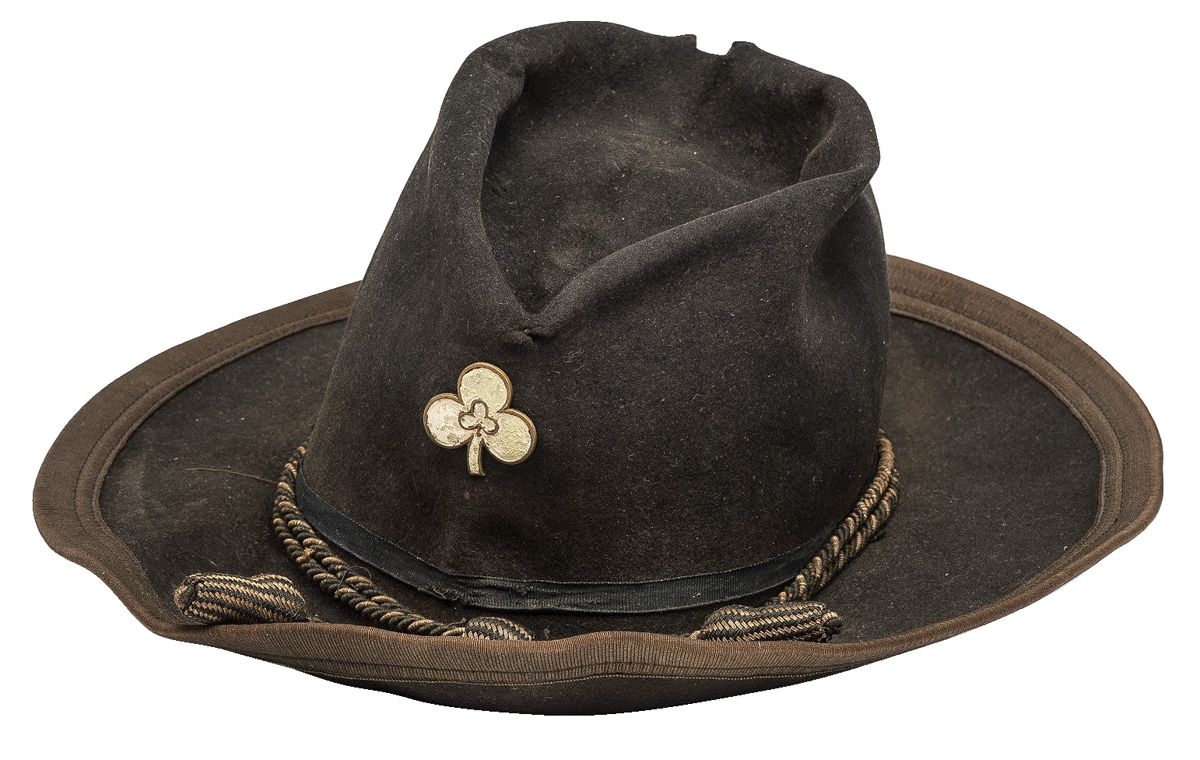
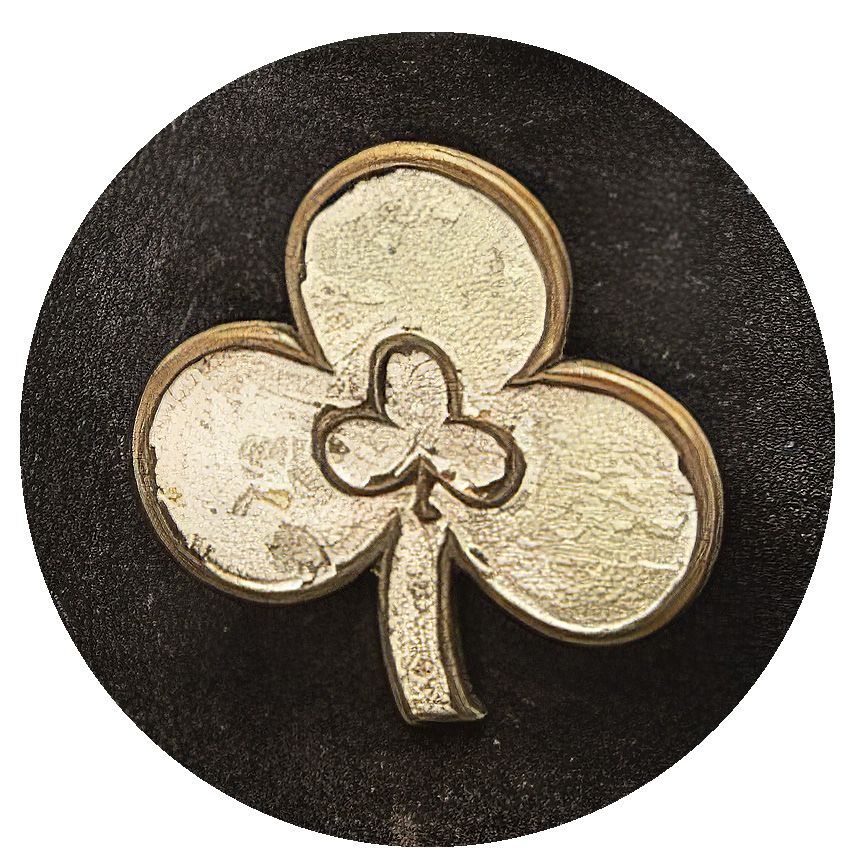
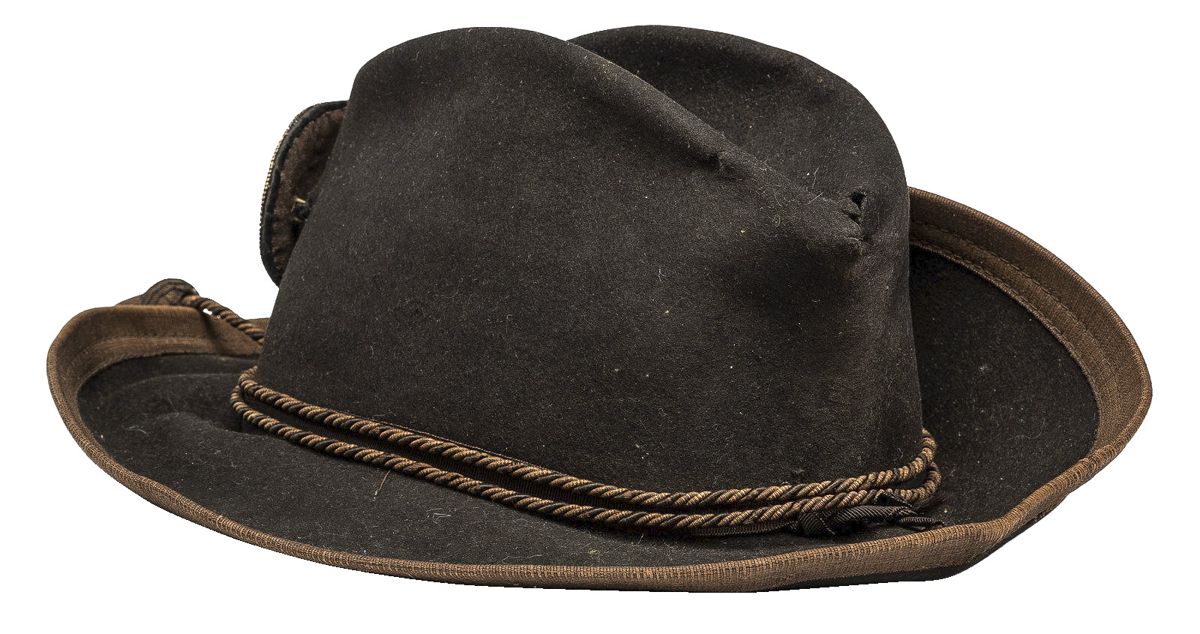
Wilderness Battle Hat. Constructed of supple, high-quality fur felt with a ¾ inch grosgrain binding that has faded to brown, a ½ inch black silk ribbon affixed to the base of the 5 ½ inch crown, and a twisted black silk and gold bullion pattern hat cord. Interior features a 2 ½ inch brown leather sweatband and a 2-piece silk lining, (bottom section partially separated and with an adjustment drawstring attached at top); upper section attached to uppermost dome of crown and with gold imprinted manufacturer and retailer information: “Warburton’s / Army Hat / Patented Dec. 16, 1862, / Made expressly for / B.H. Stinemetz / Washington, DC.” Pinned to the front of the hat is a white First Division, II Corps, post-war veteran corps badge.
The bullet strike described in the tag is visible, with the projectile having entered at the top right rear of the hat, passing through the back of the hat and exiting on the left rear side. The Wilderness slouch hat is published in the Time Life Civil War series, The Killing Ground: Wilderness to Cold Harbor, page 57.
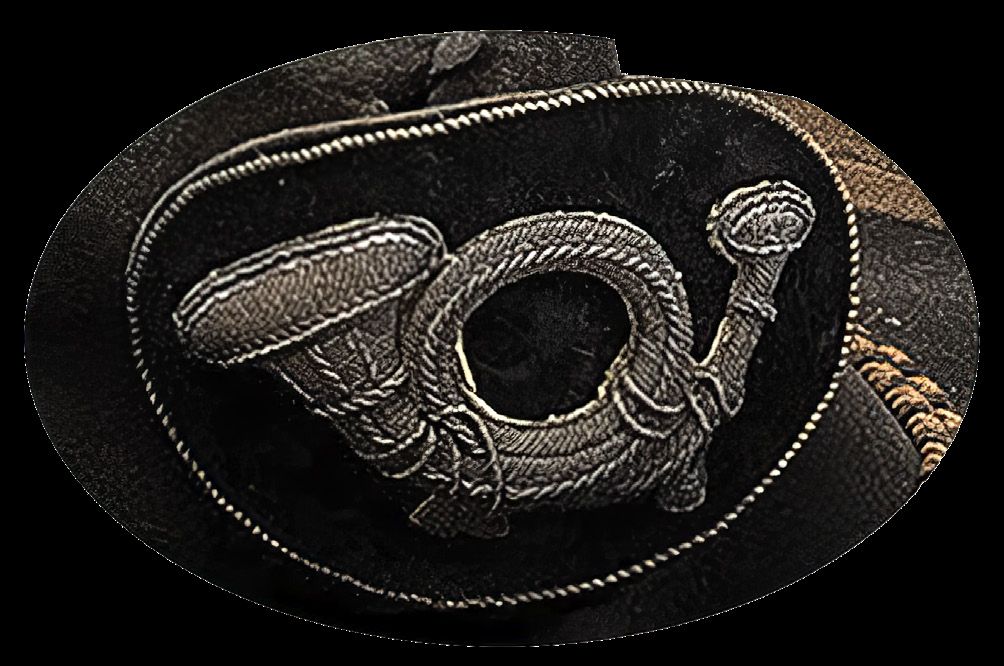
Petersburg Campaign Hat. Constructed of supple, high-quality fur felt with a ¾ inch grosgrain binding that has faded to brown, a ½ inch black silk ribbon affixed to the base of the 5 ½ inch jauntily creased crown, and a twisted black silk and gold bullion pattern hat cord with acorns and black net. Interior features a 2 ½ inch black lacquered leather sweatband and a 2-piece blue silk lining (bottom section with adjustment drawstring attached at top; upper section with faint gold embossed panoply of flags around a spade shield surmounted by an eagle). Affixed to the front of the hat is a metal-backed large bullion Infantry horn with a twisted wire border, and to the right side of the hat, a metal-backed bullion Hardee hat eagle with a twisted wire border. There is a small ¼ inch hole in front and a ¾ inch hole in back of the crown where it was creased from use.
Accompanying tag reads, “My army hat worn in the battle of the Wilderness. Shows vents made by a bullet during Longstreet’s Charge, in the forenoon. Chas. E. Nash Nov. 13 1897.”
Accompanying tag reads, “My army hat worn during the Petersburg campaign June to Aug. 25, 1864. Chas. E. Nash Nov. 13 1897.”
Sources: •
•
•
Smith, John Day. The History of The Nineteenth Maine Regiment. Minneapolis, MN: The Great Western Printing Company, 1909. See pages 238-239 for a postwar photograph of Nash. Reunions of The Nineteenth Maine Regiment Association. Augusta, ME: Press of Sprague, Owen & Nash, 1878. Charles E. Nash was a partner in this company. Nash’s account of the Battle of the Wilderness is published on pages 16-18. North South Trader Magazine. Vol. V, No. 3. March-April 1978. “The Army Hats of Capt. Chas. E. Nash,” by James C. Frasca, pages 16-22, 24, and 26.
Source: The Union Army: States and Regiments. United States, Federal Publishing Company, 1908, page 53.
A group of three early-war Union soldiers from an unidentified 79th Regiment armed with English Pattern 1856 “2-band” Enfield Short Rifles with fixed saber bayonets. The two privates and one corporal wear regulation 9 button frock coats with brass shoulder scales, forage caps, and accoutrement belts with unidentified sheet brass belt plates. The iron mounted scabbards for their saber bayonets are attached to frogs suspended from the belts. All three soldiers have a ring on their pinky finger. (All period photographs courtesy Liljenquist Family collection, Library of Congress)
Model 1858 Forage Cap Identified to Private James Strauser, Company D, 56th Pennsylvania Volunteer Infantry, WIA Gettysburg.
Model 1858 forage “bummers” cap, which features a first issue die-cut red 1st Division, I Army Corps badge and brass letters/numbers that designate Company D, 56th Pennsylvania Volunteers. The brass number “11” affixed above the “56” is a most unusual feature indicating the regiment’s assignment to the 1st Division, I Army Corps. The cap is displayed with a GAR badge, four coat and two cuff buttons, and a vintage Gettysburg pennant in a decorative frame, 18 ¼ x 12 ¼ inches, with inked inscription on verso, “These Civil War things belonged to your old grandfather Strauser of long ago. They are a part of our history. Keep them for your children as I did for mine. Merry Christmas! Mom.” The cap, while in relic condition, is mostly intact, but an examination of the lining is not possible without disassembling the original family framing. Provenance: Descended directly in the family of James Strauser and obtained from the Strauser estate as evidenced by inscription on frame verso. James Strauser (1840–1915) enlisted as a private on an unknown date with Company D, 56th Pennsylvania Infantry. Records indicate that he suffered a gunshot wound at Gettysburg on July 1, 1863. The 56th Pennsylvania Volunteers was the second Union infantry regiment on the field on 1 July and had the distinction of being the first Union Infantry regiment to fire on the advancing Confederate forces. Private Strauser was one of the 130 casualties sustained by this regiment during the battle.
M Model 1858 Enlisted Man’s Forage Cap with Blue 3rd Division, XI Corps Badge odel 1858 enlisted man’s forage cap. Sewn to the left side of the cap is a blue 3rd Division, XI Army Corps badge. This 1 ½ inch badge is a first issue die stamped crescent corps badge as specified in the Army of the Potomac March 21, 1863, circular requiring use of Corps Badges. The cap rises 4 inches in the front from visor to crown and 6 inches from the crown to the rear of the cap. The leather chinstrap is ½ inch with a brass adjustment buckle fastened by two general service eagle buttons. The leather visor slopes down. An unusual silver 1 inch company letter “E” is affixed to the front of the crown. The interior has a complete polished cotton lining and a heavily worn 1 inch leather sweat band.
Civil War Private Purchase Infantry Officer’s Forage Cap
Private purchase forage cap made of a quality blue wool with a 6 ½ inch diameter flat sloping crown. Manufactured by Schuyler, Hartley, and Graham, New York. The body rises nearly 4 inches in the front and 5 ½ inches in the back. It has a 1 ¾ inch brim, tarred on top with a colored green underside and a black leather edging. The leather chinstrap is 11/16 inch with a typical flat brass adjustment buckle held on by two Infantry officer’s eagle buttons. The interior of the hat has a 1 3/8 inch brown leather sweatband. The inside is complete with black quilted lining. Embossed in the interior crown is “Schuyler, Hartley, and Graham / 19 Maiden - Lane / New York.”
Cavalry Officer’s McDowell Style Forage Cap
McDowell style forage cap made of blue wool, with the characteristic hump in the back and distinctive tall crown and angled crescent visor. The cap rises 4 inches in the back. It has a 1 ¼ inch deep narrow crescent shaped visor, a leather chin strap with round cornered brass adjustment buckle, and eagle “C” buttons made by “D. Evans.” The interior of the cap has a black leather sweat band and a black leather stiffening disc on the crown. Sewn to the front is a gold bullion cavalry officer’s crossed sabers insignia with a silver bullion numeral “6” in the upper angle on a blue wool oval (typical with field exposure, the surface of the bullion has darkened).
This Union enlisted soldier is wearing a 4 button sack coat, infantry belt with US oval buckle with attached percussion cap box. A .36 caliber Colt Navy revolver is stuck in belt. His forage cap has a company letter “C” of unknown unit.
This 56th New York Volunteers infantryman is easily identified by the shield-shaped patch with large X. The 56th was known as the 10th Legion. While the 10th Legion was a famous Roman army unit, Congressman and later Colonel Charles Van Wyck who raised and led the 56th, named it in honor of his own New York Congressional 10th District where most of the men were recruited. The soldier is wearing what is probably a 9 button shell jacket with shoulder straps. Collar and shoulder straps are tinted blue. The jacket has an external pocket on the left breast. He is also wearing a forage cap.
140th Pennsylvania Infantry, 1st Division, II Corps Enlisted Man’s Forage Cap Identified to Philip A. Cooper, Company C
Model 1858 enlisted man’s forage cap. Sewn to the crown is a red 1st Division, 2nd Army Corps Badge. This badge is a first issue die stamped trefoil corps badge as specified in the Army of the Potomac March 21, 1863, circular requiring use of Corps Badges. Superimposed on the badge is a brass regulation 1 inch letter “C” for Company C, and below are regulation 5/8 inch brass numbers “140” designating the 140th Pennsylvania Regiment. The cap measures 3 inches tall in the front from brim to crown and 5 ½ inches in the rear from the bottom of the cap to the crown. It has a standard ½ inch leather chinstrap with a brass adjustment buckle, which is fastened to the cap by two general service eagle buttons. With a 1 ¼ inch sweatband (shows wear) and an intact full polished cotton lining. According to HDS database, one Philip Alcooper enlisted on August 22, 1862, as a private, and mustered into Company C, 140th Pennsylvania Volunteer Infantry that same day. He was later promoted to the rank of corporal on September 1, 1864, and mustered out with his regiment at Washington, D.C., on May 31, 1865. During the War, the 140th participated in the Battle of Chancellorsville, suffering 44 killed, wounded, or missing, before returning to camp at Falmouth, Va. On the morning of July 2, 1863, the regiment arrived at Gettysburg where it fought and lost heavily in the clash at the wheat field. It suffered 241 total losses in the battle. The regiment was further engaged at, among others, Bristoe Station, Wilderness, Spotsylvania, Cold Harbor, Strawberry Plains, Reams, Hatcher’s Run, Petersburg, and Farmville. An examination of Samual Bates History of Pennsylvania Volunteers, Volume 4, page 419, shows a “Philip Alcooper” who in fact was Philip A. Cooper, a corporal in Company C, 140th Pennsylvania Volunteers.
This New Hampshire infantryman from an unknown Company C, is wearing a state issued kepi and jacket with New Hampshire state seal buttons. The “O” on the front of his kepi has unknown significance. The soldier holds a musket with sling and fixed bayonet, wears a full set of accoutrements. He has an Allen & Wheelock side hammer percussion Navy revolver and a cutlery handled Sheffield Bowie knife stuck in his belt.
This Union infantryman holds a U.S. Model 1861 Springfield .58 caliber rifle musket with sling and bayonet. He is wearing a 9 button frock coat and forage cap. His percussion cap box is worn on the waistbelt with US beltplate, while his cartridge box is slung from his left shoulder by its belt with eagle plate. He is standing in front of a patriotic painted backdrop with American flag.
1st Ohio Light Artillery Forage Cap Identified to Joseph Speddy, Battery G, WIA Pulaski, Tennessee
Model 1858 forage cap has an original stamped brass crossed cannon insignia affixed to the crown, with original battery letter “G” located below and a period replacement regimental number “1” affixed above. Two general service eagle buttons are fastened to the original ½ inch chinstrap with rounded corner adjustment buckle. Rising 3 ½ inches from peak to crown and 5 ¾ inches from the widow’s peak to the crown (one visible ¼ inch slit above the chinstrap). Joseph Speddy enlisted as a private on December 24, 1863, initially mustering into Battery F of the 1st Ohio Light Artillery. He transferred to Battery G in 1864 and was wounded at Pulaski, Tennessee, on September 27, 1864.
On the underside of the visor, Speddy carved, “4th AC Joe. Speddy Bat. G, 1st OVA.”
Manuscript circular in which Major General Joseph Hooker orders the use of corps badges in the Army of the Potomac. Headquarters, Army of the Potomac. March 21, 1863. “HdQrs 1st A.C. March 22nd 63 Official (signed) C. Kingsbury Lt Col. & A.A.G.” Endorsed on second page, “HdQrs 3rd Div 1st A.C. March 23rd 1863 / Official Meredith L. Jones Lt & A.A.A.G.” Order directs use of badges, “For the purpose of ready recognation [sic] of Corps and Divisions of this Army and to prevent injustice by reports of straggling and misconduct, through mistake as to their organization, the chief Quartermaster will furnish without delay the following badges to be worn by the Officers and enlisted men of all Regiments of the various Corps mentioned. They will be securedly [sic] fastened upon the centre of the top of the Cap.”
Corps Badges for the 1st, 2nd, 3rd, 5th, 6th, 11th, and 12th Army Corps.
This Union infantryman is dressed for cold weather with a greatcoat, 4 button sack coat, and a forage cap.
This Union infantryman is wearing a blue trimmed, 9 button frock coat and forage cap. He has a cap box, cartridge box, and bayonet in its scabbard. The cartridge box sling has an eagle plate. The “28” insignia on his forage cap denotes the 28th regiment of unknown state.