
The Austrian Rifle
By Craig L. Barry · Originally published November-December 2025 · pp. 3–9

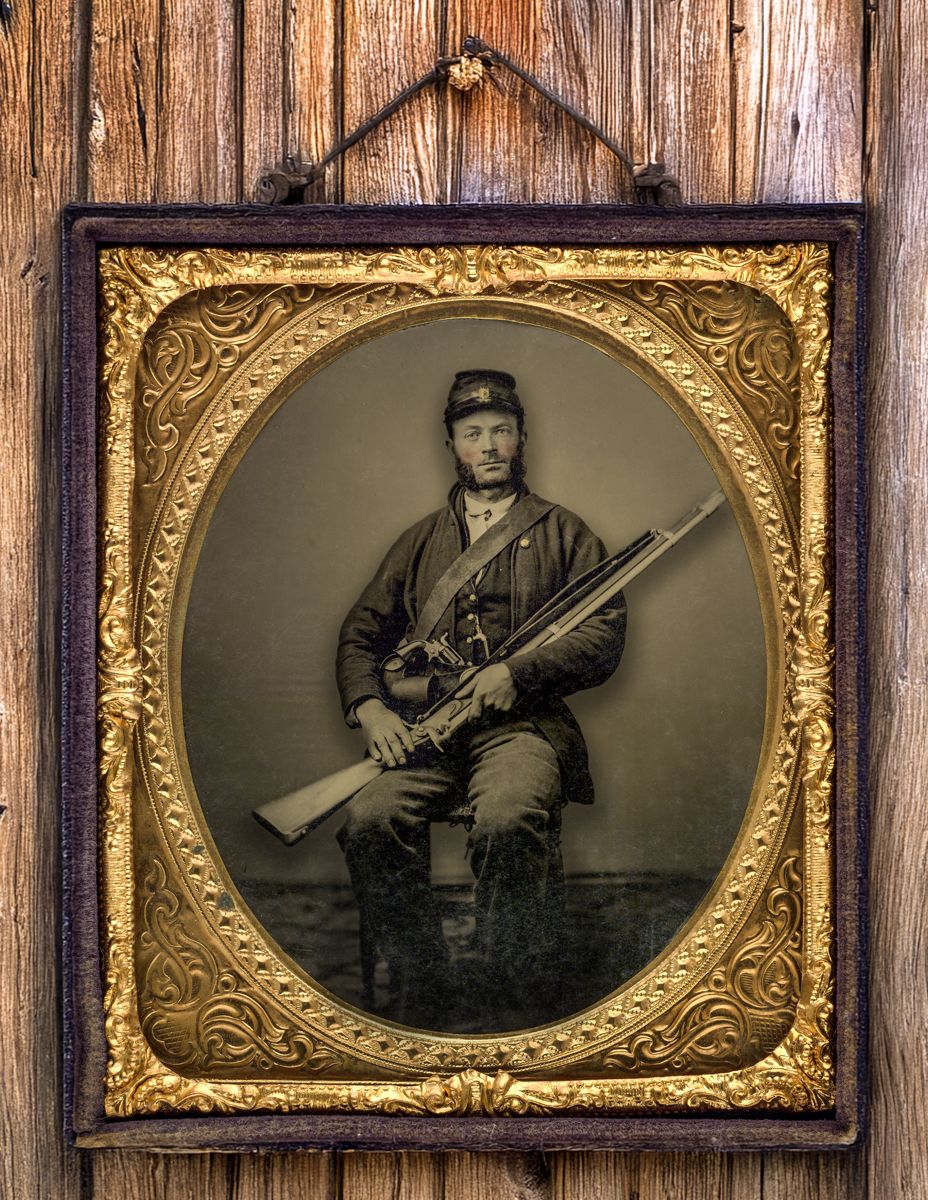
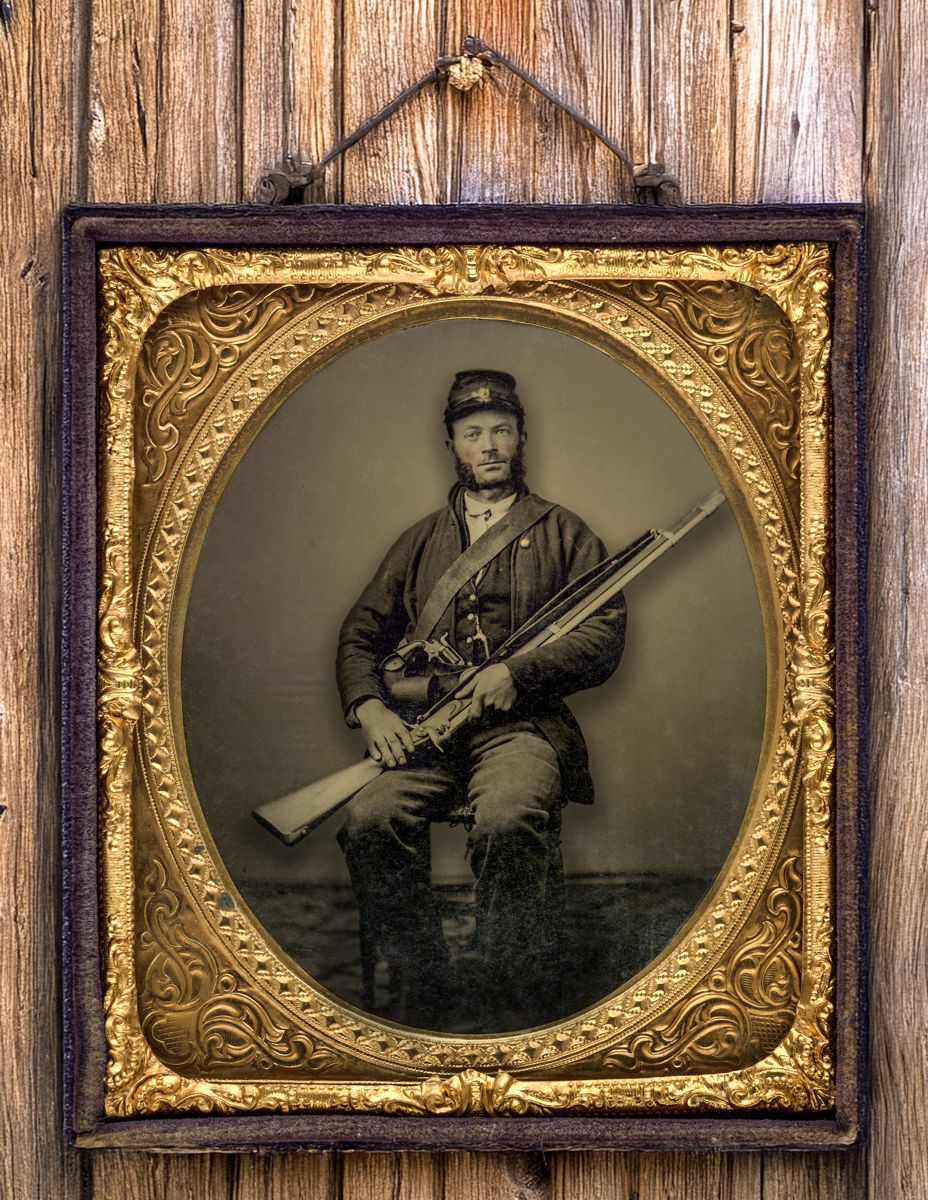
Union soldier in uniform holding an Austrian Lorenz rifle with a Colt Root revolver tucked in his belt. Liljenquist Family collection (Library of Congress).
The Austrian government did things a bit dif-
ferently from other European monarchies. The British War Department made it a policy not to sell the production of their national armory to the armies of foreign governments, including the U.S. and C.S. Instead, the Enfield long and short rifles that made their way to both sides during the U.S. Civil War were purchased from commercial gun makers in Birmingham and London. The Austrians, however, agreed to sell surplus infantry arms and artillery abroad. The Emperor at the time was Franz Josef, whose long tenure began in 1848 and lasted until World War I. Franz Josef “made the foreign policy for the Austro-Hungarian empire,” as he often said.
a high-ranking official to his humble abode. The innkeeper asked if the guest “knew the Emperor personally.” Franz Josef’s lighthearted response was, “Well yes, in fact I shave him sometimes.” The Austrians sold hundreds of thousands of their Model 1854 infantry rifle to both sides because they were considered obsolete. The Austrians were then replacing them with updated 1862 model infantry rifles, which were not for sale. They were more than happy, however, to sell off their stockpile of older models. So what were these 1854 Austrian rifles like? There is a certain lack of understanding about the Model 1854 Austrian rifle or “Lorenz” as it is often called today. It was simply called the “Austrian rifle,” Civil War soldiers, and perhaps sometimes other less complimentary names. To begin with, the 1854 Austrian rifle was designed to work with a solid lead projectile invented in 1852 by Josef Lorenz (1814–1879), an Austrian artillery officer working at the Imperial Arsenal in Vienna. Lorenz had developed an understanding of ballistics from his experience with rifled artillery, of which the Austrians produced some of the best of the mid-19th century. All artillery used by the Austrians was manufactured at the Government Arsenal, and most of it was rifled. See the following from an 1861 article by William Ainsworth on the invention for an explanation of how the Lorenz projectile and rifling system worked:
“Another exactly opposite system (from the hollow base conical Minie ball) of making the projectile fill the grooves is by compression—that is to say, it is not expanded by the explosion of the powder, but squeezed together longitudinally. This system possesses the same advantages as the Minié as regards simplicity and convenience of loading, with a great reduction of recoil, through the successive filling of the grooves by the bullet.
Franz Joseph I of Austria, Emperor of Austria and King of Hungary (1830–1916). (Wikimedia)
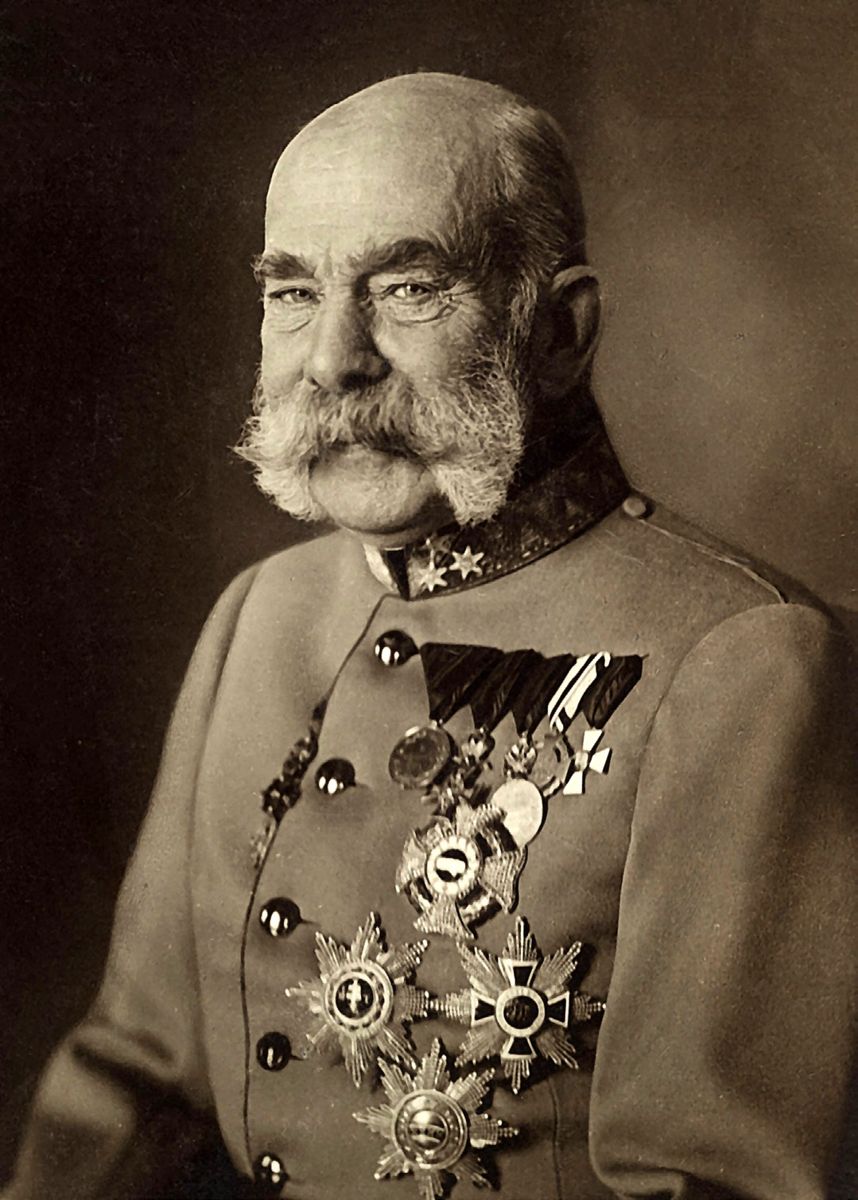
There is an interesting anecdote that lends insight into Franz Josef’s character. It was said that the Emperor used to venture out on his own incognito to see and hear what his subjects were concerned about. On one such venture the Emperor was shaving himself in his room while staying overnight at a country inn. The innkeeper noticed the royal emblem on the carriage parked in front of the inn and, out of curiosity, knocked on the door to inquire what official business brought what was clearly
“The peculiarity of this system is that it was simultaneously invented by two gentlemen in 1852, an Austrian artillery officer of the name of Lorenz, and an English gunsmith, Wilkinson, hence the system is fairly known as the Lorenz/Wilkinson. It has been most extensively employed in Austria, where, since 1854, the Chasseurs have been gradually armed with short rifles of that pattern. They were employed in Italy in 1859, and that they are effective in the hands of expert shots was proved by the great loss the French suffered in officers. The defects of the system appear to be that it cannot be applied to rifles of the old pattern, and it is certain that expansion is more likely to be effectual in all cases than compression; while, further, barrels are apt to expand with lengthened use, and in that case the compressing bullet is unavailing, as one of the chief conditions of success is the reduction of the windage to a minimum.”

To better grasp some problems experienced by Civil War soldiers armed with the 1854 Austrian rifle, it necessary to first understand that it was designed to fire a solid lead projectile like a miniature piece of field artillery. This type of ammunition was not available through the U.S. or C.S. ordnance departments nor was it manufactured at any U.S. or C.S. arsenals. While the Union and Confederacy purchased significant numbers of 1854 Austrian rifles, they did not have the right ammunition for them. Some problems encountered by the Confederates with the Austrian rifle might have been avoided if the officer’s manual, had been translated from German into English during the U.S. Civil War. If it had been, a few of the finer points, such as the correct ammunition and proper use of the sights, would have greatly assisted soldiers using the Austrian rifle with their marksmanship. The Österreichische Infanterie – Feurgewehr, Wien, 1857, explains all this as well as how to use the block sights to adjust aim for a target at various points up to 300 schritt, a distance of roughly 225 yards. Soldiers had mixed feelings about the 1854 Austrian rifle. Some like Leander Stillwell of the 61st Illinois called his newly issued 1854 Austrian, “a wicked good shooter.” Other soldiers for the reasons outlined previously, were less impressed with it.
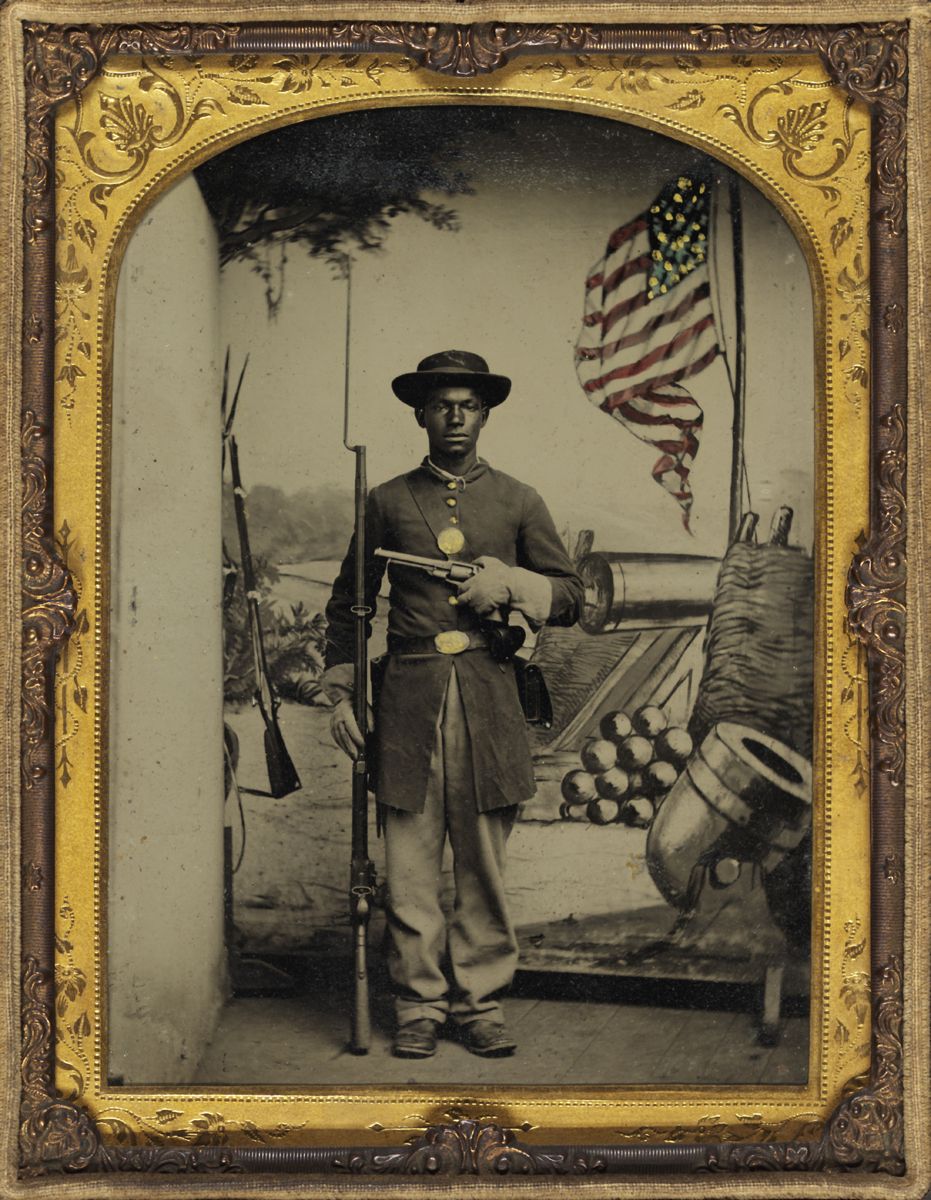
African American soldier in Union uniform with a Austrian Lorenz riflemusket and Remington revolver in front of painted backdrop showing weapons and American flag at Benton Barracks, Saint Louis, Missouri. Liljenquist Family Collection of Civil War Photographs (Library of Congress).
Model 1854 Austrian Lorenz rifle. (Dave Winfield Collection)
About the Author Craig L. Barry was born in Charlottesville, Va. He holds his BA and Masters degrees from UNC (Charlotte). Craig served The Watchdog Civil War Quarterly as Associate Editor and Editor from 2003–2017. The Watchdog published books and columns on 19th-century material. He is the author of several books including The Civil War Musket: A Handbook for Historical Accuracy (2006, 2011), The Unfinished Fight: Essays on Confederate Material Culture Vol. I and II (2012, 2013). He has also published four books in the Suppliers to the Confederacy series on English Arms & Accoutrements, Quartermaster stores and other European imports.