
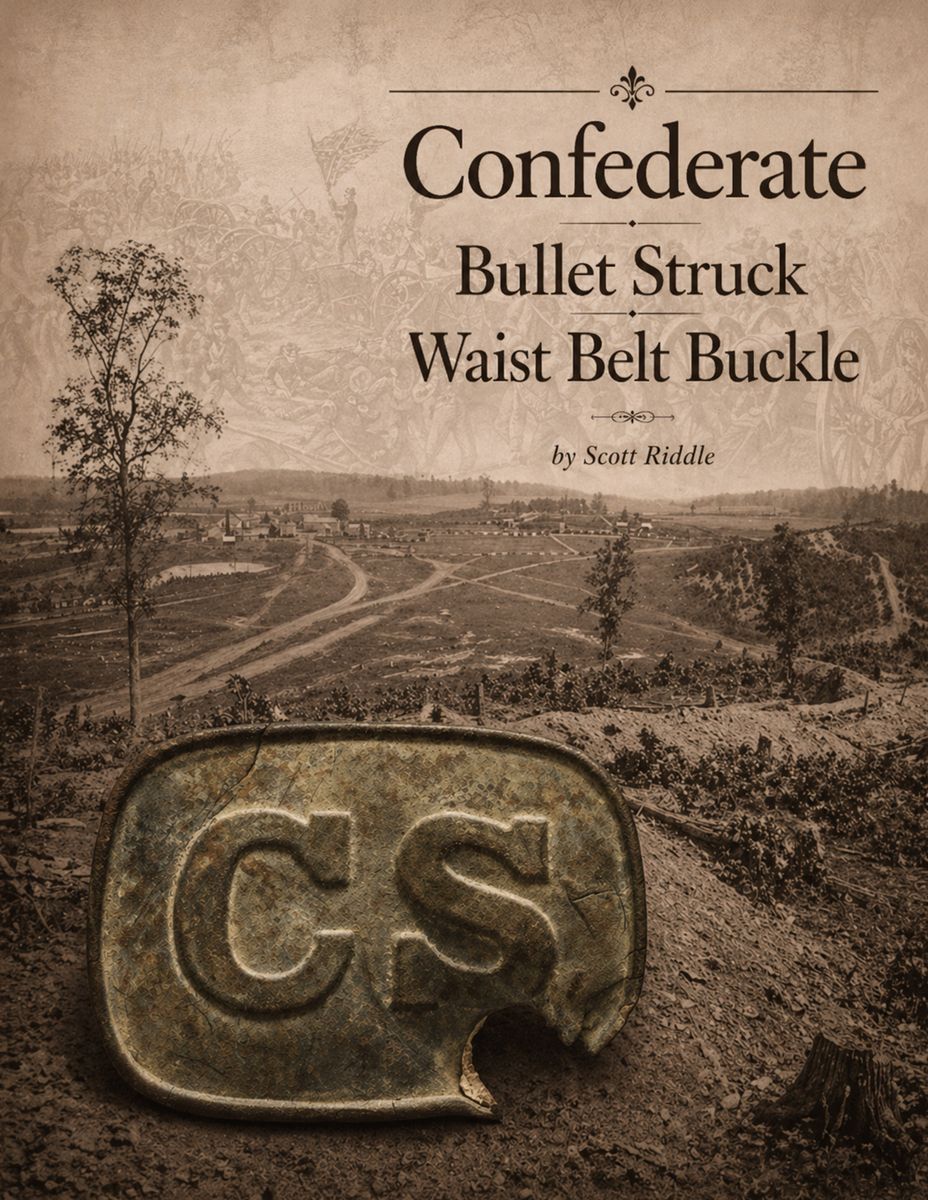
Confederate Bullet Struck Waist Belt Buckle
By Scott Riddle · Originally published July-August 2026 · pp. 6–14

he brutally cold winter of 1863–1864 had finally given way to spring by mid-April 1864, and the armies under generals Joseph E. Johnston and William T. Sherman were preparing for the upcoming campaign. The stinging defeats at Chattanooga and Missionary Ridge in Tennessee were still fresh in the minds of the soldiers, and morale had hit an all-time low in the Army of Tennessee. Braxton Bragg’s failure to follow up on the Confederate victory at Chickamauga, combined with internal fighting within his command, resulted in a loss of confidence in his ability to lead. This prompted him to tender his resignation. As the army settled into winter quarters in Dalton, Georgia, in December 1863, desertion had become a serious problem in the Army of Tennessee. After serious deliberations in Richmond, Gen. Joseph E. Johnston assumed command of the army on December 26, 1863, and immediately set about reoutfitting it and improving discipline and morale.
T New uniforms and accoutrements were issued through the Atlanta Arsenal in preparation for the upcoming campaign, as Sherman had his eye on the industrial complex and railroad hub located in that city. Sherman’s first moves were assaults on the fortifications around Dalton at Buzzard’s Roost Gap and Rocky Face Ridge as a diversion, while he sent Gen. James McPherson’s Army of the Tennessee on a flanking maneuver through Snake Creek Gap to threaten Johnston’s rail supply line to the south at the sleepy hamlet of Resaca, Georgia. Upon learning of this move, Johnston withdrew from the defensive positions surrounding Dalton and established a line north of Resaca, with his left flank resting on the Oostanaula River and his right on the Conasauga River, forming a general arc in the center and encompassing the Western and Atlantic Railroad. On May 13, 1864, the first major engagement of the Atlanta Campaign commenced just north of Resaca. For the next three days, the armies squared off, with most of the fighting occurring on the center and right flank of the Confederate line near the Western and Atlantic Railroad. After several failed assaults by the Federals on Johnston’s right, he felt Sherman’s troops might have been weakened enough for a counterattack, with the possibility of cutting Sherman off from his vital supply line on the Western and Atlantic Railroad. The first attack was ordered on the evening of May 14, and although the Federals were driven from their position, the attacking Confederates were halted by a section of artillery.
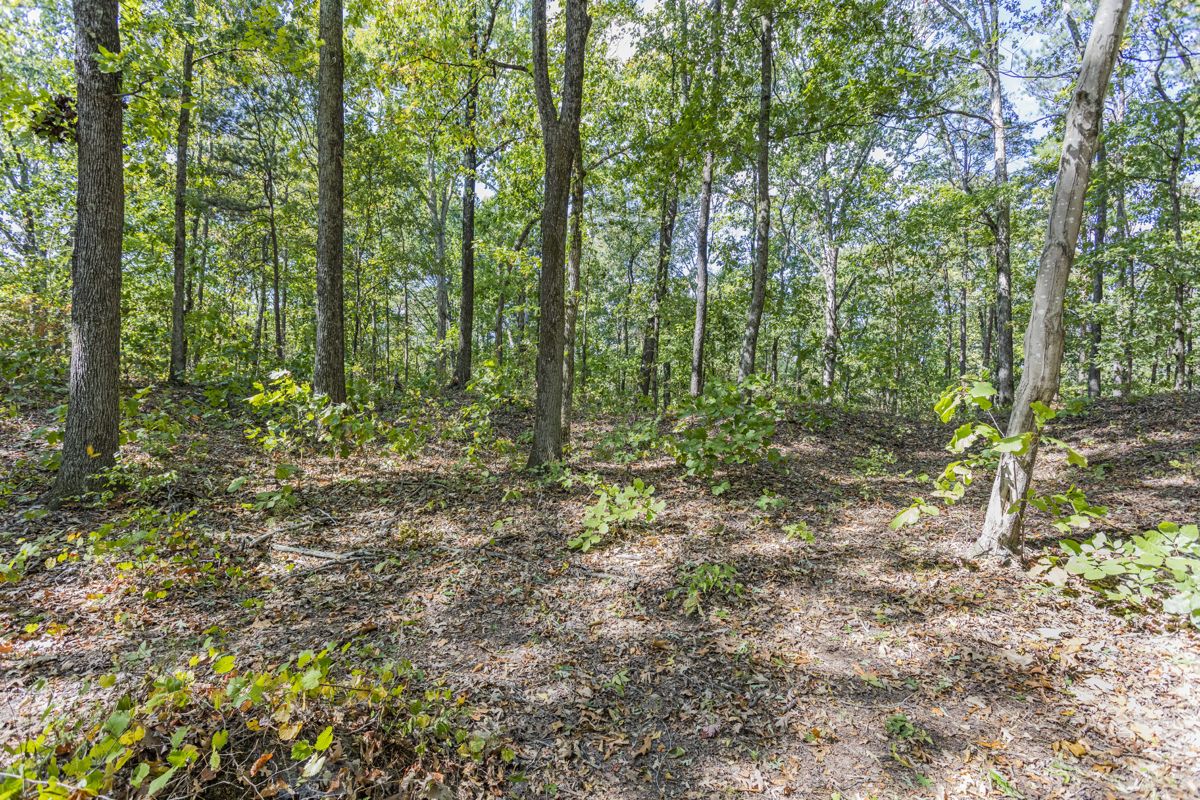
Capt. Max Van Den Corput’s gun emplacements where the heavy fighting took place at Resaca, Ga. (Jack W. Melton Jr.)
General Hood ordered Gen. Carter L. Stevenson to position a battery of artillery to help silence the Federal battery that was “annoying General Hindman’s line.” Complying with Hood’s orders, General Stevenson ordered up Captain Maximilian Van Den Corput’s four 12-pounder Napoleon guns of the “Cherokee Artillery.” These guns were positioned on a slight rise about 20 yards in front of the line. This section of the line was occupied by troops serving under Brigadier Generals John C. Brown and Alexander Reynolds. Having been driven back earlier, a counterattack led by future U.S. President Benjamin Harrison succeeded in driving off most of the gunners in Van Den Corput’s battery, and those who remained were shot or bayoneted. The Confederates laid down heavy enough fire to drive Harrison’s troops back to cover, and the Cherokee Artillery lay unmanned between the lines, unclaimed by either side. This section of the battlefield was confused during the fighting on May 15. Johnston had ordered Hood to commence an assault on the Federal left but countermanded the order when he learned that Thomas Sweeney’s division of
Federal infantry had crossed the Oostanaula to the south at Lay’s Ferry, threatening his supply line to the rear. Unfortunately, not all the units received the message in time to abort the attack, and a general assault was made on the Federal left, resulting in heavy casualties. The 63rd Virginia reported onethird of its men killed or wounded. The Confederate army withdrew after dark on May 15, leaving the guns of the Cherokee Artillery and more than 1,000 dead at Resaca. This bullet-struck CS “Sardine” waist belt plate was found on private property in the 1980s behind the trenches where the 63rd and 54th Virginia Regiments were positioned during the battle on May 15, 1864. Those trenches were located just behind the embrasure where Van Den Corput’s Cherokee Artillery was positioned. The identity and fate of the wearer of this plate are unknown, but the wound is assumed to have been fatal. Based on the evidence, it is assumed that one of the Virginians engaged in the counterattack was the wearer, although it could possibly have belonged to one of the wounded Tennesseans of John C. Brown’s Brigade, who were
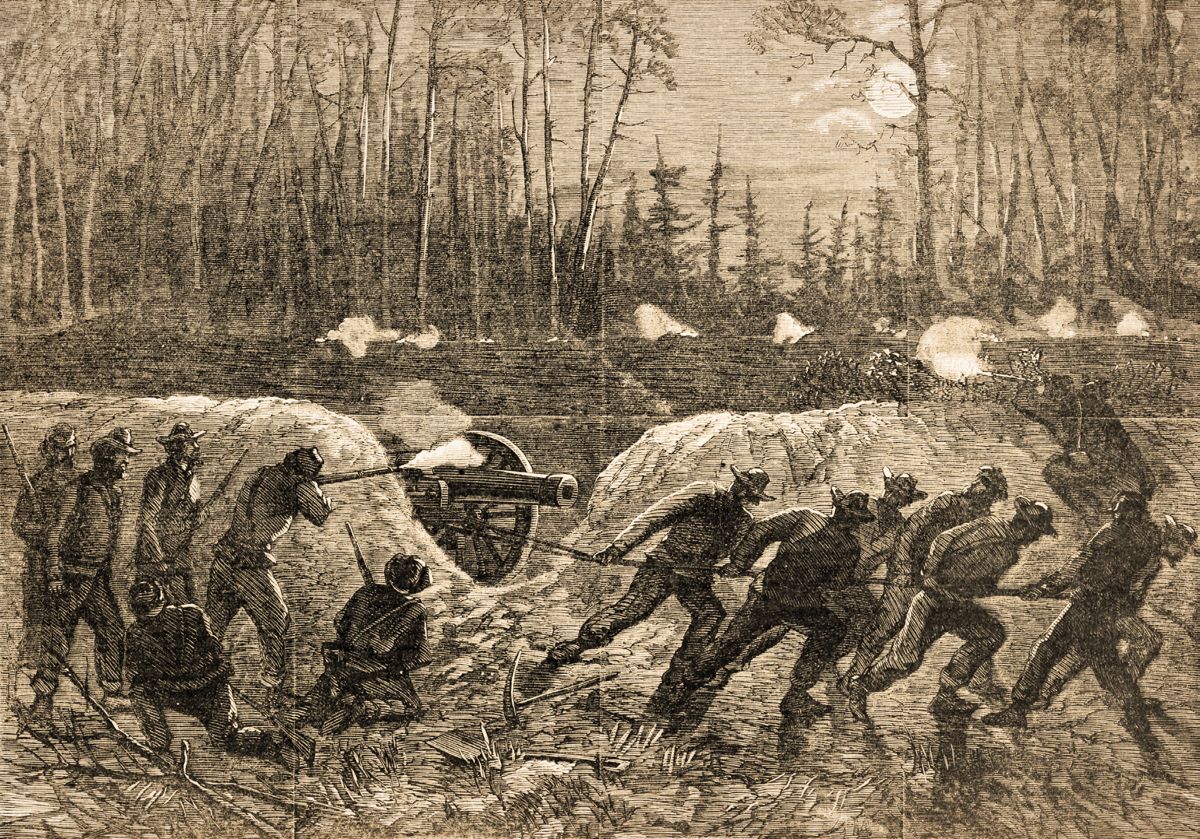
Titled “The Campaign in Georgia—Geary’s Division Digging the Guns out of a Rebel Battery [Van Den Corput’s Cherokee Artillery] Before Resaca, on the Night of May 15, 1864.” (Harper’s Weekly, June 18, 1864, page 389)
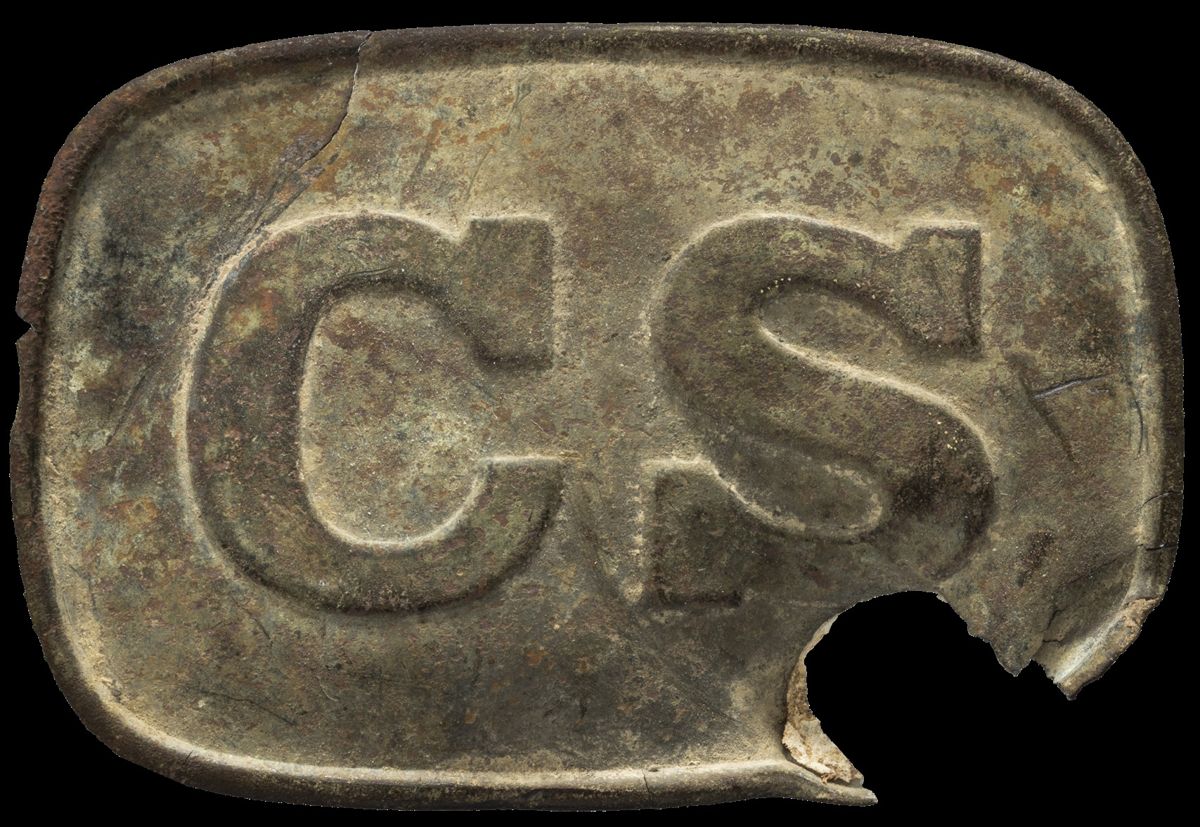
Type: Waist Belt Plate Pattern: Sardine Period: ca. 1862–1865 Weight: 26 grams Dimensions: inches: 3.31 W X 2.22 H mm: 84.12 W X 56.64 H
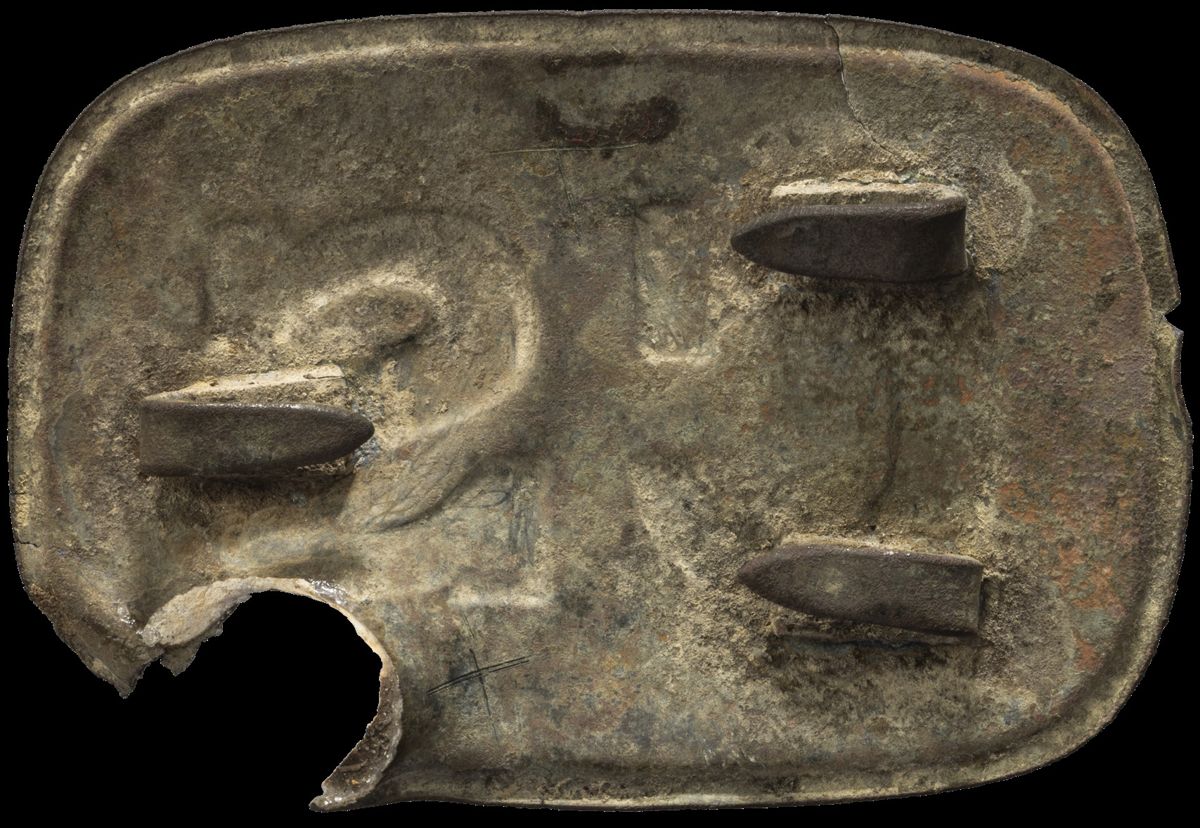
Construction: Die-stamped Brass Rarity: 10 Collection: Scott Riddle Provenance: Resaca, Georgia
Comments: This extremely rare bullet struck example was found in a section of trench line that was occupied by the 63rd Virginia Regiment near Capt. Max Van Den Corput’s “Cherokee Artillery,” under the command of Johnston’s Battalion of Artillery. This part of the Confederate line bore the brunt of the assault on May 16, 1864, made by two of Maj. Gen. Daniel Butterfield’s brigades of the Federal 20th Corps. The 63rd Virginia suffered heavy losses with five killed and 11 wounded. The Federals captured the four guns of the “Cherokee Artillery” after nightfall by digging out the front section of the gun emplacements and handtowing the guns behind the Federal lines.
defending against the assault on the Cherokee Artillery’s guns. The only thing known for certain was that the opening salvos of the Atlanta Campaign at Resaca were best described by a Confederate soldier as “Hell has come to Georgia, sure enough.”
Here is Benjamin Harrison’s official report of the fighting at Resaca: HDQRS. SEVENTIETH INDIANA VOLUNTEER INFANTRY, In the Field, near Cassville, Ga., May 20, 1864. GENERAL: In obedience to your orders, I have the honor to submit the following report of the part taken by my regiment in the operations of our forces from the 13th to the 19th, inclusive: On the 13th instant I moved out about four miles from Snake Creek Gap, having the advance of the brigade, and under orders from you formed line of battle on the Resaca road and moved up to the crest of a ridge connecting on the right with the forces under the command of General McPherson, and having on my left one regiment of our brigade (One hundred and second Illinois Volunteer Infantry), which, with my regiment, constituted our front line and was placed by you under my command. Skirmishers were thrown out to cover the front of the line and every preparation made for a proper advance when the order should be received. Almost immediately after we had taken position the line on our right (General McPherson) was advanced and soon became engaged with the enemy, but suffered no loss. About 4 p.m., by your orders, our line was advanced, changing direction gradually to the left, and having emerged from the timber was massed on the left of General Harrow’s line, who was still skirmishing with the enemy. Shortly after dark we again changed position, relieving the regular brigade, of the Fourteenth Army Corps. My regiment was here located on the right of our brigade line and along the crest of a hill with a meadow of about 600 yards in width in front and extending from the base of the hill occupied by me to a hill opposite, which was strongly fortified and occupied in force by the enemy. As soon as day dawned on the 14th instant a sharp fire was opened by the rebel sharpshooters on my skirmishers, which was kept up quite briskly during the day, inflicting some loss on my regiment. Early in the day of Saturday, the 14th instant, instructions were received from your headquarters that we would be ordered to assault the works in our front at some time during the day, and orders were also given by you to strengthen the skirmish line. In compliance with the order, I deployed Company D of my regiment, Captain Tansey, relieving the skirmishers under Captain Carson, who had been placed upon the line the preceding night, and a few hours subsequently communicated to Captain Tanseyan order received from your headquarters to advance his skirmishers, which was promptly though cautiously done, the men availing themselves of such meager shelter as the open field afforded. About 1 p.m., and while our line was resting behind the crest of the hill to avoid a troublesome fire which the rebel sharpshooters continued to pour in upon the crest, the “attention” was sounded in the regiment on my left and was repeated in my regiment. Not having received any intimation of what movement was intended, I called to Brigadier-General Ward, who at that moment approached my left, to know what the orders were. His reply was, “The orders are to advance.” Knowing that an assault on the works in our front had been in contemplation earlier in the day, and supposing that the order involved such an assault, or at least that it involved an advance until a halt was ordered by the brigade commander, I put my regiment in march when the regiment on my left moved and passed over the crest of the hill and down its slope to a fence at its base, where I had previously instructed my officers to halt for a moment to reform their line, as they would necessarily be much broken in passing down the hill, which was very steep in some places. Under the cover of the fence I halted, and passed an inquiry to my major, who has on the left, to know whether the One hundred and second Illinois was still advancing with me. His answer was that this regiment had halted on the crest of the hill. After some time I was given to understand by one of the brigade staff, calling to me from the summit of the hill, that it was not intended that I should pass the hill, but that I should have halted on the crest, which had not been previously explained to me. By retiring the men singly or in small squads I was able without further casualties to resume our former line behind the crest of the hill. My losses during the day were as follows: On the skirmish line–killed, enlisted man, 1: wounded, enlisted men, 3; in advancing over the crest of the hill to our supposed assault–killed, enlisted men, 2; wounded, enlisted men, 10; wounded, Lieutenant Martin, Company I, slightly in the leg. During the night of Saturday, the 14th instant, under orders, I constructed, with the assistance of Lieutenant and the brigade pioneers, a line of rifle-pits along the front of my line, and had moved in at daylight four companies to occupy them as sharpshooters and watch the enemy, when we were suddenly relieved By another brigade and marched around to a new position on the left of the Fourteenth Army Corps. In our new position we were informed that our brigade, supported by the other brigades of our division, was expected to assault the enemy’s rifle-pits, and without delay our brigade was formed in column of battalions in order of rank. My regiment leading, passed from the crest of an intrenched ridge, occupied by our forces, across an open field in the valley and up a steep and thickly wooded hill to the assault of the enemy’s breastworks, whose strength, and even exact location, was only revealed by the line of fire which, with fearful destructiveness, was belched upon our advancing column. I moved my men at the double-quick and, with loud cheers, across the open space in the valley in order sooner to escape the enfilading fire from the enemy’s rifle-pits on our right and to gain the cover of the woods, with which the side of the hill against which our assault was directed was thickly covered. The men moved on with perfect steadiness and without any sign of faltering up the hillside and to the very muzzles of the enemy’s artillery, which continued to belch their deadly charges of grape and canister, until the gunners were struck down at their guns. Having gained the outer face of the embrasures, in which the enemy had four 12-pounder Napoleon guns, my line halted for a moment to take breath. Seeing that the infantry supports had deserted the artillery, I cheered the men forward, and with a wild yell they entered the embrasures, striking down and bayoneting the rebel gunners, many of whom defiantly stood by their guns till struck down. Within this outer fortification, in which the artillery was placed, there was a strong line of breastworks, which was concealed from our view by a thick pine undergrowth, save at one point, which had been used as a gateway. This line was held by a rebel division of veteran troops, said to be of Hood’s command. When we first entered the embrasures of the outer works the enemy fled in considerable confusion from the inner one, and had there been a supporting line brought up in good order at this juncture the second line might have easily been carried and held. My line having borne the brunt of the assault, it was not to be expected that it could be reformed for a second assault in time. The enemy in a moment rallied in rear of their second line, and poured in a most destructive fire upon us, which compelled us to retire outside the first line to obtain the cover of the works. At this point some confusion was created among our forces in and about the enemy’s works (several of our battalions in rear of me having come up) by a cry that the enemy was flanking us. This caused many to retire down the hill, and had for a time the appearance of a general retreat. I strove in vain to rally my men under the enemy’s fire on the hillside, and finally followed General Benjamin Harrison—”Come on boys!” – Battle of Resaca – May 13th to 16th them to a partially sheltered 1864. (Library of Congress) place behind a ridge to our left, where I was engaged in separating my men from those of other regiments and reforming them preparatory to leading them again to the support of those who still held the guns we had captured, when I was informed that General Ward was wounded, and was ordered to assume command of the brigade and reform it, which duty I discharged and then urgently asked General Butterfield for permission to take it again to the works we had carried and still held, and bring off the guns we had captured. This was refused, and by his order the brigade was placed in a new position on a hill to the left of the point at which we had assaulted, to assist in repelling an attack made by the enemy. To sum up the account of the day’s fight, I will add that detachments from my regiment, and, I believe, from each of the other regiments of the brigade, held the rebels from re-entering and taking the guns we had captured until they were brought off at night by a detail from the First and Second brigades. I would respectfully call your attention to the following points: First, my regiment entered the enemy’s works in advance of all others, and my colors, though not planted, were the first to enter the fort; second, the enemy’s lines were not penetrated at any other point than that where we entered, although assaulted by other troops on the left; third, my regiment, being in advance and having to bear the brunt of the assault, accomplished all that could have been required of them in entering the works and driving the enemy out. The work of carrying a second line of defense belonged to the support which followed me. The day following the battle my regiment, together with our whole brigade, remained on the battle-field burying our own and the rebel dead, and collecting abandoned arms and other property. Leaving the battle-ground about 5 p.m. of the 16th, were joined the division at —- Mill. In the engagement with the enemy near Cassville on the 19th instant my regiment was under quite a heavy fire of shell, but suffered no loss. I append a list of killed and wounded in my regiment.
I desire, in conclusion, to acknowledge the gallantry of my officers and men. Though never before under fire they have the testimony of the veteran foe they overcame that they bore themselves with conspicuous courage. I could not, of course, observe every individual act of gallantry on the part of my company officers, but must commend to your notice the following as especially worthy of mention for their determined and successful efforts to hold the captured guns: Capt. William M. Meredith, Capt. H. M. Scott, Lieut. M. L. Ohr, Capt. P. S. Carson, Capt. H. M. Endsley, Lieut. William C. Mitchell, Lieut. E. B. Colestock. Captain Tansey, who was severely wounded, also bore himself most gallantly. Lieut. C. H. Cox, acting adjutant, was conspicuous for his coolness and his efforts to rally the men. Lieutenant-Colonel Merrill and Major Ragan did their whole duty, and have need of no higher praise from me. Dr. Jenkins A. Fitzgerald, assistant surgeon, during all of our series of operations was always found with his regiment, dressing the wounds of those who had fallen under the heaviest fire of the enemy, manifesting a thorough disregard of his own safety in his humane desire to give the wounded the promptest surgical relief. Rev. A. C. Allen, chaplain, deserves mention for his untiring labors night and day to relieve the wants and sufferings of our wounded. I am, general, with the greatest respect, your obedient servant, BENJA. HARRISON, Colonel Seventieth Indiana Volunteer Infantry. Brig. Gen. W. T. WARD, Comdg. First Brig., Third Div., 20th Army Corps. Source: Official Records of the War of the Rebellion, Series I, Volume 38, Part 2.
About the Author Scott Riddle is a retired Firefighter/Arson Investigator after 30 years of employment with the City of Smyrna Fire Department just outside Atlanta, Ga. He has been an avid relic hunter and historian focusing on the battlefields, camps, and troop movements in North Georgia. Scott became passionate about Confederate belt plates after finding his first CSA plate in 1981. Riddle’s comprehensive book, Belt Buckles and Plates of the Confederacy, was published in 2026, and is an extensive work on the subject of Confederate and Southern State belt plates. Riddle has one of the largest collections in the southeast. He also owns Code Compliant Inspection Service based in Kennesaw, Ga., and has authored several articles on Civil War history and relic hunting in Cobb County, Ga.