
“congress to Col. Willett”: Sword of Marinus Willett
Compiled by Jack W. Melton Jr. · Originally published July-August 2026 · pp. 65–71
he honor came late, as such honors sometimes do. Marinus Willett earned it in 1777, when the Revolution was still in doubt, and the Mohawk Valley was full of smoke, rumor, hunger, and hard marching. The sword itself did not appear until 1786, after independence had been won and after Congress had found the money and the means to carry out what it had voted during the war.
T That delay is worth keeping in mind. This was not the sword Willett had at his side when he went out of Fort Stanwix on August 6, 1777. It was not a field weapon battered by service, nor was it the kind of practical sidearm an officer might reach for in the press of a fight. It was a presentation smallsword, elegant, deliberate, and national in meaning. The inscription did the plain work: “Congress to Col. Willett, Oct. 11, 1777.” There is a good deal packed into that short line. Congress, not New York, made the award. Willett was honored not by family pride or local affection, though he had plenty of both in time, but by the national authority that was still struggling to define itself. The date fixed the memory. The sword turned that memory into silver, gold, steel, and workmanship.
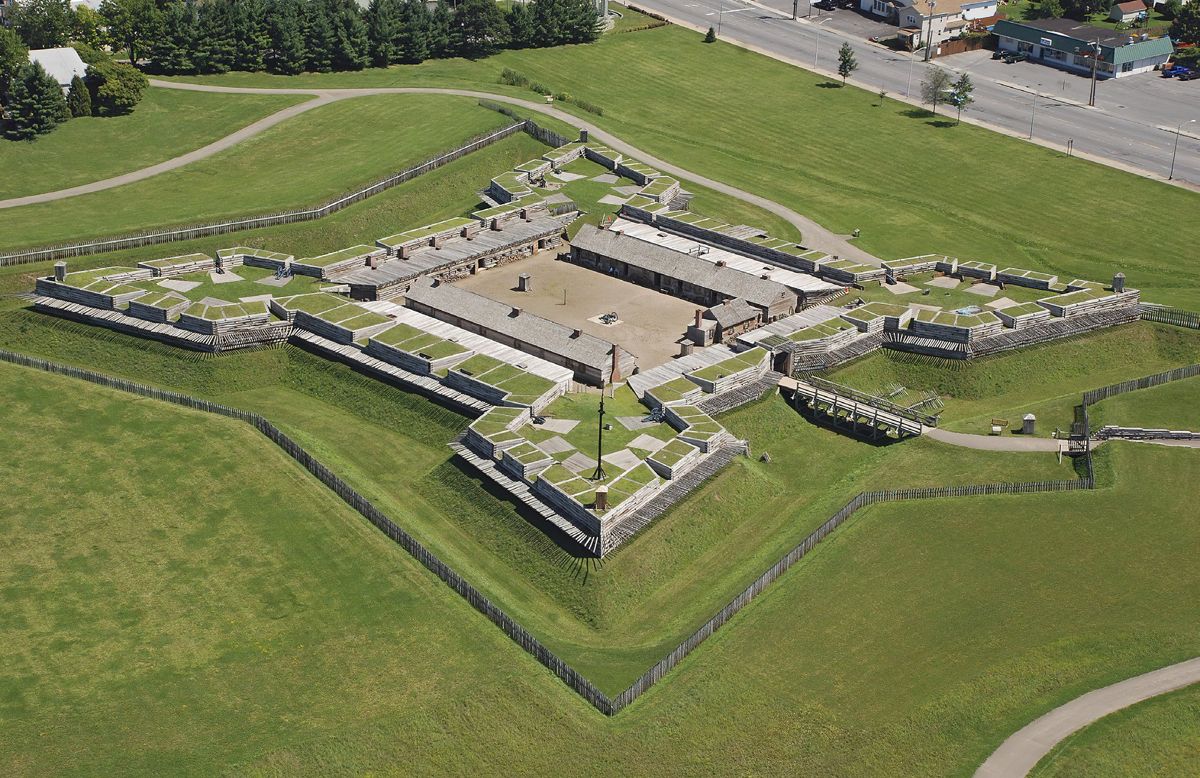
The Man Marinus Willett was born in Jamaica, Long Island, on July 31, 1740. His first soldiering was in the French and Indian War. In 1758, he received a commission in a New York provincial regiment, served in the Ticonderoga campaign under James Abercrombie, and took part in John Bradstreet’s successful expedition against Fort Frontenac. The Mohawk Valley was not a strange place to him when the Revolution came. He had already seen its roads, waterways, forts, and frontier dangers. Before the break with Britain, Willett was active among the Sons of Liberty in New York City. When the war opened, he served in the Canada expedition under Richard Montgomery and later became lieutenant colonel of the 3rd New York Regiment. In 1777, that regiment was ordered to Fort Stanwix, the old post at the Oneida Carrying Place. The Americans commonly called it Fort Schuyler during the war, in honor of Maj. Gen. Philip Schuyler, but the older name has never quite left the story. The fort stood at a strategic crossing place between waterways leading toward Lake Ontario and the Mohawk River. Whoever controlled that corridor had a hand on one of the most important routes into the interior of New York. In the summer of 1777, as Lieut. Gen. John Burgoyne moved south from Canada, Lieut. Col. Barry St. Leger advanced from the west with a mixed force of British regulars, German troops, Loyalists, Canadians, and Native warriors allied with the Crown. The plan was part of the larger British effort to break the northern colonies apart by controlling New York. Inside Fort Stanwix, Col. Peter Gansevoort commanded the garrison. Willett was his second. That is the position in which history usually finds him, and it was a good place for a man of nerve and practical experience.
The Siege St. Leger’s force reached the fort at the beginning of August 1777. The siege opened formally on August 3, when surrender demands were sent in. The garrison refused. For the first days, St. Leger could do little more than harass the place with musket and rifle fire while his artillery lagged behind on Wood Creek. The Tryon County militia had done useful work there, felling trees into the creek and slowing the movement of guns and stores. The American garrison was not sitting behind its works in comfort. Fort Stanwix had been repaired in haste. It was crowded with the 3rd New York and Massachusetts detachments. The men had to hold the works, repair defenses, protect water, answer alarms, and watch enemy camps set up beyond the walls. Frontier sieges were not neat affairs. The military lines were never far removed from homes, crops, kinship, local grudges, and Native diplomacy. On August 6, Brig. Gen. Nicholas Herkimer and the Tryon County militia were marching to relieve the fort when they were ambushed near the Oneida village of Oriska. The Battle of Oriskany became one of the hardest and most personal fights of the Revolution, with neighbors, Loyalists, militia, and Native allies caught in a brutal struggle in the woods. The men inside Fort Stanwix did not know the full story when messengers reached them. They only knew Herkimer was coming and had asked for help.
Willett’s Sortie Gansevoort ordered a diversion against the enemy camps. Willett led the force out of the fort. Accounts vary in the number of men, with National Park Service summaries using both 200 and 250 men when the detachment guarding a 3-pounder gun is included. The working figure is about 250, half New York troops and half Massachusetts men, with a light cannon accompanying them. This was not a parade ground maneuver. Willett’s party moved out, struck the Loyalist and Native camps near the Mohawk River, drove off the guards, and tore into enemy property, papers, equipment, and stores. When St. Leger tried to form troops to cut them off on the return, Willett’s 3-pounder and cannon fire from the fort helped break up the British response. The sortie returned inside the works without losing a man. That last point should not be passed over too quickly. An attacking party leaving a besieged fort accepted every risk. The gate had to open. The men had to move fast enough to reach the target, do damage, gather what could be carried, and get back before the enemy recovered. A failed sortie could leave the fort weaker, its best men dead or captured, and its commander under pressure to surrender. Willett instead brought back prisoners, intelligence, and large quantities of captured property. The material effect mattered. Camps were not incidental. In eighteenth-century warfare, tents, blankets, papers, provisions, clothing, arms, ammunition, and personal baggage were part of military power. Destroying and carrying away those things struck at the enemy’s ability to continue the siege and at the confidence of St. Leger’s Native allies, many of whom had expected plunder and a quick result.
The Larger Campaign Fort Stanwix did not fall. St. Leger’s artillery was too light to batter the place into submission, even after bombardment began. Later British efforts to cut water and push trenches forward did not bring the result he needed. Meanwhile, Benedict Arnold moved toward the fort with a relief column, and the famous use of Han Yost Schuyler to spread alarming stories of Arnold’s strength helped shake confidence in the British camp. By August 23, the siege was over. St. Leger’s column retreated toward Canada, leaving behind equipment and a failed campaign. That failure mattered well beyond Fort Stanwix. It meant Burgoyne would not receive the western support he expected. The American defense of the Mohawk Valley, along with the fighting at Oriskany, Bennington, and Saratoga, helped break the British campaign of 1777. Burgoyne surrendered at Saratoga on October 17. Six days earlier, Congress had dated the honor that would later be engraved on Willett’s sword. That is why the sword should not be treated merely as a handsome object. It belongs to the northern campaign. It belongs to the long chain of events
Fort Stanwix, New York. The site is a reconstructed bastion fort famous for its successful defense by American troops during a British siege in August 1777. (Courtesy Fort Stanwix National Monument)
that made Saratoga possible. It belongs to a frontier war in which logistics, morale, local intelligence, and camp stores counted as much as formal battlefield lines.
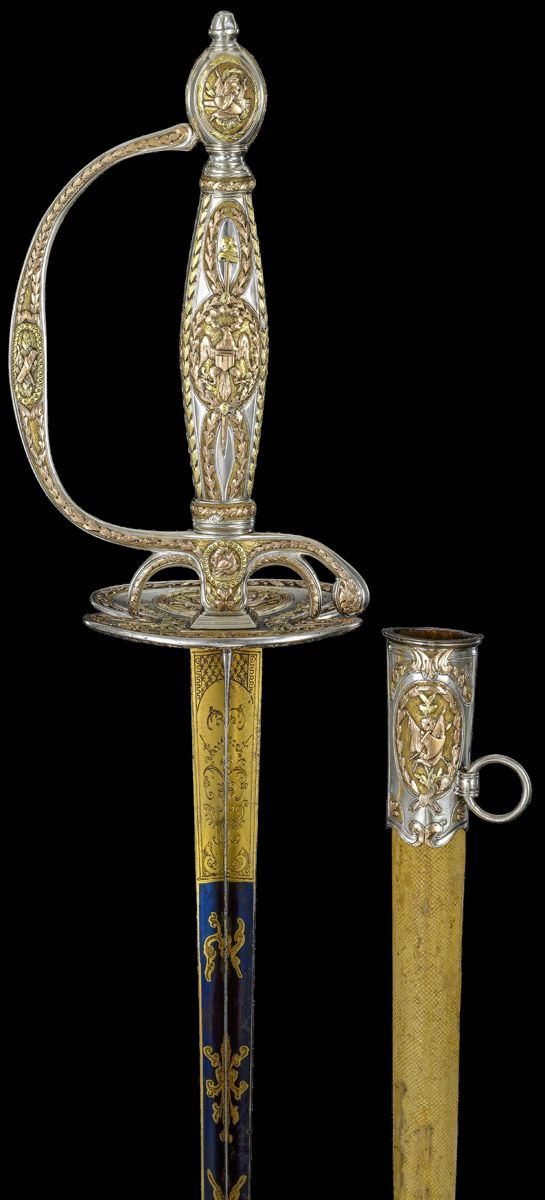
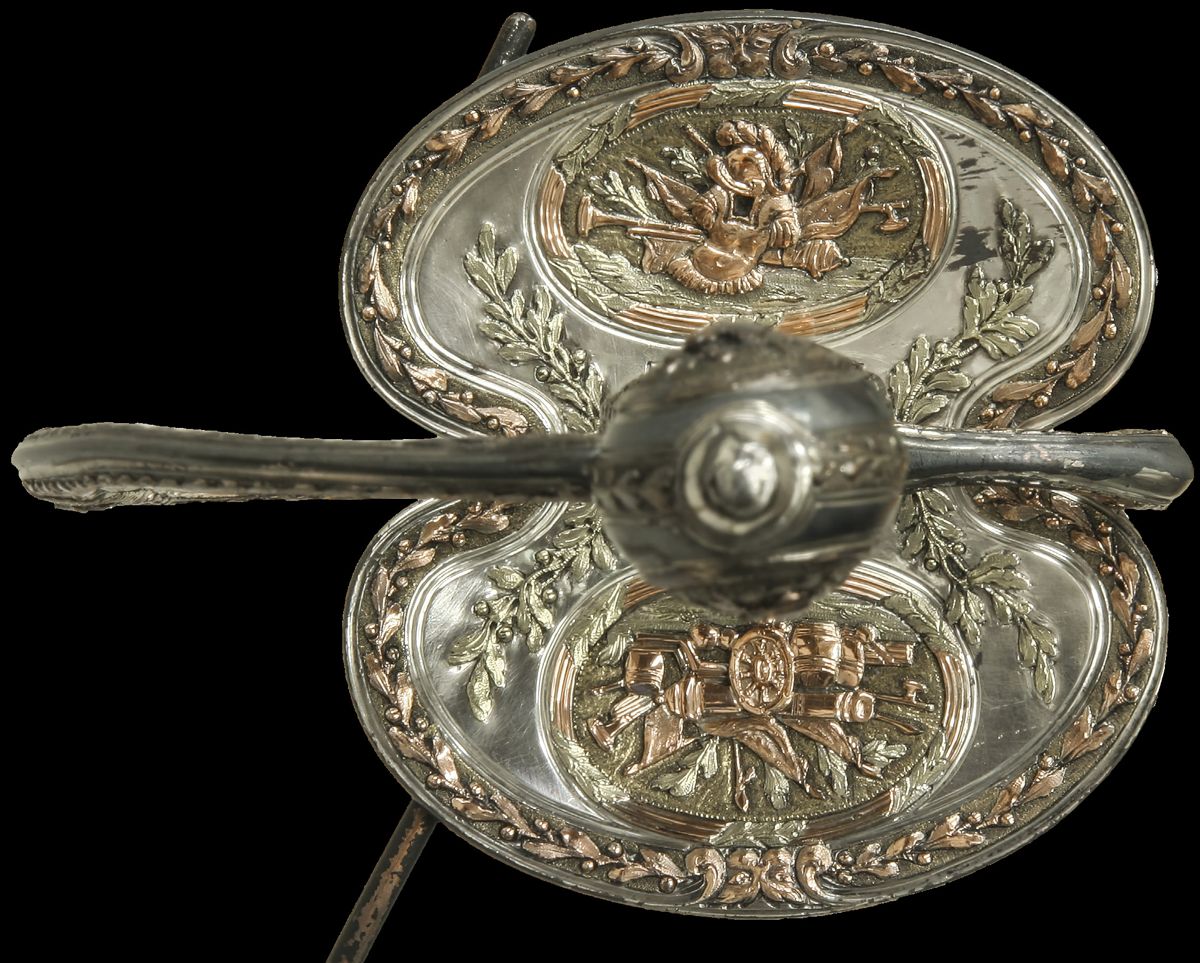
The Sword The Metropolitan Museum of Art identifies Willett’s presentation sword and scabbard as the work of C. Liger, a Paris maker and fourbisseur, or sword retailer, recorded between 1770 and 1793. It is hallmarked for 1785–1786. The materials are listed as steel, silver, gold, wood, fish skin, and textile. The sword measures and overall length of 39 ⅝ inches and the scabbard, 33 ¼ inches. It is important to call it what it is, a smallsword. This was not a heavy cavalry saber and not a rugged campaign hanger. By the late eighteenth century, the smallsword had become an officer’s dress weapon, a gentleman’s arm, and a symbol of rank and standing. In a presentation form, it did its best work in public view. The hilt, grip, guard, shell, scabbard mounts, engraving, precious-metal surfaces, and inscriptions carried the language of honor.
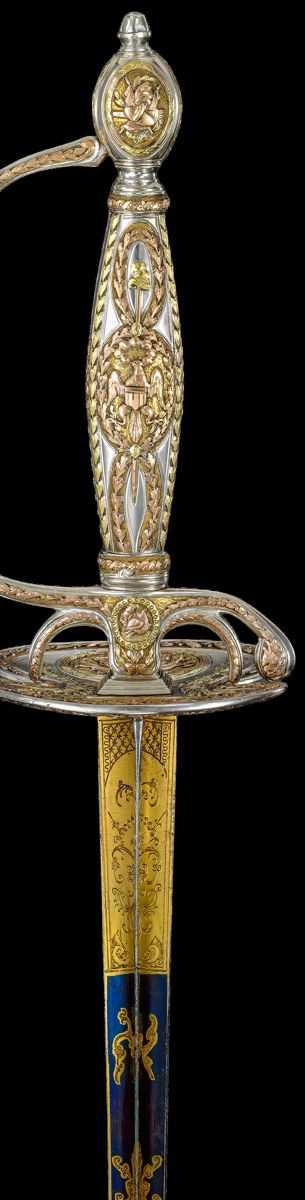
Congressional Presentation Sword with Scabbard of Colonel Marinus Willett, hilt and scabbard detail. Made in Paris by C. Liger and hallmarked for 1785–1786, the sword combines French courtly workmanship with the arms and inscription of the new United States. (Bequest of George Willett Van Nest, 1916, MET)
The decoration included the coat of arms of the United States on one side of the grip and the presentation inscription on the other. That is one of the most interesting things about the piece. The United States was still forming its official visual vocabulary. Eagles, shields, stars, inscriptions, and national arms had to be made familiar on seals, medals, military colors, printed documents, and objects like this sword. Willett’s smallsword helped give American military gratitude a visible form. The workmanship was French. That fact is not a weakness in the story. It tells us something about the new republic. Congress wanted an object worthy of the service being honored, and the finest luxury arms work of that sort was still more readily found in Europe than in the young United States. Parisian craft, American symbols, and Revolutionary memory met in one object.
The Letter and the Painting A sword of this kind is strongest when it brings its paperwork with it. Willett’s does. Henry Knox, then Secretary of War, wrote to Willett on May 27, 1786, presenting the sword that Congress had awarded in 1777. The Met describes Knox’s letter as calling the sword an “illustrious testimony of your distinguished merit.” That phrase has the tone of the age, formal, balanced, and meant to last.
Henry Knox to Colonel Marinus Willett, May 27, 1786. Knox’s letter formally transmitted the sword awarded by Congress and gives the object documentary authority as well as family and institutional provenance. (Arthur Ochs Sulzberger Gift, 2008, MET)
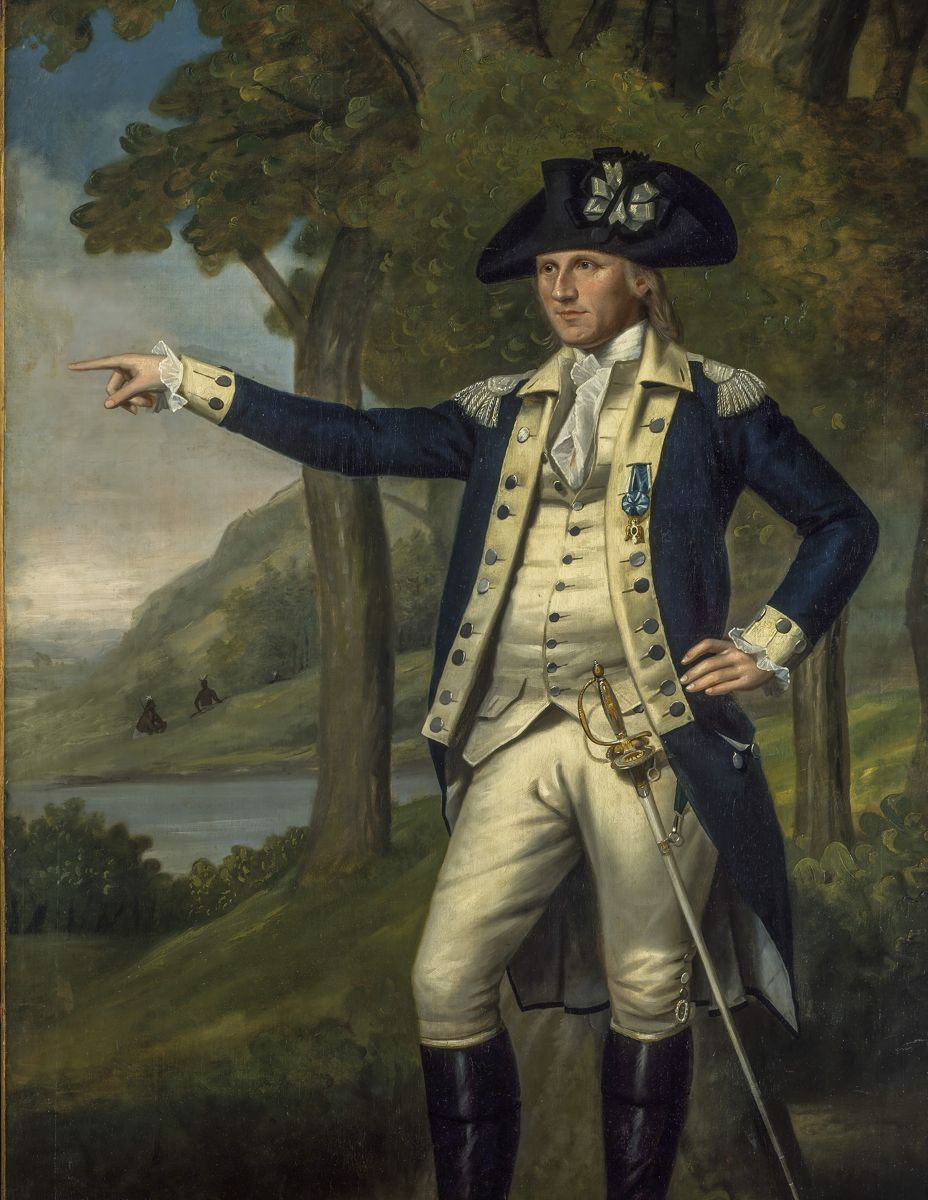
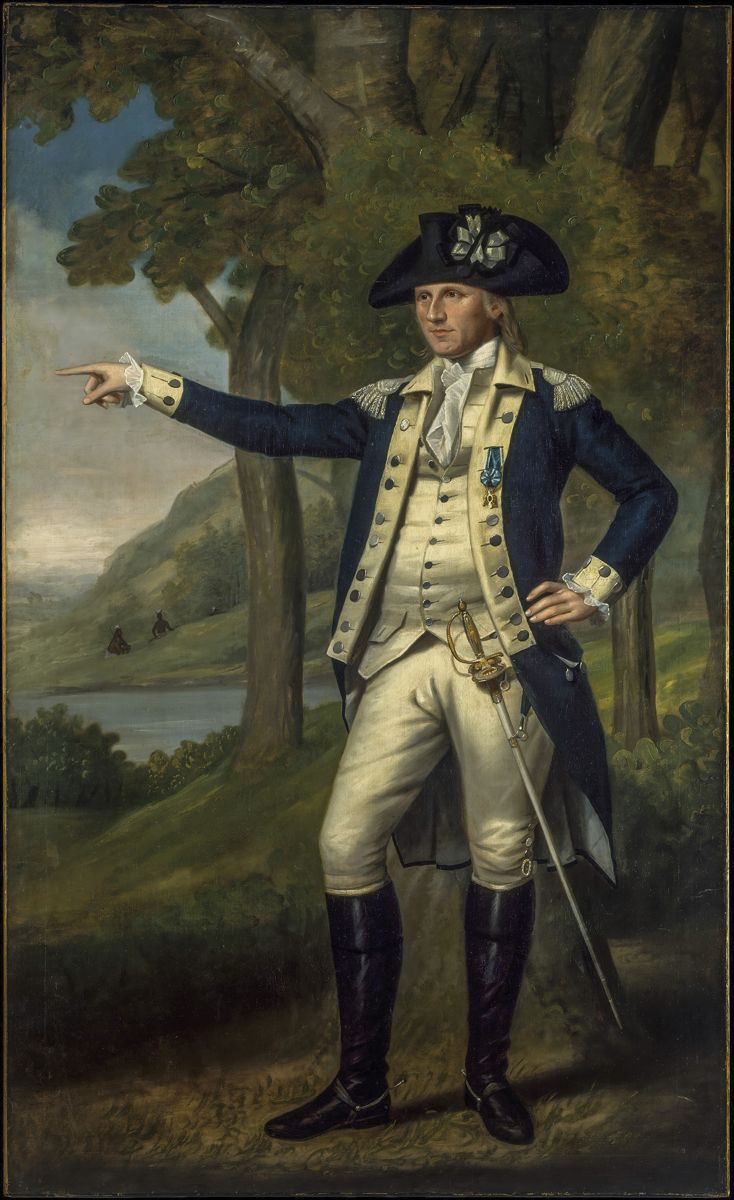
Ralph Earl (American, 1751–1801). Marinus Willett, ca. 1791. Oil on canvas. (The Metropolitan Museum of Art, New York, Bequest of George Willett Van Nest, 1916. 17.87.1)
The letter matters because it fixes the presentation. It gives the object its official voice. A sword can be separated from its story over time; a letter like Knox’s pulls it back into place. Ralph Earl’s portrait of Willett, painted about 1791, adds another layer. In the portrait, Willett stands in uniform with this presentation smallsword at his side. The sword is not hidden. It is part of the man’s public identity. Willett is not shown in the mud and smoke of the sortie. He is shown as a Revolutionary officer remembered by the nation, a soldier who had moved into civic life without surrendering the meaning of his service. That point suited Willett. After the war, he returned to New York and held public office, including sheriff and, in 1807, mayor of New York City. He also remained tied to diplomacy and public affairs. Like many Revolutionary officers, he carried his military reputation into republican civil life. The sword helped mark that passage.
A Presentation Arm Collectors sometimes divide military artifacts into battlefield pieces and ceremonial pieces, as if the first category is automatically more serious. Willett’s sword argues against that habit. It was ceremonial, yes, but it commemorated a hard military act. It was made after the war, but it was born out of wartime service. It was elegant, but the action behind it involved a besieged fort, a threatened valley, captured stores, and the morale of an enemy coalition. That is the correct way to read a presentation arm. Ask who gave it, when the award was voted, when the object was actually made, who made it, what is inscribed, what symbols were used, what event was being remembered, and what documents or portraits survive with it. Willett’s sword answers those questions unusually well. For military arms collectors, the lesson is familiar. Presentation swords of the 1860s often carry names,
Additional detail of the Willett sword and scabbard. The precious-metal decoration and national symbolism distinguish the weapon as a congressional presentation arm rather than an ordinary officer’s sidearm.
dates, towns, companies, donors, battles, and inscriptions that connect an officer to a community or command. Willett’s sword shows that the habit was older than the Civil War and older than the War of 1812. Congress had already recognized that an arm could serve as a public honor, a patriotic object, and a durable record of service. There is also a useful caution here. Not every important military artifact had to be present when shots were fired. Some objects were made afterward because people wanted the service remembered. Medals, presentation swords, flags, engraved silver, commemorative prints, and formal letters belong to the material culture of military memory. They tell us what a nation, state, town, regiment, or family thought was worth preserving. Willett’s sword has survived because it was meant to survive. A campaign musket might be altered, used up, sold, or lost. A uniform coat might be worn out or cut apart. A presentation sword began life as a keeper. That purpose does not make it less military. It makes it military in another way. The last word belongs to the inscription. “Congress to Col. Willett, Oct. 11, 1777.” No flourish is needed. The words are spare, but they carry the essential facts. A soldier did something worth remembering. Congress made the memory official. A French craftsman made it beautiful. And nearly two and a half centuries later, the sword still says exactly what it was made to say. Willett later became the 49th Mayor of New York City from 1807 to 1808.
Sources v v v v v v
Scabbard locket detail of the Willett presentation sword. The fine decorative work helps explain why Congress turned to Parisian craftsmanship when it finally executed the award after the war.
v v
The Metropolitan Museum of Art, Congressional Presentation Sword with Scabbard of Colonel Marinus Willett: https://www.metmuseum.org/art/collection/search/22631
The Metropolitan Museum of Art, The Sword Awarded to Revolutionary War Hero Colonel Marinus Willett: https://www.metmuseum.org/perspectives/sword-awarded-to-revolutionary-war-hero-marinus-willett
The Metropolitan Museum of Art, Letter from Henry Knox to Colonel Marinus Willett: https://www.metmuseum.org/art/collection/search/35640
The Metropolitan Museum of Art, Ralph Earl, Marinus Willett: https://www.metmuseum.org/art/collection/search/10833
National Park Service, Lieutenant Colonel Willett’s Sortie: https://www.nps.gov/articles/000/colonel-willett-s-sortie.htm
National Park Service, The 1777 Siege of Fort Schuyler: https://www.nps.gov/articles/000/the-1777-siege-of-fort-schuyler.htm
National Park Service, Marinus Willett: https://www.nps.gov/people/marinus-willett.htm
New York State Library, Willett Family Papers: https://www.nysl.nysed.gov/msscfa/sc16670