
The American Longrifle and the Fall of Burgoyne
By Military Antique Collector Staff · Originally published July-August 2026 · pp. 47–56
Saratoga was decided in part by an unfamiliar weapon in unfamiliar hands. The Pennsylvania longrifle, in the service of Morgan’s Rifle Corps, did what no Brown Bess could do. It gave a small body of expert marksmen the reach to unsettle a British army.
At about 11 a.m. on October 7, 1777, on a piece of Hudson Valley farmland near Bemis Heights, a British brigadier general on a gray horse rode into the smoke at the head of his retreating troops and tried to rally them. His name was Brigadier General Simon Fraser. He was 48 years old, a veteran of Louisbourg and Quebec, and one of the most respected combat officers in Lieutenant General John Burgoyne’s army of invasion. He had perhaps 20 minutes to live. A few hundred yards off, in a stand of timber on the American left, Colonel Daniel Morgan turned to a party of his Pennsylvania, Maryland, and Virginia riflemen and gave the order to take Fraser down. The rifles those men carried were unlike anything the British army issued in regular service. They were long, slender, full-stocked, small-bore, deeply rifled muzzleloaders, made largely by German and German American gunsmiths in the towns and frontier districts of Pennsylvania. They ran roughly a eight to a quarter of an inch smaller in bore than a Brown Bess, were slower to load, and depended on a good flint and a properly greased patch. They could not, as a rule, mount a bayonet. However, in the hands of a man who had grown up shooting one, a rifle of this kind was capable of reaching a horseman at 200 yards or more. Fraser took a ball in the abdomen. He was carried from the field to the Taylor cabin in the British rear, where Baroness Riedesel was lodging, and died there the following morning, October 8. British lieutenant William Digby would later write that Fraser’s loss “helped to turn the fate of the day.” Ten days afterward, on October 17, 1777, Burgoyne’s army grounded its arms at Saratoga and surrendered. The convention that followed helped bring France openly into the war on the American side and changed the diplomatic balance of the Revolution. The American longrifle, in the hands of Morgan’s corps, did not win the Revolution by itself. However, on that October morning, it helped end an army.
What the Rifle Was
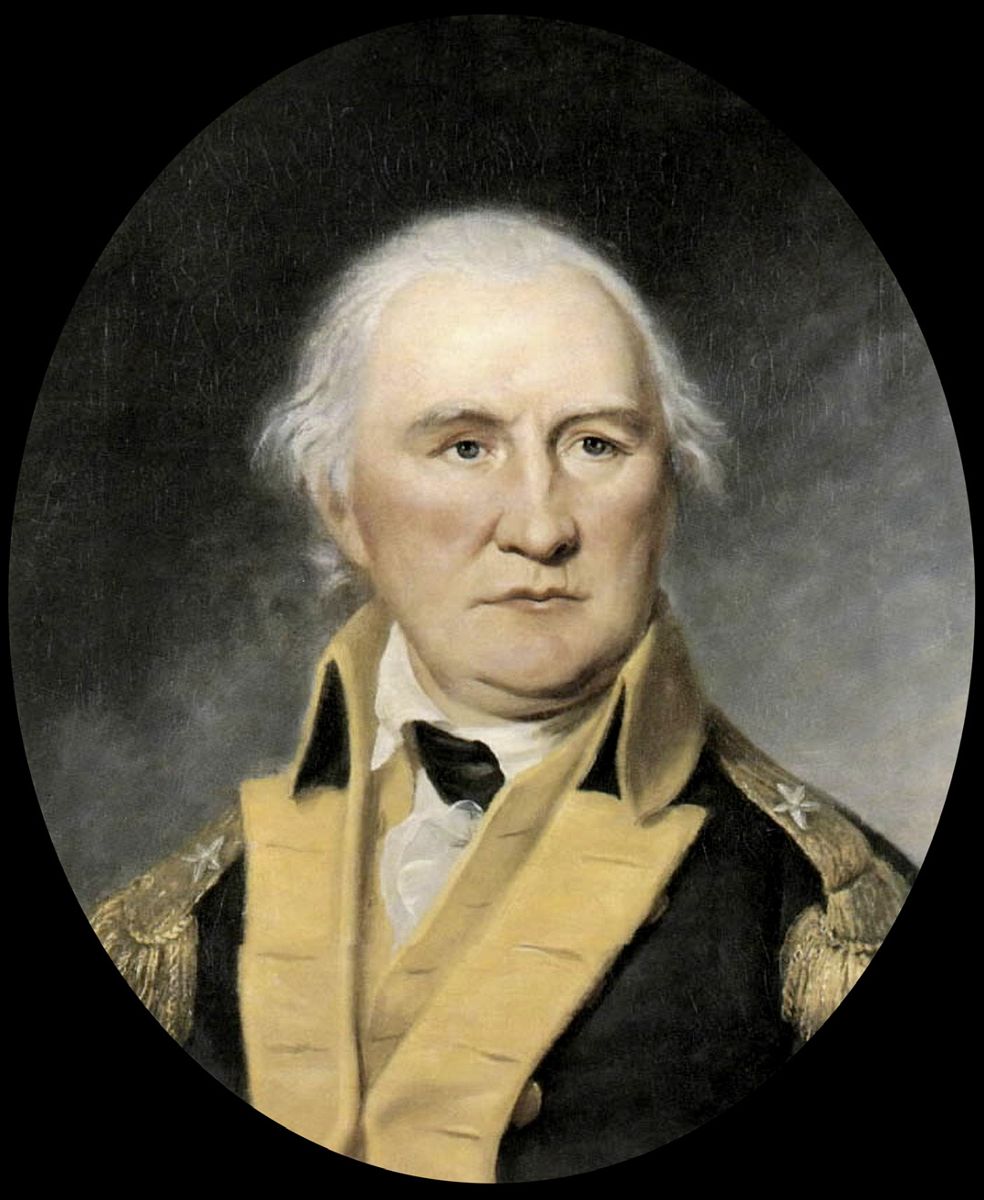
The American longrifle, also known as the Pennsylvania rifle and, later, the Kentucky rifle, developed in the southeastern Pennsylvania gunmaking region and along the colonial frontier during the first half of the eighteenth century. Its makers were largely German immigrants and their sons, working out of small shops in Lancaster, Reading, York, the Lehigh Valley, Bedford, Christian’s Spring, and other related communities. Their starting point was the German Jaeger, a short, heavy, large-caliber hunting rifle of the seventeenth and eighteenth centuries. Pennsylvania gunsmiths adapted that ancestor to a different country: longer barrels for higher velocity and a longer sight radius, smaller calibers to economize on the lead and powder a frontiersman had to carry on his back, slimmer stocks shaped for offhand hunting, and brass furniture in place of the heavier German iron. Brigadier General Daniel Morgan (1736–1802), commander of the Provisional Rifle Corps and the architect of the rifle ambush at Bemis Heights. Morgan was a Virginia teamster who had been flogged nearly to death after striking a British officer in the French and Indian War, had little formal education when the Revolution began, and became one of the most effective tactical commanders in the Continental Army. He later won the Battle of Cowpens against Banastre Tarleton in January 1781. (Collection Independence National Historical Park)
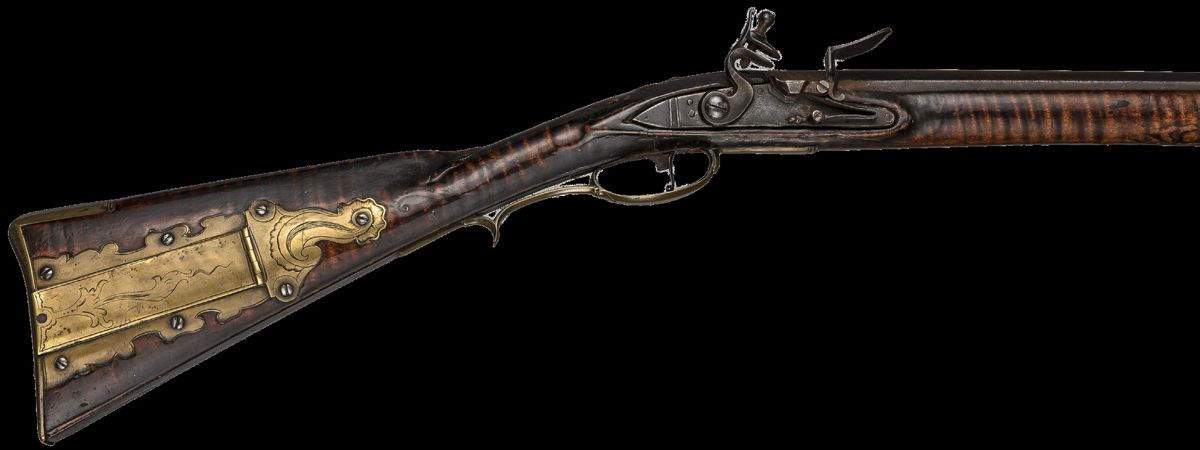
By about 1750, the result was a recognizably American firearm. A typical wartime longrifle had a curly maple stock running the full length of the barrel, a 42- to 46-inch octagonal barrel, a caliber commonly between about .40 and .54 inches, and a slow rifling twist suited to a patched round ball. The lock might be made in Pennsylvania or imported from England. Brass butt plates, trigger guards, side plates, ramrod thimbles, and engraved patch boxes were common, although plainer rifles and rifles with
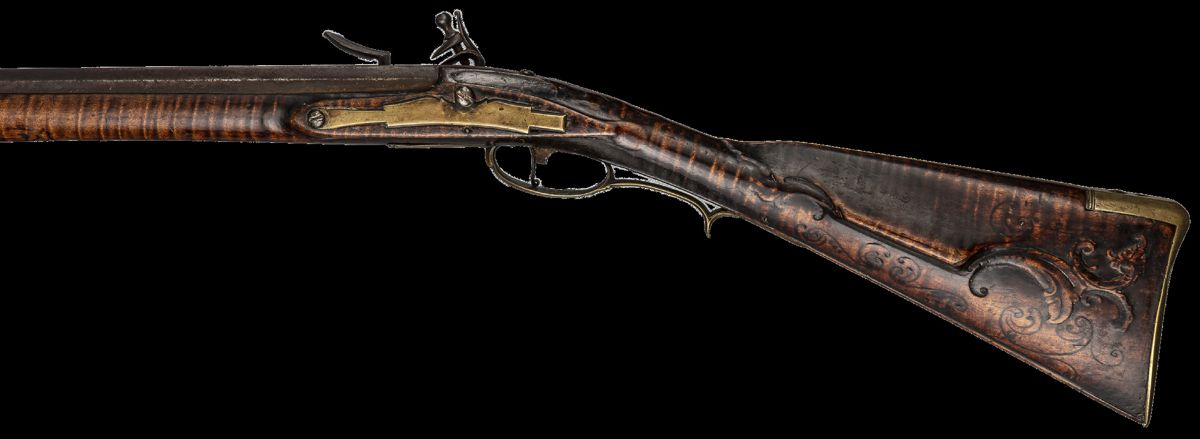
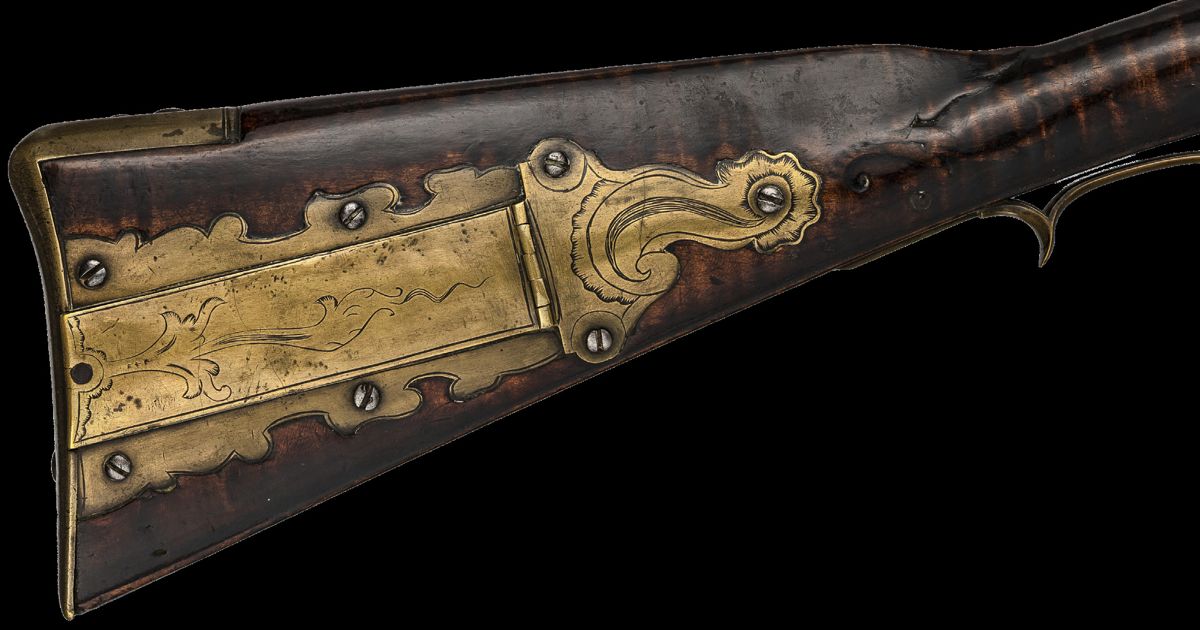
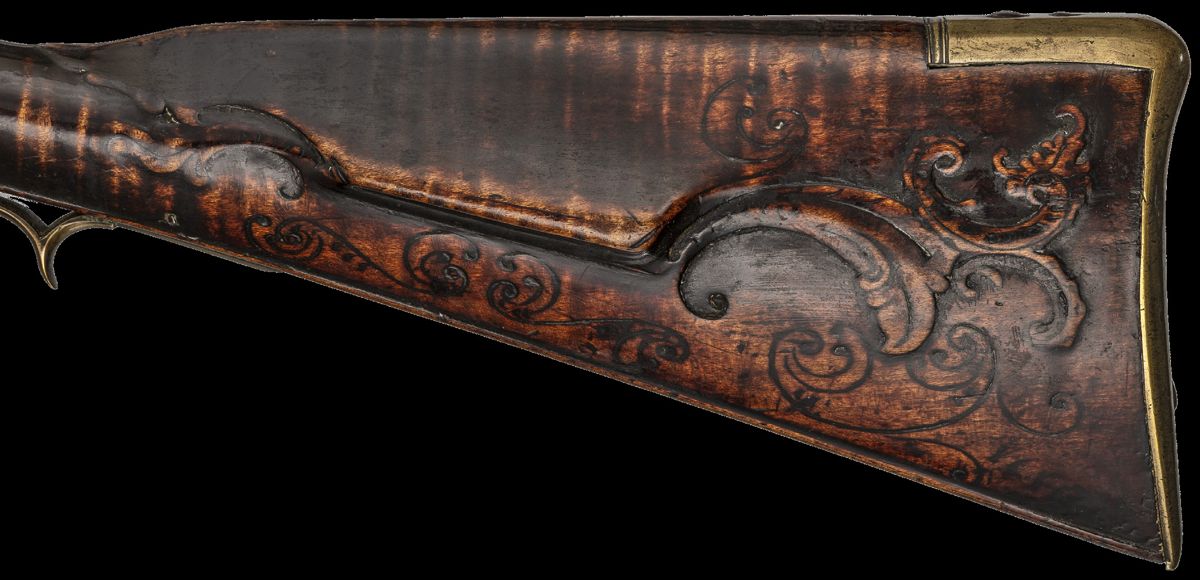
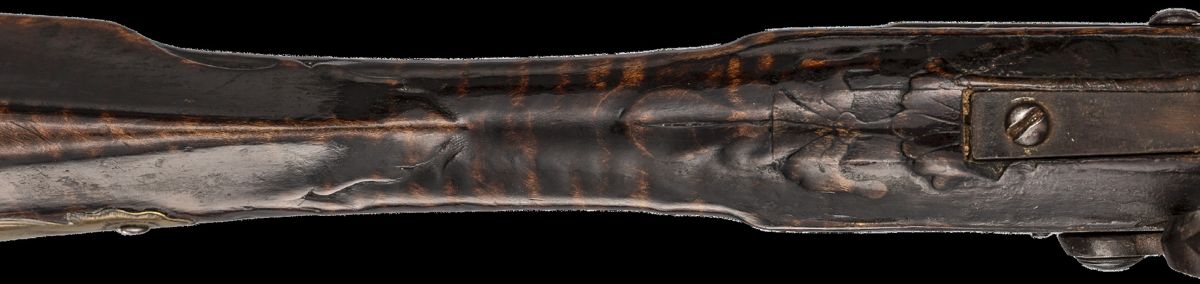
American longrifle, attributed to George Schreyer Sr. of York County, Pennsylvania, dated to about 1770. The Metropolitan Museum of Art catalog notes that this rifle is complete and in nearly original condition, an unusual state of preservation for an American longrifle of the Revolutionary period, and that the architecture, hardware, and decoration are consistent with the York County school associated with Schreyer. Length 60 3/4 inches; barrel length 44 3/4 inches; caliber .54; curly maple stock; brass mountings; daisy-form brass patch box. Joe Kindig Jr. described it as “a very beautiful Lancaster daisy patch box rifle made before or during the Revolution.” (Courtesy of The Metropolitan Museum of Art, public domain.)
wooden patch boxes also survive in some quantity. The patch box held greased linen patches, small tools, and other shooting necessities. Carving on the cheek side of the buttstock and around the wrist was common in the better shops. By the early 1770s the basic form was settled, and gunsmiths competed as much on workmanship as on architecture. What this weapon could do, a smoothbore musket simply could not do as reliably. The British Brown Bess was a .75-caliber smoothbore that fired an undersized ball without a patch, loaded quickly, and mounted a bayonet. It was the right tool for the linear tactics of European warfare, and commanders generally preferred volley fire at 50 yards or even closer, although the ball itself could travel much farther. A Pennsylvania longrifle, in trained hands and under favorable conditions, could group tightly at 100 yards, hit a man-sized target at 200, and sometimes reach farther. The trade-offs, however, were severe. A rifleman needed substantially more time between shots, his rifle could not normally mount a bayonet, and his unit was vulnerable in close-order fighting unless musket-armed troops were nearby to defend it. The longrifle was a precision instrument, not a battlefield workhorse.
Morgan’s Rifle Corps
George Washington had wanted a reliable body of riflemen since the early months of the war. The Pennsylvania, Maryland, and Virginia rifle companies that joined
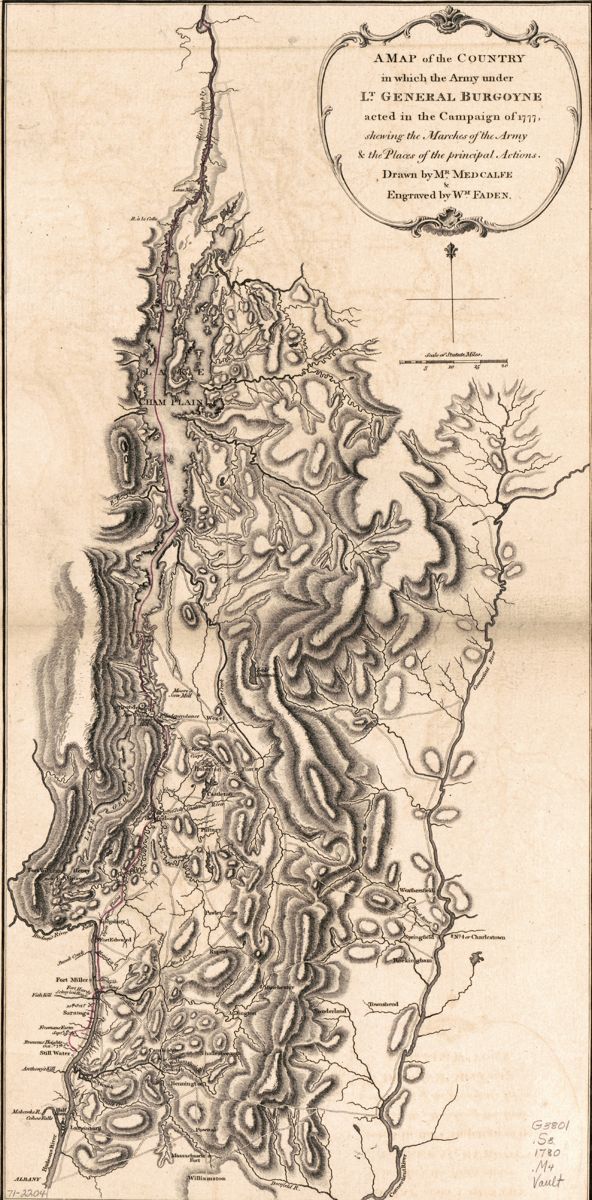
“A Map of the Country in which the Army under Lt. General Burgoyne acted in the Campaign of 1777,” drawn by Mr. Medcalfe and engraved and published in London by William Faden in 1780. The map traces Burgoyne’s route from Lake Champlain to his defeat at Saratoga, with the marches and principal actions marked along the Hudson corridor. Faden was one of the principal British map publishers of the war, and his Revolutionary War maps were among the most important cartographic records available in Europe. (Library of Congress)
the Continental Army at the Siege of Boston in 1775 had impressed him with their long-range accuracy and their willingness to do work no line regiment would have tolerated. They had also frustrated him. They were independent in habit, hard to discipline, and tactically incomplete on their own. The solution Washington arrived at in the summer of 1777 was the Provisional Rifle Corps, drawn from experienced marksmen and light troops and placed under a Virginia teamster turned officer named Daniel Morgan. Morgan was a self-made frontier figure of the kind the eighteenth century produced in some quantity, and that modern readers tend to underestimate. He was born in 1736, probably in New Jersey, and is often associated with Hunterdon County. He left home as a teenager, worked his way south into the northern Shenandoah Valley, learned to drive a wagon team, and built a reputation for marksmanship and physical violence. He had served as a teamster in the French and Indian War and was sentenced to 500 lashes after striking a British officer; the punishment nearly killed him, and he carried the scars for the rest of his life. He had little formal education when the Revolution began, learned to read and write later, and proved to be one of the war’s ablest tactical commanders. By the summer of 1777, Washington had given him roughly 500 picked riflemen and orders to harass and break up British formations wherever he found them.
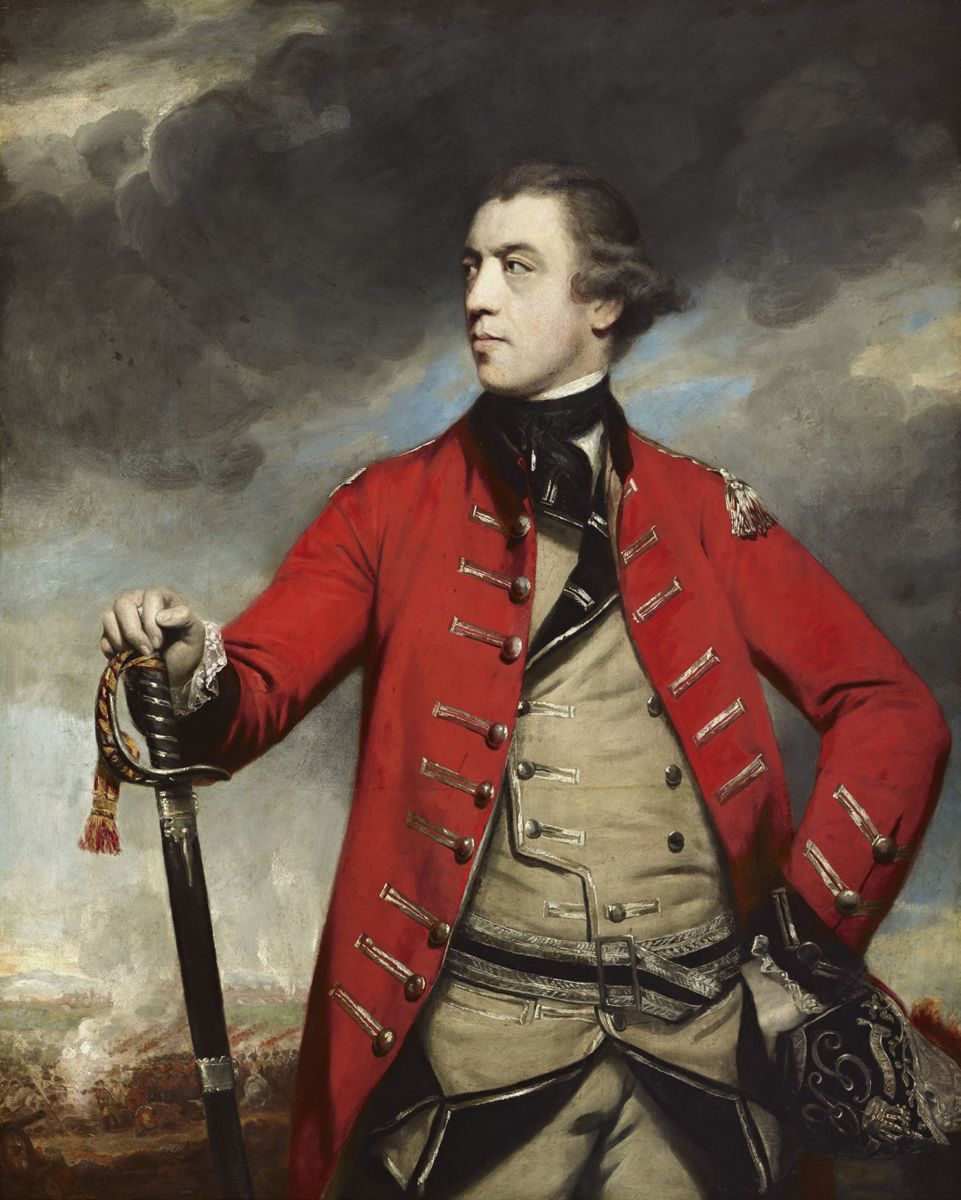
General John Burgoyne. (The Frick Collection)
In August, Morgan’s corps was sent north into the upper Hudson Valley to reinforce Major General Horatio Gates against Burgoyne’s invasion. Burgoyne had crossed Lake Champlain in early summer with about 7,200 to 7,500 British regulars, German auxiliaries, Loyalists, Canadians, and Indigenous allies. He forced the evacuation of Fort Ticonderoga in early July and worked his way south toward Albany on a plan that called for British forces to converge by way of the Hudson and Mohawk valleys. The plan unraveled almost immediately. The Mohawk column under Barry St. Leger was turned back after the siege of Fort Stanwix in August. The southern column under William Howe sailed for Pennsylvania instead of moving up the Hudson. Burgoyne, increasingly isolated in the wilderness, kept moving south.
Freeman’s Farm and Bemis Heights
The two engagements known to history as the Battles of Saratoga were fought 18 days apart on the same piece of ground. On September 19, 1777, Burgoyne tried to push past American defenses on Bemis Heights, a bluff on the west bank of the
Hudson where the Polish military engineer Thaddeus Kosciuszko had helped lay out a strong field fortification. The center column ran into Morgan’s riflemen and Henry Dearborn’s light infantry in the timber around a clearing called Freeman’s Farm. In eighteenth-century warfare, officers were expected to be exposed because they carried orders, managed formations, and served as visible points of command. Morgan’s men aimed at those men. By the end of the afternoon, the British had nominally held the ground, however at a cost of almost 600 killed and wounded to roughly half as many American casualties, with a disproportionate number of officers and sergeants among the dead. Burgoyne dug in and waited for relief that never came. By early October, he was outnumbered, low on rations, and nearly surrounded. On October 7 he sent a reconnaissance in force toward the American left to probe for a way around it and to gather forage. The Americans were ready. Morgan’s riflemen, posted in trees and behind cover on the wooded flanks of the British advance, began picking apart the column from the moment it deployed. When Brigadier General Simon Fraser rode forward to rally his men, he became the most visible target on the field.
“Battle of Saratoga, September 19, 1777,” published in Augsburg by Johann Martin Will (1727-1806), about 1777. Published in Europe shortly after the campaign, this German print belongs to a group of views and maps of American Revolutionary War battlefields prepared for German readers, many of whose countrymen were serving in Burgoyne’s army as Brunswick and other German auxiliaries. The print depicts the engagement at Freeman’s Farm, where Morgan’s riflemen first engaged the British center column. (Courtesy of The Metropolitan Museum of Art, public domain)
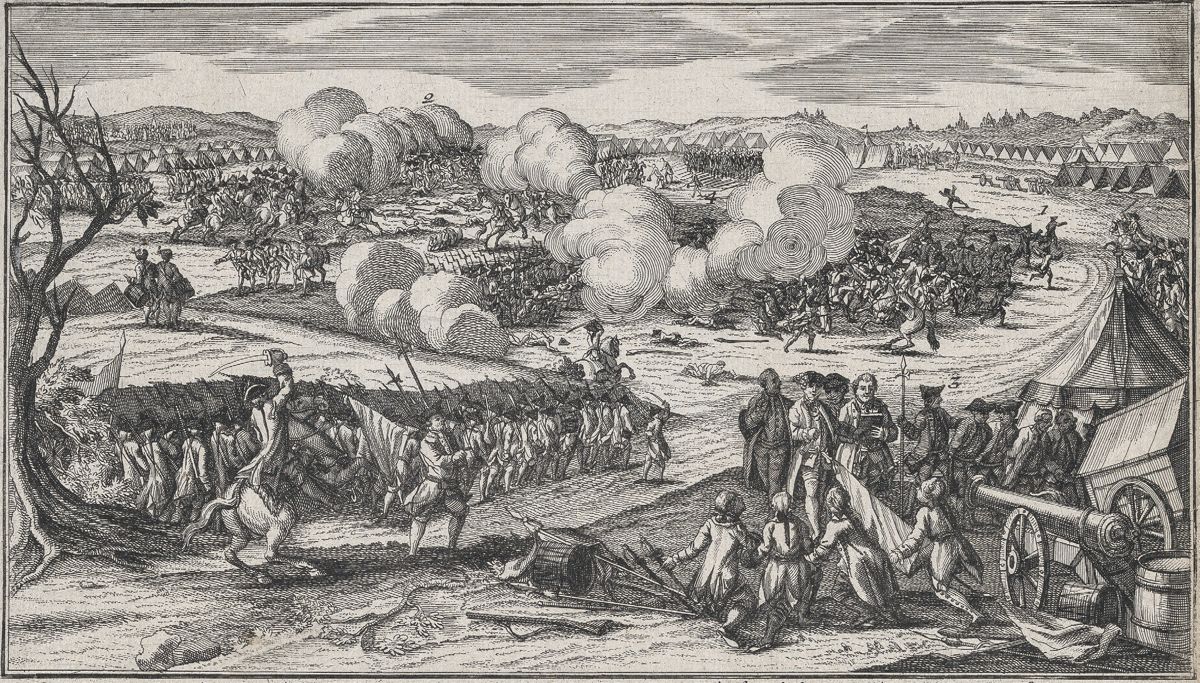
Several rifles were probably aimed at Fraser, and more than one may have fired at him. Saratoga folklore has long credited a single marksman, a Pennsylvania rifleman named Timothy Murphy, with a tree shot at 300 to 400 yards that brought Fraser down. Murphy was a real man and a member of Morgan’s corps, and his later life on the New York frontier is documented in scattered records. The specific shot, however, is folklore rather than proved history. No contemporary source names Murphy as the marksman. The earliest published account naming him appears in Jeptha R. Simms’s History of Schoharie County and Border Wars of New York in 1845, decades after both the battle and Murphy’s death. The Silliman/Brent anecdote sometimes cited as supporting evidence does not name Murphy or any other rifleman, and the double-barreled rifle Murphy is sometimes said to have used is itself a problem; if connected to John Golcher or the later Golcher family, it is almost certainly not a 1777 battlefield weapon. What is documented is that Fraser was killed by aimed rifle fire from Morgan’s corps, that his death broke the British rally, and that Digby believed the loss “helped to turn the fate of the day.” The men who took the shot deserve their place in American military history. Their names did not survive. What did survive, in some quantity, was the lesson. The Saratoga campaign demonstrated that a small body of expert marksmen, properly placed and supported, could damage a regular army by removing officers, artillerists, and noncommissioned officers at critical moments. British and German commanders for the rest of the war complained bitterly about the practice. Burgoyne himself wrote that “the enemy had with their army great numbers of marksmen, armed with rifle-barrel pieces.” That was meant as an indictment. It is also a fair description of how the longrifle was used at Saratoga, at Cowpens four years later, and in smaller frontier actions in between.
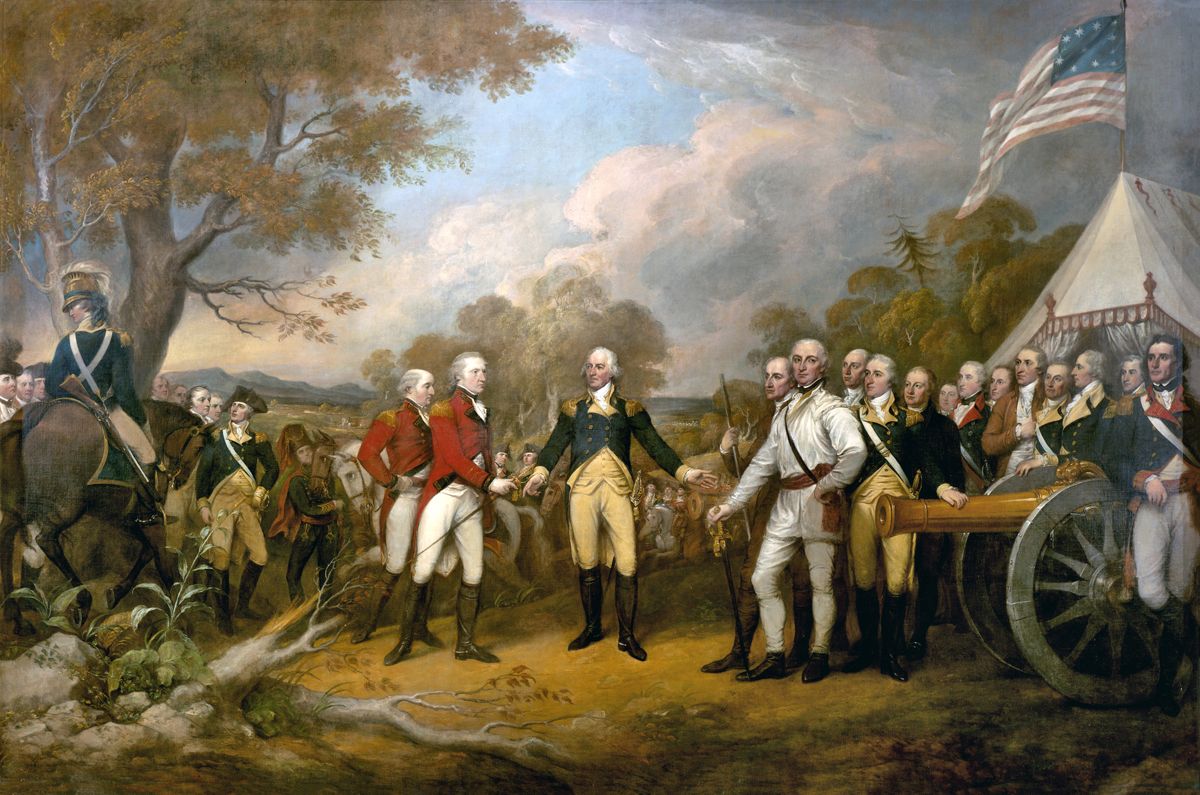
The scene of the surrender of the British Gen. John Burgoyne at Saratoga, on October 17, 1777, was a turning point in the American Revolutionary War. The central figure is the American Gen. Horatio Gates, who refused to take the sword offered by General Burgoyne, and, treating him as a gentleman, invites him into his tent. Trumbull planned this outdoor scene to contrast with the Declaration of Independence beside it. John Trumbull (1756–1843) was born in Connecticut, the son of the governor. After graduating from Harvard University, he served in the Continental Army under General Washington. He studied painting with Benjamin West in London and focused on history painting. British Major General William Phillips (British Army officer) (in red) British Lieut. Gen. John Burgoyne (in red) American Maj. Gen. Horatio Gates (in blue and buff) American Col. Daniel Morgan (in white).
Identifying a Rev War Period American Longrifle
Surviving wartime American longrifles are scarce. Many surviving American rifles described as “Revolutionary period” by dealers and well-meaning institutions actually date from the late 1780s through about 1830, the so-called Golden Age of the form, when the architecture matured and the decoration reached its highest development. True wartime or near-wartime rifles, made between roughly 1770 and 1783, are recognizable by a different set of features. I look at any longrifle described as a “Revolutionary War carried” piece with a very jaundiced eye, and I would suggest the buyer do the same. These guns have to prove they are what they are being represented as. The standard references, particularly Joe Kindig Jr.’s Thoughts on the Kentucky Rifle in Its Golden Age and George Shumway’s two-volume Rifles of Colonial America, remain the place to start, and the diagnostic features below are what an experienced eye looks for first.
Stock architecture comes first. Earlier rifles tend to have a flatter, heavier butt with less drop than many later examples. The wrist is often thicker. The forestock is full to the muzzle and pinned, not keyed, to the barrel; pinning is an early construction method, while wedge keys became more common later. Curly maple was a dominant stock wood throughout the period, although earlier examples often have less aggressively figured wood than the later collector-grade pieces. Comb shape should be read with the whole rifle, not used alone as a dating shortcut. Some early rifles do have distinctive high combs, however the exaggerated architecture seen on many nineteenth-century collector rifles belongs to a later period. Hardware tells the same story. Brass butt plates on early rifles are often broader and flatter, with a less pronounced curve, than the deeply curved butt plates of many rifles from the 1790s onward. Trigger guards are simpler in profile. Patch boxes on some early rifles were the so-called “daisy” or four-petal type, with engraved decoration but a relatively plain
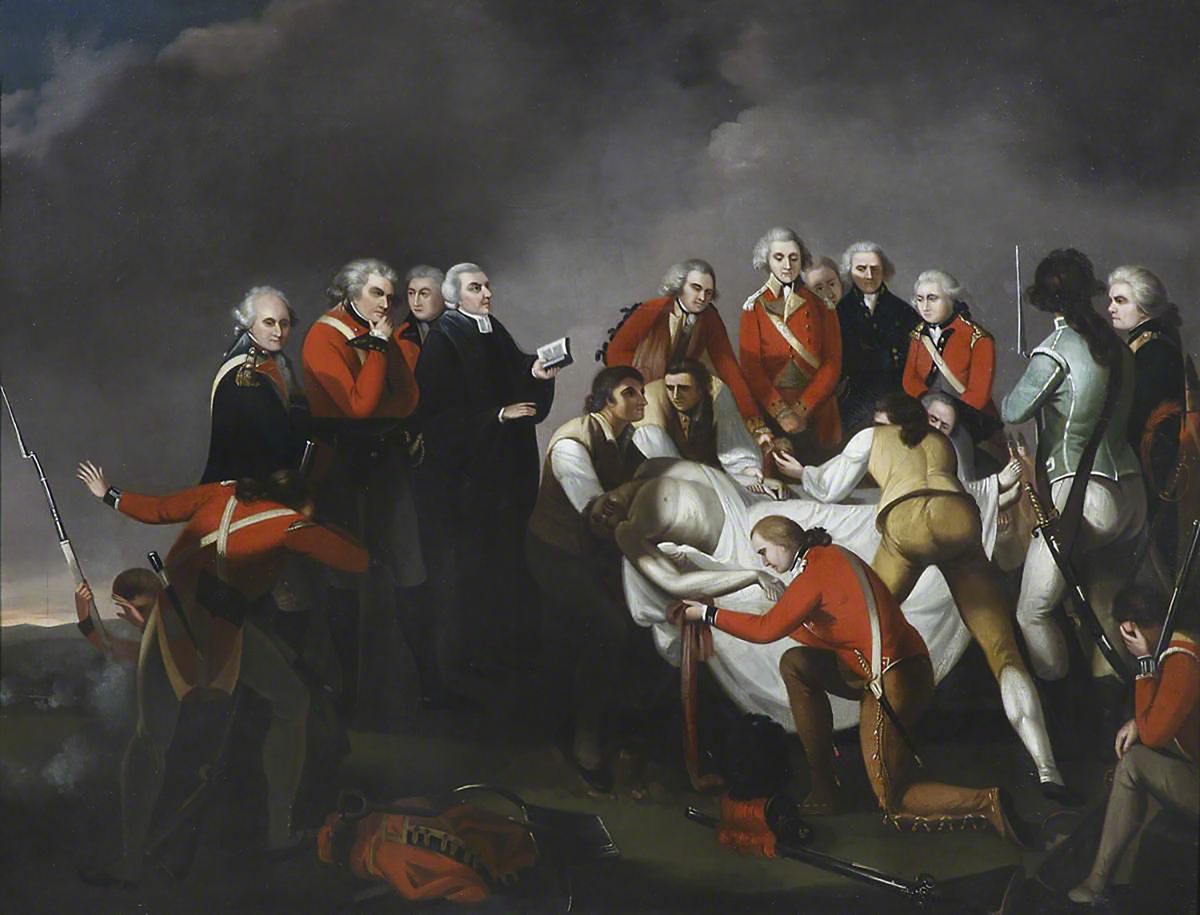
The Burial of General Simon Fraser (1729–1777), after the Battle of Saratoga, 1777. (National Army Museum)
outline. Wooden sliding patch boxes appear on some early rifles in place of brass; hinged brass boxes became increasingly common as the form developed. The barrel itself, on many early rifles, was swamped: thicker at breech and muzzle, slimmer in the middle, a forging convention that produced a balance favored by period gunsmiths. Locks are the next stop. Revolutionary Wartime American rifles used a mix of imported English locks (often by Ketland, Wilson, or other Birmingham makers), continental imports, and locks made or assembled by the gunsmith himself. The lock plate is usually flat or only slightly convex, with a banana profile becoming more common toward the end of the century. A round-faced lock plate is conventionally taken as a sign of post-1810 manufacture. Conversion is the largest authentication issue with surviving longrifles. Many flintlock rifles were converted to percussion in the 1820s and 1830s, and a flintlock that has been “converted back” from percussion will typically show telltale plug marks on the lock plate and around the touch hole. That kind of work should never be glossed over and should be disclosed up front, every time. Carving and engraving deserve careful study, as they are among the most heavily faked features. Period carving is generally restrained, deeply cut, and well integrated with the architecture of the stock. Engraved decoration on patch boxes, side plates, and barrels follows the conventions of midto-late eighteenth-century American silver and furniture work, with rococo C-scrolls, simple foliate motifs, and unsigned ownership initials. Elaborate eagles, stars, regimental designations, and patriotic inscriptions on a supposed Revolutionary War longrifle are warning signs rather than virtues. Real wartime longrifles tend to be plainer than collectors expect. Provenance, finally, is what separates a wartime piece from an attribution. Surviving rifles with documented Revolutionary service almost always have a chain of family or institutional custody that places them in a specific household, town, estate inventory, or service-related record. Where that chain is missing, the piece is best described cautiously, for example as “circa 1770 to 1800, possibly Revolutionary period,” and not as a battle gun. Honest description protects the buyer, the seller, and the future of the field.
What Saratoga Meant
About 6,300 British and German officers and soldiers, along with about 600 women and children attached to the army, surrendered at Saratoga on October 17, 1777. The Articles of Convention worked out between Burgoyne and Gates promised the army passage to Britain on the condition that the troops not serve again in North America during the war. Congress later suspended the agreement until Britain gave formal ratification, which it did not do, and the Convention Army therefore became, in practice, a body of prisoners. France signed the Treaty of Alliance and the Treaty of Amity and Commerce with the United States on February 6, 1778. The Saratoga campaign is often described as the turning point of the Revolution, and that is broadly accurate, although the war still had four hard years to run. For the longrifle and the men who carried it, Saratoga was both a high point and an early peak. Morgan’s corps was reassembled and used again with effect at Cowpens in January 1781, where Morgan handed Banastre Tarleton one of the most one-sided defeats of the war. After 1783 the rifle continued to develop as a civilian and frontier weapon through the early nineteenth century. As a military weapon, it was eventually superseded by the rifled musket of the Civil War era. As an American cultural object, it has never quite been replaced.
Sources N The Metropolitan Museum of Art, longrifle attributed to George Schreyer Sr., York County, Pennsylvania, ca. 1770 (object 2018.568) N The Metropolitan Museum of Art, “Battle of Saratoga, September 19, 1777,” by Johann Martin Will (object 83.2.915) N Library of Congress, Prints and Photographs Division, Brigadier General Daniel Morgan engraving N Library of Congress, “Surrender of General Burgoyne at Saratoga,” after John Trumbull, N. Currier, 1852 N Hugh T. Harrington, “The Myth of Rifleman Timothy Murphy and the Power of the Written Word,” Journal of the American Revolution (March 2013) N New York State Military Museum, “Timothy Murphy: Frontier Rifleman” N National Park Service, Saratoga National Historical Park, “Daniel Morgan” N George Washington’s Mount Vernon Library, “Battle of Saratoga” N American Battlefield Trust, “Saratoga” battle summary N American Battlefield Trust, small-arms glossary N Architect of the Capitol, “Surrender of General Burgoyne” N National Park Service, Saratoga National Historical Park, “After Saratoga” N U.S. Department of State, Office of the Historian, “French Alliance, French Assistance, and European Diplomacy during the American Revolution, 1778-1782” N Joe Kindig Jr., Thoughts on the Kentucky Rifle in Its Golden Age (1960; reprinted George Shumway, 1982) N George Shumway, Rifles of Colonial America (Volumes I and II) (York, Pennsylvania: George Shumway Publisher, 1980)