
A Mosby Ranger’s Bullet Pierced Slouch Hat
By Shannon Pritchard · Originally published May-June 2026 · pp. 7–15
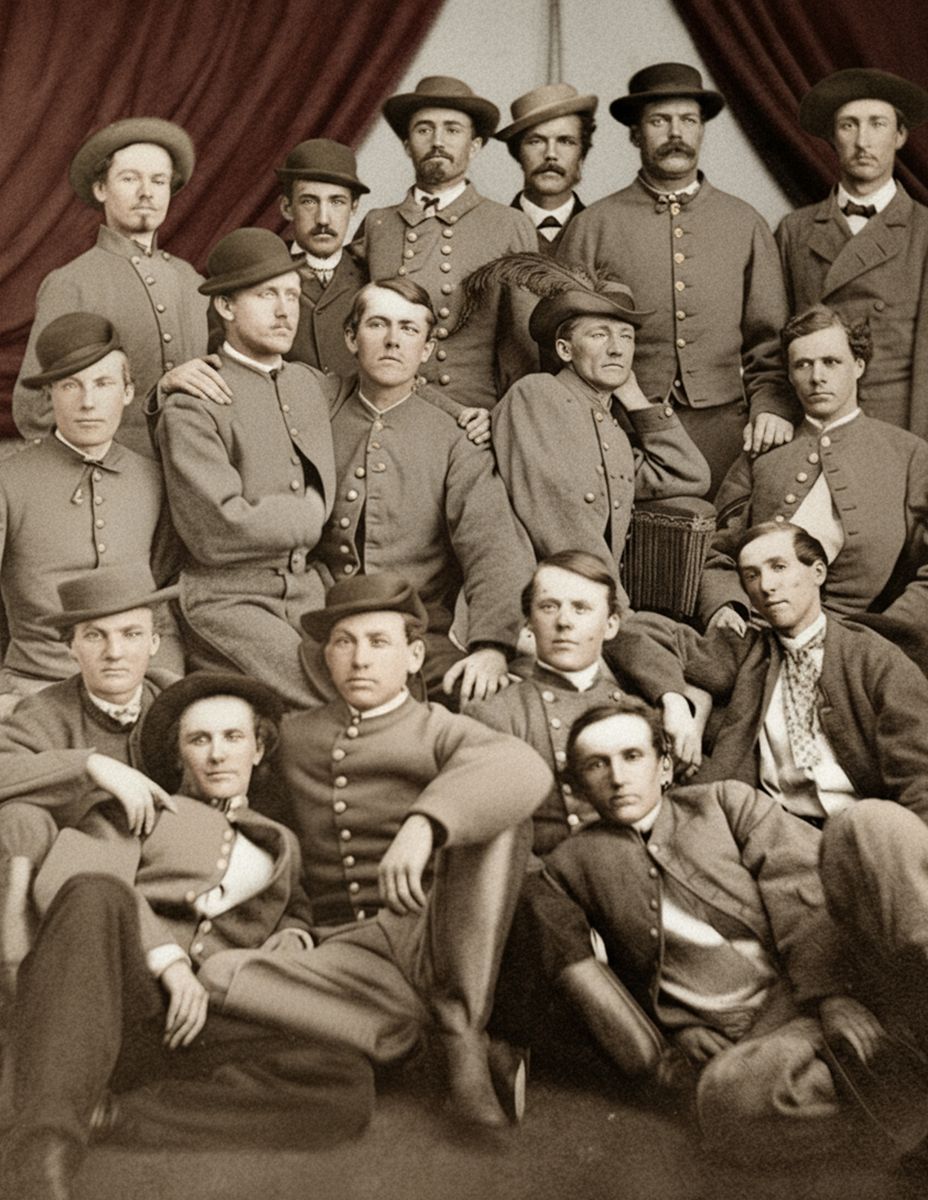
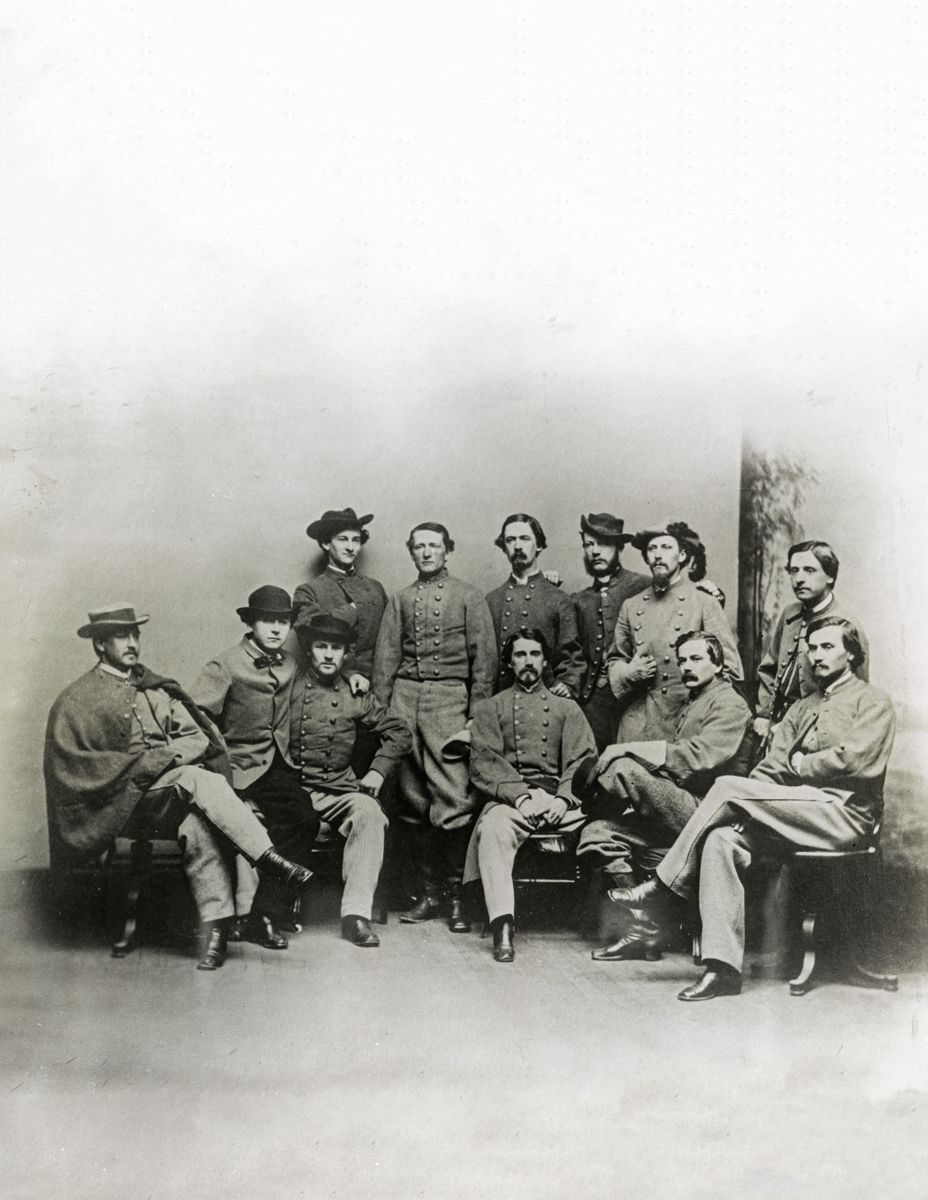
Col. John Singleton Mosby, wearing hat with feather plume, and members of Mosby’s Rangers, 43rd Virginia Cavalry Battalion. (Library of Congress)
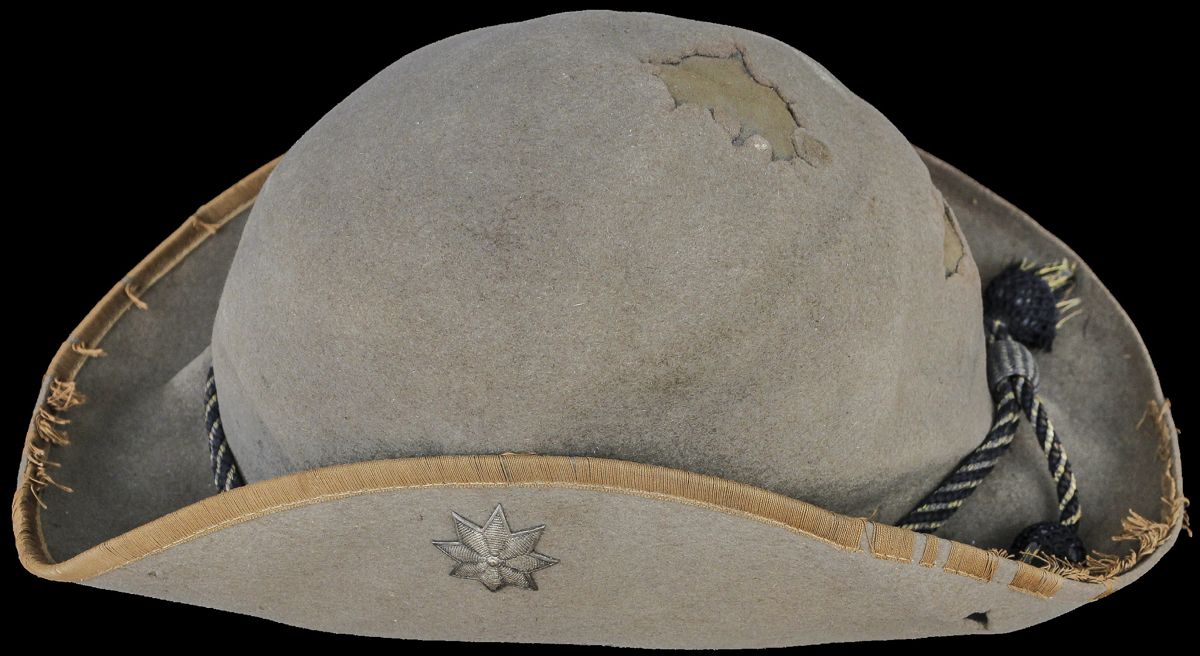
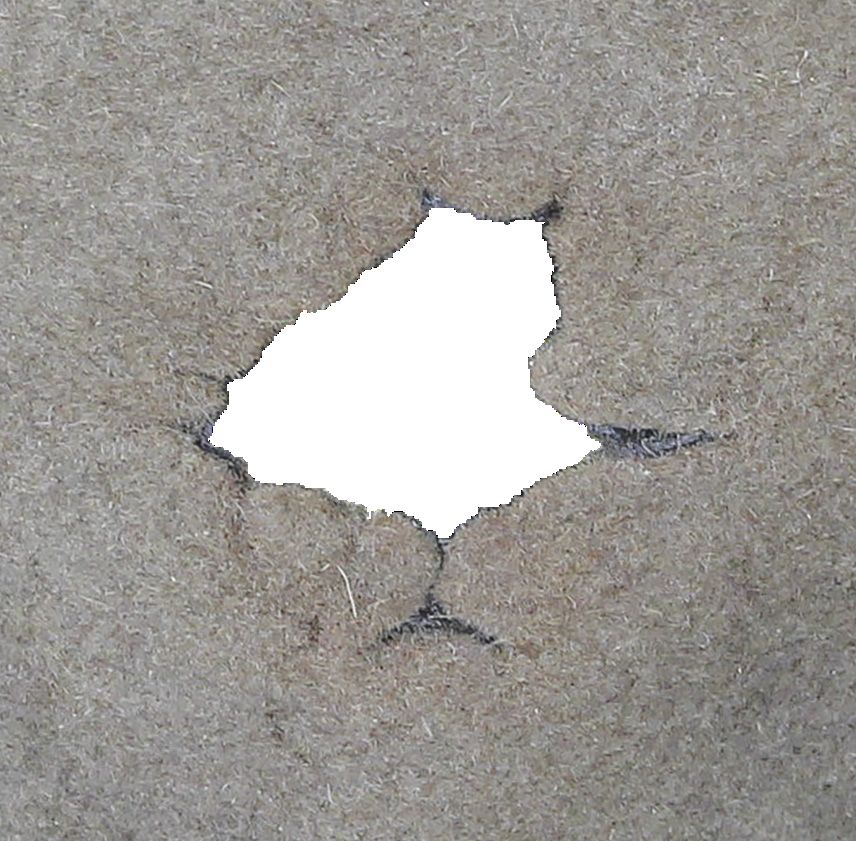
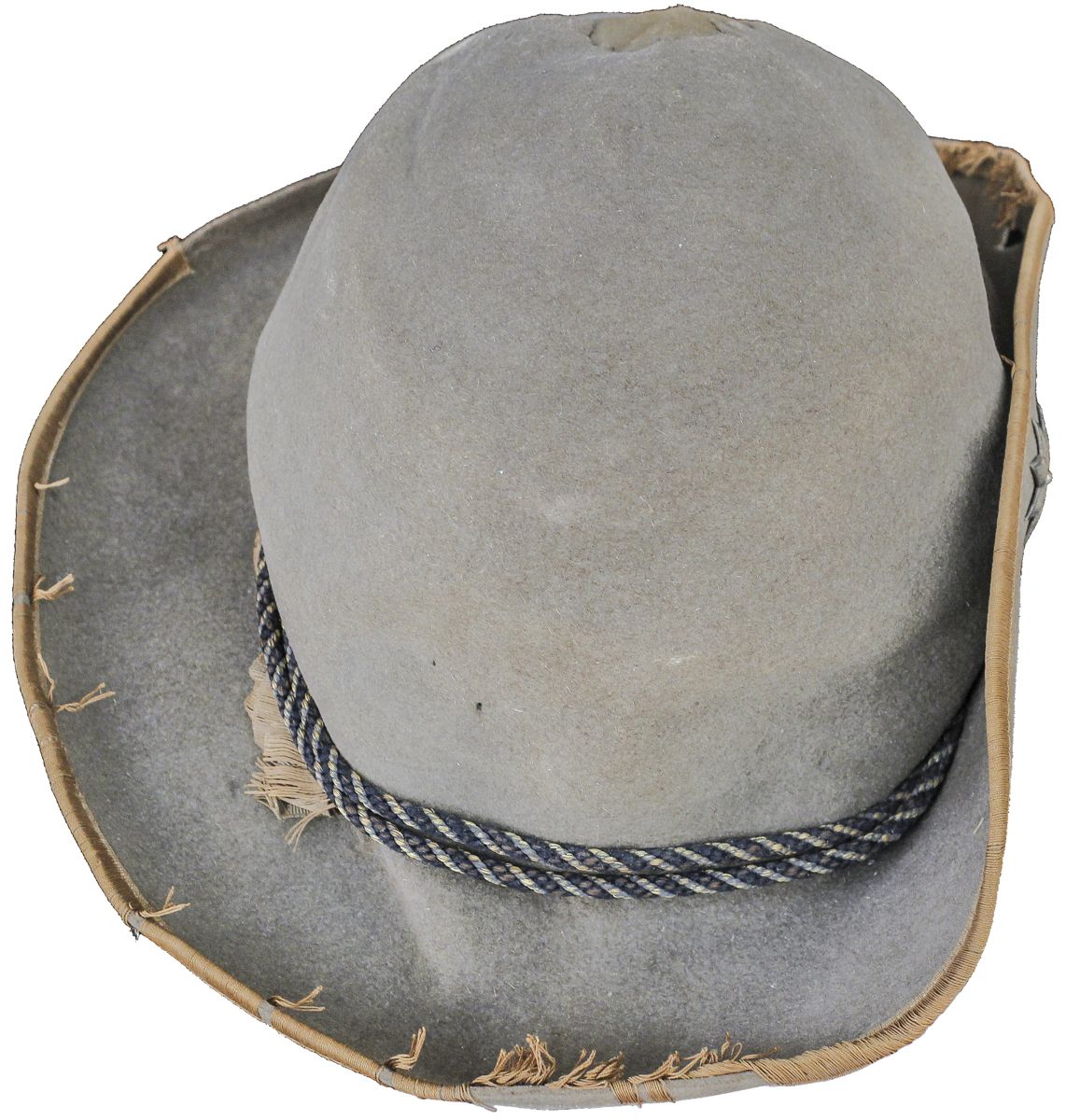
The classic Confederate slouch hat shown here has a remarkable documented history. An old paper tag accompanying the hat reads: “Captured from Mosbeys Guerrilla Battle of Cedar Creek 1864 Major C M Car-” (others have said it reads “Cary”; I disagree). This tag was evidently used to identify it in a G.A.R. hall or exposition display. More poignant than the written history is the jagged entrance and exit holes made by the bullet that likely took the ranger’s life. The hat has the distinctive rakish look of so many of Mosby’s Rangers when they were captured in photographs, especially so if we picture it with the black ostrich feather, a fragment of which remained when it was examined by Textile Preservation Associates, Inc., many years ago, but has since been lost. The black-and-gold, Confederate-manufactured military hat band added to the look, and a solid silver, eight-pointed star that pins up the right side of the brim completed it to a tee. The Battle of Cedar Creek was fought on October 19, 1864, between the forces of Lieutenant General Jubal Early and Federal invader Phil Sheridan. The battle was first won and then lost by the Confederates. Though the battle proper was fought on the nineteenth, the history on the tag could refer to a day or two
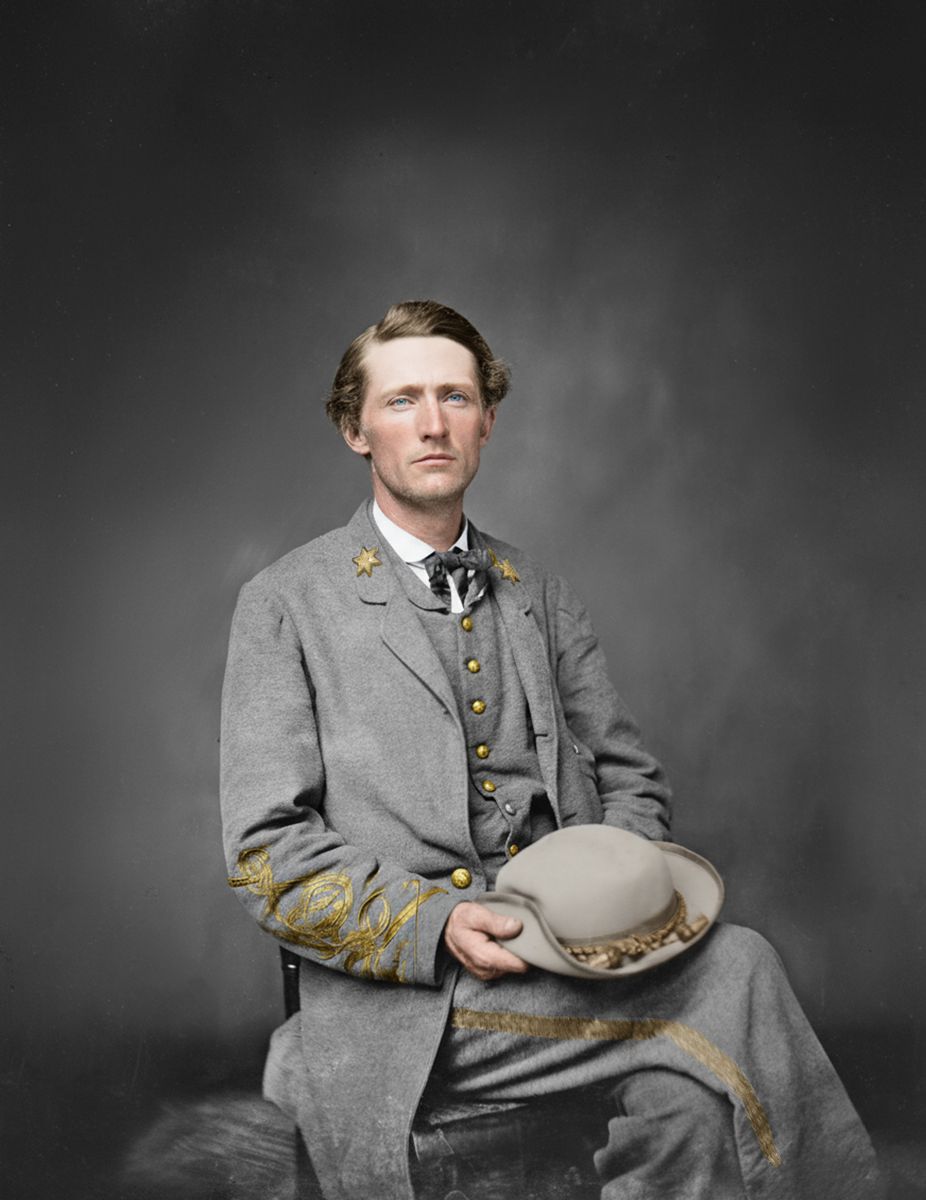
Col. John S. Mosby
This colorized image of Major Mosby holding his hat is now held by the Smithsonian Institution. (Library of Congress photograph.)
before, or the night and next day after, because it refers to the peripheral war, the jousting, scouting, and skirmishing of the cavalry and scouts. Colonel Mosby had been called on by General Early to provide timely information on the enemy’s strengths, weaknesses, and movements, which he always did so well. On October 13, the Colonel called a meeting of seventy rangers at Bloomfield in Loudon County, just a few miles from Snicker’s Gap, which led through the mountains to the Valley, and Sheridan.1 On the sixteenth, having just completed the “Greenback Raid,” they were still operating in the Valley at Kabletown, just behind Sheridan’s lines.2 They continued to scout for Early, constantly taking prisoners and forcing Sheridan to keep his flanks and foragers well in hand. Nowhere was safe for the miscreants save for their own camp. While Colonel Mosby was occupying as much of the attention of Sheridan as he could,3 unbeknownst to the Union General, General Early’s Army was
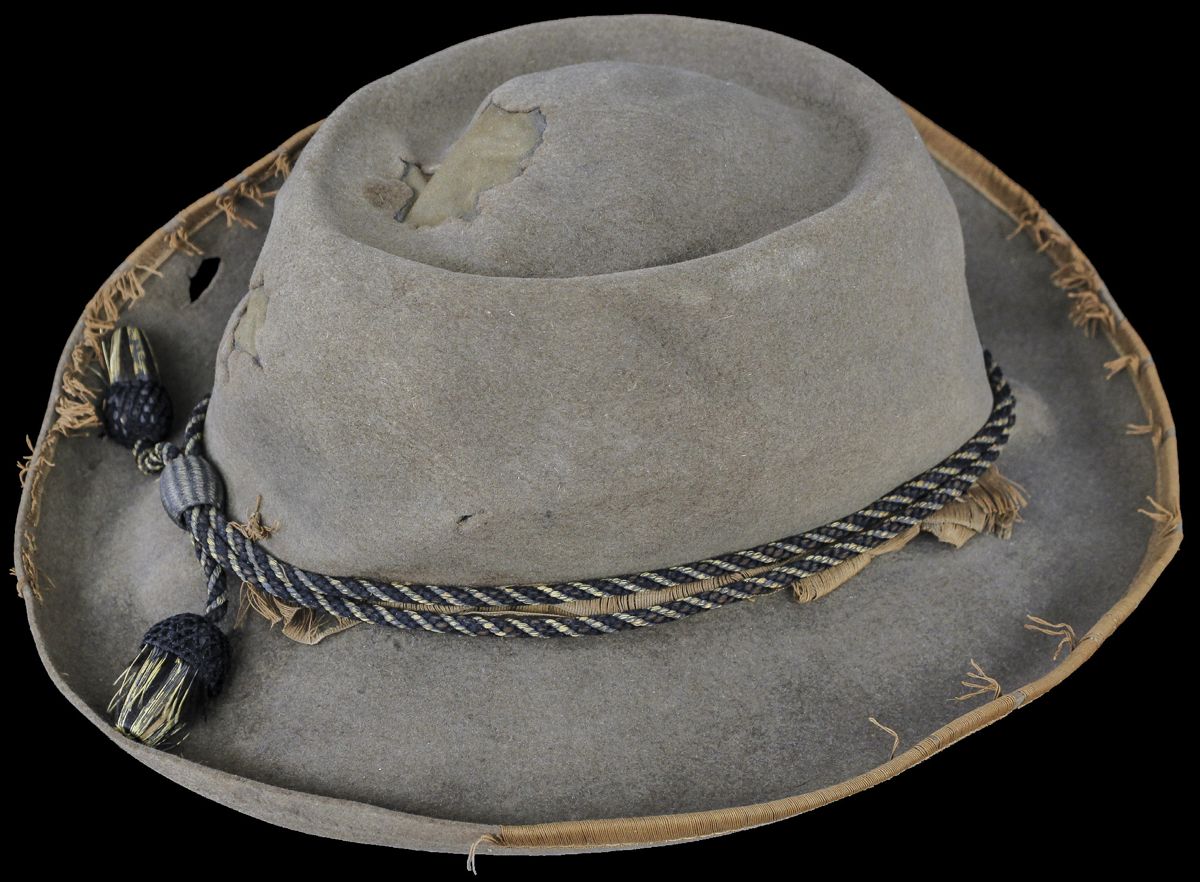
An old paper tag accompanying the hat reads: “Captured from Mosbeys Guerrilla Battle of Cedar Creek 1864 Major C M Car-.”
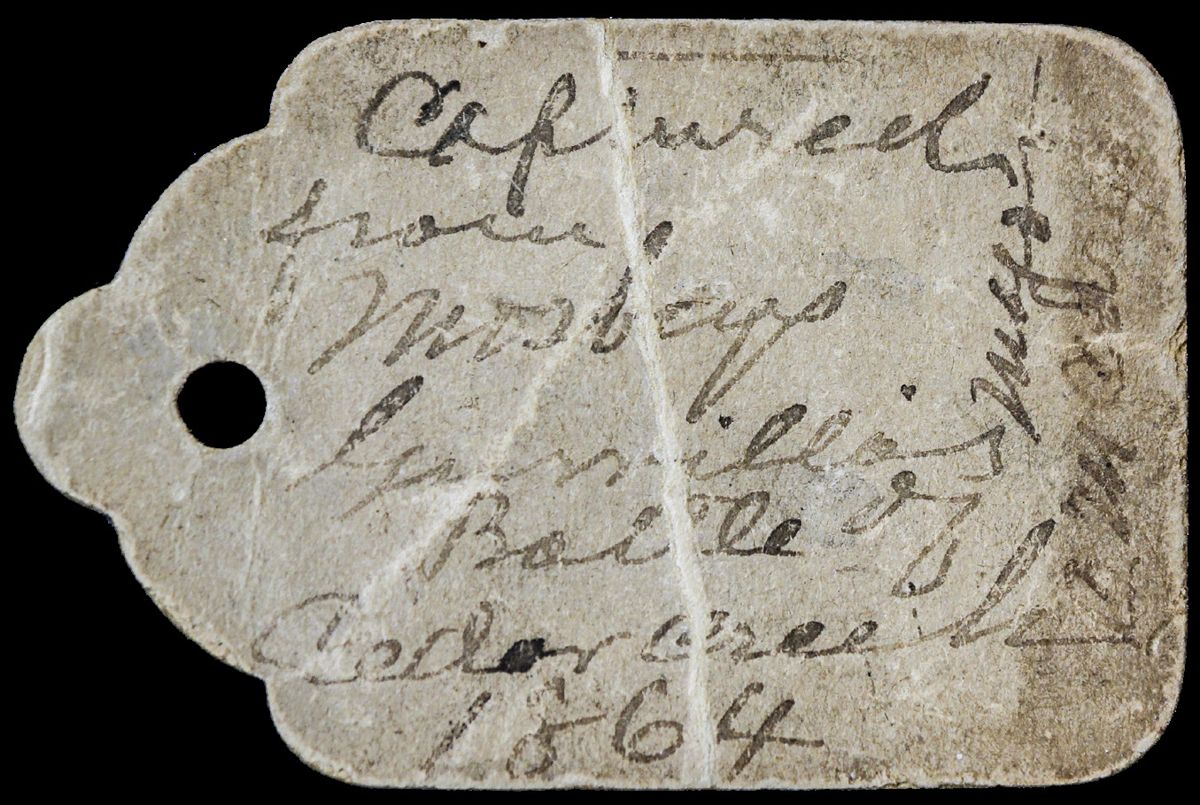
The hard-used hat with the top down, as it would have been worn when the bullet struck it.
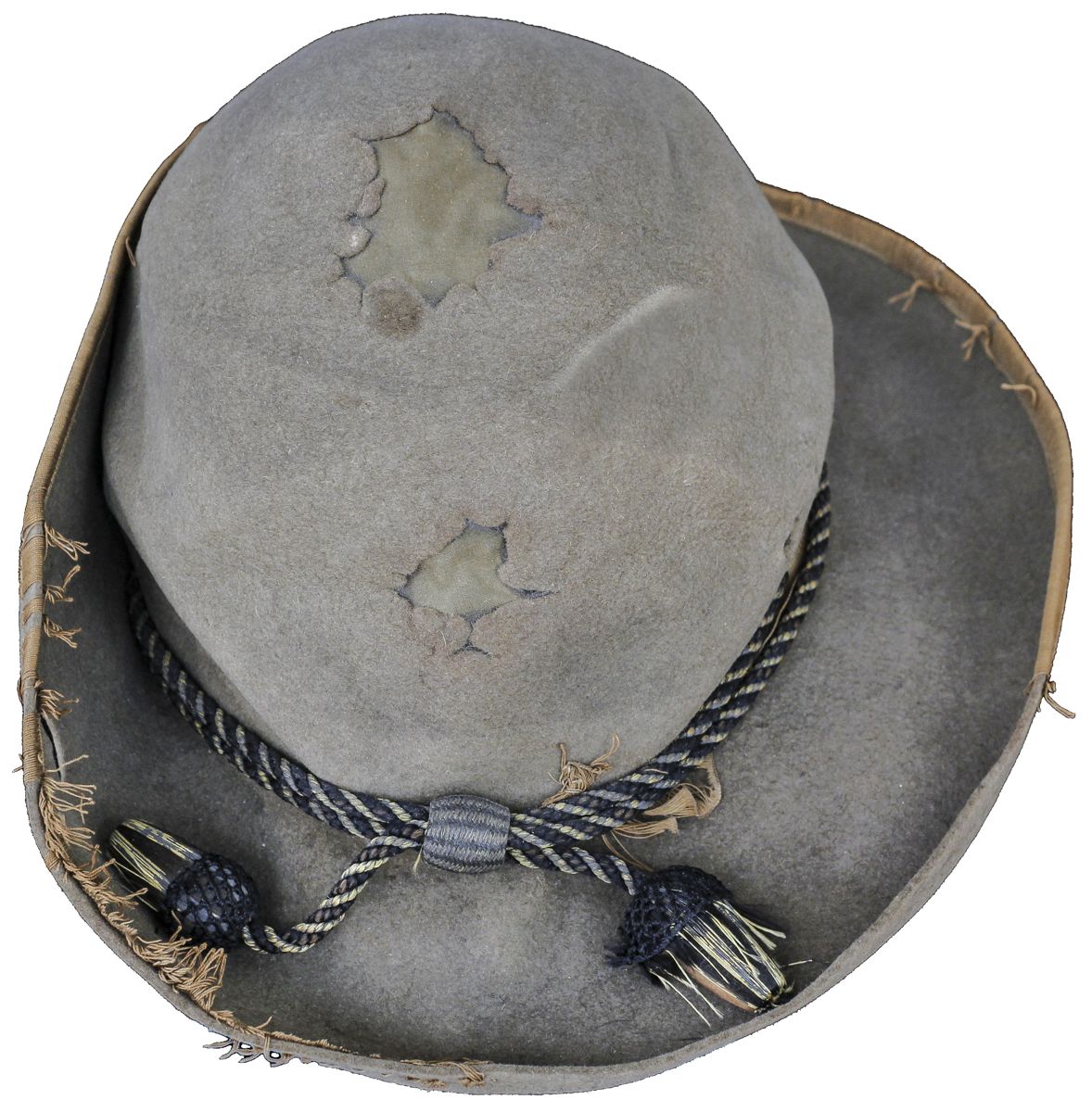
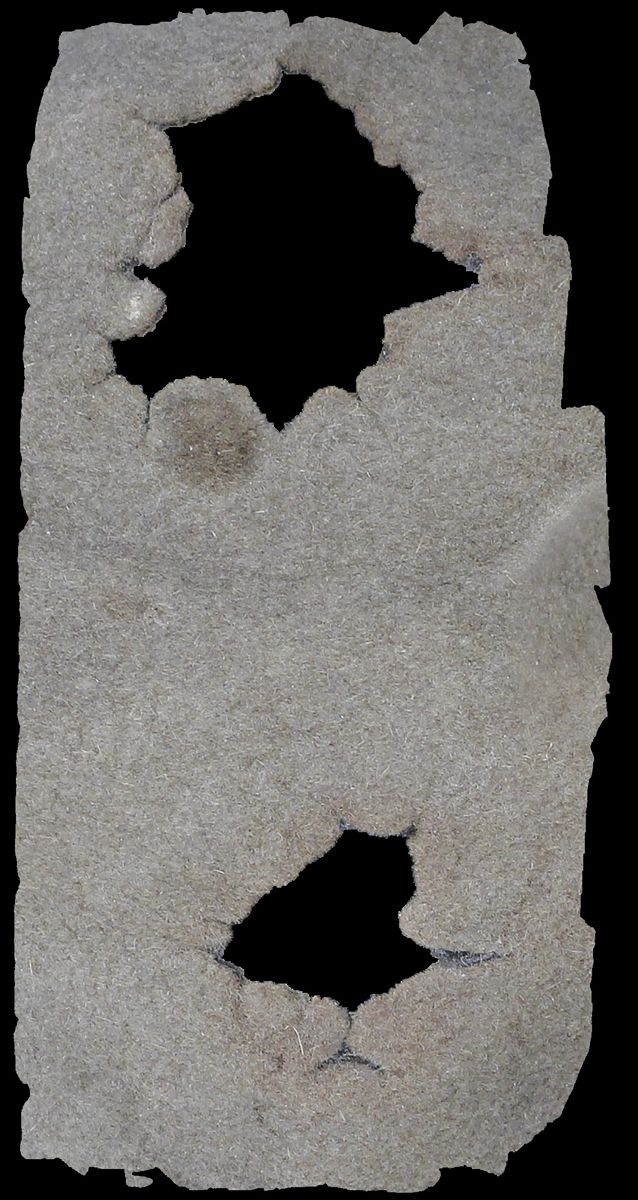
Bullet entry, right, and exit, left.
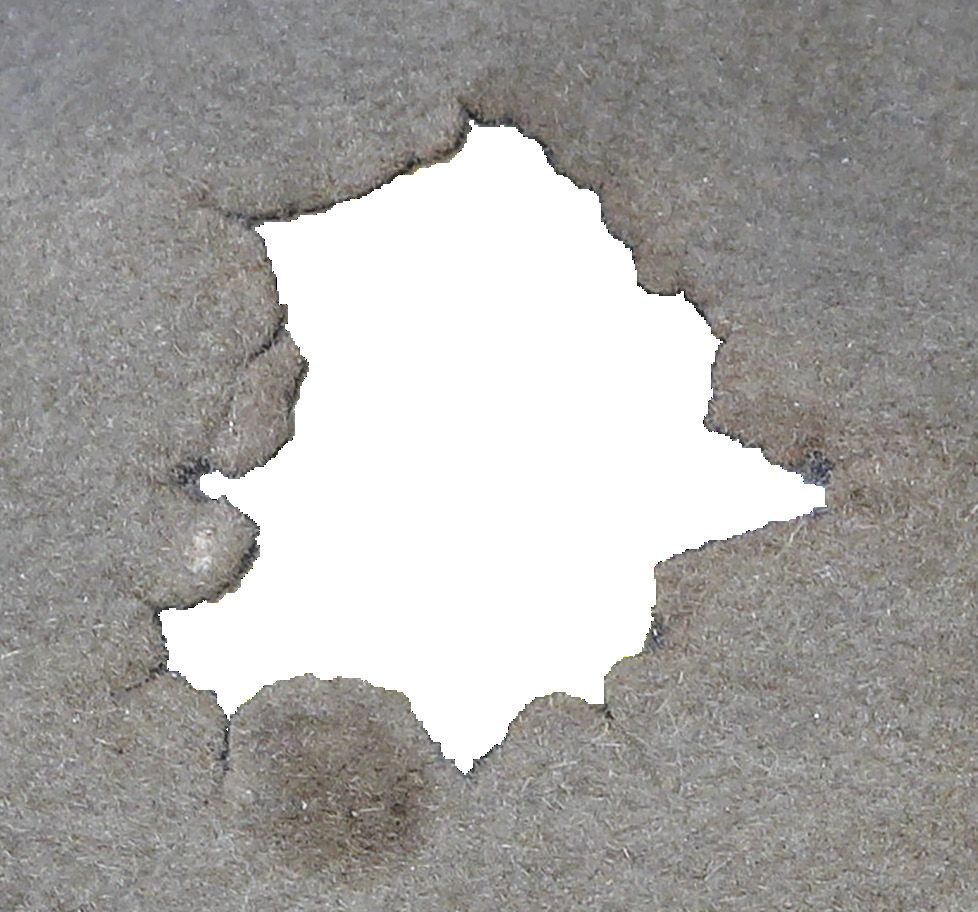
Here, the crown is extended to show the comparison of the entrance and exit holes. The hat alone would not have caused bullet expansion, which is clearly represented in this image.
quietly flanking him.4 On the morning of October 19, Early’s Army made contact with the enemy and routed Sheridan’s men. But on the afternoon of the same day, Early’s Army was routed. A tragic ending, to have won a battle, and yet to have lost. With Early’s Army in full retreat, Mosby’s bunch of cavaliers continued their lightning assaults on Sheridan’s flanks and rear,5 in order to prevent as much as possible their looting and burning out of civilians. On November 6, the last of Mosby’s men rode back over the mountains and out of the great Valley of Virginia, under the command of Captain Dolly Richards. They brought with them 14 prisoners along with horses and equipment;6 thus ended the Rangers’ escapades during the Cedar Creek Campaign.
Somewhere during their numerous skirmishes, Union “Major Car-“ captured this slouch hat from one of Mosby’s men, after he, or one of his men, blew a hole through the crown. Hopefully, the Ranger was not in it at the time, but from the size of the entrance and exit holes, I fear that he was. Because when a bullet passes through flesh and bone, it expands as a result of the impact; the result can be seen in the difference in size of the entrance and exit holes in the hat, indicating that the ranger was wearing the hat when it was struck. The hat is a classic “Mosby Man” slouch hat, so much so that it is identical, down to the factory grosgrain hat band with bow, to Colonel Mosby’s slouch hat housed in the Smithsonian Institute.
Col. John Singleton Mosby, center, and some members of Mosby’s Rangers, 43rd Virginia Cavalry Battalion. Published in Divided We Fought: A Pictorial History of the War 1861–1865, Milhollen & Kaplan, eds. New York: Macmillan Books, 1956, p. 354. (Library of Congress)
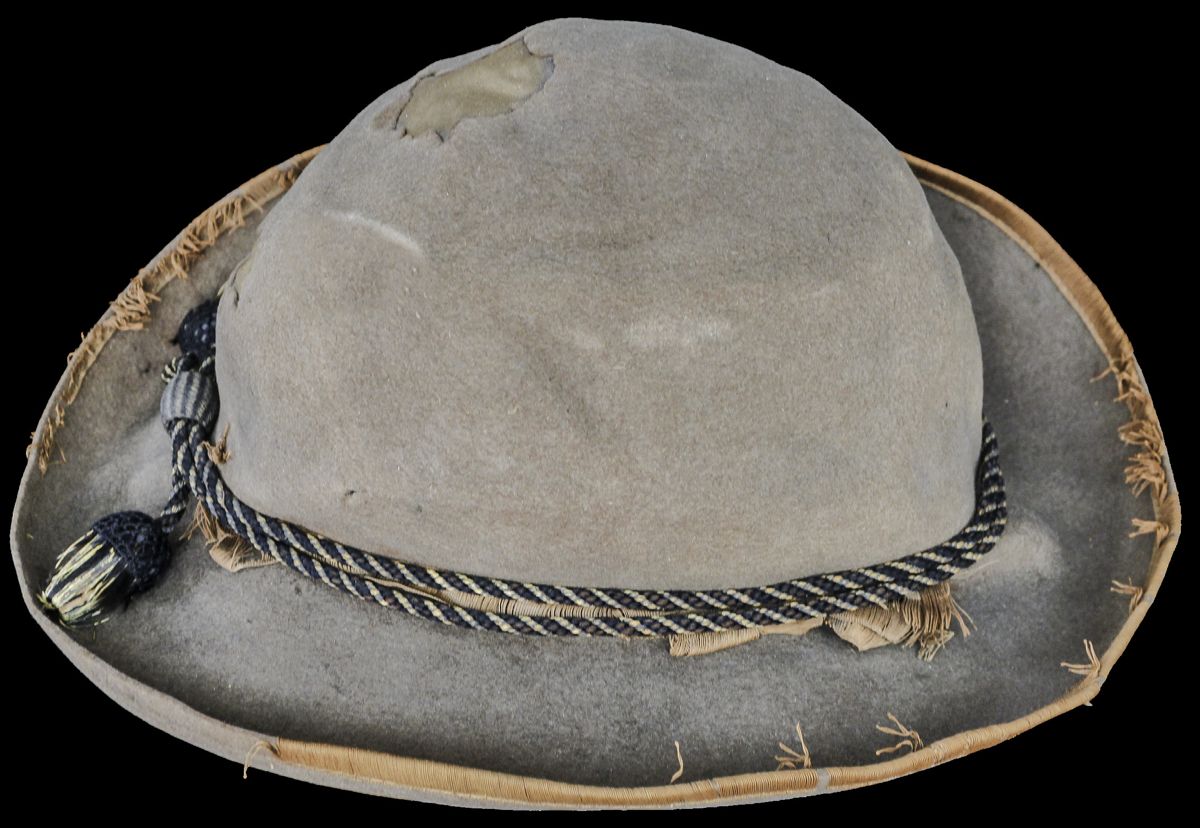
It is probable that Colonel Mosby’s hat and this one were purchased, or captured, at the same place as Colonel Mosby acquired his own. Civil War photographs show other Mosby men wearing this same hat. The hat’s brim is pinned to the crown with an eight-pointed silver star. A Confederate made black and gold military hat cord with acorns covers the factory band, giving it a more military appearance.
Endnotes
- The Gray Raiders: Volume 3 Accounts of Mosby and His Raiders, by J. Marshall Crawford and John Scott.
- Mosby’s Men, Chapter IX.
- Ibid. Chapter X.
- National Park Service “Surprise Attack.”
- Mosby’s Rangers: A Record of the Operations of the Forty-Third Battalion, by James Joseph Williamson, p. 164.
- Ibid., p. 169.
A fragment of history that opens a vivid window into a battlefield of yesteryear.
The reverse of the hat.
Inner hat showing modern stabilization of entrance and exit holes. Note the front of the hat band appears to be blood-soaked.
Left side of the ranger’s hat showing the unusual gold and black hat cord.
The solid silver star was an ornamentation and had no significance as military insignia.
About the Author Shannon Pritchard has authored numerous articles relating to the authentication, care, and conservation of Confederate antiques, including several cover articles and is the author of the definitive work on Confederate collectibles, the widely acclaimed
Collecting the Confederacy, Artifacts and Antiques from the War Between the States, and is co-author of Confederate Faces in Color.